Quick summary
UK passport holders flying home from Schengen airports this summer face queues of one to three hours at outbound border control under the EU’s Entry/Exit System (EES), which went fully live on 10 April 2026. The Wizz Air UK chief has told British travelers to arrive at European airports three hours before departure — and confirmed cases already exist of passengers being left behind by airlines unable to hold flights for those still in border lines. easyJet‘s chief executive has acknowledged the same problem.
Italy’s airports are the worst-affected so far, with all three Milan airports reporting serious congestion. Missing a flight due to EES queues does not trigger EU261 or UK261 compensation — the cost falls entirely on the traveler.
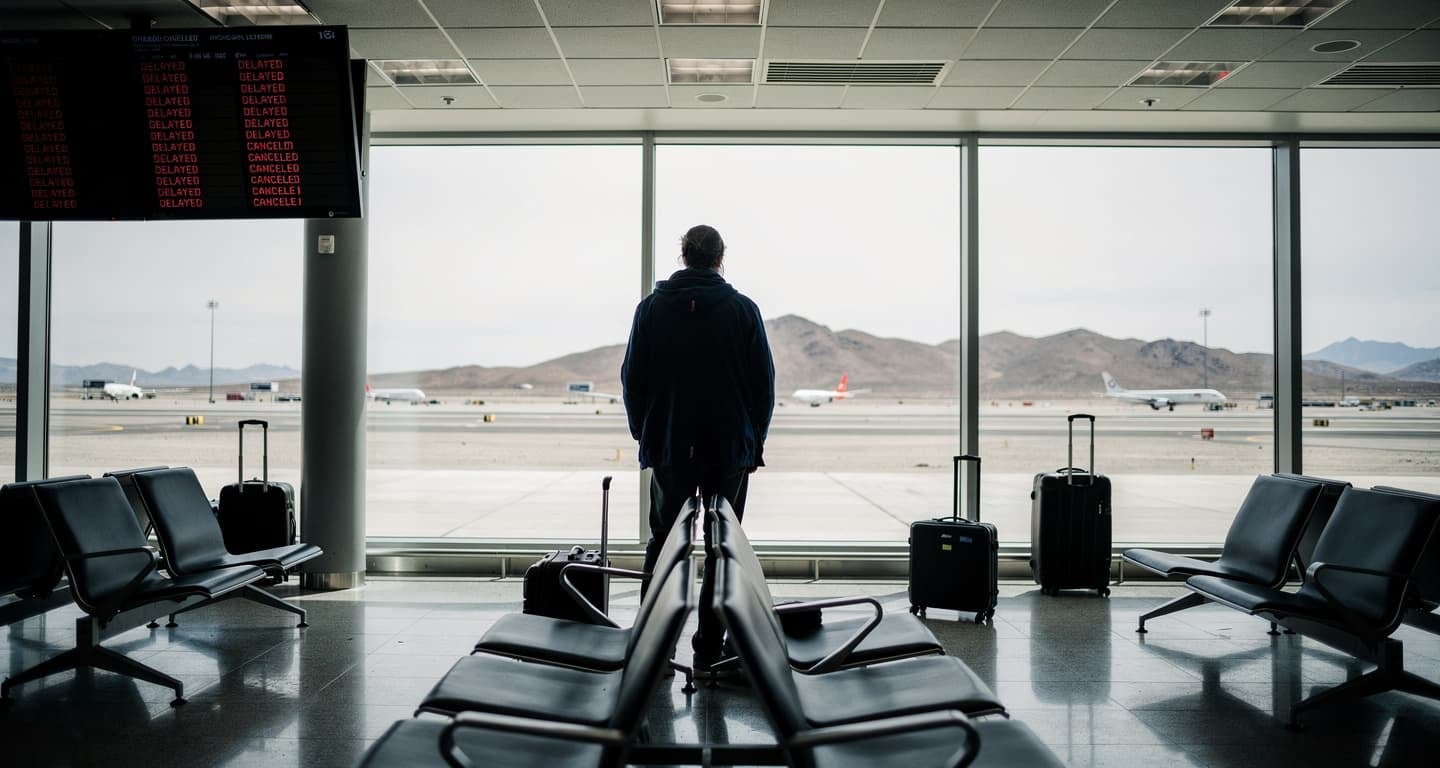
Half-term is over, and the first real stress test of Europe’s new biometric border system has produced exactly the outcome airports and airlines feared: passengers stranded at departure gates, flights leaving without them, and no statutory right to a penny in compensation.
The Entry/Exit System requires every UK citizen — now classified as a “third-country national” under the Schengen Borders Code — to submit passport details, a facial image and four fingerprints at an automated or staffed checkpoint when crossing an external Schengen border. That first registration takes significantly longer than a passport stamp. At busy leisure airports during school-holiday peaks, the difference between a manageable queue and a missed flight can be measured in minutes.
The Wizz Air UK chief has issued a direct public warning: arrive three hours before departure at Schengen airports this summer. The easyJet chief executive, speaking separately, confirmed the airline hates leaving passengers behind but cannot hold aircraft without wrecking downstream schedules and risking slot infringements. Both carriers operate on turnarounds tight enough that a 90-minute border queue can be the difference between boarding and a very expensive walk-up fare.
This is not a theoretical risk. Passengers have already been left behind by easyJet at Milan Linate and by Ryanair at Milan Bergamo. The summer peak — with school holidays running through July and August — has not yet begun.
Where the queues are worst — and why Italy stands out
Implementation has been deeply uneven across the 30 Schengen member states, each running its own version of the border process. That inconsistency is creating a patchwork of risk for travelers who may not know which airports are coping and which are not.
Milan is the clearest problem cluster. All three of the city’s airports — Malpensa, Linate and Bergamo — are reporting serious congestion in both directions. Travelers are reporting waits of over an hour on arrival and comparable delays on departure. Italy is also generating complaints that biometric registration is being repeated in both directions, despite EES rules stating that once registered, the same data should be reused for three years.
Palma de Mallorca, by contrast, appears to be handling the rollout well — multiple kiosks, efficient e-gate use for returning registered travelers, and faster throughput overall. Athens is a different story: Greece initially announced it would suspend biometric checks for British visitors entirely to protect tourism, but the system failed at Athens Airport during the half-term weekend, forcing staff to manually transcribe passport details and producing three-hour queues.
The European Commission maintains that EES is working well in most locations and has rejected calls from ACI Europe — the body representing European airports — to suspend the system until September. That tension between Brussels and airport operators is unlikely to resolve before the summer peak arrives.
Ryanair is responding operationally: the carrier is moving check-in desks earlier and will require bag drop no later than 60 minutes before departure from 10 November 2026, a direct response to EES-related congestion — as detailed in ATC’s coverage of Ryanair’s new 60-minute bag drop deadline and what it means for checked luggage passengers. For this summer, the practical implication is that check-in desks at some airports may open earlier than travelers expect.
| Airport | Country | Queue situation | Incidents reported |
|---|---|---|---|
| Milan Malpensa | Italy | Over 1 hour both directions | Passengers left behind by multiple carriers |
| Milan Linate | Italy | Serious congestion | Passengers left behind by easyJet |
| Milan Bergamo | Italy | Serious congestion | Passengers left behind by Ryanair |
| Athens International | Greece | System failure — up to 3 hours | Manual passport transcription during outage |
| Palma de Mallorca | Spain | Functioning well | No major incidents reported |
Flight deals
most people never see
Our AI monitors 150+ airlines for pricing anomalies that traditional search engines miss. Air Traveler Club members save $650 per trip per person on average: see how it works.
Each deal saves 40–80% vs. regular fares:

Why airlines can’t help — and why compensation won’t cover this
Border control at Schengen airports is run by national state authorities, not airlines. Under EES, every third-country national must have their passport scanned, then submit to a camera and fingerprint reader that captures biometrics stored in an EU-wide database and checked against watch lists. That first registration takes materially longer than a stamp. Airlines have no authority to override or bypass the process — and no commercial incentive to try. Departing late means slot infringements, knock-on delays across the day’s schedule, and potential fines. The rational choice for a carrier is always to close the gate on time.
The compensation picture is equally stark. Under EU Regulation 261/2004 and its UK equivalent, fixed payments of €250–€600 (or £220–£520) apply only when disruption is caused by the operating carrier. Queues at a state-run border checkpoint are treated as outside airline control — an extraordinary circumstance under the regulation’s language. Miss your flight because EES took two hours, and the airline owes you nothing beyond whatever goodwill rebooking it chooses to offer. The UK Civil Aviation Authority’s guidance confirms this position explicitly. Travel insurance is the only realistic financial backstop — and even then, policy wording varies on whether a foreseeable, publicized delay qualifies as a covered event.
Steps to protect your summer flight home
Passengers left behind at Milan and Athens this half-term had no warning and no recourse. The summer peak — school holidays across July and August — will bring far higher volumes through the same checkpoints.
- Arrive three hours before departure at large leisure hubs. This is the explicit guidance from the Wizz Air UK chief. At airports with known congestion — all three Milan airports, Athens — treat this as a hard minimum, not a buffer. If you are checking bags, verify when the desk opens: some carriers are moving check-in earlier specifically because of EES, but desk opening times vary by airport.
- Check your airline’s app the day before for updated cut-off times. Ryanair is already adjusting its bag drop deadline. easyJet and Wizz Air may update gate cut-off guidance as the summer develops. App notifications are the fastest channel — enable them before you travel.
- Book earlier flights where possible. A morning departure from a multi-frequency airport gives you same-day rebooking options if EES queues cause you to miss the flight. An evening departure on a once-daily service does not.
- If you are already in the queue and running late, contact the airline immediately. Open the airline app, call the customer service line, and document the queue with photos or video showing the length and any visible timestamps. This evidence will not unlock EU261 compensation, but it supports a travel insurance claim and may prompt discretionary rebooking at the gate.
- Review your travel insurance policy before departure. Check whether it covers missed departures caused by airport delays outside your control. If it does not, consider whether a policy upgrade is worth the cost against a potential walk-up fare.
Watch: The European Commission’s response to ACI Europe’s suspension request — if Brussels agrees to pause EES at the most congested airports even temporarily, queue times could ease before the main summer peak. If it holds firm, the situation at Italian airports in particular is likely to worsen before it improves.

Questions? Answers.
Does EES apply every time I fly back from Europe, or just the first time?
The biometric registration — facial image and four fingerprints — is captured once and stored in the EU database for three years. After that first registration, subsequent crossings should be faster because your data already exists in the system. However, multiple travelers have reported being asked to re-register at Italian airports in both directions, suggesting inconsistent implementation. Until the system stabilizes, allow extra time regardless of whether you believe you have already registered.
Can I claim compensation if I miss my flight because of EES queues?
Almost certainly not under EU261/2004 or UK261. Both regulations cover disruption caused by the operating airline — delays, cancellations, denied boarding within the carrier’s control. A queue at a state-run border checkpoint is treated as an extraordinary circumstance outside airline control, so the carrier owes no fixed compensation. Your best financial recourse is travel insurance, though policy wording varies. Check your policy’s missed-departure clause before you travel.
Which Schengen airports are handling EES best and worst right now?
Based on reports from the half-term period, all three Milan airports — Malpensa, Linate and Bergamo — are the most problematic, with queues exceeding one hour in both directions and confirmed cases of passengers being left behind. Athens experienced a system failure producing three-hour waits. Palma de Mallorca is performing well, with multiple kiosks and functional e-gates for returning registered travelers. The situation is changing week by week as airports adapt, so check your specific airport’s own website for current EES guidance before you travel.
Does EES affect travelers from the US, Canada, Australia or New Zealand flying through Schengen airports?
Yes. EES applies to all third-country nationals at Schengen external borders — that includes US, Canadian, Australian and New Zealand passport holders, not just UK citizens. The same biometric registration requirement applies on first crossing. None of those countries have an equivalent of EU261 automatic cash compensation for state-caused airport delays, so the financial risk of a missed flight falls on the traveler in all cases. Travel insurance with a missed-departure clause is the primary protection available.