Quick summary
EASA currently prohibits operators from flying within the airspace of Iran, Iraq, and Lebanon at all flight levels, while a March 2026 aviation risk report confirms that key flight information regions including Iran, Iraq, Israel, Qatar, Kuwait, Bahrain, and Syria remain closed to civil aviation. Europe-Asia traffic is being forced onto northern and southern bypass routes, adding fuel burn, block time, and connection risk for travelers on Gulf-carrier itineraries. Passenger confidence in major Gulf carriers remains resilient, but rising airfares and schedule instability are already reshaping how travelers book.
The disruption is not a short-term shock. Travelers connecting through Doha, Dubai, or Abu Dhabi face a structurally altered network for the foreseeable future, and the next EASA update — expected within weeks — could tighten restrictions further.
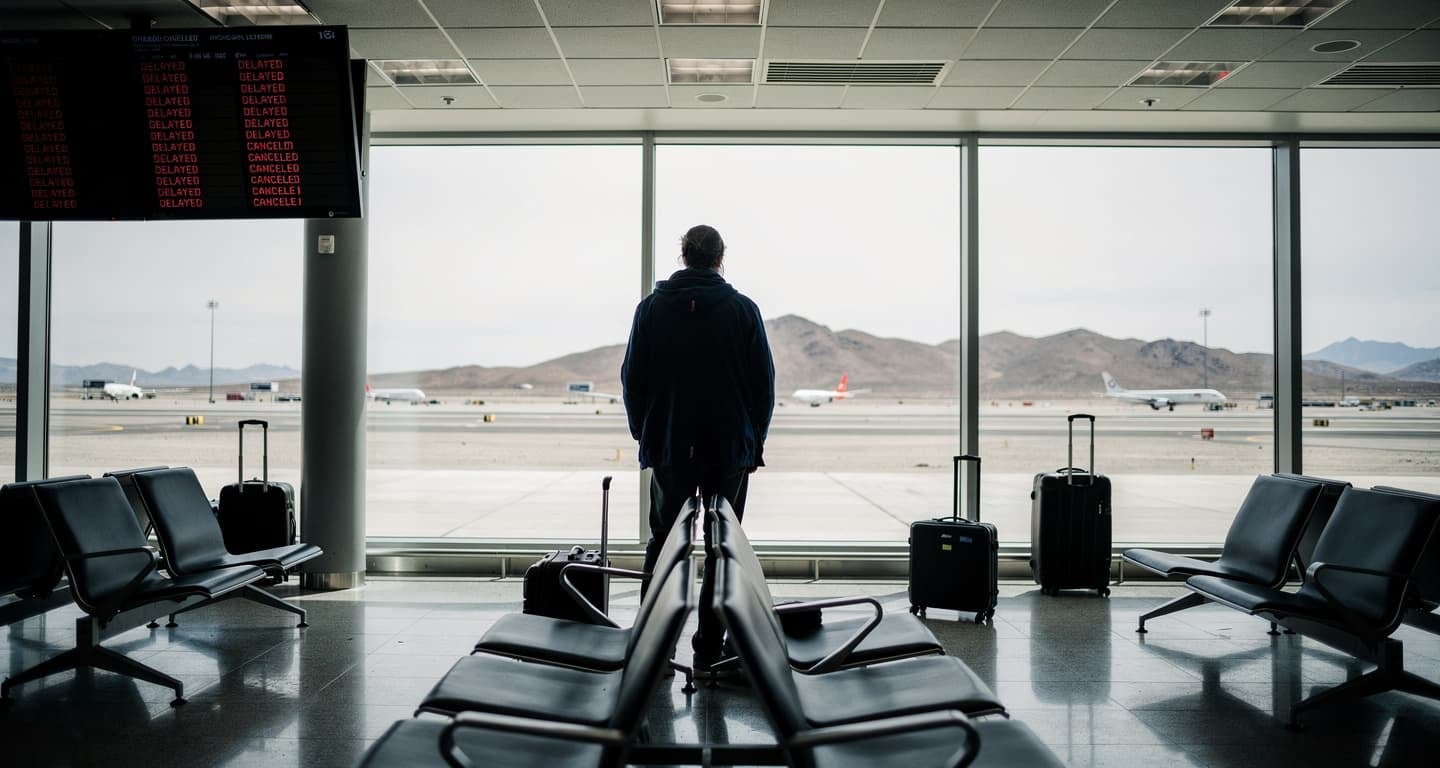
Middle East airspace remains one of the most operationally constrained environments in global aviation, and as of June 12, 2026, there is no sign of that changing soon. EASA‘s current conflict-zone guidance prohibits flights through Iranian, Iraqi, and Lebanese airspace entirely, while cautioning operators across Bahrain, Kuwait, Israel, Jordan, Qatar, Oman, the UAE, and Saudi Arabia. For travelers on any itinerary that connects through a Gulf hub — or crosses the region between Europe and Asia — this is the operating reality right now.
The practical consequence is a wholesale rerouting of Europe-Asia traffic. The central Gulf corridor, which for decades was the backbone of one-stop connections between Europe and Southeast Asia, South Asia, and Australia, is no longer reliably usable. Airlines are instead routing via Egypt-Saudi-Oman or through the Caucasus, both of which add time and cost. A March 2026 aviation risk report confirmed that key flight information regions across the Gulf and Levant remained closed to civil aviation, forcing carriers to absorb higher fuel burn and build more schedule contingency into their operations.
That cost does not stay on the airline’s balance sheet. It moves into fares.
Middle East tourism arrivals are projected to fall between 11% and 27% compared to December 2025 levels, with potential visitor spending losses of $348 million to $568 million. Yet consumer surveys show that passengers retain confidence in major Gulf carriers — Emirates, Etihad Airways, and Qatar Airways — with most willing to resume flying within six months of conflict resolution. The demand is there. The airspace is the problem.
What the airspace closures actually mean for your route
The EASA guidance, published as conflict-zone information bulletin 2026-03-R11, is unambiguous: operators must not enter Iranian, Iraqi, or Lebanese airspace at any flight level. This is not a caution — it is a prohibition. For the broader Gulf region, the agency requires heightened monitoring, contingency planning, and navigation integrity checks, including GPS accuracy, RAIM warnings, and ADS-B reliability.
The UK Civil Aviation Authority has issued parallel guidance requiring operators to heighten oversight of navigation and surveillance systems across the Middle East, specifically flagging GPS interference and the need for contingency routing if deviations become necessary mid-flight. These are not theoretical concerns — GPS spoofing and signal degradation have been documented across the region.
The result, operationally, is that the two viable Europe-Asia corridors are now the southern bypass via Egypt, Saudi Arabia, and Oman or the UAE, and the northern bypass via the Caucasus and Afghanistan. Both add block time. Both increase fuel burn. Neither is as efficient as the central Gulf routing that carriers spent decades optimizing.
| Airspace / FIR | EASA status | Routing impact |
|---|---|---|
| Iran | Prohibited — all flight levels | Forces southern or northern bypass; adds 45–90 min block time on Europe-Asia flows |
| Iraq | Prohibited — all flight levels | Eliminates direct overfly; compounds Iran closure for central corridor |
| Lebanon | Prohibited — all flight levels | Removes eastern Mediterranean routing option |
| Israel / Syria | Closed to civil aviation (March 2026 risk report) | Blocks Levant corridor entirely |
| Bahrain / Kuwait / Qatar | Caution — enhanced monitoring required | Gulf hubs remain operational but with navigation risk controls |
| UAE / Oman / Saudi Arabia | Caution — contingency planning required | Southern bypass viable but not without risk management obligations |
Flight deals
most people never see
Our AI monitors 150+ airlines for pricing anomalies that traditional search engines miss. Air Traveler Club members save $650 per trip per person on average: see how it works.
Each deal saves 40–80% vs. regular fares:

Why this is a structural shift, not a temporary detour
The market forces driving this disruption are not going to resolve on a short timeline. Sustained conflict-driven rerouting has combined with sharply higher operating costs — the US Spot Jet Fuel Index rose 77.7% between late February and late March 2026, from $2.42 per gallon to $4.30 per gallon. Saudi Arabia has warned that oil prices could exceed $180 per barrel if regional conflict continues. Airlines absorbing longer routes and higher fuel burn on every Europe-Asia flight are not going to hold fares flat.
The Heathrow data makes this concrete: Middle East passenger traffic at the airport collapsed 51.1% in March 2026, dropping from 600,000 passengers to 294,000 in a single month. Capacity that would have flowed through Gulf hubs is being redirected — Heathrow’s Asia-Pacific traffic rose 31.1% in the same period — but the network is not seamlessly absorbing the shift. Connections are less predictable, seat supply on alternative routings is tighter, and last-minute pricing is more volatile as a result.
For travelers, the honest read is this: Gulf hubs remain open and the major carriers are operating. But the cheapest one-stop ticket through Doha or Dubai may now carry more disruption risk than it did 12 months ago — longer block times, possible aircraft swaps, and tighter connection windows built around airspace workarounds rather than optimal routing.
Steps to protect your itinerary now
Gulf hub connections carry elevated disruption risk through at least mid-2026 — here is the priority order for protecting your trip.
- Verify your routing before departure: Check whether your booked flight transits Iranian, Iraqi, or Lebanese airspace. Ask your airline directly or use FlightAware to review recent actual flight paths on your route. If the routing is unclear, call the airline’s operations line — not the general booking desk.
- Check the latest EASA guidance: The EASA conflict-zone bulletin 2026-03-R11 is the authoritative source for current airspace restrictions. Read it before booking or rebooking any itinerary connecting through Doha, Dubai, or Abu Dhabi.
- Book later connections at Gulf hubs: If you must connect through a Gulf hub, choose a minimum 3-hour connection. Block times on Europe-Asia flows are being padded for airspace workarounds — a 90-minute connection that worked in 2024 may not work now.
- Compare nonstop and non-Gulf alternatives: For North American travelers, transpacific nonstops to Southeast Asia bypass the Gulf entirely. For Australasian travelers, routings via Singapore or Hong Kong to Europe avoid the most affected airspace. The fare gap between these options and Gulf-hub itineraries has narrowed as conflict premiums push Gulf fares higher.
- Ensure travel insurance covers conflict-related disruption: Standard policies often exclude conflict zones. Confirm your policy explicitly covers rerouting, delays, and cancellations arising from airspace closures — not just weather or mechanical issues.
Watch: The next EASA Middle East airspace update — expected within weeks — will signal whether restrictions tighten further. If they do, expect more rerouting and longer travel times on Gulf-connected itineraries. Watch also for airline summer schedule revisions in the next one to three months — if carriers add block time or swap to larger aircraft on Gulf-Europe and Gulf-Asia links, that confirms the disruption is becoming structural rather than temporary.

Questions? Answers.
Can I still fly through Dubai, Doha, or Abu Dhabi right now?
Yes. The UAE and Qatar are under EASA caution guidance, not prohibition. Gulf hubs remain operational, and Emirates, Etihad, and Qatar Airways continue to fly. The risk is not that your flight will be cancelled at the gate — it is that block times are longer, connections are tighter, and schedule changes are more frequent as airlines manage airspace workarounds in real time.
Which airspace is completely off-limits right now?
EASA currently prohibits operators from entering Iranian, Iraqi, and Lebanese airspace at all flight levels. Israel and Syria are also effectively closed to civil aviation according to the March 2026 aviation risk report. The broader Gulf region — Bahrain, Kuwait, Qatar, Oman, UAE, Saudi Arabia — is under caution with enhanced navigation monitoring required, but not prohibited.
Does this affect flights from Australia and New Zealand to Europe?
Yes, significantly. Australian and New Zealand travelers to Europe rely heavily on Gulf carriers for one-stop connections. Any tightening of airspace restrictions ripples into fares, availability, and schedule reliability on these routes. If travel is not time-sensitive, consider routings via Asian hubs — Singapore, Hong Kong, or Tokyo — which avoid the most affected airspace corridors.
How long is this disruption likely to last?
There is no resolution timeline. The airspace closures are tied to an active geopolitical conflict with no clear end date. Industry analysis suggests travelers should plan for Gulf hub instability through at least the end of 2026. The next EASA update will be the clearest signal of whether conditions are improving or deteriorating.
Will my travel insurance cover disruption caused by airspace closures?
It depends on your policy. Many standard travel insurance products exclude disruption arising from conflict zones or government-mandated airspace closures. Check your policy wording specifically for conflict exclusions and ensure it covers rerouting costs, missed connections, and accommodation if delays arise from airspace restrictions — not just weather or mechanical faults.