Quick summary
Emirates and flydubai are operating 215 combined daily flights from Dubai as of March 31, 2026 — Emirates at roughly 70% of pre-war capacity (147 flights March 31, 146 flights April 1) and flydubai at 40% (68 flights March 31, 64 flights April 1). This marks three consecutive weeks of stable operations following the Iran-Israel conflict that began in late February. The foreign airline ban at DXB remains in effect with no stated end date, forcing United, Lufthansa Group, Turkish Airlines, Cathay Pacific, and Virgin Atlantic to suspend or reroute service through Abu Dhabi or Doha.
Flexible rebooking policies are extended through April 30 for Emirates and March 31 for flydubai. Seat availability on Asia-Pacific routes remains constrained — Emirates’ London Heathrow service operates five daily frequencies, but economy inventory is tight on most long-haul sectors.
Dubai’s aviation recovery has entered a holding pattern. After six weeks of disruption triggered by the Iran-Israel war, Emirates and flydubai have stabilized operations at roughly 60% of combined pre-war capacity — a figure that has held steady since mid-March.
The two carriers operated 215 flights on March 31 and 212 on April 1 from Dubai International (DXB), according to schedule data. Emirates accounts for the majority: 147 departures March 31 and 146 on April 1, representing approximately 70% of its pre-conflict schedule. Flydubai operates 68 and 64 flights respectively, running at 40% of normal capacity.
For travelers with bookings on Asia-Pacific routes, this means more predictable schedules than the chaos of early March — but also persistent capacity constraints. Economy seats on key corridors like Dubai–Singapore, Dubai–Hong Kong, and Dubai–Melbourne remain scarce. Premium cabin availability is better, though fares are elevated across the board.
What the schedule data reveals about recovery
The 215-flight baseline has held for three consecutive weeks, suggesting Emirates and flydubai have reached a sustainable operating rhythm under current airspace restrictions. Emirates’ 70% capacity figure includes freighter operations and fifth-freedom routes (flights that continue beyond Dubai to a third country), which don’t appear in daily DXB departure counts but contribute to the airline’s overall network resilience.
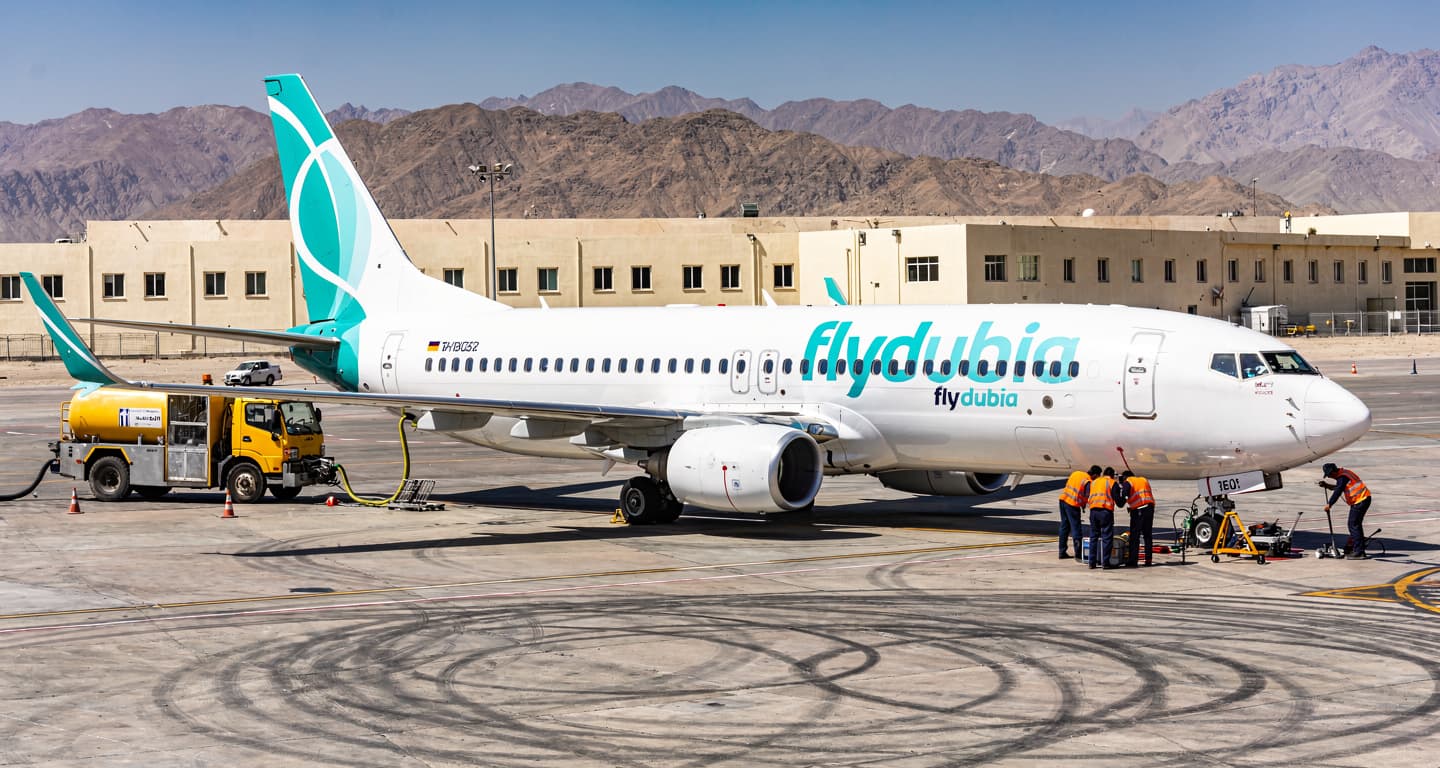
Flydubai’s 40% figure reflects its heavier reliance on regional routes within the Gulf and South Asia — sectors more directly affected by airspace closures and security concerns. The carrier operates primarily Boeing 737-800s, which lack the range to reroute around conflict zones as easily as Emirates’ wide-body fleet.
The foreign airline ban at DXB, imposed March 17, remains the most restrictive measure in the airport’s 66-year history. United, Lufthansa Group carriers (Lufthansa, Swiss, Austrian), Turkish Airlines, Cathay Pacific, and Virgin Atlantic have suspended service until late March or April. Air Canada planned to restart March 23 but continues to advise passengers not to travel to the airport. No official end date for the ban has been announced.
Etihad (operating from Abu Dhabi) and Air Arabia (operating from Sharjah, Abu Dhabi, and Ras Al Khaimah) continue limited service to select destinations in India, Pakistan, Saudi Arabia, Egypt, and Europe through April 15. Qatar Airways operates unrestricted service from Doha with daily frequencies on major Asia-Pacific routes including Singapore, Sydney, and Hong Kong — positioning itself as the premium alternative to Emirates with higher fares but more reliable schedules.
| Date | Emirates flights | Flydubai flights | Combined total | % of pre-war capacity |
|---|---|---|---|---|
| March 31 | 147 | 68 | 215 | ~60% |
| April 1 | 146 | 64 | 212 | ~60% |
| Pre-war baseline | ~210 | ~170 | ~380 | 100% |
Emirates has extended flexible cancellation and rebooking policies through April 30, 2026, and paused Skywards frequent-flyer miles expiry until June 30, 2026. Passengers booked between February 28 and April 15 can rebook for travel up to May 31 or request refunds via emirates.com. Flydubai offers rebooking within 30 days at no penalty or full refunds for customers with bookings February 28 through March 31 — though flight durations and transit times may be longer than usual due to temporary rerouting around conflict zones.
For context on how airspace closures affect Asia travel more broadly, see our analysis of which airlines still fly the fast route to Asia over Russia.
Flight deals
most people never see
Our AI monitors 150+ airlines for pricing anomalies that traditional search engines miss. Air Traveler Club members save $650 per trip per person on average: see how it works.
Each deal saves 40–80% vs. regular fares:

How this compares to past disruptions
The last comparable disruption to Dubai operations occurred during the 2022 Red Sea shipping crisis, when temporary airspace restrictions affected routing but did not trigger a foreign airline ban. The current Iran-Israel conflict represents an unprecedented peacetime suspension of foreign carrier access to DXB.
Emirates’ recovery to 70% capacity within six weeks mirrors its response to the 2020 COVID-19 shutdown, when the airline resumed 50% capacity by week four and reached 80% by week eight. The difference: COVID-19 was a global event with coordinated government responses. The current conflict is regional, asymmetric, and lacks a clear resolution timeline — making capacity planning more difficult.
The foreign airline ban is the most restrictive measure imposed on DXB since its opening in 1960. Previous disruptions — including the 1991 Gulf War, the 2003 Iraq invasion, and the 2011 Arab Spring — affected routing and demand but never resulted in a blanket suspension of foreign carrier operations.
What to do if you have a booking
The foreign airline ban and reduced capacity create a high-stakes booking environment through mid-April — here is the priority order for protecting your trip.
- Check your flight status daily via the airline’s app or website. Schedule changes are being filed 24–48 hours before departure, not weeks in advance. Emirates and flydubai send SMS and email alerts, but app notifications are faster.
- Rebook now if your departure is before April 15 and you have flexibility. Emirates’ policy allows free changes through April 30 for travel up to May 31. Flydubai’s window closes March 31. Use this to shift to a later date when schedules are more stable.
- Consider alternative hubs if your route requires DXB transit. Abu Dhabi (Etihad) and Doha (Qatar Airways) operate unrestricted service to Asia-Pacific. Fares are 15–25% higher, but schedule reliability is better. Istanbul (Turkish Airlines) resumes UAE service in late March.
- Document everything if you’re forced to cancel or rebook due to airline-initiated changes. EU261 compensation (€250–€600) applies to EU/UK departures if delays exceed 3 hours. Canadian APPR rules require CAD $400–$2,400 compensation for cancellations within 14 days of departure. Save all emails, SMS alerts, and booking confirmations.
- Use credit card travel insurance if your airline refuses a refund and you booked with a premium card. Most Visa Signature, Mastercard World Elite, and Amex Platinum cards cover trip cancellation due to airline schedule changes. File claims within 30 days.
Watch: Emirates’ next capacity announcement — expected between April 15–30 — will signal whether the airline plans to return to 80%+ capacity by mid-year or maintain the current 70% baseline through summer. If the foreign airline ban lifts before April 30, expect a surge in seat availability as United, Lufthansa Group, and others restart service within 7–10 days.

Questions? Answers.
Can I still book Emirates flights departing after April 15?
Yes. Emirates is accepting bookings through May 31, 2026, with the extended rebooking policy covering changes through April 30. Seat availability is constrained on Asia-Pacific routes, but schedules are more stable for departures after mid-April. Book early and monitor for schedule changes via the Emirates app.
What happens if my foreign airline flight to Dubai is still suspended?
If your carrier (United, Lufthansa Group, Turkish Airlines, Cathay Pacific, Virgin Atlantic) has not resumed service by your departure date, the airline must offer a full refund or rebook you on an alternative carrier at no cost. Contact the airline directly — do not wait for them to reach out. EU261 and Canadian APPR compensation may apply if the cancellation occurs within 14 days of departure.
Are fares higher on alternative hubs like Abu Dhabi and Doha?
Yes. Etihad (Abu Dhabi) and Qatar Airways (Doha) fares are 15–25% higher than pre-war Emirates fares due to reduced competition and increased demand. Economy roundtrip fares from London to Singapore via Doha currently range £900–£1,200 compared to £750–£950 via Dubai before the conflict. Premium cabin fares show similar increases.
Does flydubai’s 40% capacity mean my flight is more likely to be cancelled?
No. Flydubai’s 40% figure reflects permanent schedule reductions, not day-of cancellations. The carrier has adjusted its network to focus on high-demand regional routes (India, Pakistan, Saudi Arabia, Egypt) and suspended lower-demand sectors. If your flight appears in the schedule 48 hours before departure, it will operate barring unforeseen airspace closures.