Quick summary
A Delta Air Lines passenger won a $7.2 million jury verdict after crew handcuffed him, exposed him naked to other passengers, and denied him bathroom access during a medical emergency on a May 2015 domestic flight—but a district court vacated the award entirely, ruling Delta is immune from suit because law enforcement became involved. On April 23, 2026, the U.S. Court of Appeals for the Ninth Circuit heard oral arguments on whether the airline can shield itself from liability simply by declaring a passenger’s bathroom plea a security incident.
The case hinges on whether federal aviation security law immunizes airlines for all conduct after contacting law enforcement, or only for the initial disclosure itself. A ruling favoring Delta could allow carriers to classify medical emergencies as security threats, blocking passengers from suing over in-flight injuries or humiliation.
Bathroom emergency turned into federal case
The incident unfolded on the Atlanta to Salt Lake City leg of an international itinerary originating in Buenos Aires. The passenger, identified in court filings as Bandary, asked to use the rear lavatory approximately 45 minutes before landing. He had complained earlier about service and photographed flight attendants, stating he planned to file a complaint with Delta.
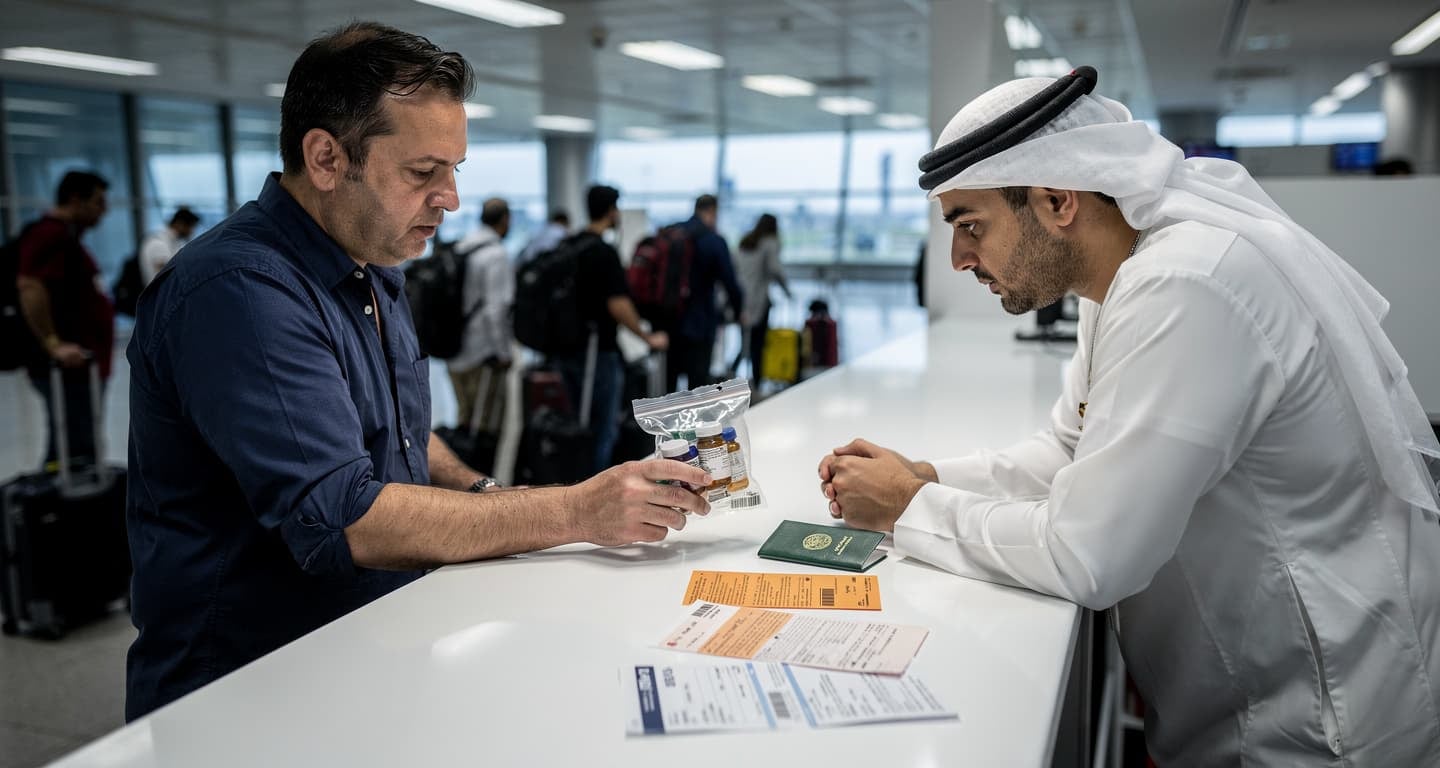
When a crewmember approached him at the lavatory queue and told him to return to his seat—despite the seatbelt sign being off—he explained he had diarrhea and HIV and could not wait. Crew called the cockpit to report a disturbance, enlisted an armed off-duty federal agent traveling as a passenger, and restrained Bandary with flexcuffs applied so tightly they injured his wrists and temporarily dislocated his left shoulder.
During the restraint, his pants fell to the floor. He was not wearing underwear.
Flight attendants refused to help him pull his pants up, according to the complaint, “because he has HIV.” He had a diarrhea accident while exposed. Upon arrival, law enforcement removed him from the aircraft by force. He was taken to a hospital for psychiatric evaluation, released, then told he was banned from Delta and could not get a refund for his return ticket. His luggage was marked with a large black “X.”
Federal prosecutors indicted him for assaulting a flight attendant and interfering with crew duties. A jury acquitted him of all charges.
He sued Delta in federal court, claiming he was targeted because he was gay, HIV-positive, and dark-skinned. According to the complaint, Delta employees testified at his criminal trial that “HIV is a deadly disease” and that he could look like a terrorist because of darker skin and dark hair.
The case went to trial in October 2021. The jury found Delta caused bodily injury, found Bandary suffered emotional distress from that injury, and awarded $2.5 million for bodily harm and $6 million for emotional distress—reduced by 15% due to partial passenger responsibility. The final judgment: $7.2 million.
Delta moved to vacate the verdict, arguing it is immune from suit under the Aviation and Transportation Security Act. The law shields airlines from liability when they make voluntary disclosures to law enforcement about suspicious behavior possibly involving air piracy, passenger safety, or terrorism—unless the disclosure is knowingly false or reckless. Because crew enlisted help from an off-duty Treasury Inspector General Special Agent, Delta argued all injuries occurring after that moment are protected.
The district court agreed and dismissed the case entirely, holding Delta immune for injuries after law enforcement “took command.” The passenger appealed to the Ninth Circuit, which heard oral arguments on April 23, 2026.
| Date | Event | Legal impact |
|---|---|---|
| May 2015 | Incident on ATL-SLC flight | Medical emergency classified as security threat |
| October 2021 | Jury awards $7.2M to passenger | Liability established for bodily injury and emotional distress |
| 2024 | District court vacates verdict | Immunity granted due to law enforcement involvement |
| April 23, 2026 | Ninth Circuit hears oral arguments | Determines scope of airline immunity under security law |
Flight deals
most people never see
Our AI monitors 150+ airlines for pricing anomalies that traditional search engines miss. Air Traveler Club members save $650 per trip per person on average: see how it works.
Each deal saves 40–80% vs. regular fares:

The immunity defense that could rewrite passenger rights
Delta’s legal strategy rests on a narrow reading of federal aviation security law. The airline argues that once crew perceive a safety threat and contact law enforcement, they are immune from liability for all subsequent actions—even if those actions cause injury. In Delta’s view, the passenger was repeatedly out of his seat, refused instructions, screamed, became physically aggressive, and made physical contact while resisting restraint. Therefore, the crew’s perception was reasonable, and immunity applies.
The passenger’s legal team counters that the law immunizes disclosure to law enforcement, not conduct. The statute’s language protects airlines “for such disclosure”—not for all actions taken after making that disclosure. Bandary’s lawyers argue there was no “suspicious transaction” triggering immunity: he simply walked down the aisle to use the lavatory and complained about service. More critically, they argue it was Delta employees—not the off-duty federal agent—who made the injury-causing decisions to apply flexcuffs, refuse to help him pull up his pants, and deny bathroom access.
The Montreal Convention adds another layer of complexity. Because the incident occurred on a domestic flight that was part of an international itinerary originating in Buenos Aires, Delta gets to defend itself under international treaty law rather than U.S. tort law. The convention limits carrier liability for personal injury to proven “accidents” and excludes pure emotional harm unless directly caused by bodily injury. Delta argued the bodily injuries here—cuts on the wrists, shoulder and neck pain—were minor, making the $6 million emotional distress award disproportionate.
The district court initially ordered a new trial because damages were intertwined with liability and comparative fault. Then Delta won summary judgment on immunity grounds, arguing injuries occurred after the Special Agent became involved. That’s the ruling now before the Ninth Circuit.
If the appeals court broadly affirms the dismissal, it sets precedent that once crew turn a situation over to law enforcement—for any reason they deem security-related—airlines face no liability for subsequent injuries, no matter how severe or how questionable the initial security determination. It’s a free pass wrapped in the language of safety.
The case echoes a pattern of bathroom-denial incidents across U.S. carriers. A Spirit Airlines passenger was denied lavatory access and forced to go on the floor while crew filmed her. Another passenger was removed from a flight for “excessive” lavatory use. In most cases, crew cite the seatbelt sign or “safety concerns” to justify denials—even when federal regulations allow passengers to use the lavatory at their own risk during non-critical phases of flight.
Travelers with medical conditions face a Catch-22: disclose the condition pre-flight and risk being denied boarding as a “safety risk,” or don’t disclose and risk having a medical emergency classified as a security incident. The Ninth Circuit’s ruling will determine whether airlines can exploit that gap to shield themselves from accountability. A decision is expected by summer 2026.
For context on how disability-related incidents are handled across carriers, see ATC’s coverage of American Airlines’ recent lawsuit over disability discrimination, where similar questions of carrier liability and passenger protection are at stake.
What to do if you face a medical emergency in-flight
Bathroom denials during medical emergencies remain rare but legally murky—this case will clarify whether airlines can classify your plea as a security threat to avoid liability.
- State it’s a medical emergency: Use those exact words. “I have a medical emergency and need the lavatory immediately.” Crew are trained to respond differently to medical language than to general requests.
- Document the incident immediately: Note crew names from uniform tags, flight number, time, and witnesses. Take photos of injuries if restraint occurs. File a written complaint with the airline within 24 hours and request a copy of the incident report.
- File an FAA complaint: If denied lavatory access for a medical reason, file at faa.gov/about/office_org/headquarters_offices/avr/src/enforcement/airlinecomplaint within 30 days. The FAA investigates crew conduct violations and can trigger enforcement action.
- Know your Montreal Convention rights: If your ticket involves any international segment—even if the incident occurs on a domestic leg—the airline may invoke treaty protections limiting liability. Review your rights at state.gov/series/74774 before booking international itineraries on U.S. carriers.
- Consider pre-flight medical documentation: Travelers with conditions requiring frequent bathroom access should carry a doctor’s note stating the medical necessity. While not legally required, it creates a paper trail countering “security incident” defenses.
Watch: The Ninth Circuit’s ruling, expected by summer 2026, will determine whether Delta’s immunity defense becomes standard industry practice—potentially requiring passengers to pre-declare all medical conditions or lose the right to sue for in-flight mistreatment.

Questions? Answers.
Can airlines legally deny bathroom access during a medical emergency?
Federal regulations allow passengers to use the lavatory at their own risk even when the seatbelt sign is on, provided it’s not during takeoff, landing, or severe turbulence. Crew cannot physically restrain you from using the bathroom unless they declare a security incident—which is what Delta did in this case. If you state it’s a medical emergency, crew are trained to accommodate you, but this case shows airlines may later claim immunity by reclassifying your emergency as a security threat.
Does the Montreal Convention apply to domestic flights in the U.S.?
Yes, if the domestic flight is part of an international itinerary. In this case, the passenger flew Buenos Aires to Atlanta to Salt Lake City—the ATL-SLC leg was domestic, but because it was part of an international ticket, Delta invoked Montreal Convention protections limiting liability for personal injury. This is a common airline defense strategy for incidents on U.S. domestic flights that connect to international routes.
What is the Aviation and Transportation Security Act immunity defense?
The law shields airlines from liability when they voluntarily report suspicious behavior to law enforcement, provided the report isn’t knowingly false or reckless. Delta argues that once crew contacted the off-duty federal agent about a perceived security threat, all subsequent actions—including the restraint, exposure, and bathroom denial—are immune from lawsuit. The Ninth Circuit must decide whether immunity covers the disclosure itself or all conduct after law enforcement involvement.
How can passengers protect themselves from similar incidents?
Use the exact phrase “medical emergency” when requesting lavatory access, document everything immediately (crew names, time, witnesses), and file both an airline complaint and an FAA report within 24-30 days. Travelers with chronic conditions should carry a doctor’s note stating medical necessity for frequent bathroom access—while not legally required, it creates evidence countering security-incident defenses. If you’re on an international itinerary, understand that Montreal Convention limits may apply even on domestic flight segments.