Quick summary
Delhi Indira Gandhi International Airport (DEL) has recorded 31 dog bite incidents since January 2026, with 24 involving airport staff. Airport management issued an advisory urging passengers not to feed stray dogs in public areas, but officials confirm the dogs will not be relocated despite a late 2025 court ruling allowing removal from transport hubs. The decision prioritizes animal welfare over passenger safety, leaving travelers exposed to aggressive strays across all three terminals.
One aggressive brown dog that bit two individuals was removed, calmed, and returned to its familiar area — a pattern that has sparked outrage among frequent travelers. The disappearance of two well-known strays, “Kaddu” and “Brownie,” has divided opinion between animal activists and passengers demanding action.
Airport refuses relocation despite legal authority and rising incidents
Delhi Airport faces a recent and ongoing safety issue that exposes a stark conflict between animal welfare activism and passenger protection. The 31 documented bites since the start of the year represent a sharp escalation, yet airport management has chosen not to exercise its legal authority to relocate the strays.
A late 2025 court ruling explicitly permits officials to remove stray dogs from transport hubs, including airports. That ruling followed a contentious legal battle — an initial 2025 order mandated roundup and relocation of Delhi’s estimated one million strays, but PETA India led a successful challenge that replaced it with a sterilize-vaccinate-and-return policy. The third ruling carved out an exception for schools, government offices, and transport facilities.
Delhi Airport has the legal clearance to act. It has chosen not to. Instead, the airport issued a public advisory asking passengers to avoid feeding or provoking the dogs — a response that shifts responsibility onto travelers rather than addressing the root hazard.
The airport’s statement emphasized that “several community dogs live across the three terminals and are being regularly cared for and fed by our team, strictly following veterinary-prescribed guidelines.” It added that one aggressive dog was “carefully handled, calmed, and gently returned to its familiar area” after biting two people. No mention of permanent removal. No acknowledgment that returning an aggressive animal to a passenger environment contradicts basic safety protocols.
| Incident type | Count | Affected group | Airport response |
|---|---|---|---|
| Dog bites | 31 | 24 staff, 7 passengers | Advisory issued |
| Aggressive dog removed | 1 | 2 individuals bitten | Calmed, returned to area |
| Missing strays (Kaddu, Brownie) | 2 | Activists allege brutal capture | Airport denies removal |
Flight deals
most people never see
Our AI monitors 150+ airlines for pricing anomalies that traditional search engines miss. Air Traveler Club members save $650 per trip per person on average: see how it works.
Each deal saves 40–80% vs. regular fares:

Why the airport’s inaction matters for international travelers
The stray dog issue at Delhi Airport is not a local curiosity — it is a safety gap that affects every passenger transiting through India’s busiest international gateway. For travelers unfamiliar with India’s stray dog population, the experience of exiting the terminal and encountering multiple uncontrolled animals can be jarring. For those who have been bitten, it is a medical emergency requiring immediate rabies post-exposure prophylaxis.
India’s Directorate General of Civil Aviation (DGCA) certifies and oversees DEL safety under the Ministry of Civil Aviation. DGCA conducts annual safety audits and enforces Civil Aviation Requirements (CAR) Section 4, which mandates secure airport operations. While no specific rule addresses animal control, the general duty under CAR Section 4 for a “safe environment” implies stray management falls within the airport’s responsibility. ICAO Annex 14 standards on obstacle-free zones further reinforce this expectation.
Delhi Airport complies with sterilization and vaccination protocols, but those measures do not eliminate bite risk. The airport’s decision to return an aggressive dog to its familiar area after it bit two people suggests a prioritization of animal welfare over passenger safety that is difficult to reconcile with international safety standards. Travelers have access to medical facilities and reporting protocols, but the underlying hazard remains unaddressed.
The disappearance of two well-known strays — “Kaddu” from Terminal 3 on March 26 and “Brownie” (also called “Dholu”) from Terminal 1 — has intensified the debate. Animal activists allege brutal capture by private contractors, while the airport denies any removal. The social media backlash has been fierce, with some accusing the airport of fabricating bite incidents to justify relocation. Others point out that passengers arriving from countries with strict animal control experience culture shock when confronted by multiple strays in a supposedly secure airport environment.
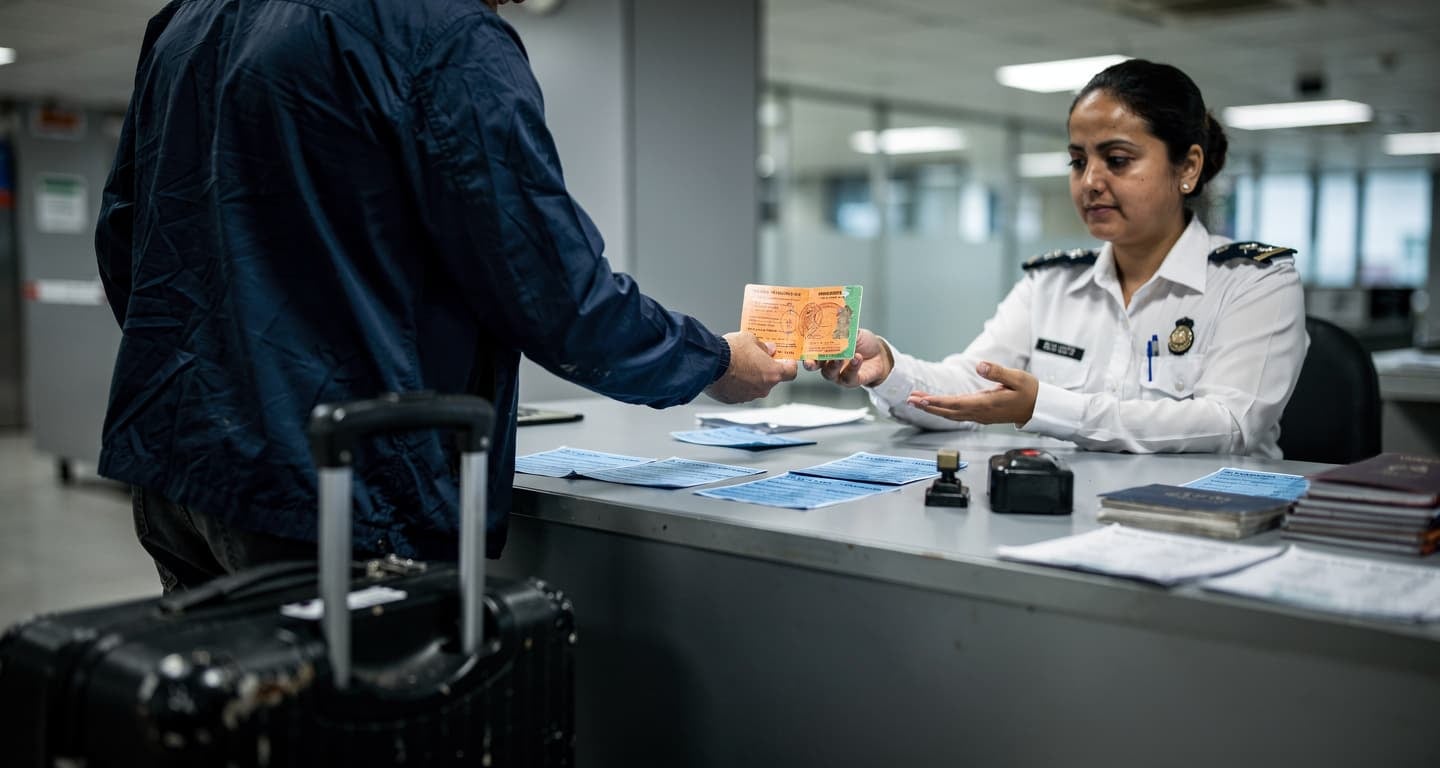
If your itinerary involves a Delhi connection, particularly on separate tickets, be aware that the transit visa trap can strand you in arrivals — and that is where stray dogs are most commonly encountered. The “Transit Without Visa” facility exists on paper, but ground staff frequently deny it for self-transfer itineraries. Travelers should apply for a 30-day Indian e-Tourist visa in advance to avoid being stuck in the arrivals hall with no way to reach departures.
What to do
The airport has issued an advisory, but the underlying hazard remains — here is the priority order for protecting yourself.
- Report aggressive dogs immediately: Contact airport security via the helpline or approach uniformed staff. Do not attempt to intervene or move the animal yourself.
- Avoid feeding or approaching strays: The airport’s advisory explicitly warns against feeding dogs in public areas. Even well-intentioned gestures can provoke bites.
- Seek medical attention for any bite: Rabies post-exposure prophylaxis is available at DEL clinics. Do not delay treatment — rabies is fatal once symptoms appear.
- Document incidents: If bitten, photograph the injury and note the location and time. File a complaint with airport management and consider reporting to the DGCA helpline if the response is inadequate.
- Consider alternative hubs: If you have flexibility, Mumbai (BOM) or Chennai (MAA) offer comparable Asia-Pacific connections without the stray dog issue.
Watch: DGCA response to bite complaints by late April — if sustained incidents trigger regulatory intervention, expect mandatory controls and reduced risk for travelers.

Questions? Answers.
Can I claim compensation if bitten by a stray dog at Delhi Airport?
India’s DGCA does not provide specific compensation for animal bites, but passengers may file claims under general consumer protection via the Consumer Disputes Redressal Commission if negligence is proven. Document the incident thoroughly and seek legal advice if the airport fails to respond.
Why doesn’t Delhi Airport relocate the strays despite having legal authority?
The airport has chosen not to exercise the late 2025 court ruling that permits relocation from transport hubs, citing the emotive nature of India’s stray dog issue. This decision prioritizes animal welfare activism over passenger safety, leaving travelers exposed to ongoing bite risks.
Are other major Indian airports affected by stray dog issues?
Delhi Airport’s stray dog problem is unusually severe due to its size and the legal complexities surrounding India’s stray population. Mumbai and Chennai airports have not reported comparable bite incidents, making them safer alternatives for travelers concerned about this issue.
What should I do if I see an aggressive stray dog at Delhi Airport?
Report it immediately to airport security via the helpline or approach uniformed staff. Do not feed, approach, or attempt to move the animal. If bitten, seek medical attention at DEL clinics for rabies post-exposure prophylaxis without delay.