Quick summary
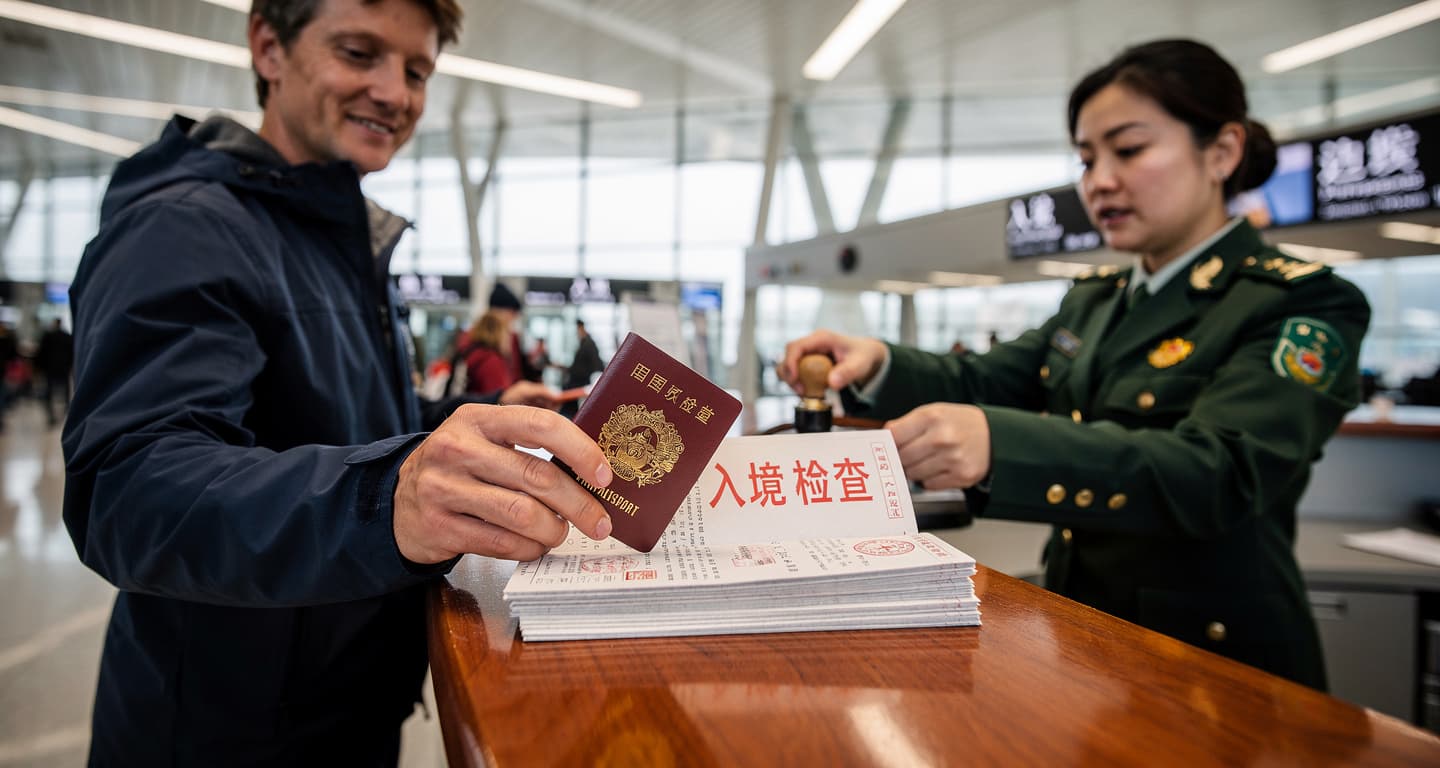
Canadian passport holders can enter mainland China without a visa for stays up to 30 days from February 17 through December 31, 2026. The waiver eliminates the previous C$140+ visa fee, in-person appointments, and detailed itinerary submissions, applying to tourism, business, family visits, and transit through all air, sea, and land borders—including connections via Hong Kong or Macau.
Passport validity of 6+ months beyond entry date and a mandatory health-declaration QR code are required. This policy follows Prime Minister Mark Carney’s January 2026 Beijing visit and places Canada among 50 countries now eligible for China’s expanded visa-free access.
China confirmed on February 15, 2026, that ordinary Canadian passport holders no longer need a visa for short stays—a policy active from February 17 to December 31, 2026. The waiver covers tourism, business meetings, family visits, cultural exchanges, and transit, with a maximum stay of 30 consecutive days per entry.
Multiple entries are permitted within the calendar year. Each 30-day stay resets independently, allowing Canadians to visit repeatedly without reapplying—though frequent short exits and re-entries may draw scrutiny from Chinese immigration if patterns suggest circumvention.
The change removes a significant friction point: the previous visa process required C$140+ in fees, in-person appointments at Chinese consulates, and detailed itinerary documentation submitted 2-3 weeks in advance. Last-minute business trips and spontaneous leisure travel to China are now immediately feasible for Canadians.
The policy applies to all entry points—airports, seaports, and land borders—including arrivals connecting through Hong Kong or Macau. Canadians transiting through these regions en route to mainland China are covered under the same 30-day waiver.
Policy details and entry requirements
The waiver runs on Beijing time: 0:00 on February 17, 2026 through 24:00 on December 31, 2026. Canadians arriving on December 31 at 23:59 are covered; those landing January 1, 2027, revert to standard visa requirements unless the policy is renewed—an outcome unconfirmed as of April 2026.
Two mandatory requirements apply. First, passports must remain valid for at least 6 months beyond the entry date. A passport expiring in February 2027 does not qualify for a December 2026 entry. Second, travelers must complete China’s health-declaration QR code 24-48 hours before arrival—typically via the official Health Code app or portal accessible through WeChat or Alipay. This cannot be completed at the border.
The waiver applies exclusively to ordinary Canadian passports. Diplomatic, official, or military passport holders must obtain a visa through standard channels. Permanent residents of Canada holding other passports must check their own country’s eligibility or apply for a Chinese visa. Verify your eligibility with the nearest Chinese embassy or consulate before booking flights.
| Requirement | Specification | Consequence if not met |
|---|---|---|
| Passport type | Ordinary Canadian passport only | Entry denied; visa required |
| Passport validity | 6+ months beyond entry date | Entry denied at border |
| Health declaration | QR code completed 24-48 hours pre-arrival | Delayed processing; possible entry denial |
| Maximum stay | 30 consecutive days per entry | Overstay penalties; visa required for longer trips |
| Policy expiration | December 31, 2026, 24:00 Beijing time | Visa required from January 1, 2027 |
Canadians planning trips longer than 30 days must apply for a standard visa. Exiting and re-entering to “reset” the clock is technically permitted but may trigger questions from Chinese immigration if patterns suggest circumvention—maintain clear business or tourism documentation for each trip.
For Canadians considering travel to China, flight options from North America include nonstop service from Vancouver, Toronto, and Montreal on Air Canada, China Eastern, and Hainan Airlines, with typical fares ranging $800–$1,400 roundtrip depending on season and booking window.
Flight deals
most people never see
Our AI monitors 150+ airlines for pricing anomalies that traditional search engines miss. Air Traveler Club members save $650 per trip per person on average: see how it works.
Each deal saves 40–80% vs. regular fares:

Diplomatic context and regional expansion
The waiver follows Prime Minister Mark Carney’s January 2026 visit to Beijing—the first Canadian PM visit since 2017—and reflects a deliberate thaw in Canada-China relations after years of diplomatic tension. The UK received identical 30-day visa-free access simultaneously, signaling China’s strategic pivot toward Western Commonwealth nations.
This policy sits within China’s broader 240-hour visa-free transit expansion. Five new ports were added in early 2026: Guangzhou, Zhuhai’s Hengqin, Zhongshan, the Hong Kong-Zhuhai-Macao Bridge, and West Kowloon Station—raising eligible transit hubs from 60 to 65. The unilateral visa-waiver programme now covers 50 countries, up from 38 in 2025.
For Canadian business travelers, this removes friction from supply-chain visits—no more 2-3 week visa processing windows for urgent factory inspections or trade negotiations. For leisure travelers, it eliminates the itinerary submission requirement that previously constrained spontaneous travel. Official policy dates and eligible purposes are published by China’s visa portal.
Pre-departure checklist and entry strategy
Canadians must complete three steps before departure to avoid border delays or entry denial.
- Passport validity check: Confirm your passport has 6+ months validity beyond your entry date. A passport expiring in August 2026 does not qualify for a March 2026 entry. Renew before booking flights.
- Health-declaration QR code: Complete the mandatory code 24-48 hours before arrival via the official Health Code app or portal. The code expires after 7 days—for multiple entries, complete a fresh code before each trip. Chinese border systems flag expired declarations.
- Embassy verification: Check the Chinese embassy in Ottawa’s visa-free policy page for updates or restrictions before purchasing flights. Policy terms may change without advance notice.
- Documentation for repeat visits: If planning multiple 30-day entries, maintain clear business or tourism documentation for each trip—hotel bookings, meeting confirmations, or tour itineraries. Frequent short exits and re-entries may draw scrutiny from Chinese immigration.
- Policy expiration awareness: The waiver ends December 31, 2026, at 24:00 Beijing time. Canadians entering on December 31 at 23:59 are covered; those arriving January 1, 2027, revert to standard visa requirements unless the policy is renewed.
Watch: China’s Ministry of Foreign Affairs typically announces visa-policy renewals 30-60 days before expiration. Monitor official channels in November 2026 for confirmation of whether the waiver extends into 2027.

Questions? Answers.
Can I use this waiver if I’m a Canadian permanent resident but not a citizen?
No. The policy applies exclusively to ordinary Canadian passport holders. Permanent residents of Canada holding other passports must check their own country’s eligibility or apply for a Chinese visa. Verify with the Chinese embassy in Ottawa before booking flights.
If I enter China on February 17 and stay 30 days, can I re-enter on March 18 for another 30 days?
Yes. Multiple entries are permitted within the calendar year, and each 30-day stay is independent. However, Chinese immigration may question frequent short exits and re-entries if they appear designed to circumvent longer-stay restrictions. Maintain clear business or tourism documentation for each trip—hotel bookings, meeting confirmations, or tour itineraries.
Does the health-declaration QR code expire, or do I need a new one for each entry?
The health declaration is typically valid for 7 days from completion. For multiple entries, complete a fresh QR code before each arrival. Check the official Chinese health code portal—typically accessible via WeChat or Alipay—for current validity windows, as requirements may change without advance notice.
What happens if my passport expires within 6 months of my planned entry date?
Entry will be denied at the border. The policy explicitly requires 6+ months validity beyond the entry date. A passport expiring in August 2026 does not qualify for a March 2026 entry. Renew your passport before booking flights to China—processing times for Canadian passport renewals currently range 10-20 business days for standard service.
Does the waiver apply if I’m connecting through Hong Kong or Macau before entering mainland China?
Yes. The policy explicitly covers arrivals connecting through Hong Kong or Macau en route to mainland China. However, you must still meet all entry requirements—passport validity, health-declaration QR code, and 30-day stay limit. Verify with your airline that your routing qualifies before departure.