Quick summary
Australia and New Zealand downgraded their Nepal travel advisories in March 2026, moving from “reconsider your need to travel” to “exercise a high degree of caution” (Australia) and “exercise increased caution” (New Zealand). The change follows Nepal’s 5 March 2026 general election, which passed without major incident after widespread civil unrest shut down Kathmandu and Pokhara in September 2025. Standard retail travel insurance policies in both countries are now more likely to cover Nepal without high-risk surcharges.
The United States maintains a more conservative position, creating insurance complications for mixed-nationality groups. The practical impact on trekking windows, insurance wording, and urban itinerary planning is where the real decisions lie.
Australia’s Smartraveller and New Zealand’s SafeTravel both updated their Nepal advice in March 2026, stepping back from the elevated “reconsider your need to travel” stance that had been in place since the September 2025 protests. The trigger was Nepal’s 5 March 2026 general election, which passed without significant violence after months of instability that killed at least 19 people and prompted curfews across the Kathmandu Valley.
For Australian and New Zealand travelers, the immediate consequence is practical: travel insurers that previously excluded Nepal under high-risk clauses are more likely to offer standard coverage again. That matters most for anyone planning trekking departures in the pre-monsoon window (March–May) or the post-monsoon peak (October–November).
The downgrade does not mean Nepal is risk-free. Both governments continue to warn that protests can erupt with little notice, that earthquakes and landslides remain year-round hazards, and that medical infrastructure outside Kathmandu is severely limited. The advisory change is a recalibration, not a clearance.
Australian and New Zealand passport holders planning flights to Nepal from Australasia are the primary beneficiaries of this shift — though the implications extend to anyone in a mixed-nationality travel group.
What the advisory change actually means for your trip
Before March 2026, both governments were telling citizens to question whether the trip was necessary at all. That language has direct consequences: many standard travel insurance policies automatically exclude destinations rated at “reconsider” or above, or apply punishing surcharges. The downgrade removes that barrier for most retail policies.
The shift followed a specific sequence of events. Nepal’s September 2025 protests — the most serious civil unrest in years — triggered the original upgrade. The 5 March 2026 election passed without major incident, and both governments assessed the security environment as sufficiently stabilized to lower the rating. New Zealand’s latest travel advice for Nepal explicitly notes that the significant protests of September 2025 have eased, while still flagging that strikes and demonstrations can recur quickly.
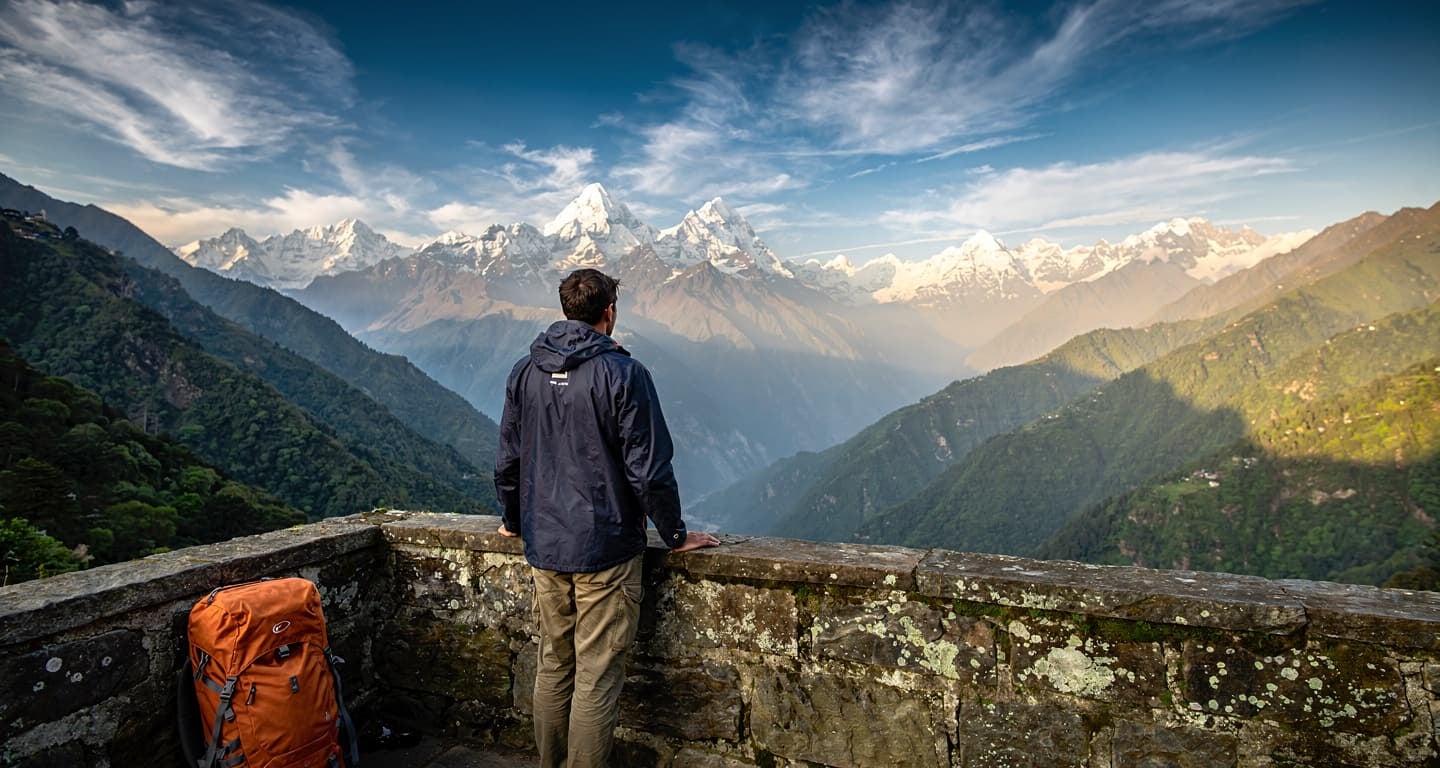
Urban and trekking risks are not the same thing. Protests have concentrated in Kathmandu and Pokhara. The Everest Base Camp and Annapurna Circuit regions were largely unaffected by political unrest during 2025. For trekkers, the dominant risks remain altitude sickness, poor road infrastructure, and the logistics of mountain rescue — not street demonstrations.
| Country | Previous level | Current level | Key insurance impact |
|---|---|---|---|
| Australia (Smartraveller) | Reconsider your need to travel | Exercise a high degree of caution | Standard policies more likely to apply |
| New Zealand (SafeTravel) | Reconsider your need to travel | Exercise increased caution | Standard policies more likely to apply |
| United States (State Dept) | Level 2 – Exercise increased caution | Level 2 – Exercise increased caution | No change; some policies still flag unrest clauses |
| Canada (Global Affairs) | Exercise a high degree of caution | Exercise a high degree of caution | No change from prior position |
One coverage gap that the advisory change does not fix: helicopter evacuation from altitude. Smartraveller and SafeTravel both stress that medical evacuation from remote trekking areas is logistically complex. A medical evacuation from the Khumbu region costs upward of $50,000 — assuming weather permits the flight. Standard policies often cap emergency evacuation well below that figure, or exclude high-altitude incidents entirely. Trekkers need to read that section of their policy before departure, not after.
Flight deals
most people never see
Our AI monitors 150+ airlines for pricing anomalies that traditional search engines miss. Air Traveler Club members save $650 per trip per person on average: see how it works.
Each deal saves 40–80% vs. regular fares:

AU/NZ travelers now hold a timing advantage
The advisory divergence between countries creates an uneven playing field — and right now, it favors Australian and New Zealand travelers. The US State Department continues to flag Nepal at a level that causes some American tour operators to delay fixed-departure itineraries or cap group sizes. That hesitation is keeping demand from recovering as fast as supply is rebuilding.
The result: 2026 trekking capacity on the Everest and Annapurna corridors is rebuilding faster than bookings are filling. Reputable operators who paused Nepal programs during the 2025 unrest are relaunching departures for the October–November post-monsoon window. Permit quotas for popular routes have not yet returned to pre-2025 levels of competition.
There is a practical complication for mixed-nationality groups — Australian and American friends trekking together, for instance. Each traveler’s insurance policy is governed by their own government’s advisory, not the group’s. An Australian policy may not reimburse a trip canceled because a US companion’s government issued a higher-level warning. Group organizers need to check each member’s policy conditions separately, not assume one standard applies to everyone.
The monsoon window runs June through September, when landslides and flooding can block trekking routes and ground domestic flights. That window is not affected by the advisory change — it is a fixed seasonal risk that applies regardless of political conditions.
Steps to take before booking a Nepal trip in 2026
The advisory downgrade opens the door, but several decisions need to happen in sequence before you commit to a non-refundable itinerary.
- Verify your government’s current advisory level: Check Smartraveller (Australia) or SafeTravel (New Zealand) directly on the day you purchase insurance — advisory levels can change, and your policy is typically locked to the level at time of purchase.
- Read your insurance policy’s civil unrest and natural disaster exclusions: The advisory downgrade improves access to standard policies, but exclusion clauses for protests, earthquakes, and floods exist independently of the advisory level. Confirm coverage explicitly, not by assumption.
- Confirm helicopter evacuation coverage with a meaningful limit: Look for a policy that covers high-altitude medical evacuation to at least USD $100,000. Many standard policies cap emergency evacuation far below what a Khumbu rescue actually costs.
- Build flexibility into Kathmandu and Pokhara days: Demonstrations can close roads with no notice. Avoid non-refundable bookings on arrival and departure days; allow buffer time for airport transfers.
- For mixed-nationality groups, check each member’s policy separately: An Australian policy’s cancellation triggers are governed by Australian advisory language. A US companion’s policy operates under US State Department levels. These are not interchangeable.
- Save consular contacts offline: Store the Tourist Police hotline numbers for Kathmandu and Pokhara, plus your embassy’s emergency contact, in your phone before departure — not just in a browser bookmark.
Watch: Nepal’s political calendar for late 2026. If local elections or coalition instability produce street protests before the October–November trekking peak, advisory levels could move again — and with them, your insurance coverage status.

Questions? Answers.
Does the advisory downgrade mean my existing travel insurance now covers Nepal?
Not automatically. If you purchased a policy while Nepal was rated “reconsider your need to travel,” your coverage was determined at that point in time. The March 2026 downgrade applies to new policies purchased after the change. If you are buying new insurance now, the lower advisory level means more standard retail policies will cover Nepal without high-risk surcharges — but you still need to read the civil unrest and natural disaster exclusion clauses, which exist independently of the advisory rating.
Is it safe to trek the Everest Base Camp or Annapurna Circuit right now?
The 2025 civil unrest was concentrated in Kathmandu and Pokhara. Trekking regions including the Khumbu Valley and Annapurna Circuit were largely unaffected by protests. The primary risks in those areas are altitude sickness, poor road infrastructure, and the logistics of mountain rescue — not political instability. Both Smartraveller and SafeTravel continue to advise vigilance and recommend trekkers carry appropriate insurance with helicopter evacuation coverage. Avoid the monsoon season (June–September), when landslides and flooding can block routes and ground domestic flights.
My travel group includes both Australian and American citizens. Whose advisory applies to our insurance?
Each traveler’s insurance policy is governed by their own government’s advisory, not the group’s. Australia and New Zealand have downgraded Nepal to “exercise caution” levels, while the US State Department remains at Level 2 with continued emphasis on unrest risk. This means an Australian policy’s cancellation triggers differ from a US policy’s triggers. If one government upgrades its advisory mid-trip, only travelers holding policies under that government’s framework may be entitled to claim. Group organizers should check each member’s policy conditions separately before departure.
Can I get a Nepal visa on arrival, and how long can I stay?
Yes. Tourist visas are available on arrival at Kathmandu’s Tribhuvan International Airport and from Nepali embassies abroad. Visas are issued in 15, 30, or 90-day increments and are extendable at Nepal’s Department of Immigration. Visitors may stay up to 150 days in a single calendar year. Long-stay trekkers and digital nomads should ensure their travel insurance covers the full intended duration, including any visa extension periods.