Quick summary
A federal lawsuit filed in the Western District of Pennsylvania (case no. 1:26-cv-00103) alleges that a Piedmont Airlines flight attendant physically intimidated Melanie Mellon, 73, forcing her off an American Eagle regional jet on January 3 because he objected to her two Bichon Frise service dogs — dogs she had flown with on American Airlines multiple times without incident. Mellon had completed all required DOT paperwork before the flight. She was later allowed to reboard a subsequent flight only after paying a $150 pet-in-cabin fee she did not legally owe.
The suit alleges violations of the Americans with Disabilities Act, plus intentional assault, battery, and unlawful confinement. This is not American’s first federal disability action involving service animals.
A 73-year-old disabled woman was allegedly cornered at her seat by a flight attendant who put his face seven inches from hers and ordered her off the plane — not because her service dogs misbehaved, not because her paperwork was missing, but because, the lawsuit contends, he simply didn’t want them there.
Melanie Mellon was traveling from Erie, Pennsylvania to Fort Myers, Florida on January 3, connecting through Charlotte. The first leg — Erie to Charlotte — was operated by Piedmont Airlines, a wholly owned subsidiary of American Airlines Group, under the American Eagle brand. Mellon had pre-boarded on previous American flights with the same two Bichon Frises in an approved carrier. She had completed the U.S. DOT Service Animal Air Transportation Form. The check-in agent raised no objections.
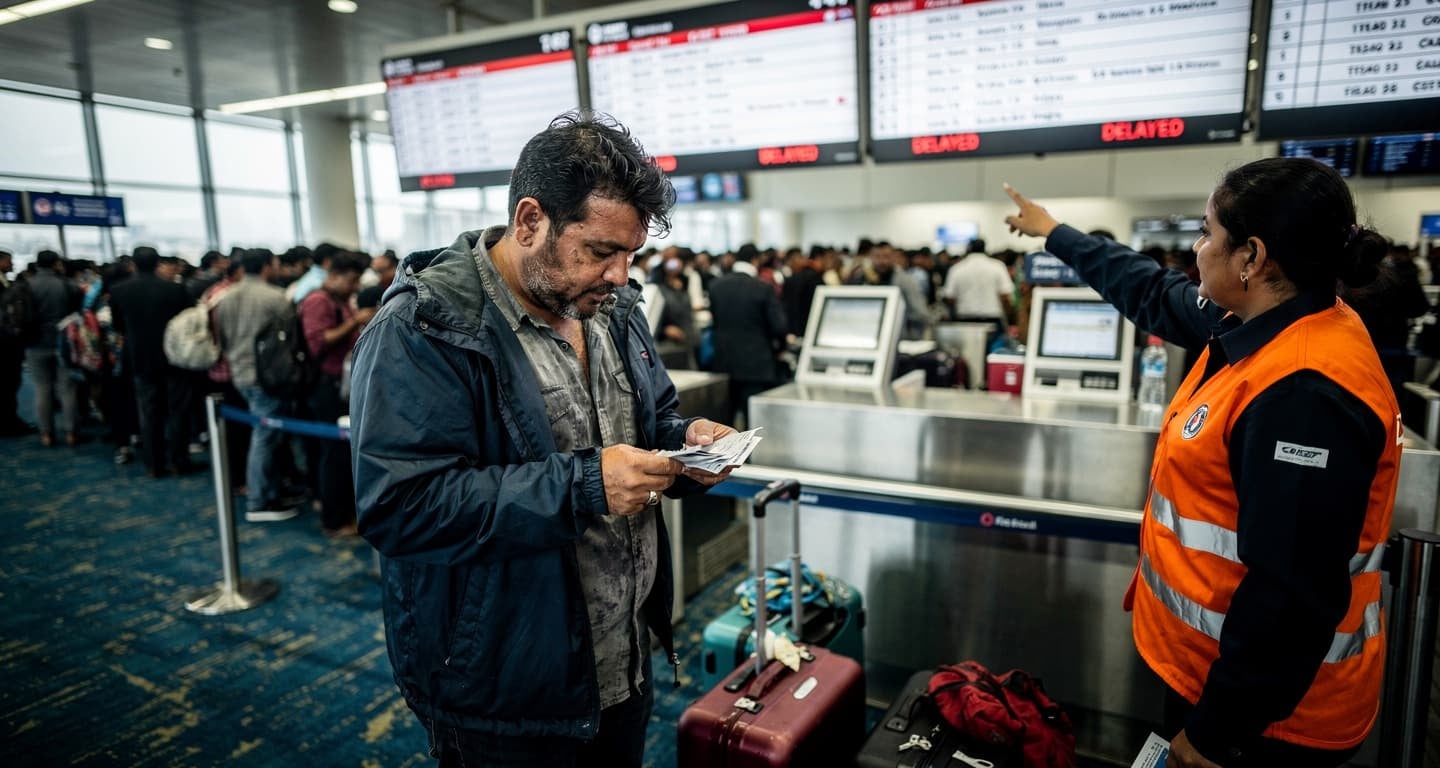
On this flight, she was never called for pre-boarding despite requesting it. Once seated on the Embraer regional jet, with her dogs stowed in a crate under the seat ahead of her, the flight attendant allegedly stood over her without warning, leaned into her face, and told her to get off the aircraft. No explanation was given. Mellon says she feared physical harm if she refused.
After being held in a waiting area — she says against her will — Mellon was told she could fly on the next departure. The condition: pay a $150 pet-in-cabin fee. She paid it. She had no legal obligation to do so. The lawsuit, filed in federal court, alleges ADA violations alongside intentional civil assault, battery, and false confinement.
What the law says — and what American has been told before
Under the Air Carrier Access Act (ACAA), codified at 14 CFR Part 382, U.S. carriers are prohibited from discriminating against passengers with disabilities. Airlines may refuse a service animal only if it is not harnessed, poses a direct safety threat, or behaves disruptively — none of which the lawsuit alleges occurred here. Carriers cannot require documentation proving a passenger’s disability itself, only the DOT service animal form. The U.S. Department of Transportation’s disability travel guidance makes this framework explicit.
American has been here before. In a 2017 consent order, the DOT found that American Airlines staff at Miami International Airport failed to properly document a passenger traveling with a service animal — a direct violation of 14 CFR 382.141. The order required American to cease the conduct and implement corrective training. That order is public record. The training it mandated was supposed to prevent exactly the kind of incident Mellon describes.
There is also a closer parallel. In October 2015, Army veteran Lisa McCombs was allegedly barred from flying with her PTSD service dog Jake on an American and Envoy Air itinerary. The disruption lasted days. American later apologized and reportedly offered first-class international tickets and flight reimbursement. That case drew public scrutiny of American’s service-animal training gaps — scrutiny that, a decade later, appears not to have fully resolved the underlying problem. ATC has previously reported on a separate 2026 federal lawsuit alleging American bumped a deaf mother’s son from a flight, suggesting a pattern of disability-related incidents now drawing sustained legal attention.
| Date | Event | Outcome |
|---|---|---|
| October 2015 | Army veteran Lisa McCombs allegedly denied boarding with PTSD service dog Jake on American/Envoy itinerary | American apologized; reportedly offered first-class international tickets and flight reimbursement |
| January 2017 | DOT consent order (Order 2017-1-11): American staff at Miami failed to document service animal travel, violating 14 CFR 382.141 | American ordered to cease violations and implement corrective training |
| January 2025 | Deaf mother’s son allegedly bumped from American flight; family filed federal lawsuit April 2026 | Lawsuit pending; ADA and disability discrimination claims active |
| January 3, 2026 | Melanie Mellon, 73, allegedly removed from Piedmont/American Eagle flight with two Bichon Frise service dogs; charged $150 pet fee | Federal lawsuit filed, Western District of Pennsylvania, case no. 1:26-cv-00103 |
Flight deals
most people never see
Our AI monitors 150+ airlines for pricing anomalies that traditional search engines miss. Air Traveler Club members save $650 per trip per person on average: see how it works.
Each deal saves 40–80% vs. regular fares:

A pattern American Airlines cannot keep calling isolated
The ACAA does not set automatic cash compensation for disability discrimination the way EU261/2004 does for delays. Mellon’s path to damages runs through federal court — ADA claims, intentional tort counts, and whatever a jury decides her ordeal was worth. The DOT can impose civil penalties and order corrective measures, but it does not write her a check. That asymmetry matters: it means airlines face less immediate financial pressure from individual disability incidents than from, say, a mass cancellation event.
What does create pressure is accumulation. Three federal lawsuits in roughly 18 months, a prior consent order, and a documented history of regional-carrier training gaps — that is the kind of record that surfaces in DOT enforcement reviews and, eventually, in analyst questions on earnings calls. The 2017 consent order was supposed to fix this. The fact that Mellon’s alleged experience mirrors the McCombs case almost point for point suggests the fix did not reach every crew member operating under the American Eagle banner.
Regional operations are the weak link. Mainline American crews operate under direct company oversight. Piedmont and Envoy crews operate under subsidiary management, with training that may not be updated at the same pace or depth. That structural gap — not malice at the corporate level — is likely where these incidents originate. It is also the gap the DOT will scrutinize if a formal enforcement action follows this lawsuit.
Steps to protect yourself on American Airlines flights with a service animal
American’s regional network is where documentation disputes are most likely to occur — and where resolution is slowest, because supervisors are fewer and turnaround pressure is highest.
- Complete the DOT form before you travel: Download the U.S. DOT Service Animal Air Transportation Form from aa.com’s service animals page, submit it electronically, and print a physical copy. Carry it with vet records and vaccination documentation — not in your checked bag.
- Request pre-boarding in writing: When you check in, ask the agent to note your pre-boarding request in your passenger name record (PNR). If you are not called at the gate, approach the podium before general boarding begins — do not wait.
- Know what airlines cannot ask: Under 14 CFR Part 382, staff may ask whether your animal is a service animal required for a disability and what task it performs. They cannot demand medical documentation proving your disability. If asked for anything beyond the DOT form, calmly state this rule.
- Call the disability assistance line immediately if challenged: American’s disability assistance number is listed under Special Assistance on aa.com. Call from the gate area, not after the fact — a live note in your record changes the dynamic.
- File a DOT complaint if denied: Submit a formal complaint at transportation.gov/airconsumer/file-consumer-complaint with specific times, staff names, and flight numbers. The DOT tracks complaint patterns — individual filings contribute to enforcement decisions.
Watch: Any DOT enforcement action or formal investigation linked to the Mellon lawsuit — if opened, it will signal whether regulators view this as an isolated crew failure or a systemic training deficiency across American’s regional network.

Questions? Answers.
Can American Airlines legally remove a passenger because a flight attendant dislikes their service animal?
Under 14 CFR Part 382, airlines may only refuse a service animal if it is not harnessed, poses a direct safety threat, or behaves disruptively. Personal objection by a crew member is not a lawful basis for removal. If the facts in the Mellon lawsuit are accurate, the removal would constitute a violation of the Air Carrier Access Act.
What compensation can a passenger get if wrongly removed with a service animal?
The ACAA does not set automatic cash compensation amounts the way EU261 does for flight delays. Passengers must file a DOT complaint — which can result in civil penalties against the airline — or pursue damages through federal court under the ADA or state tort law. There is no fixed payout schedule; outcomes depend on the specific facts and legal claims.
Does the DOT service animal form guarantee you can fly with your service animal?
No. The form is required documentation, but airlines retain the right to refuse animals that pose a direct safety threat or behave disruptively. What the form does is establish that you have met your documentation obligation — making any refusal based on crew preference or breed appearance legally indefensible under the ACAA.
Are Piedmont Airlines and Envoy Air subject to the same disability rules as mainline American?
Yes. Both are wholly owned American Airlines Group subsidiaries operating under the American Eagle brand, and both are bound by 14 CFR Part 382 as U.S. air carriers. The DOT’s 2017 consent order against American specifically addressed training failures at the carrier level — obligations that extend to its regional subsidiaries.