Quick summary
A passenger’s laptop ignited aboard American Airlines Flight 2398 on August 21, 2026, during final approach into Dallas Fort Worth International Airport. The Airbus A321, carrying 133 passengers from Atlanta, landed safely after flight attendants used a thermal containment bag to isolate the burning device. One passenger received on-site medical attention and was released.
The incident is a live demonstration of why the FAA requires lithium batteries to travel in the cabin rather than the hold. American Airlines’ own rules are stricter than the federal baseline — and most passengers don’t know that.
Thirty minutes from landing, a laptop in the cabin of American Airlines Flight 2398 went into thermal runaway. The pilot radioed air traffic control, requested an expedited approach, and asked for medical services on the ground. What followed was a textbook execution of the containment protocol the FAA has spent years building into US airline operations — and a reminder that the protocol exists because the alternative is far worse.
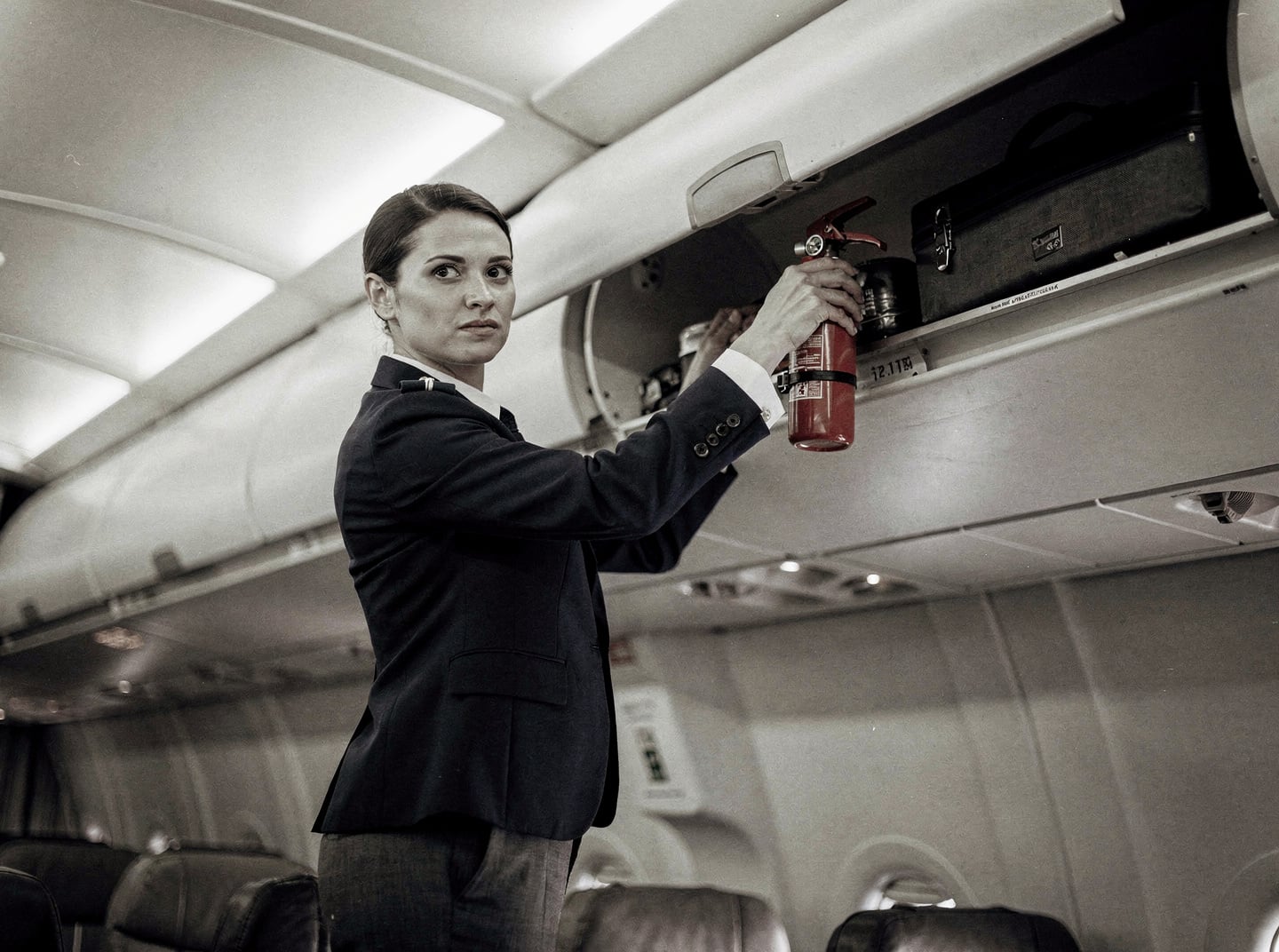
Flight attendants moved the burning device into the aisle and sealed it inside a thermal containment bag within roughly five minutes. The aircraft landed safely at Dallas Fort Worth International Airport on August 21, where firefighters boarded at the gate. The pilot had initially estimated four to five injuries; American Airlines later confirmed a single passenger received on-site care and was released.
The FAA has documented dozens of lithium-battery incidents on US aircraft in 2026 involving smoke, fire, or excessive heat. This one, on a routine Atlanta–Dallas domestic run, is the clearest recent illustration of both the hazard and the response system designed to contain it.
What the FAA rules actually require — and where American goes further
The FAA’s rationale for keeping lithium batteries out of checked baggage is straightforward: a fire in the cargo hold is invisible to the crew until it’s catastrophic. A fire in the cabin can be seen, reported, and fought. The FAA’s PackSafe guidance requires spare lithium batteries and portable chargers to travel in carry-on baggage. Laptops may go in carry-on bags and, under specific conditions, in checked luggage — but only if protected from accidental activation or damage.
Battery size determines what’s allowed at all. The FAA’s passenger battery page sets the ceiling at 160 Wh; batteries between 101 and 160 Wh require carrier approval, and anything above 160 Wh is banned outright. Standard laptop batteries typically fall well below 100 Wh, but high-capacity power banks can push into the approval zone.
American Airlines caps passengers at two portable chargers per person, each no larger than 100 Wh, and bars all lithium batteries from checked bags — a stricter position than the FAA baseline on both counts. The airline’s restricted-items page is the authoritative reference before any American flight.
| Battery type / size | FAA rule | American Airlines rule | Practical impact |
|---|---|---|---|
| Laptop (typically <100 Wh) | Carry-on preferred; checked bag allowed with protections | Carry-on only recommended; checked bag allowed with protections | Keep laptop in cabin during flight |
| Portable charger / power bank (0–100 Wh) | Carry-on only; checked bag banned | Carry-on only; max 2 per passenger; checked bag banned | American’s 2-unit cap is stricter than FAA |
| High-capacity battery (101–160 Wh) | Carry-on only; carrier approval required | Carry-on only; carrier approval required | Contact American before travel |
| Large battery (>160 Wh) | Banned entirely | Banned entirely | Cannot board any US commercial flight |
Flight deals
most people never see
Our AI monitors 150+ airlines for pricing anomalies that traditional search engines miss. Air Traveler Club members save $650 per trip per person on average: see how it works.
Each deal saves 40–80% vs. regular fares:

Why a cabin fire during descent is a different kind of problem
Thermal runaway — the chain reaction inside a lithium cell that produces intense heat, toxic smoke, and sometimes open flame — can be triggered by physical damage, a manufacturing defect, overheating, or improper packing. The FAA has catalogued the failure mode extensively, and the containment bag now standard on US airliners exists specifically because dousing a lithium fire with water can accelerate it rather than suppress it.
The timing of the Flight 2398 incident sharpens the risk picture. During final approach, the crew is managing altitude, speed, and ATC communications simultaneously. Five minutes to isolate a burning device — which is roughly what happened here — is a fast response under any circumstances. It’s a compressed one when the aircraft is minutes from the runway.
There’s also a gap most passengers don’t think about: what the FAA permits and what a specific airline allows are not the same thing. American’s two-charger cap is the clearest example. A traveler who boards with three power banks has technically violated American’s policy before the aircraft pushes back — and that’s before any question of battery condition arises.
How to pack and fly with lithium devices safely
The Flight 2398 incident confirms that thermal runaway can happen on any flight, on any device — and that crew response time shrinks to near zero during the final minutes of descent.
- Keep all lithium batteries in your carry-on, not your checked bag. This applies to laptops, phones, power banks, and spare batteries. If the device is in the hold and it ignites, the crew cannot reach it.
- Check American Airlines’ restricted-items page before flying. The two-charger, 100 Wh cap is stricter than FAA rules. Passengers carrying more than two power banks are in violation of airline policy regardless of battery size.
- Inspect batteries before travel. Swollen, cracked, or previously overheated batteries are the most common precursors to thermal runaway. A battery that looks damaged should not board a plane.
- Report heat or smoke immediately. Do not move a device to another seat or stow it in an overhead bin if it starts warming abnormally. Alert the crew — they have containment equipment you don’t.
- Keep devices accessible during flight. A laptop buried under clothing in an overhead bin is harder to retrieve and isolate quickly. Stow it where you can reach it in seconds.
Watch: The FAA has not yet issued a specific advisory on laptop batteries following this incident. If the agency updates its PackSafe guidance or American Airlines revises its restricted-items policy in the coming weeks, that will signal whether regulators view this as an isolated event or part of a pattern requiring new passenger-facing rules.

Questions? Answers.
Why can’t lithium batteries go in checked baggage?
A fire in the cargo hold is invisible to the crew and can grow unchecked until it breaches the aircraft structure. A fire in the cabin can be seen, reported, and fought with containment equipment. The FAA’s carry-on requirement exists specifically to keep the crew in the response loop.
What is thermal runaway and what causes it?
Thermal runaway is a self-reinforcing chemical reaction inside a lithium cell that generates intense heat, toxic smoke, and sometimes open flame. It can be triggered by physical damage to the battery, manufacturing defects, overheating from external sources, or improper packing that puts pressure on the cells. Once started, it is difficult to stop with conventional fire suppression methods.
Does American Airlines allow power banks in carry-on bags?
Yes, but with stricter limits than the FAA baseline. American Airlines allows a maximum of two portable chargers per passenger in carry-on baggage, each capped at 100 Wh. Power banks are banned from checked baggage entirely. Passengers carrying more than two units or units above 100 Wh are in violation of American’s policy.
What should I do if my device overheats on a flight?
Alert the flight crew immediately. Do not move the device to another part of the cabin or attempt to stow it. Flight attendants on US airliners carry thermal containment bags designed to isolate overheating devices — they are trained to handle this situation. Trying to manage it yourself delays the crew’s response.