Quick summary
A passenger’s laptop battery ignited during the final approach of American Airlines flight 2398 from Atlanta to Dallas-Fort Worth on August 21, 2026, with cabin crew deploying a thermal containment bag to isolate the burning device. One of the 133 people on board received treatment for minor burns at the gate and was released without hospitalization. The FAA logged 93 lithium-battery incidents in US airspace in 2025, and at least 56 more in the first portion of 2026 — a pace that has already driven new global rules on power banks.
ICAO’s two-power-bank cabin limit took effect in March 2026, but individual carrier policies vary sharply. What’s allowed on one airline can get your device confiscated at the gate of another.
American Airlines confirmed that one passenger aboard flight 2398 was treated for minor burns after a laptop battery caught fire during descent into Dallas-Fort Worth on August 21, 2026. The Airbus A321, operating the Atlanta–DFW corridor, landed safely and taxied to its gate with medical staff waiting on the ramp.
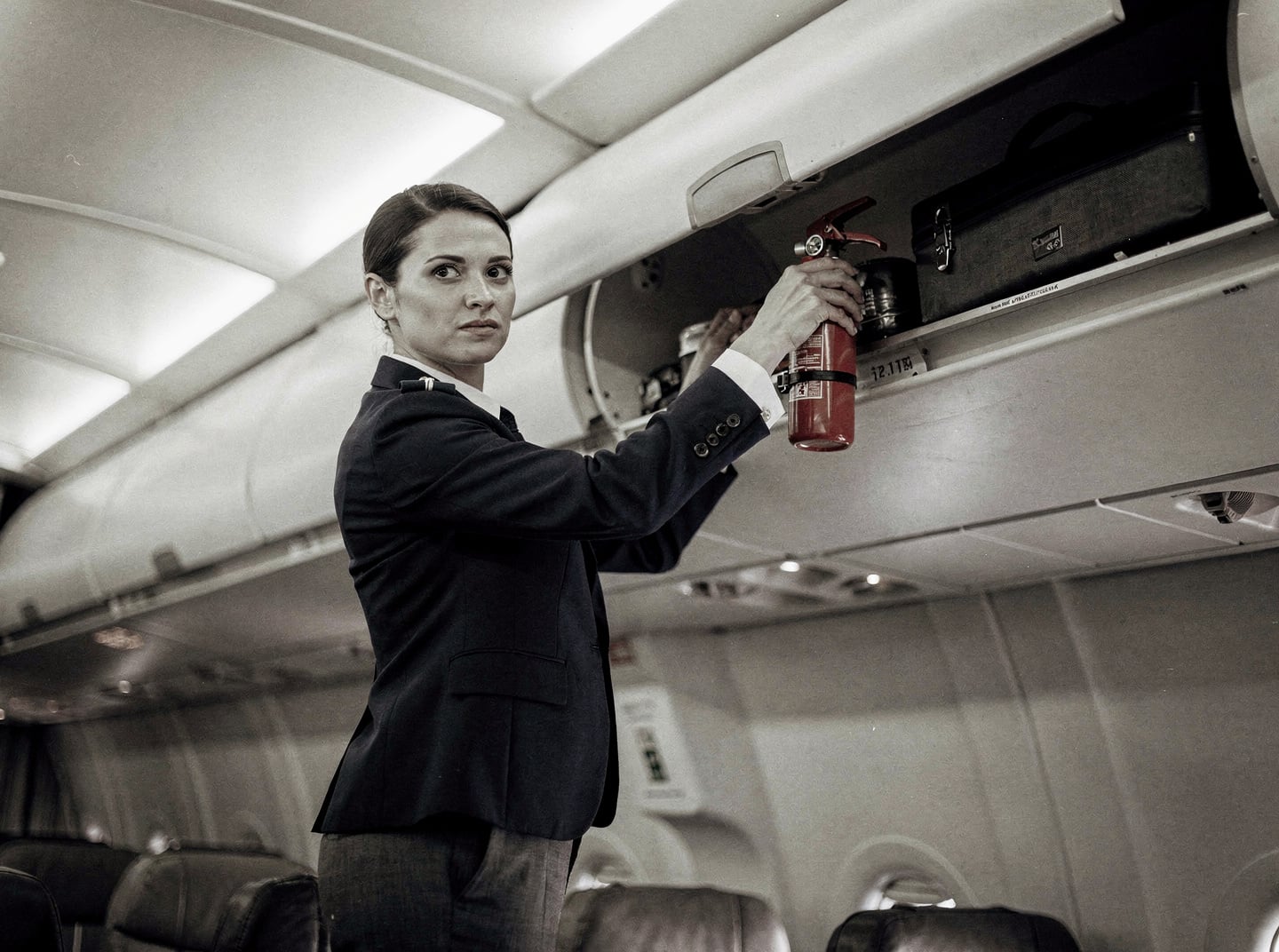
Cabin crew contained the fire using a thermal containment bag — equipment that has become standard on US carriers precisely because incidents like this one are no longer rare. The passenger was released without hospitalization.
The event lands against a backdrop of accelerating numbers. The FAA’s own lithium-battery incident tracking recorded 93 smoke, fire, or extreme-heat events in US airspace across 2025, with at least 56 more documented in the early months of 2026. At that pace, this year is on track to exceed last year’s total before summer ends.
For travelers carrying power banks, laptops, or spare batteries on any US domestic or international itinerary, the rules governing those devices have quietly tightened — and the gap between what different airlines permit is now wide enough to matter at the boarding gate.
What happened on flight 2398 — and what the numbers say
The battery failure occurred during the landing approach, roughly the worst possible phase of flight for a cabin emergency: the crew is preparing for touchdown, passengers are seated with belts fastened, and diverting to an alternate airport adds significant complexity. Flight attendants identified the overheating device, secured it in a thermal containment bag, and kept the aircraft on its original approach. The A321 landed without incident.
American Airlines confirmed the passenger received medical attention at the airport and was subsequently released. The airline has not disclosed the laptop’s make or model, and the precise cause of the battery failure — manufacturing defect, physical damage, or age-related degradation — remains under review.
| Period | Documented incidents | Incident type |
|---|---|---|
| Full year 2025 | 93 | Smoke, fire, or extreme heat from lithium batteries |
| Early 2026 (partial year) | At least 56 | Smoke, fire, or extreme heat from lithium batteries |
| August 21, 2026 | AA flight 2398 (ATL–DFW) | Laptop battery fire, thermal containment bag deployed |
The FAA’s lithium-battery incidents database tracks these events in near real-time and is the primary public record for US airspace. The 2026 partial-year figure already represents more than half of 2025’s full-year count.
On the regulatory side, ICAO‘s Addendum No. 1 to its 2025–2026 Technical Instructions — effective March 2026 — sets a global baseline: passengers may carry a maximum of two power banks, both must travel as hand baggage, and neither may be recharged while the aircraft is in the air. The full ICAO addendum is publicly available and gives airlines the framework to enforce stricter house rules on top of the international floor.
Flight deals
most people never see
Our AI monitors 150+ airlines for pricing anomalies that traditional search engines miss. Air Traveler Club members save $650 per trip per person on average: see how it works.
Each deal saves 40–80% vs. regular fares:

Why the same power bank can fly on one airline and get confiscated on the next
ICAO sets the floor; airlines build the ceiling. That gap is where travelers get caught.
American Airlines now caps passengers at two portable chargers per person, each under 100 Wh, and requires them to remain within reach — not stowed in overhead bins, not used to recharge other devices mid-flight. The policy is detailed on AA’s restricted-items page, though CBS News reported the two-power-bank cap as a specific recent addition. Southwest Airlines goes further, limiting passengers to a single power bank. Several carriers in Asia and the Middle East have banned onboard use entirely.
The practical consequence: a traveler with two 20,000 mAh power banks is compliant on American but non-compliant on Southwest before they’ve even checked in. On certain Asian carriers, both devices stay in the bag — or stay at the gate.
The January 2025 Air Busan A321 ground fire illustrates what’s at stake when containment fails. South Korean investigators, as reported by the Straits Times, traced the blaze to a power bank with failed internal insulation — scorch marks on the device debris identified it as the ignition point. The aircraft was destroyed, though all passengers and crew evacuated safely. That finding reinforced a principle now embedded in global guidance: high-energy batteries belong in the cabin, within crew sight, not buried in overhead bins or checked luggage where a thermal event goes undetected until it’s structural.
Steps to take before your next flight with lithium devices
The AA2398 incident confirms that thermal containment equipment and crew training can manage an in-flight battery fire — but the better outcome is not needing either. Carrier rules are tightening faster than most travelers realize.
- Check your airline’s power bank limit before packing. ICAO’s two-bank cap is the international floor, not the universal rule. Southwest allows one; some Asian carriers ban use entirely. Verify at the carrier’s baggage or restricted-items page, not a third-party summary.
- Keep all lithium devices in your carry-on, within reach. Checked bags are prohibited for spare batteries and power banks under virtually every major carrier’s policy. Overhead bins are now off-limits for power banks on American Airlines. Seat pocket or under-seat bag is the correct location.
- Do not charge devices during boarding or taxi. ICAO’s addendum explicitly prohibits in-flight recharging of power banks. Several carriers extend this to the full ground phase. A charging cable plugged in during an emergency evacuation is a hazard — to you and to the crew.
- If a device overheats, tell a flight attendant immediately — do not move it yourself. FAA guidance emphasizes keeping the device in place and alerting crew, who have thermal containment bags and training. Moving a burning battery spreads the risk.
- For connecting itineraries through Asia or the Middle East, verify each segment separately. A power bank that clears US boarding may be confiscated at a transfer gate in a hub where the local carrier applies stricter rules. Air Traveler Club’s tracking occasionally flags airline policy updates and promotions across 150+ carriers, including Asian operators with active power bank restrictions.
Watch: The FAA’s 2026 incident count — updated on its lithium-battery tracking page — will determine whether the agency moves toward mandatory thermal containment bag requirements or formal power bank quantity limits beyond ICAO’s current baseline. If the 2026 total exceeds 2025’s 93 incidents before year-end, expect a formal rulemaking notice.

Questions? Answers.
Are power banks allowed on American Airlines flights in 2026?
American Airlines permits up to two portable chargers per passenger, each under 100 Wh, carried in the cabin within reach. They cannot be stored in overhead bins or used to recharge other devices during the flight. Spare batteries between 100–160 Wh require airline approval and are capped at two per person.
What is ICAO’s new power bank rule effective March 2026?
ICAO’s Addendum No. 1 to its 2025–2026 Technical Instructions limits each passenger to a maximum of two power banks, requires them to be carried as hand baggage only, and prohibits recharging power banks while on board. Individual airlines may impose stricter limits on top of this international baseline.
What should I do if a battery catches fire on a plane?
Do not attempt to move the device. Alert a flight attendant immediately. Cabin crew are trained to handle lithium-battery fires as hazmat events and carry thermal containment bags designed to isolate the device. FAA guidance emphasizes keeping the battery in place and cooling it with non-alcoholic liquid only if crew direct you to do so.
How many lithium-battery incidents have occurred on US flights?
The FAA recorded 93 documented incidents involving smoke, fire, or extreme heat from lithium batteries in US airspace during 2025. At least 56 more were logged in the early months of 2026, putting the year on pace to exceed the prior year’s total. The FAA maintains a public incident database updated on an ongoing basis.