Quick summary
An American Airlines flight was deplaned at midnight after passengers had already boarded, when the pilot reportedly declared fatigue and removed himself from duty. Under FAA regulations, that declaration immediately obligates the airline to pull the pilot from the assignment — the flight cannot legally depart. With no replacement crew available at that hour, the entire aircraft was offloaded. A viral video of the incident has drawn over 216,000 views, reigniting debate about late-night scheduling and airline staffing margins.
The passenger who filmed the incident noted the pilot had landed a flight the day before, and that another pilot was reportedly upset with him — suggesting the situation may have involved more than fatigue alone. FAA rules require at least 10 consecutive hours of rest between duty periods, with a minimum of 8 hours of uninterrupted sleep.
Everyone was seated. The doors were closed. Then, just before midnight, American Airlines told a full planeload of passengers to get off.
The reason, according to a passenger who posted video to TikTok: the pilot was too fatigued to fly. The clip went viral almost immediately, accumulating over 216,400 views and splitting viewers between outrage at the timing and respect for the pilot’s call. Both reactions are understandable. Neither changes what the FAA requires.
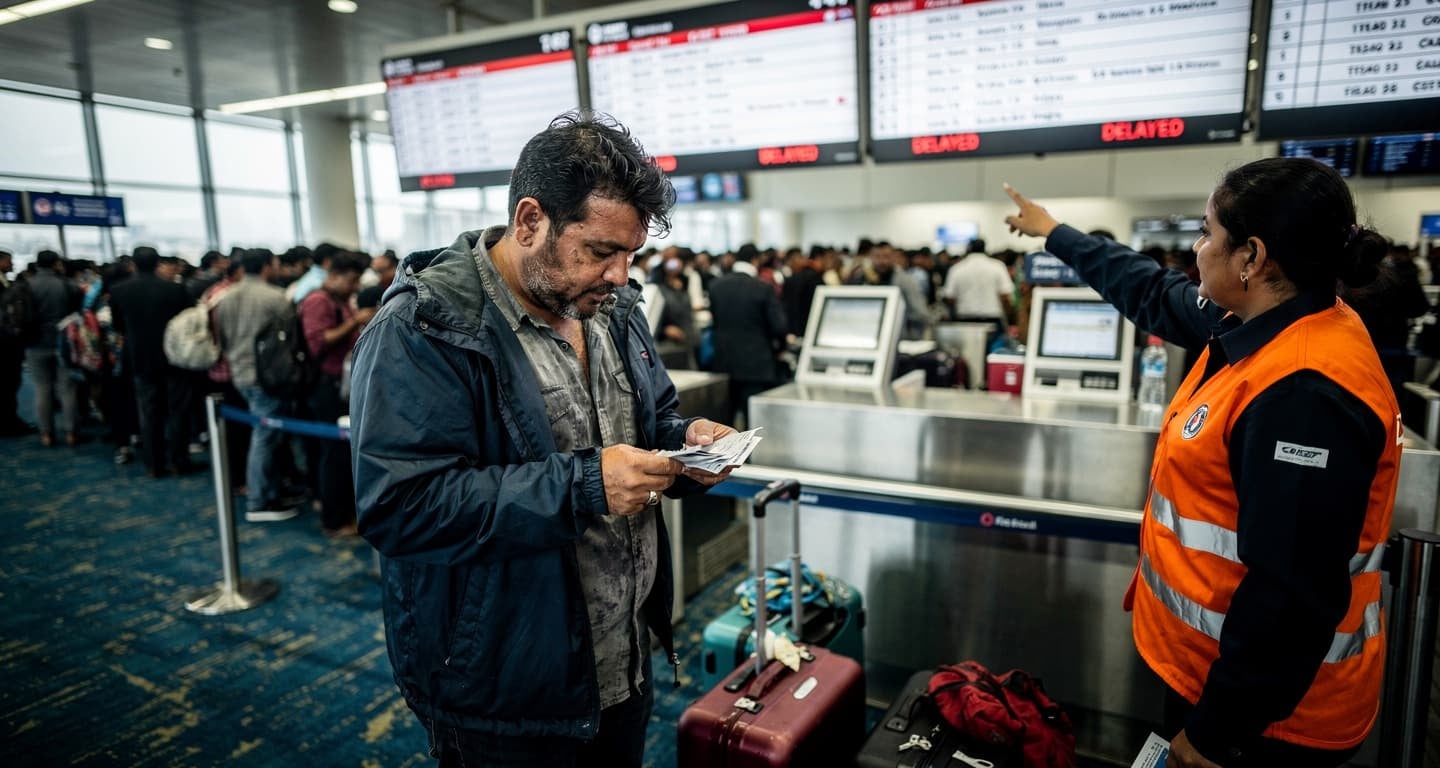
When a pilot declares fatigue, the airline has no legal path forward. Federal regulations under 14 CFR Part 117 and related Part 121 rules prohibit the carrier from allowing that pilot to operate — full stop. Finding a legal, rested replacement at midnight, at an outstation with limited standby crews, is often impossible. The result is exactly what these passengers experienced: everyone off the plane, connections missed, and a scramble for hotel rooms and rebooking options that may not exist until morning.
The passenger who filmed the incident, posting under the handle @ihurrrrr, captured the frustration precisely: “POV: American Airlines boards the whole plane, decides at midnight to offload you because the pilot was sleepy.” In follow-up comments, she added that the pilot had landed a flight the day before and that another crew member was reportedly upset with him — leaving open the question of whether this was a straightforward fatigue call or something more complicated. American Airlines has not issued a public statement on the incident.
What FAA fatigue rules actually require — and why replacement is so hard
FAA regulations set hard floors on pilot rest. Under current rules, pilots must receive at least 10 consecutive hours of rest before a duty period, with a protected window of at least 8 hours of uninterrupted sleep. The US Department of Transportation has confirmed in congressional testimony that pilots are also capped at 30 flight hours in any 7 consecutive days and must receive at least 24 consecutive hours of rest within that same window. These are not targets — they are legal ceilings.
Critically, the FAA places the fitness-for-duty assessment on the pilot, not just the airline. If a pilot believes fatigue could impair safe operation, that concern must be addressed before the flight proceeds. The FAA has stated explicitly that a fatigued pilot must be removed from duty and allowed to rest — making continued operation of the flight impermissible regardless of how many passengers are already seated.
| Rule | Requirement | Practical impact |
|---|---|---|
| Minimum rest between duty periods | 10 consecutive hours | Pilot cannot report for duty until full rest window is complete |
| Protected sleep opportunity | 8 hours uninterrupted | Rest period must allow full sleep, not just time off |
| Maximum flight hours (7-day window) | 30 hours | Cumulative cap — cannot be waived by airline or pilot |
| Consecutive rest in 7-day period | 24 consecutive hours | At least one full day off per week, non-negotiable |
| Pilot self-assessment obligation | Fitness for duty before each flight | Pilot must decline to operate if fatigued — airline cannot override |
What makes late-night incidents like this one particularly disruptive is the staffing reality. Reserve pilots — the standby crew members airlines use to cover unexpected gaps — are finite resources, and their availability drops sharply after 10 p.m. at smaller stations. This is not a policy failure. It is the system working as designed, prioritizing safety over schedule. But that distinction offers cold comfort to passengers who missed a connection or slept on an airport floor.
This incident is not isolated to fatigue. American Airlines has faced scrutiny over other in-flight crew decisions recently — including a separate case in which the airline was found to have served eight drinks to a visibly intoxicated passenger, violating federal alcohol service regulations. The pattern points to operational pressure on crews across multiple fronts.
Flight deals
most people never see
Our AI monitors 150+ airlines for pricing anomalies that traditional search engines miss. Air Traveler Club members save $650 per trip per person on average: see how it works.
Each deal saves 40–80% vs. regular fares:

The regulatory system worked — but passengers still paid the price
Here is the uncomfortable truth about this incident: the outcome was correct. A pilot who believed he was too fatigued to fly safely removed himself from duty. Passengers were inconvenienced. No one was put at risk at 35,000 feet. That is the trade-off the FAA’s fatigue framework was designed to enforce, and it held.
The frustration — and it is legitimate — is about timing and transparency, not the decision itself. The passenger’s own comment captures it: why did the pilot board the aircraft before declaring fatigue? Why wasn’t this resolved before passengers were seated for over an hour? Those are fair operational questions, and they point to a structural issue: airlines scheduling late-night rotations with minimal slack, where a single crew change has no recovery path.
Under US domestic rules, there is no federal requirement for cash compensation when a flight is canceled due to crew availability or fatigue. The DOT Airline Customer Service Dashboard shows some carriers voluntarily commit to meals or hotels for controllable cancellations — but a safety-based fatigue call may be classified as a non-compensable operational disruption. For travelers departing from the EU or UK on a US carrier, EU261/UK261 compensation generally does not apply to flights operated by US airlines traveling to, not from, Europe.
Steps to protect your trip if a crew fatigue issue grounds your flight
Late-night American Airlines departures — particularly last-flight-of-day rotations — carry elevated exposure to crew-fatigue disruptions, where replacement options are scarcest and recovery time is shortest.
- Act on your phone before the gate queue forms. The moment deplaning is announced, open the American Airlines app or aa.com and search same-day alternatives. Gate agents are managing dozens of passengers simultaneously — having a rebooking option already identified puts you ahead of the line.
- Ask specifically about interline rebooking. If no AA options remain that night, ask gate staff whether the airline will rebook you onto a partner or competing carrier. This is not guaranteed, but it is worth requesting directly — agents have more discretion than the app suggests.
- Request hotel and meal vouchers in writing. If you face an overnight delay, ask whether courtesy vouchers are available and confirm your rebooked itinerary and baggage handling via the app or a printed receipt. Verbal confirmations at midnight are easy to lose.
- Build buffer into late-night bookings going forward. Avoid scheduling critical events — job interviews, medical appointments, cruise departures — within 12 hours of a last-flight-of-day arrival. Enable push alerts in the AA app so any crew or status change reaches you before you’ve left for the airport.
- Know your compensation position. For US domestic flights, federal law does not mandate cash compensation for crew-related cancellations. Check the DOT Airline Customer Service Dashboard for AA’s voluntary commitments, and document everything if you intend to file a complaint.
Watch: Any FAA Safety Alert or revision to flightcrew rest guidance published on faa.gov in the next 6–12 months would signal tighter oversight — and could push American Airlines and peers to add reserve pilot capacity on late-night rotations. If no new FAA guidance materializes, expect carriers to rely on existing Part 117 frameworks, keeping current operational patterns largely intact.

Questions? Answers.
Is American Airlines required to compensate passengers when a flight is deplaned due to pilot fatigue?
Under US federal law, there is no mandatory cash compensation for cancellations or delays caused by crew availability or fatigue. The DOT focuses on disclosure and enforcement of unfair practices rather than mandated payments. American Airlines may offer meal vouchers or hotel accommodation as a courtesy for controllable disruptions, but a safety-based fatigue call can be classified as non-compensable. Document your expenses and file a complaint with the DOT if you believe the airline’s response was inadequate.
Can an airline legally force a fatigued pilot to fly?
No. FAA regulations explicitly prohibit an airline from allowing a pilot who has declared fatigue to operate an aircraft. The pilot has an independent legal obligation to assess their own fitness for duty and must decline to fly if fatigued. The airline cannot override that declaration — doing so would violate federal safety regulations under Part 121 and Part 117.
Why wasn’t a replacement pilot found before passengers boarded?
Crew scheduling decisions are made in real time, and fatigue declarations can occur at any point before or during boarding. At late-night departures — particularly at smaller stations — reserve pilot availability is limited. Once a pilot declares fatigue after boarding has begun, the airline must locate a legal, rested replacement, which may simply not exist at that hour. The result is deplaning, not a scheduling failure that could have been caught earlier in every case.
Does EU261 compensation apply if this happened on a flight to Europe?
Generally, no. EU261/UK261 compensation applies to flights departing from EU or UK airports, or to flights arriving in the EU/UK operated by an EU/UK carrier. An American Airlines flight operated by a US carrier traveling to Europe — not departing from it — falls outside EU261 protections for most passengers. Travelers departing from an EU airport on any carrier would have stronger grounds to claim.