Quick summary
American Airlines‘ automated rebooking system, known internally as AURA (AUtomated ReAccommodation), gave away confirmed seats on a Miami–Boston flight on May 3, 2026 — even as passengers stood at the gate with boarding passes, with boarding still underway. The system predicted a misconnect on their inbound leg and released their seats before they actually missed anything. One passenger missed a wedding as a result.
Gate agents refused to override the closure or provide documentation. Under US DOT rules, passengers denied boarding involuntarily are entitled to compensation — but the airline must offer it at the airport, and many passengers don’t know to demand it.
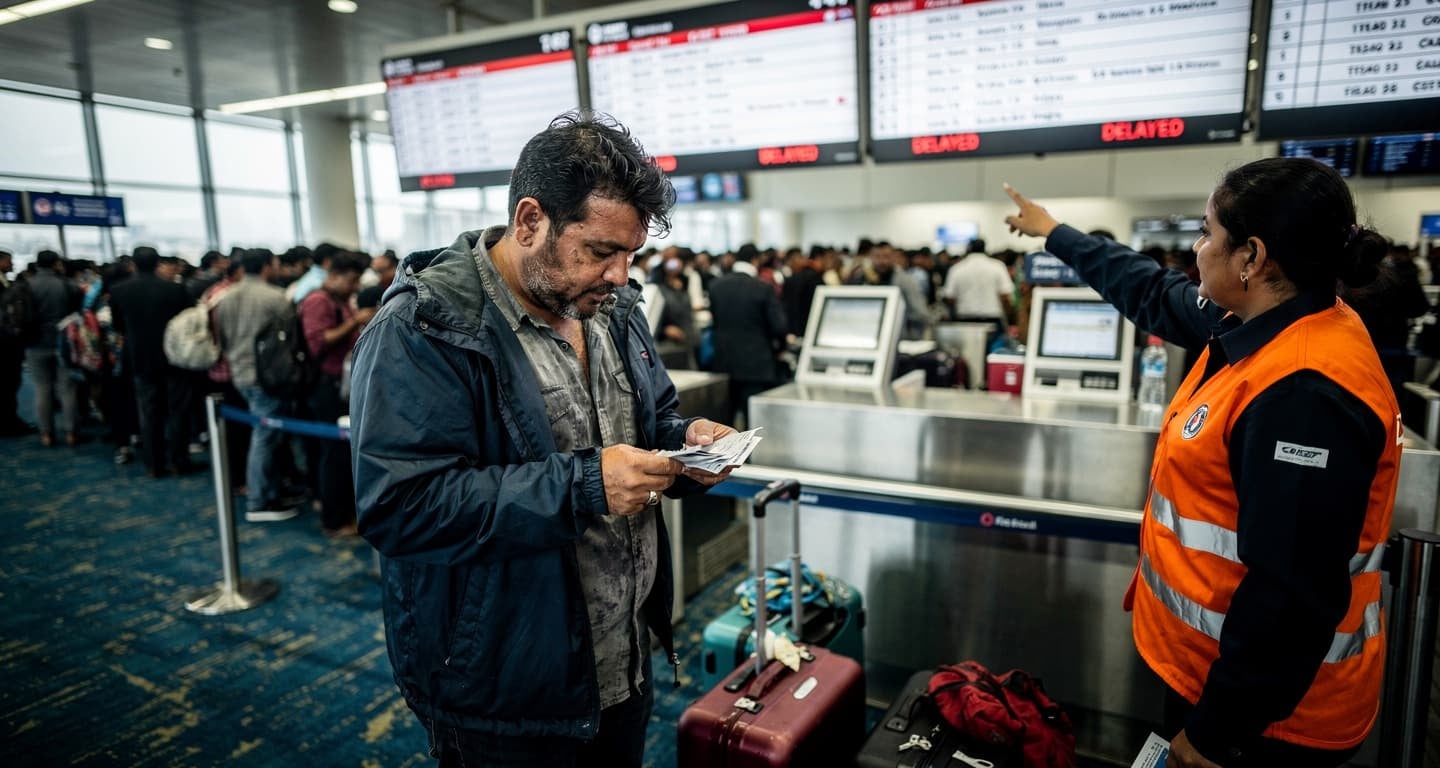
Two women arrived at their Miami International Airport gate for a domestic flight to Boston on May 3, 2026 — on time, checked in, boarding passes in hand, with other passengers still walking down the jetbridge. The gate agent turned them away. The flight, she said, was closed.
It wasn’t a weather event. It wasn’t an oversale in the traditional sense. American Airlines‘ own algorithm had already decided these passengers weren’t coming — and handed their seats to someone else before they had a chance to prove it wrong. One of those women missed a wedding because of it.
The incident, first described publicly by a witness at the gate, drew several hundred thousand views within 24 hours and reignited a long-running debate about what happens when airline automation gets it wrong. The gate agent offered no documentation, no compensation, and no explanation beyond “the flight was closed” — then walked away.
This is not a freak occurrence. It is a known, documented behavior of American‘s AURA system, and it has a paper trail going back years. What’s new is the visibility — and the wedding that won’t be attended.
How AURA works — and where it breaks down
American Airlines rolled out AURA several years ago to automate the rebooking of passengers whose inbound flights are delayed or cancelled. The system uses what an internal memo describes as “discovered inventory” — identifying passengers it calculates are certain to misconnect and releasing their onward seats to protect other travelers who need that space.
On paper, this reduces chaos at the gate and cuts the volume of manual rebooking calls. In practice, it occasionally strips confirmed seats from passengers who beat the odds and make their connection anyway. The algorithm doesn’t update fast enough — or at all — when a passenger sprints through the terminal and arrives before the door closes.
American‘s Conditions of Carriage Rule 7 requires passengers to be at the gate at least 15 minutes before departure for domestic flights to retain their seat. These passengers met that standard. The system had already acted regardless.
| Scenario | Delay to destination | DOT compensation owed | Deadline for airline to pay |
|---|---|---|---|
| Involuntary bump, rebooked within 1 hour of original arrival | Under 1 hour | No compensation required | N/A |
| Involuntary bump, rebooked 1–2 hours after original arrival | 1–2 hours | 200% of one-way fare, up to $775 | At airport same day (or within 24 hours) |
| Involuntary bump, rebooked more than 2 hours after original arrival | Over 2 hours | 400% of one-way fare, up to $1,550 | At airport same day (or within 24 hours) |
| Passenger late to gate (under 15 min pre-departure) | Any | No compensation — Rule 7 applies | N/A |
The passengers in Miami appear to meet every threshold for involuntary denied boarding compensation under US DOT Fly Rights rules: confirmed reservation, checked in, assigned seats, physically at the gate before the 15-minute cutoff, and refused boarding while the door was still open. American is required to offer compensation at the airport on the same day — or within 24 hours if alternative transport was arranged too quickly to do so on the spot.
Critically, 14 CFR Part 250 — the federal regulation governing denied boarding — lists specific exceptions to compensation requirements. “Our algorithm predicted a misconnect” is not one of them. This is not a gray area.
This incident isn’t isolated. It is part of a pattern that has been documented repeatedly since AURA‘s rollout — and this is far from the first time American Airlines has faced scrutiny over how it treats passengers its systems have already written off. A federal lawsuit filed in April 2026 alleged the carrier bumped a 4-year-old from a flight after learning his mother is deaf, with a ticket agent allegedly lying about an oversale — a separate but telling pattern of gate-level accountability failures.
Flight deals
most people never see
Our AI monitors 150+ airlines for pricing anomalies that traditional search engines miss. Air Traveler Club members save $650 per trip per person on average: see how it works.
Each deal saves 40–80% vs. regular fares:

The compensation gap most passengers never close
US DOT rules updated in 2024 set involuntary denied boarding compensation at 400% of the one-way fare, up to $1,550, when the airline cannot rebook a passenger within two hours of the original arrival time on a domestic flight. Airlines are required to solicit volunteers before bumping anyone involuntarily — and must offer compensation at the airport, in cash or check, on the same day.
The problem is enforcement. American has a documented pattern of initially ignoring compensation requests from passengers who don’t know the rules or don’t escalate correctly. A gate agent saying “the flight is closed” and walking away is not a legal substitute for the written compensation notice airlines are required to provide. Passengers who accept a rebooked flight without demanding documentation often forfeit their right to the full amount.
Filing a complaint directly with the DOT at transportation.gov/airconsumer is the most effective escalation path — it routes the case to someone with authority, rather than a front-line script. Credit card protections add a secondary layer: Chase Sapphire Reserve covers missed connections up to $500 per person when a ticketed connection is delayed more than 12 hours due to airline fault; Amex Platinum covers trip delay expenses over six hours up to $500 per trip.
Steps to take if AURA has already acted on your booking
If American‘s system has released your seat — or you’re at risk of it happening — the window to act is narrow and the sequence matters.
- Demand written documentation at the gate: Airlines are legally required to provide a written statement of denied boarding compensation. Do not leave the gate area without it. If the agent refuses, note their name and the exact time on your phone.
- Do not accept a rebooked flight without asking about compensation first: Accepting a new boarding pass does not waive your right to denied boarding compensation — but it can complicate your claim. Ask explicitly: “Am I being involuntarily denied boarding? What compensation am I owed?”
- File a DOT complaint the same day: Go to transportation.gov/airconsumer and file with gate photos, boarding pass screenshots, and timestamps. DOT complaints create a formal record and trigger airline response within 60 days.
- Check your credit card benefits: Chase Sapphire Reserve missed connection coverage and Amex Platinum trip delay coverage both apply here — file within 60 days of the incident through your card’s benefits portal.
- Escalate inside AA if initial response is a form letter: Request escalation to the Customer Relations team specifically — not the general support queue. Reference 14 CFR Part 250 by name in your written complaint. Airlines respond differently when passengers cite the regulation.
Watch: The DOT complaint filing dashboard update expected around May 10, 2026 — if it shows a surge in American Airlines denied boarding reports, it triggers a formal enforcement inquiry. American‘s Q2 earnings call on July 23, 2026 is the next signal: any mention of “connection algorithm review” indicates policy changes are coming. Silence means nothing has changed.

Questions? Answers.
Can American Airlines legally give away your seat if their system predicts you’ll miss a connection?
American‘s AURA system does release seats based on predicted misconnects — but if you arrive at the gate on time with a valid boarding pass and are refused boarding, that constitutes involuntary denied boarding under federal law. 14 CFR Part 250 does not include an algorithmic prediction as a valid exception to compensation requirements. The airline cannot legally avoid compensation by pointing to its own system’s decision.
How much compensation are you owed if American Airlines bumps you involuntarily on a domestic flight?
Under current US DOT rules, if you are involuntarily denied boarding and the airline cannot rebook you within two hours of your original arrival time, you are owed 400% of your one-way fare, up to $1,550. For delays of one to two hours, the amount is 200% of the one-way fare, up to $775. The airline must offer this at the airport on the same day — or within 24 hours if alternative transport was arranged immediately.
What if the gate agent refuses to provide documentation or compensation?
Document everything — agent name, exact time, gate number, and any witnesses. File a complaint immediately at transportation.gov/airconsumer. DOT complaints create a formal record and require a written airline response. Separately, check whether your credit card’s missed connection or trip delay benefit applies — Chase Sapphire Reserve and Amex Platinum both cover qualifying airline-caused disruptions.
Does this only affect Miami connections, or can AURA act on any American Airlines itinerary?
AURA operates across American Airlines‘ network — it is not limited to Miami International. Any connecting itinerary where the inbound flight is delayed enough for the system to flag a predicted misconnect is potentially affected. Tight connections at major hubs including Dallas/Fort Worth, Charlotte Douglas, and Philadelphia carry the same risk. The 90-minute connection buffer is the most reliable protection currently available to passengers.