Quick summary
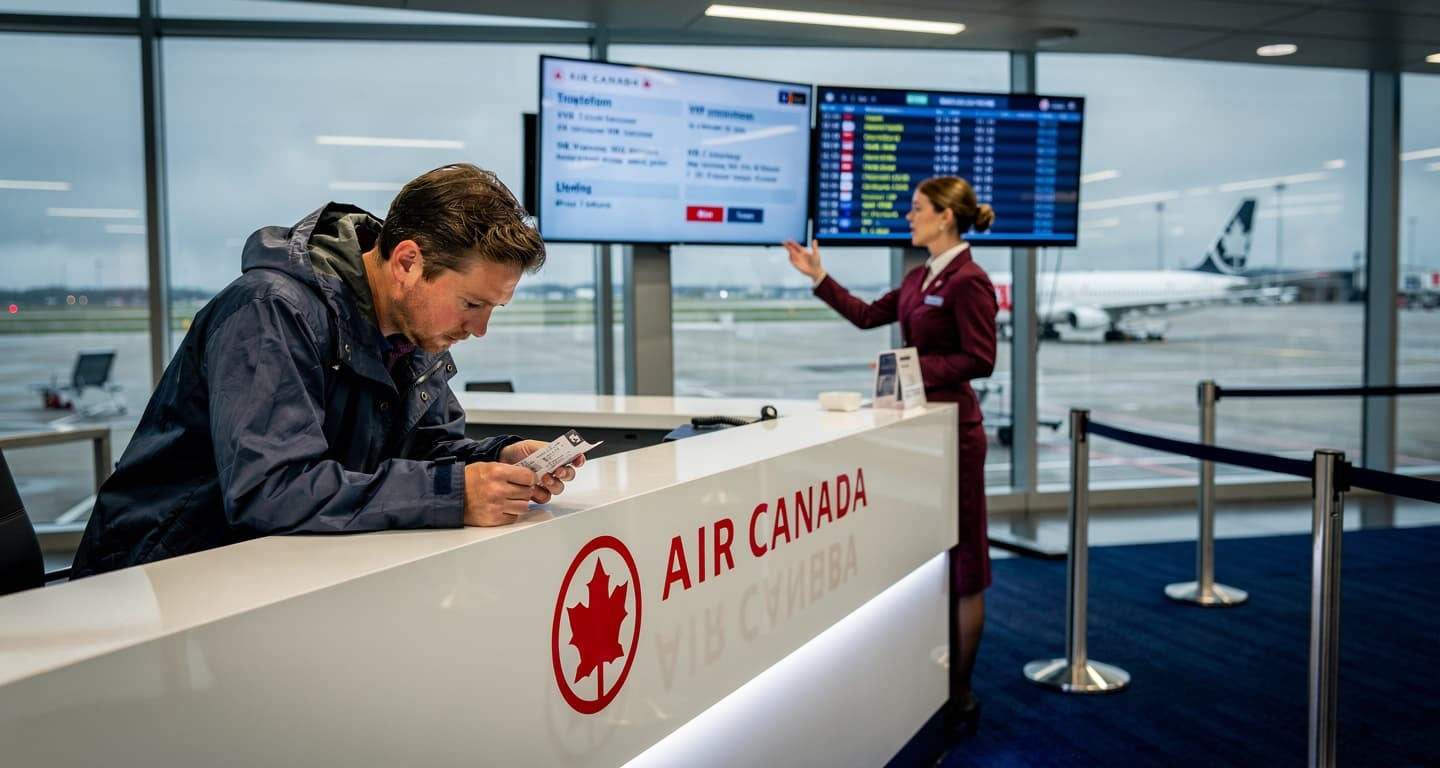
Air Canada will add a fifth weekly non-stop flight between Vancouver (YVR) and Manila (MNL) from December 7, 2026, operated on Boeing 787-9 aircraft with 30 lie-flat business seats. The expansion — part of the Northern Winter 2026/27 schedule — increases the carrier’s frequency on the route from four to five weekly departures, adding meaningful capacity during the Philippines’ peak travel season.
The fifth frequency was briefly trialled in March 2026, and strong load data from that test appears to have driven the permanent addition. Filipino-Canadian travelers and leisure visitors gain a new mid-week option on one of Canada’s most culturally significant long-haul routes.
Air Canada has filed a fifth weekly frequency on its Vancouver–Manila non-stop route, effective December 7, 2026, running through the Northern Winter 2026/27 season. The new departure — AC017, leaving YVR at 01:30 and arriving MNL at 06:45 the following day — operates on days not currently served, with the return AC018 departing Manila at 10:25 and landing Vancouver at 07:10. Both directions use the Boeing 787-9, the same aircraft that has operated the route since its April 2025 launch.
For Canadian travelers, this is straightforward good news: more seats, more scheduling flexibility, and added competition on a corridor where Philippine Airlines currently holds a frequency advantage. The timing is deliberate. December through February is peak demand on YVR-MNL — holiday travel, balikbayan visits, and winter sun seekers all converge — and Air Canada is positioning to capture a larger share of that traffic before the season opens.
The route itself is relatively young. Air Canada launched YVR-MNL on April 2, 2025, initially at three weekly flights before stepping up to four by May 2025. A brief fifth-frequency test in March 2026 — lasting roughly four weeks — provided the load factor data needed to justify a permanent addition. The airline confirmed the schedule change through official filings.
What the schedule filing actually tells us
The flight numbers and timing matter here. AC017 departs YVR at 01:30 — a red-eye that lands Manila at breakfast time, maximizing usable arrival day. The return AC018 leaves MNL at 10:25, arriving Vancouver at 07:10, which works well for onward connections across Air Canada‘s Star Alliance network to more than 60 North American cities. The “x46” and “x57” day-of-week codes in the filing indicate the fifth frequency runs on days currently uncovered, filling a genuine gap in the weekly schedule rather than doubling up on existing high-demand days.
Air Canada‘s 787-9 on this route carries 298 seats — 30 in lie-flat business class, 21 in premium economy, and 247 in economy. That configuration is unchanged from current operations. The fifth frequency adds roughly 298 seats each way per week to the corridor, a meaningful capacity injection ahead of the peak December–February window.
For Pacific Northwest travelers who haven’t considered the Vancouver routing, the YVR gateway can save $300–500 compared to Seattle or Portland departures — worth checking even if you’re driving across the border.
| Carrier | Weekly frequency | Aircraft | Alliance | Business class |
|---|---|---|---|---|
| Air Canada (from Dec 7, 2026) | 5 weekly | Boeing 787-9 | Star Alliance | 30 lie-flat seats |
| Air Canada (current) | 4 weekly | Boeing 787-9 | Star Alliance | 30 lie-flat seats |
| Philippine Airlines | 7 weekly | Airbus A350 | oneworld | 24 lie-flat seats (Mabuhay Class) |
| EVA Air (via Taipei) | 14 weekly (YVR–TPE + TPE–MNL) | Boeing 777-300ER | Star Alliance | Superior premium economy option |
Flight deals
most people never see
Our AI monitors 150+ airlines for pricing anomalies that traditional search engines miss. Air Traveler Club members save $650 per trip per person on average: see how it works.
Each deal saves 40–80% vs. regular fares:

Why Air Canada is making this move now
The March 2026 test flight wasn’t a marketing exercise — it was a controlled load factor experiment. Air Canada‘s network planners ran the fifth frequency for approximately four weeks during a shoulder-to-peak transition period, collected the yield data, and made a call. The fact that the airline is now filing the frequency for the full Northern Winter 2026/27 season, rather than another short trial, signals the numbers cleared whatever internal threshold the route team set.
There’s a structural reason this route performs. Canada’s Filipino diaspora exceeds one million people, concentrated heavily in Metro Vancouver and the surrounding Lower Mainland. That community generates consistent, price-inelastic demand — balikbayan travel doesn’t get cancelled because fuel surcharges tick up. Air Canada launched this route in April 2025 partly to serve that demand directly from YVR rather than routing it through US hubs, and the ramp from 3x to 4x to now 5x weekly suggests the bet is paying off.
The competitive picture adds another layer. Philippine Airlines holds a 7-weekly frequency advantage and the backing of the oneworld alliance. Five weekly flights doesn’t close that gap entirely, but it strengthens Air Canada‘s direct positioning — and as a Star Alliance hub, YVR feeds connections from more than 60 North American cities onto this single route. That network math matters when corporate and premium leisure travelers are choosing between carriers. For more context on how Canadian gateways stack up for Asia-Pacific flying, the guide to flying to Asia from Canada covers the full picture.
How to act on this capacity increase
Seats on the new fifth frequency are bookable now, and December 2026 fares on YVR-MNL will move as the peak season approaches — booking early on a newly filed frequency often captures inventory before yield management tightens pricing.
- Search aircanada.com directly for December 7, 2026 onward: The fifth frequency operates on days currently uncovered (x46 outbound, x57 inbound) — filter by specific travel dates rather than flexible search to find the new departure slots.
- Compare against Philippine Airlines on the same dates: PAL’s 7-weekly schedule gives more date flexibility; Air Canada‘s 787-9 business class (30 lie-flat seats) is competitive with PAL’s Mabuhay Class at similar price points. Run both on Google Flights for the same dates.
- Target economy fares in the CAD $1,200–$1,800 range before peak pricing kicks in: Historical data shows this corridor’s fares climb sharply from October onward as December inventory fills. Q1 2027 (January–March) often offers better value than December itself.
- Consider the YVR gateway if you’re in the US Pacific Northwest: Seattle and Portland travelers frequently save $300–500 by positioning to Vancouver — the drive or train ride across the border is worth pricing out before booking a US-hub connection.
- Monitor Air Traveler Club’s fare tracking for temporary drops on this corridor: ATC previously flagged YVR-MNL economy at $980 RT — well below the corridor average — during Q4 2025. New capacity additions sometimes trigger short-window pricing anomalies as airlines seed initial bookings.
Watch: Air Canada‘s Q4 2026 load factor disclosure — expected in the February 2027 earnings call — will determine whether a sixth weekly frequency or a summer 2027 extension follows. If loads clear 85%, expect further expansion. If they fall below 75%, the airline may revert to four weekly and push connecting traffic through Taipei or Seoul instead. The IATA slot conference in June 2026 will also reveal whether Air Canada has filed for additional Manila slots beyond the current winter season.

Questions? Answers.
When does Air Canada’s fifth weekly Vancouver–Manila flight start?
The fifth weekly frequency begins December 7, 2026, as part of the Northern Winter 2026/27 schedule. It operates on Boeing 787-9 aircraft with the same cabin configuration as current flights: 30 lie-flat business seats, 21 premium economy, and 247 economy.
How does Air Canada’s YVR-MNL service compare to Philippine Airlines?
Philippine Airlines currently operates 7 weekly non-stop flights between Vancouver and Manila on Airbus A350 aircraft, with 24 lie-flat seats in Mabuhay Class business. Air Canada will reach 5 weekly from December 2026, with 30 lie-flat business seats on 787-9. PAL holds the frequency advantage; Air Canada has a larger business cabin and Star Alliance connectivity to 60+ North American cities.
What fares should I expect on the Vancouver–Manila route?
Typical roundtrip economy fares on YVR-MNL run CAD $1,200–$1,800; business class ranges from CAD $4,500–$6,500. Fares peak December through February and are generally lowest May through September. ATC has previously detected short-window economy fares as low as $980 RT on this corridor — these anomalies typically last 3–7 days.
Can US travelers benefit from Air Canada’s Vancouver–Manila flights?
Yes. Travelers in Washington State, Oregon, and northern California frequently save $300–500 by departing from Vancouver rather than Seattle or Portland. Philippine Airlines‘ aggressive pricing for the Canadian-Filipino diaspora market keeps YVR fares competitive, and the drive or train ride to Vancouver is often worth pricing out before booking a US-hub connection to Manila.