Quick summary
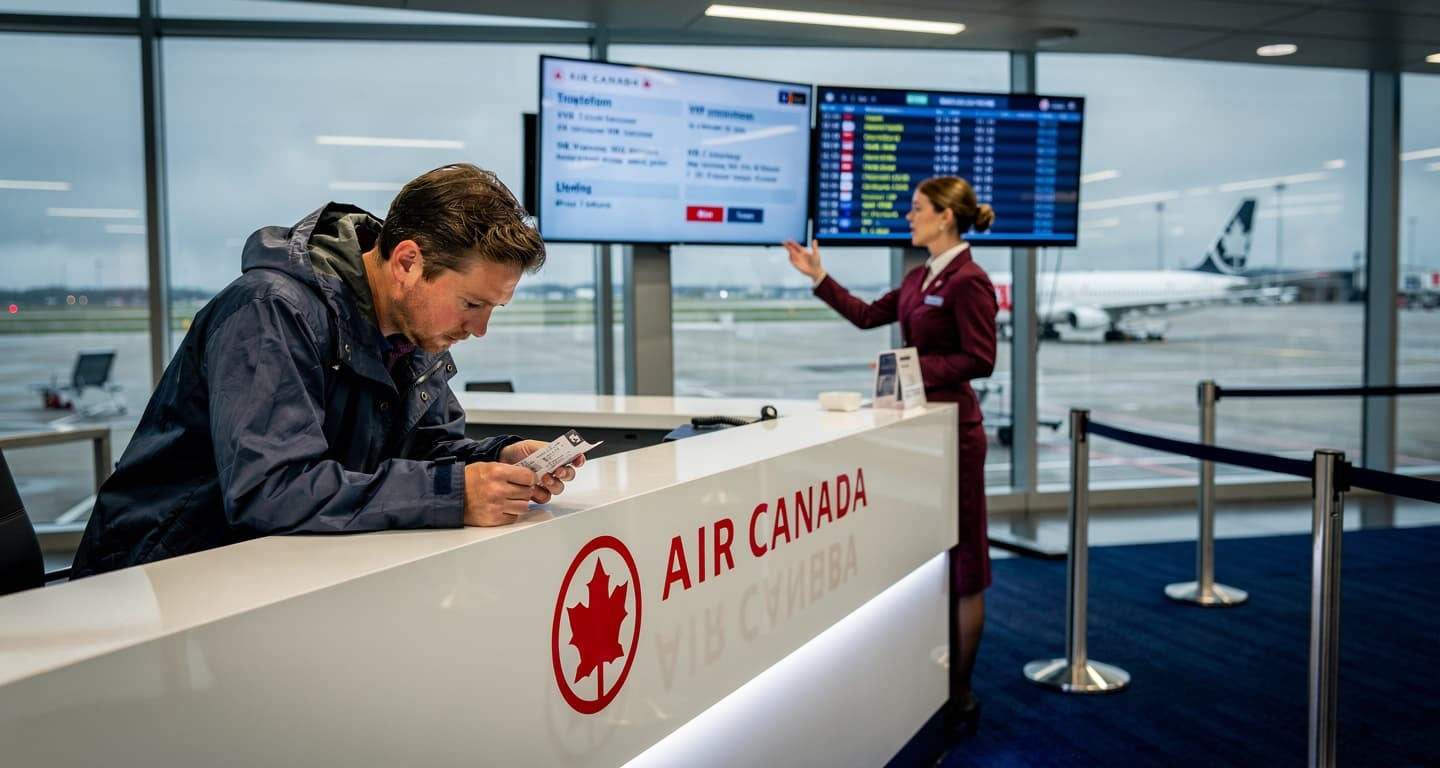
Air Canada has suspended all Toronto–Dubai flights until May 1, 2026, the longest Middle East service halt by a major Western carrier since the 1990–91 Gulf War. Canadian travelers with bookings between now and May 1 must rebook immediately on alternative carriers or via European hubs — the airline is waiving change fees but offering no compensation under force majeure rules. Air Canada is redeploying aircraft to expand Toronto–Delhi capacity as a partial alternative, though Delhi lacks Dubai’s hub connectivity for onward Asia-Pacific travel.
The suspension follows Iranian missile and drone strikes on US military bases and civilian infrastructure across the Gulf region — UAE, Saudi Arabia, Qatar, Kuwait, Bahrain, Jordan — forcing emergency airspace closures that have persisted since late February. Emirates and Etihad resumed limited operations on March 6; Lufthansa Group carriers restarted Dubai service March 10.
Air Canada extended its Dubai suspension to May 1 in an update posted March 13–14, pushing the halt six weeks beyond the carrier’s initial March 28 target date.
The decision leaves an estimated 15,000 weekly seats unavailable on what was Canada’s only nonstop link to the Middle East’s largest aviation hub. Travelers holding bookings through April 30 face immediate rebooking requirements — the airline is offering penalty-free changes to partner carriers routing through London, Frankfurt, or Paris, but those connections add 8–12 hours to total journey time and typically cost $400–800 more than the direct fare.
The suspension stems from Iranian attacks on US military installations and civilian targets across six Gulf nations, triggering airspace closures that forced Dubai International Airport to halt operations intermittently throughout late February and early March. While Air Canada’s official advisory cites “unrest in the Middle East” as the cause, the carrier has not disclosed whether the May 1 date reflects airspace safety assessments or commercial risk calculations.
What the suspension means for Canadian travelers
Air Canada operated daily Toronto–Dubai service using Boeing 787 Dreamliners — a route that served as the primary gateway for Canadian traffic connecting onward to India, Southeast Asia, and East Africa via Dubai’s 90+ million annual passenger hub. The airline is now redirecting those aircraft to expanded Toronto–Delhi frequencies, though Delhi cannot absorb the full capacity: Air Canada is operating an estimated 30–40% of its normal Middle East seat inventory on the Delhi route.
For travelers whose final destination is Dubai or the broader UAE, the only options are European hub routings on Lufthansa, Air France-KLM, or British Airways. Those carriers resumed limited Dubai service between March 6 and March 10, but seat availability remains constrained — economy fares on Toronto–Frankfurt–Dubai routings currently range from $1,600–$2,200 roundtrip, compared to $1,200–$1,400 for the suspended nonstop.
| Date announced | Dubai suspension | Tel Aviv suspension | Key trigger |
|---|---|---|---|
| March 2 | March 15 | March 22 | Initial airspace closures |
| March 6 | March 28 | May 2 | Escalating Iranian strikes |
| March 13–14 | May 1 | May 2 | Persistent Gulf instability |
Flight deals
most people never see
Our AI monitors 150+ airlines for pricing anomalies that traditional search engines miss. Air Traveler Club members save $650 per trip per person on average: see how it works.
Each deal saves 40–80% vs. regular fares:

How this compares to past Middle East disruptions
This is Air Canada’s longest Middle East suspension since the 2003 Iraq War, when the carrier halted Baghdad service for over a year. The current 6–7 week Dubai halt exceeds the 2022 Russia airspace closure, which lasted 3–4 weeks for European carriers forced to reroute around Russian airspace after the Ukraine invasion.
No major Western carrier has suspended Dubai service this long since the 1990–91 Gulf War — a reflection of how central the emirate has become to global aviation networks over the past three decades. Dubai International Airport now ranks as the world’s busiest international hub by passenger volume, and its closure ripples through long-haul networks far beyond the Middle East.
The Canadian government arranged a charter flight from Dubai to Istanbul on March 8 for 180 stranded Canadians, and Ottawa has upgraded travel warnings to “avoid all travel” for ten Middle East jurisdictions. Unlike EU carriers, Air Canada is not required to pay compensation under Canadian consumer protection law when cancellations result from geopolitical force majeure — though the airline is waiving change fees and offering rebooking on partner carriers.
Immediate steps for affected travelers
Air Canada has updated suspension dates four times since March 2 — the May 1 target could shift again if Gulf airspace remains unstable or if the conflict escalates further.
- Check Air Canada’s official page daily: The carrier posts updates at aircanada.com/middle-east-travel — verify your departure date is still affected before rebooking, as the airline has narrowed suspension windows in past updates.
- Rebook via European hubs now: Air Canada is waiving change fees for affected bookings. Use Lufthansa, Air France-KLM, or British Airways for Toronto–Dubai–Asia routings; expect 2–3 hour layovers in Frankfurt, Paris, or London and $400–800 premium over direct fares.
- Consider Delhi if Asia-bound: Air Canada’s expanded Delhi capacity offers a stable gateway to India and Southeast Asia. Book Toronto–Delhi–Bangkok or Toronto–Delhi–Singapore if your final destination is not the UAE or Israel.
- Monitor cargo and corporate mobility: High-value aerospace and life-science shipments normally transiting Dubai are blocked; companies moving talent between Canada and the Middle East must now budget for European hub routings or postpone assignments.
Watch: Emirates and Etihad resumed limited operations March 6 — if Gulf carriers maintain consistent schedules through late March without further suspensions, Air Canada may accelerate its May 1 restart date. The carrier’s next update is expected by March 20.

Questions? Answers.
Can I get a refund if Air Canada cancelled my Dubai flight?
Air Canada is offering penalty-free rebooking on partner carriers or full refunds for cancelled flights. Refunds typically process within 7–10 business days for credit card purchases. The airline is not required to pay additional compensation under Canadian consumer law when cancellations result from geopolitical force majeure.
Which airlines are still flying to Dubai from North America?
United Airlines, American Airlines, and Delta Air Lines continue Dubai service from US gateways (New York, Washington, Los Angeles). Canadian residents can access these flights by repositioning to US departure cities, though this adds complexity to immigration and baggage handling. Emirates resumed limited Toronto–Dubai service March 6 but is operating reduced frequencies.
Is Delhi a viable alternative to Dubai for connecting to Southeast Asia?
Yes, but with trade-offs. Delhi offers robust onward connectivity to Bangkok, Singapore, and Kuala Lumpur via Thai Airways, Singapore Airlines, and Malaysia Airlines. However, Delhi’s hub efficiency is lower than Dubai’s — expect 3–5 hours longer total journey time and potential fog-related delays during winter months. Air Canada’s expanded Delhi capacity makes this the best alternative for India-bound travelers or those continuing to Southeast Asia.