Quick summary
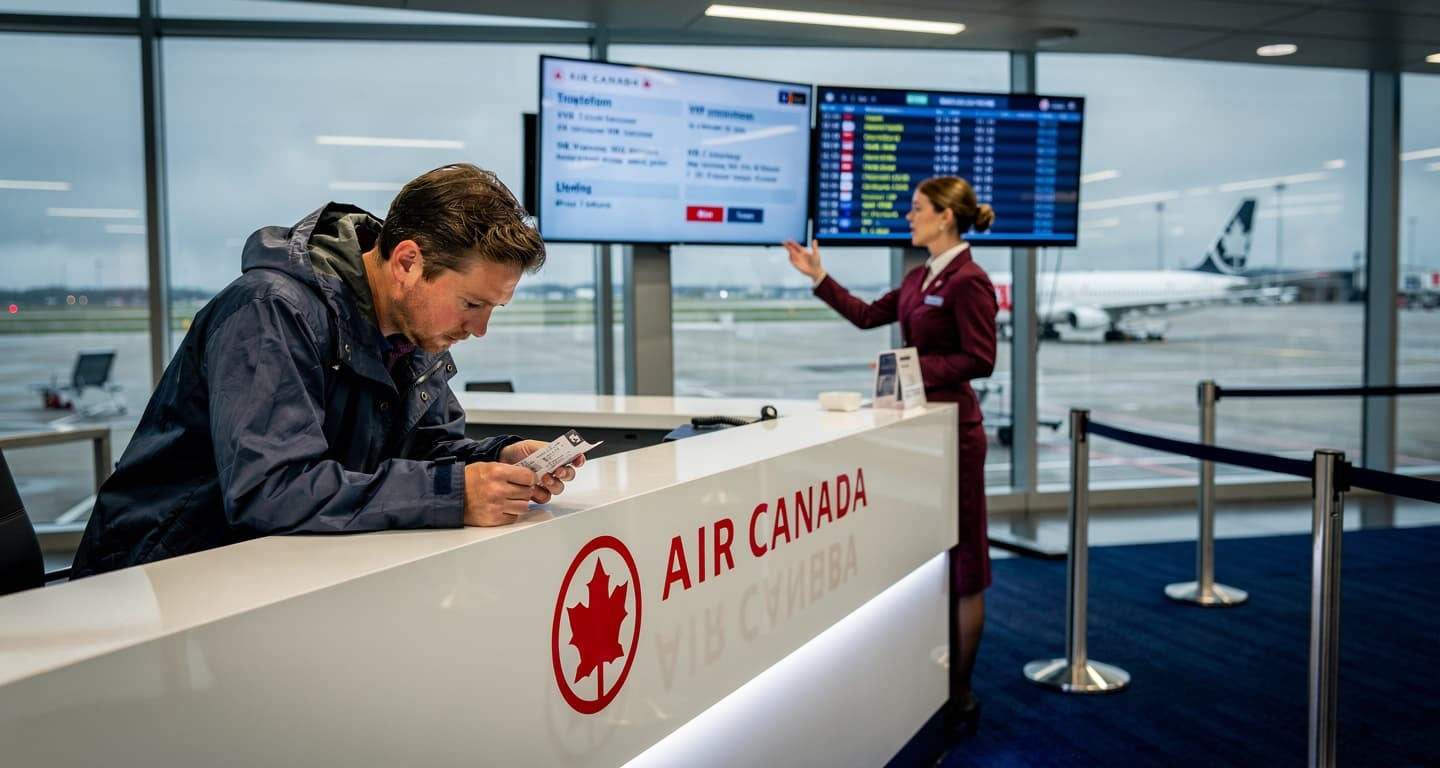
Air Canada will suspend six routes between May 28 and August 30, 2026, eliminating direct service from Toronto and Montreal to JFK Airport (effective June 1, resuming October 25), Salt Lake City to Toronto (June 30, resuming 2027), Fort McMurray to Vancouver (May 28), and Yellowknife to Toronto (August 30). The carrier also canceled its planned Montreal–Guadalajara launch and suspended Montreal–Algiers service for summer 2026. Jet fuel prices have doubled since the US-Iran conflict began, forcing the airline to cut routes where yields no longer cover operating costs.
Passengers holding bookings on these routes will receive automatic rebooking notifications, but summer peak scarcity is driving fares on alternative carriers 25–50% higher. The airline also raised checked baggage fees for Economy Basic, Standard, and Flex fares purchased after April 13, 2026, adding $10–25 CAD per bag to trip costs.
Fuel costs force network cuts across domestic and transborder routes
Air Canada confirmed the suspensions in an updated notice issued April 23, 2026, stating that jet fuel prices have doubled since the start of the Iran conflict, rendering certain lower-profitability routes “no longer economically feasible.” The cuts affect 1% of the carrier’s total capacity but eliminate key city-pair connections for Canadian travelers.
The Toronto and Montreal to JFK suspensions remove the only nonstop options between Canada’s two largest cities and New York’s primary international gateway through the peak summer travel season. Air Canada will continue operating 34 daily flights to New York’s LaGuardia and Newark airports from six Canadian cities, but passengers preferring JFK face connections or alternative carriers.
Domestic cuts hit resource-dependent communities hardest. The Fort McMurray–Vancouver route serves oil sands workers commuting between Alberta and British Columbia, while the Yellowknife–Toronto link connects Canada’s Northwest Territories capital to the national hub. Neither route has announced resumption dates.
| Route | Suspension date | Resumption | Aircraft type |
|---|---|---|---|
| Toronto–JFK | June 1, 2026 | October 25, 2026 | A321neo |
| Montreal–JFK | June 1, 2026 | October 25, 2026 | A321neo |
| Salt Lake City–Toronto | June 30, 2026 | 2027 | B737-800 |
| Fort McMurray–Vancouver | May 28, 2026 | Not announced | A220 |
| Yellowknife–Toronto | August 30, 2026 | Not announced | A220 |
| Montreal–Algiers | Summer 2026 | 2027 | B787-9 (planned) |
The airline’s official statement emphasized that schedule adjustments are part of regular network reviews to ensure routes meet profitability targets. Industry filings show the carrier is trimming capacity across domestic, transborder, and international segments in response to sustained high fuel costs.
Alternative carriers absorb demand but at premium fares
WestJet operates 10 weekly flights between Toronto and JFK using A320 aircraft, while Porter Airlines offers seven weekly frequencies on the route with A220 equipment. Both carriers are seeing load factors above 70% for summer 2026 bookings, and economy roundtrip fares currently sit around $450 CAD — approximately 30% higher than Air Canada’s typical pricing before the suspensions.
For Salt Lake City connections, United Airlines maintains seasonal service three times weekly using B737 aircraft. As a Star Alliance partner, United offers seamless connections for Air Canada passengers, but the reduced frequency limits flexibility for business travelers.
The Montreal–Algiers suspension affects a planned route that had not yet launched. Passengers who booked the service will receive full refunds, but the cancellation eliminates the only nonstop option between Canada and Algeria. Air Algérie operates connecting service via Paris, adding approximately 90 minutes to total travel time.
Domestic passengers face more limited alternatives. Fort McMurray–Vancouver travelers must now connect through Calgary or Edmonton, adding 2–3 hours to journey time. Yellowknife–Toronto passengers can route through Calgary or Winnipeg, but the lack of nonstop service increases travel time by 4–5 hours.
Flight deals
most people never see
Our AI monitors 150+ airlines for pricing anomalies that traditional search engines miss. Air Traveler Club members save $650 per trip per person on average: see how it works.
Each deal saves 40–80% vs. regular fares:

Geopolitical conflict drives unprecedented fuel price surge
US airstrikes on Iranian facilities in January 2026 escalated tensions in the Strait of Hormuz, prompting OPEC+ to cut oil output by 2 million barrels per day in February. The production cuts spiked North American jet fuel prices to $3.20 per gallon — a 110% increase year-to-date and the highest level since the 1991 Gulf War.
While no direct airspace bans are in effect, sanctions block approximately 15% of Iranian oil exports, forcing Middle East flights to reroute and adding 90 minutes of flight time and 12% more fuel consumption. These indirect effects have raised global spot prices across all aviation markets, not just routes transiting conflict zones.
The current fuel cost environment is unprecedented in scale. During the 2019 tanker attacks in the Persian Gulf, jet fuel prices increased 25% and prompted North American carriers to implement temporary 5% capacity cuts. The 2026 surge has more than doubled prices, forcing airlines to make deeper network adjustments.
Air Canada’s narrowbody routes are particularly vulnerable because aircraft like the A321neo and B737-800 burn 20% more fuel per seat-mile at current kerosene rates compared to widebody operations. Routes with lower passenger yields — typically shorter domestic and transborder flights — cannot absorb the cost increase without operating at a loss.
Other North American carriers have responded with similar measures. JetBlue, Southwest, American, and United all increased checked baggage fees in April 2026 due to the same fuel cost pressures. WestJet announced capacity reductions and added temporary fuel surcharges on certain flights earlier this month.
What to do if your route is affected
The suspensions take effect between late May and late August, giving most passengers 4–16 weeks to adjust travel plans.
- Check your booking status immediately: Visit aircanada.com and log into “Manage Trips” to see if your flight is affected. The airline is contacting passengers automatically, but proactive checking ensures you have first choice of rebooking options.
- Compare alternative airports: For New York travel, LaGuardia sits 8 miles closer to Manhattan than JFK, while Newark offers direct rail connections via NJ Transit. Ground transportation costs and times vary significantly — factor this into your rebooking decision.
- Book substitute carriers now if you prefer nonstop service: WestJet and Porter Airlines inventory for summer 2026 is filling rapidly. Waiting until closer to departure will likely mean higher fares or sold-out flights.
- Understand your refund rights: Canada’s Air Passenger Protection Regulations entitle you to a full refund for cancellations with 14-day notice. No compensation is required for voluntary suspensions, but you can choose cash refund over rebooking if the alternatives don’t work for your schedule.
- Factor in new baggage fees: If you rebook on Air Canada or purchase a new ticket after April 13, 2026, Economy Basic, Standard, and Flex fares now carry increased checked baggage fees of $10–25 CAD per bag. Budget accordingly.
Watch: Air Canada’s Q2 2026 earnings report in May will reveal whether fuel costs remain above $3.50 per gallon and if capacity cuts exceed 10% — signals that could trigger additional transatlantic or transpacific route suspensions.

Questions? Answers.
Will Air Canada refund my ticket if my route is suspended?
Yes. Canada’s Air Passenger Protection Regulations require airlines to offer a full refund for cancellations with 14-day notice. You can choose a cash refund or accept rebooking to an alternative airport or connecting flight at no additional cost.
Are fuel surcharges refundable if I cancel my trip?
Fuel surcharges are part of the total ticket price. If you cancel a refundable fare, the entire amount including surcharges is refunded. Non-refundable fares follow standard cancellation policies — you typically receive a travel credit minus cancellation fees, but the surcharge is not separately refundable.
How long will these route suspensions last?
Toronto and Montreal to JFK resume October 25, 2026. Salt Lake City to Toronto and Montreal to Algiers are suspended until 2027 with no specific resumption date. Fort McMurray to Vancouver and Yellowknife to Toronto have no announced resumption plans.
Can I use my Air Canada booking to fly on WestJet or Porter instead?
No. Air Canada will rebook you on its own flights to alternative airports or offer a refund. To fly on WestJet or Porter, you must request a refund from Air Canada and purchase a new ticket directly with the other carrier.