Quick summary
Air Canada opened its seventh Air Canada Café at Québec City Jean Lesage International Airport (YQB) on June 16, 2026, marking the first premium lounge of its kind at a secondary Canadian airport. The 3,616-square-foot space seats 97 travelers and is operated in partnership with Plaza Premium, offering locally sourced food, a full bar, and power at every seat. Eligible customers include Aeroplan Elite 50K and above, Star Alliance Gold members, premium co-brand cardholders, and Business Class passengers on Air Canada and Star Alliance departures.
Third-party lounge access via Priority Pass and similar programs has not been officially confirmed at YQB. The Café opens alongside a broader upgrade of YQB’s passenger experience, including a new Lobbie bar-restaurant and a pay-per-use lounge launching in summer 2026.
Québec City travelers have never had this before. Until now, departing from YQB meant making do with limited dining options and no dedicated premium space — a gap that has quietly frustrated business travelers and Aeroplan elites for years. That changes today.
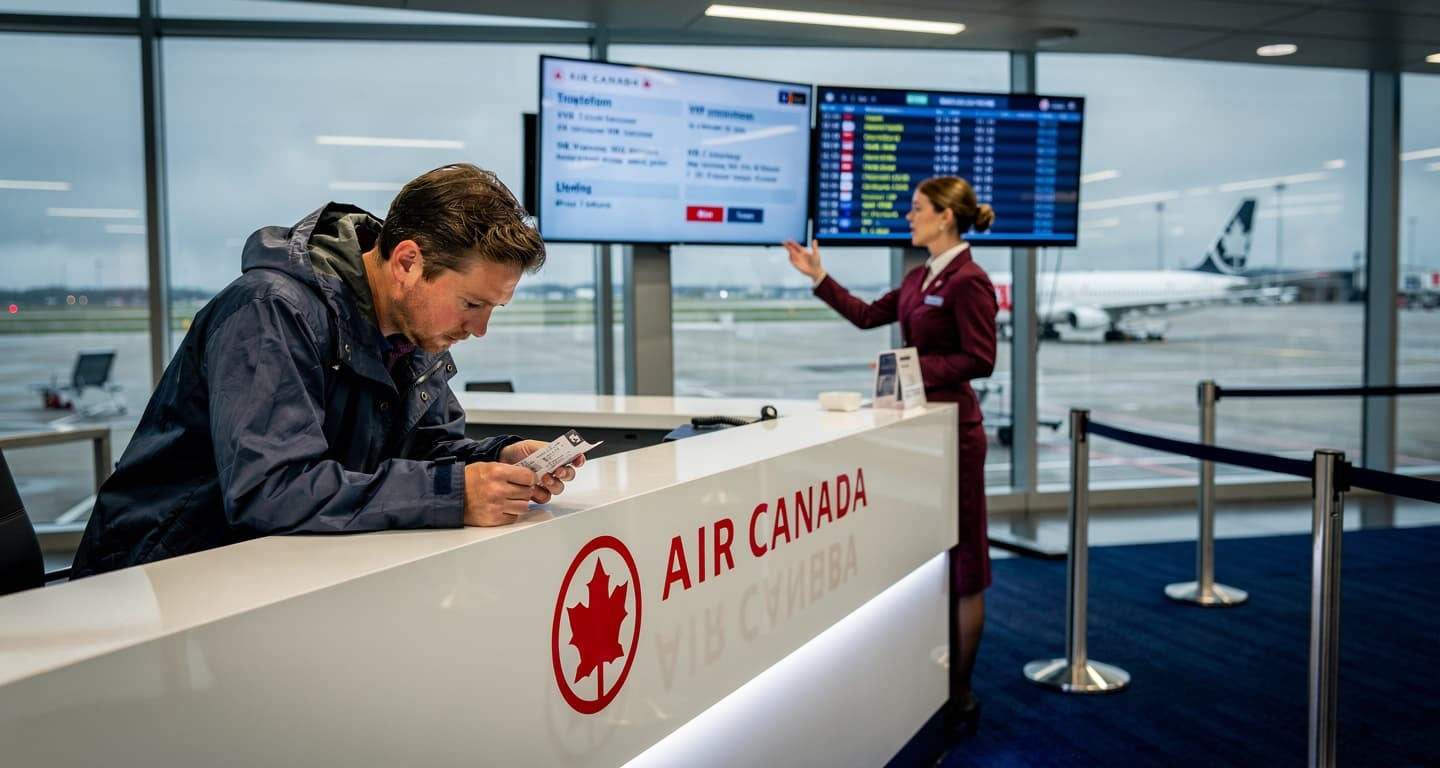
Air Canada officially opened its newest Café at Québec City Jean Lesage International Airport on June 16, 2026, bringing a 97-seat, 3,616-square-foot premium lounge to a market that previously had none. It is the carrier’s seventh Café location, joining existing spaces at Montréal–Trudeau, Toronto Pearson, Toronto Billy Bishop, and Vancouver International. The YQB opening is the first time Air Canada has extended the Café concept beyond its primary hub airports.
For eligible travelers, the practical shift is immediate. Aeroplan Elite 50K and above, Star Alliance Gold members, Aeroplan premium co-brand cardholders, and Business Class passengers on Air Canada or Star Alliance departures from Québec City can now access the space before their flight. The lounge is operated in partnership with Plaza Premium, which runs Air Canada’s Café network at several other Canadian airports.
The design leans hard into local identity — Québec City’s art de vivre, natural landscape, and French character are woven through the décor, with works by artists including Antonietta Grassi and Douglas Coupland on the walls. On the food side, signature breakfast pancakes come with maple butter and Sigewigus pumpkin seed spread sourced from the Mi’gmaq Nation of Gespeg Indigenous community. The bar pours local beers from La Souche brewery and cocktails featuring La Distillerie du Fjord.
What the YQB Café actually delivers
The space is built for productivity as much as comfort. Every one of the 97 seats has power access, including USB-C ports with enough wattage to charge a laptop — not just a phone. Seating is arranged in productivity-oriented zones suited for working or taking calls, alongside areas for quieter pre-departure downtime.
Food is self-service, with hot and cold options, allergen labelling, and menu items covering vegan, vegetarian, and gluten-free preferences. The build-your-own power bowl bar uses fresh, locally sourced ingredients. Beverages run from Lavazza specialty coffee through a full bar with wines, spirits, and local beers. This is not a grab-a-muffin-and-go setup — the food program is meaningfully closer to what you’d find at a full Maple Leaf Lounge than the name “Café” might suggest.
Access eligibility follows the same framework as other Air Canada Café locations: Aeroplan Elite 50K status or higher, Star Alliance Gold, eligible Aeroplan co-brand credit cardholders, and Business Class passengers on Air Canada or Star Alliance flights. What remains unconfirmed is whether third-party programs — Priority Pass, Dragon Pass, Mastercard Travel Pass — will grant entry. The Toronto Billy Bishop Café operates as an Aspire partner lounge with third-party access; the YQB location may follow, but Air Canada has not confirmed this as of opening day.
Official details on the lounge are available directly through Air Canada’s opening announcement for the YQB Café.
| Location | Airport | Size | Seats | Third-party access confirmed |
|---|---|---|---|---|
| Québec City | YQB | 3,616 sq ft (336 m²) | 97 | Not confirmed (as of June 16, 2026) |
| Vancouver | YVR | Data pending | Data pending | Yes (Aspire/Priority Pass) |
| Montréal | YUL | Data pending | Data pending | Yes (Aspire/Priority Pass) |
| Toronto Pearson | YYZ | Data pending | Data pending | Yes (Aspire/Priority Pass) |
| Toronto Billy Bishop | YTZ | Data pending | Data pending | Yes (Aspire/Priority Pass) |
Flight deals
most people never see
Our AI monitors 150+ airlines for pricing anomalies that traditional search engines miss. Air Traveler Club members save $650 per trip per person on average: see how it works.
Each deal saves 40–80% vs. regular fares:

Why Air Canada is betting on secondary airports now
The Café concept has always been Air Canada’s answer to a specific problem: how do you deliver a premium ground experience at airports that cannot justify a full Maple Leaf Lounge? The grab-and-go format keeps operating costs manageable while still giving status holders and business-class passengers a reason to choose Air Canada over a competitor that offers nothing at the gate.
At YQB, the competitive logic is sharper than at the big hubs. WestJet operates Québec City–Toronto and seasonal services without any proprietary lounge footprint at YQB. Porter Airlines serves YQB with flights to Toronto Billy Bishop on Embraer E195-E2 jets — free Wi-Fi, more spacious seating, a genuinely differentiated onboard product — but no dedicated lounge on the ground. Air Canada is currently the only carrier pairing premium ground space with its schedule at Québec City. For a business traveler choosing between carriers on a YQB–YYZ or YQB–YUL fare, that gap matters.
The broader signal here is about loyalty geography. Air Canada’s Aeroplan engagement has historically concentrated around its three main hubs. Seeding a Café into a market like Québec City — where Porter is actively growing and WestJet competes on price — is a way to make status feel tangible before the traveler even boards. If you’re wondering whether Air Canada’s premium push extends to the aircraft itself, the carrier’s Signature Plus Suites on incoming 787-10s suggest the ground investment at YQB is part of a wider premium-product strategy, not a one-off.
Steps to take before your next YQB departure
The Café is open now, but access rules and third-party program eligibility are still being confirmed — travelers who show up without checking may find themselves turned away.
- Verify your access eligibility first: Check Air Canada’s Café access page to confirm whether your Aeroplan status tier, co-brand credit card, or cabin class qualifies. The rules mirror other Café locations but confirm before you plan your airport time around it.
- Arrive 30–45 minutes earlier than usual: YQB’s peak morning wave can produce security queues. Budget extra time so you actually get to use the lounge rather than rushing past it to the gate.
- Hold on third-party access: If you rely on Priority Pass, Dragon Pass, or Mastercard Travel Pass, do not assume entry is available at YQB yet. Air Canada has not confirmed this as of opening day — check directly with your card provider or the airport before your trip.
- Factor lounge access into fare comparisons: On YQB–YYZ and YQB–YUL, Air Canada, WestJet, and Porter often price within a narrow band. If you hold Aeroplan 50K+ status or an eligible co-brand card, the Café access tips the value equation toward Air Canada even when fares are similar.
- Check the broader YQB upgrade timeline: The Lobbie bar-restaurant and a new pay-per-use lounge are also launching at YQB in summer 2026, per airport communications. If you travel without lounge access, those options will meaningfully improve the pre-departure experience versus what existed before.
Watch: Air Canada’s next quarterly earnings communication or dedicated premium-product announcement in late 2026 — if additional Café locations beyond YVR, YUL, and YQB are named, it confirms a deliberate strategy to seed the concept into more secondary Canadian airports. Also watch for any Aeroplan co-brand credit card refresh that explicitly adds YQB Café access as a named benefit, which would signal Air Canada is using this location to drive premium card uptake in smaller markets.

Questions? Answers.
Who can access the new Air Canada Café at Québec City airport?
Eligible customers include Aeroplan Elite 50K status and above, Star Alliance Gold members, Aeroplan premium co-brand credit cardholders, and passengers flying Business Class on Air Canada or Star Alliance departures from YQB. Third-party program access via Priority Pass or Dragon Pass has not been officially confirmed as of the June 16, 2026 opening.
Is the Air Canada Café at YQB a full lounge or just a grab-and-go counter?
It is a full lounge in practical terms — 97 seats across 3,616 square feet, with hot and cold self-service food, a full bar, Lavazza specialty coffee, and power at every seat including USB-C laptop charging. The “Café” label reflects the self-service format rather than the scale or quality of the space, which is closer to a Maple Leaf Lounge experience than a simple café.
Does Porter Airlines have a lounge at Québec City airport?
No. Porter operates YQB–Toronto Billy Bishop flights on Embraer E195-E2 jets with a strong onboard product — free Wi-Fi and more spacious seating — but has no dedicated lounge footprint at YQB. Air Canada is currently the only carrier offering premium ground space at Québec City.
What else is changing at Québec City airport in 2026?
Beyond the Air Canada Café, YQB is adding a Lobbie bar-restaurant and a new pay-per-use lounge as part of a broader upgrade to its food and premium offerings in summer 2026. These additions collectively represent the most significant enhancement to YQB’s passenger experience in recent years.
Will Air Canada open more Café locations at other secondary Canadian airports?
Not confirmed. The YQB opening is the first Café outside Air Canada’s three primary hubs. Watch for mentions of additional locations in Air Canada’s late 2026 quarterly earnings communications or premium-product announcements — that would signal a deliberate expansion strategy rather than a one-off test.