Quick summary
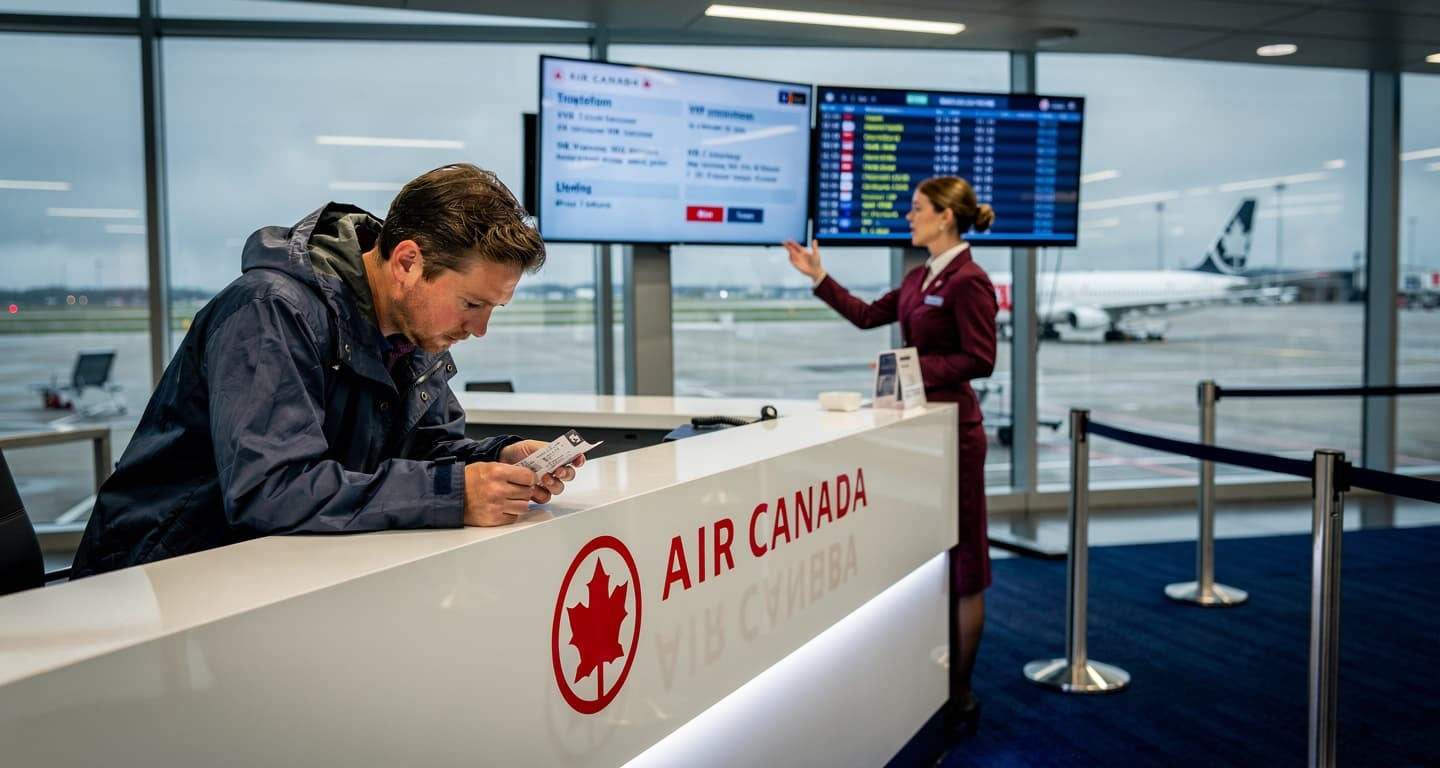
Air Canada flight AC937, a Boeing 787-9 Dreamliner (registration C-FRTU), declared a general airborne emergency and turned back to Edinburgh Airport on 14 June 2026 after departing at 09:40 BST on a scheduled service to Montréal-Trudeau International Airport. The crew activated squawk code 7700 and executed a rapid descent from approximately 38,000 feet to 10,000 feet before returning to Edinburgh, where emergency services were placed on standby. No injuries have been reported.
Air Canada confirmed it was monitoring the situation and expected to release an update within 30 minutes of the incident. Passengers on AC937 and connecting itineraries through Montréal face same-day delays, potential rebooking, and missed onward connections.
A transatlantic emergency unfolded over Scotland this morning when Air Canada flight AC937 transmitted squawk code 7700 — the universal signal for a general airborne emergency — and reversed course back toward Edinburgh less than an hour after wheels-up. The Boeing 787-9, bound for Montréal with passengers and crew aboard, had reached the upper stages of its initial climb before the crew halted the ascent and began a sharp turn east.
What followed was a rapid, controlled descent from 38,000 feet to 10,000 feet. Aviation protocols call for exactly that altitude during a suspected loss of cabin pressure: at 10,000 feet, the air is dense enough for passengers and crew to breathe without supplemental oxygen. The descent profile, combined with the 7700 squawk, indicates the crew was treating this as a genuine emergency requiring immediate priority handling from air traffic control.
Emergency response teams at Edinburgh Airport were positioned on standby as the aircraft returned. No injuries have been reported. The cause has not been officially confirmed, and Air Canada’s promised update — expected within 30 minutes of the incident — was still pending at time of publication.
Passengers booked on today’s AC937 and anyone with connections through Montréal-Trudeau International Airport should treat this as an active disruption requiring immediate action on rebooking and accommodation.
What the flight data and emergency protocols tell us
Flight tracking data for AC937 on 14 June 2026 shows the Boeing 787-9 departing Edinburgh on schedule, climbing normally, then executing an unscheduled in-air return — consistent with an airborne emergency declaration. The aircraft’s registration, C-FRTU, identifies it as a Canadian-registered widebody operating under Air Canada‘s Air Operator Certificate, which is issued and maintained by Transport Canada.
The 7700 squawk is not a precautionary measure. It is a crew decision made when a situation requires immediate ATC priority and emergency services on the ground. The rapid descent to 10,000 feet narrows the likely cause: pressurization anomalies, certain mechanical failures, or medical emergencies at altitude all follow this response profile. Until Air Canada specifies the technical cause, the exact trigger remains unconfirmed.
Live tracking of the flight is available via FlightAware’s AC937 flight history, which is being updated as the situation develops.
This is the second transatlantic emergency declaration out of a European airport on the same date. Aer Lingus flight EI440 also squawked 7700 and diverted to Amsterdam earlier today after departing Dublin, though the two incidents involve different aircraft types, airlines, and routes.
| Time (BST) | Event | Passenger impact |
|---|---|---|
| 09:40 | AC937 departs Edinburgh Airport (EDI) on schedule | Normal boarding and departure |
| Approx. 10:00–10:10 | Aircraft reaches ~38,000 ft; crew halts climb, initiates eastward turn, activates squawk 7700 | Emergency declared; ATC priority handling begins |
| Shortly after | Rapid descent to 10,000 ft; aircraft returns toward Edinburgh | Emergency services placed on standby at EDI |
| ~10:12 | Air Canada confirms monitoring situation; update promised within 30 minutes | Rebooking and accommodation status pending airline statement |
| Ongoing | Aircraft undergoing inspection; cause unconfirmed | Same-day delays, rebooking, and potential overnight stay for affected passengers |
Flight deals
most people never see
Our AI monitors 150+ airlines for pricing anomalies that traditional search engines miss. Air Traveler Club members save $650 per trip per person on average: see how it works.
Each deal saves 40–80% vs. regular fares:

Passenger rights and the regulatory framework now in play
Because AC937 departed from Edinburgh, UK261 — the retained version of EU261/2004 — applies immediately. That means Air Canada is obligated to provide care: meals, refreshments, and hotel accommodation if the delay extends overnight. Re-routing or a full refund must be offered if the flight is cancelled. Whether passengers are entitled to financial compensation on top of that depends on two things: the length of the final arrival delay at Montréal, and whether the cause is classified as within the airline’s control. A technical fault that was foreseeable and preventable typically falls within the carrier’s control under UK CAA guidance on delays and cancellations.
Once passengers are rebooked onto flights operating to or within Canada, the Air Passenger Protection Regulations (APPR) layer on top. The Canadian Transportation Agency’s APPR portal sets out what Air Canada must provide in terms of rebooking standards, treatment, and compensation for disruptions classified as within its control.
On the regulatory side, Transport Canada oversees Air Canada’s Air Operator Certificate and continuing airworthiness obligations for its Canadian-registered 787-9 fleet. The Boeing 787-9 type is certificated by the FAA, with Transport Canada validating that approval through bilateral safety agreements. An unscheduled return of this nature will require Air Canada to document the occurrence internally and may trigger a mandatory report to Transport Canada and, given the Edinburgh departure, potentially to the UK Civil Aviation Authority.
Steps to take right now if AC937 affects your trip
The aircraft is on the ground at Edinburgh and undergoing inspection — no confirmed return-to-service time exists yet, which makes early action on rebooking critical before alternatives fill up.
- Check your booking immediately: Open the Air Canada app or visit aircanada.com/manage-bookings to see your AC937 status and any self-service rebooking options. Do this before calling — phone queues will lengthen as the delay extends.
- Request re-routing via alternative hubs: Ask Air Canada ground staff or reservations for re-routing through Toronto (YYZ), London Heathrow (LHR), or a Star Alliance partner. EDI–LHR–YUL is a viable same-day or next-day option depending on seat availability.
- Claim your UK261 care entitlements: If you are waiting at Edinburgh, Air Canada is obligated to provide meals and refreshments during the delay, and hotel accommodation if you are held overnight. Request these from ground staff — do not pay out of pocket without first asking the airline to cover costs directly.
- Document everything for APPR and card claims: Keep receipts for any meals, transport, or accommodation you pay for. If your onward journey to or within Canada is disrupted, the Canadian APPR may entitle you to additional compensation — file through the Canadian Transportation Agency if Air Canada does not resolve your claim.
- Monitor upcoming EDI–YUL bookings: If you are traveling on this route in the next three to seven days, sign up for flight notifications and identify backup routings now. A second serviceable 787-9 will need to be assigned before normal operations resume.
Watch: Air Canada’s travel alerts page and official media statements in the next few hours — if the airline specifies a technical cause and confirms a return to service, the disruption is likely isolated to this airframe. If statements remain vague or schedules show further changes, expect rolling adjustments on EDI–YUL rotations. A formal occurrence report from Transport Canada or the UK CAA in the coming weeks would signal a broader regulatory review.

Questions? Answers.
What does squawk code 7700 mean, and how serious is it?
Squawk 7700 is the internationally recognized transponder code for a general airborne emergency. When a crew activates it, air traffic control immediately gives the aircraft priority handling and clears airspace around it. It does not specify the nature of the emergency — that is determined by the crew and communicated separately — but it signals that the situation requires immediate attention. Emergency services on the ground are placed on standby as a standard precautionary response.
Why did the aircraft descend to 10,000 feet so quickly?
Aviation protocols call for a descent to 10,000 feet when a pressurization problem is suspected or confirmed. At that altitude, the air is dense enough for passengers and crew to breathe normally without supplemental oxygen, eliminating the risk of hypoxia. The rapid descent profile observed on AC937 is consistent with this procedure, though the confirmed cause of the emergency has not yet been released by Air Canada.
Am I entitled to compensation, or just care, under UK261?
UK261 guarantees care — meals, refreshments, and hotel if needed — regardless of cause. Financial compensation (up to £520 per passenger for long-haul flights arriving more than four hours late) applies only if the disruption is within the airline’s control and the arrival delay meets the relevant threshold. A technical fault that was foreseeable and preventable is generally considered within the carrier’s control. If Air Canada classifies the cause as an extraordinary circumstance, compensation may not apply, but you can challenge that classification through the UK CAA.
Does Canada’s APPR apply to this flight, which departed from Edinburgh?
UK261 governs the Edinburgh departure. However, once Air Canada rebooks affected passengers onto flights operating to or within Canada, the Air Passenger Protection Regulations apply to those subsequent flights. If those rebooked services are also delayed or cancelled due to a disruption within the airline’s control, APPR obligations — including rebooking standards and potential compensation — come into effect for the Canadian leg.