Quick summary
American Airlines has issued an internal agent clarification reinforcing that medical device bag-fee waivers apply only to equipment that assists passengers with a disability — covering functions like mobility, hearing, or communication. Hospital beds, massage tables, wagons, chiropractic tables, and soap do not qualify. Passengers attempting to check these items free will be denied and charged the standard $50 first-bag domestic fee on the spot.
The policy itself is unchanged; what changed is how firmly agents are now enforcing it. Travelers with legitimate assistive devices face longer verification queues at major hubs as a direct result.
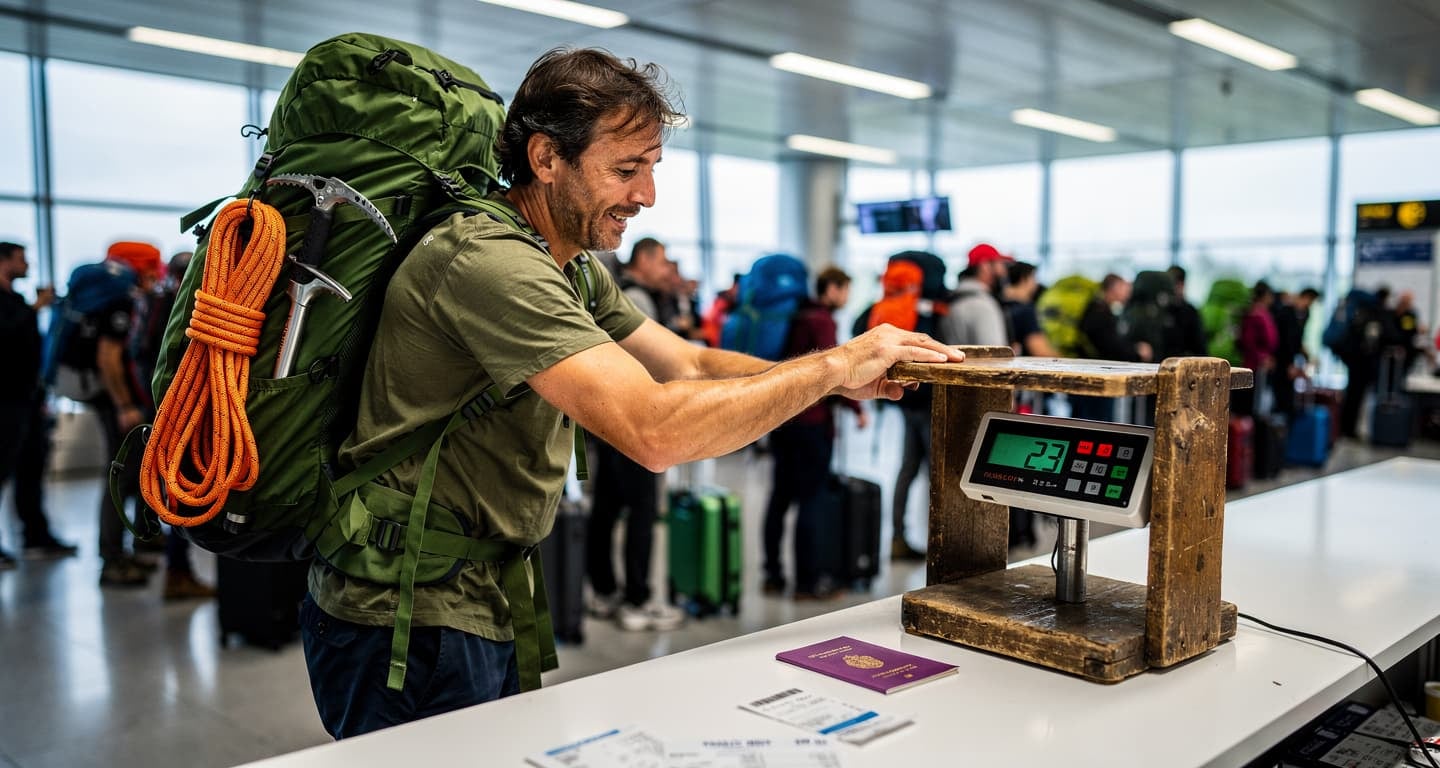
Passengers have been showing up at American Airlines check-in counters with hospital beds, massage tables, and wagons — and asking to check them free as medical devices. Some have tried soap.
The airline responded in early May 2026 with an internal agent update clarifying exactly what qualifies for a bag-fee waiver and what does not. The clarification does not create new rules; it tells agents to hold the line on rules that already exist. The practical effect for travelers at DFW, CLT, ORD, and other American hubs is immediate: expect longer check-in queues, sharper documentation demands, and zero tolerance for creative interpretations of “medical necessity.”
Legitimate device users are caught in the crossfire.
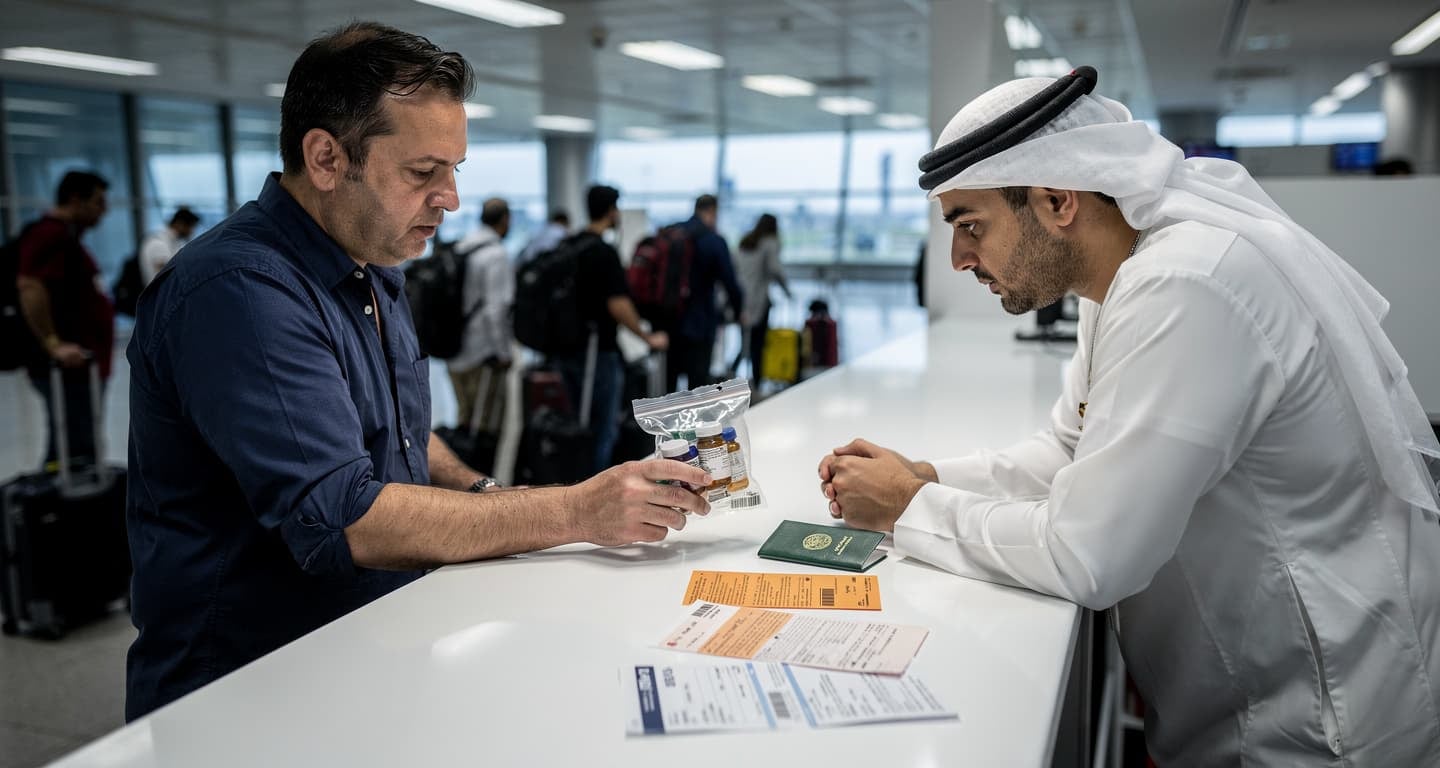
Wheelchairs, scooters, CPAP machines, canes, and other equipment that genuinely assists a passenger in coping with a disability still check free — at the counter or gate. But agents are now verifying more carefully, and travelers without advance documentation are discovering that “I need this” is not a policy argument. Disputes at the counter add 10 to 20 minutes per case, and at a busy hub during peak hours, that math compounds fast.
What the policy actually says — and what it rules out
American Airlines defines a qualifying medical device as any piece of equipment that assists a passenger in coping with the effects of a disability, specifically to help them hear, see, communicate, maneuver, or perform other functions of daily life. That definition, drawn directly from the airline’s mobility and medical devices policy, is the standard agents now apply at the counter.
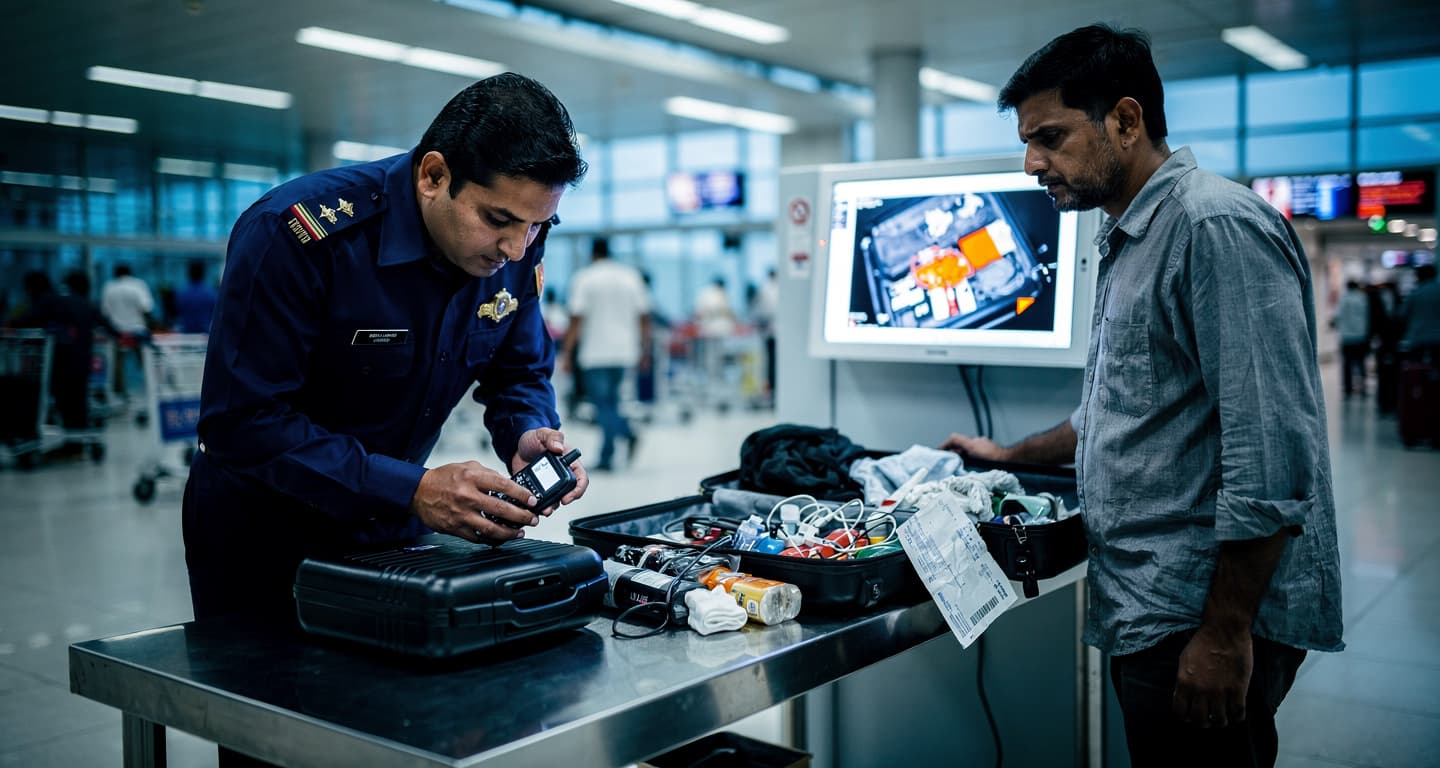
The agent clarification explicitly names items that fail the test: chiropractic and massage tables, devices that can also be used recreationally, and — in a detail that says something about the state of airport check-in — lotion and soap. Hospital beds and wagons fall under the same exclusion logic: they do not assist with a disability-related function as defined by the policy.
| Item | Qualifies for free check? | Standard fee if denied |
|---|---|---|
| Wheelchair / mobility scooter | Yes — counter or gate | N/A |
| CPAP / BIPAP machine | Yes — carry-on, no limit count | N/A |
| Cane / walker (collapsible) | Yes — does not count toward carry-on limit | N/A |
| Hospital bed | No | $50 first bag domestic |
| Massage / chiropractic table | No | $50 first bag domestic |
| Wagon / recreational device | No | $50 first bag domestic |
| Soap / lotion | No | $50 first bag domestic |
This story sits alongside a broader pattern of American Airlines tightening onboard and check-in item policies in 2026 — the airline’s portable charger limit introduced in May 2026 reflects the same enforcement-first posture, driven by documented safety and operational incidents.
Flight deals
most people never see
Our AI monitors 150+ airlines for pricing anomalies that traditional search engines miss. Air Traveler Club members save $650 per trip per person on average: see how it works.
Each deal saves 40–80% vs. regular fares:

Why agents are drawing the line now
The medical device exemption exists because the Air Carrier Access Act requires US airlines to accommodate passengers with disabilities without penalizing them for the equipment their condition demands. That is a legitimate and important protection. What the law does not require — and what American is now making explicit — is that airlines extend the same courtesy to items that happen to be large, awkward, or expensive to ship through normal channels.
The pattern here is recognizable to anyone who has watched baggage policy enforcement cycles. A waiver category exists for genuine need. Word spreads that the category is loosely enforced. Abuse climbs. The airline issues a clarification. Agents tighten up. Legitimate users pay the price in extra scrutiny while the people who gamed the system simply move on to the next workaround. It is a cycle that repeats across every major US carrier, and it never ends cleanly.
From a DOT perspective, passengers have no automatic compensation rights if a medical device waiver is denied for a non-qualifying item. If a traveler believes they were incorrectly charged, a refund claim can be filed within 45 days via aa.com. EU261, UK261, and Australian Consumer Law do not apply here — this is a US carrier domestic policy enforcement matter, not a delay or cancellation scenario.
Steps to take before your next American Airlines flight
The agent clarification is live now — counter staff at every American Airlines hub are applying tighter scrutiny to medical device waiver claims, and disputes are adding meaningful time to check-in.
- Legitimate medical device, existing booking: Log into aa.com, go to Manage Trip, select Special Assistance, and add your device request at least 48 hours before departure. Upload or carry a doctor’s letter specifying the device and its function. Call 800-237-7976 to confirm the request was logged. Arriving at the counter without pre-notification is the single most common reason legitimate users face delays.
- Oversized non-medical item, new trip: Prepay bags online — first bag costs $45 online versus $50 at the airport. For genuinely large items (think: anything that requires its own cart), ship via UPS or FedEx. The math almost always favors shipping over checked-bag fees plus dispute time.
- Currently in transit or at the airport now: Go directly to the Special Assistance desk before joining the standard check-in queue. Bring any supporting documentation. If the item qualifies, gate-check approval bypasses the counter entirely and saves time.
- Damage to a checked device: Inspect immediately on arrival and file a report at the Baggage Office before leaving the airport. The window for domestic claims is 24 hours — after that, the claim is forfeit regardless of damage value.
Watch: American Airlines‘ Q2 2026 earnings call in July will reveal whether baggage fee revenue has risen meaningfully year-on-year. A significant increase would signal further agent training and tighter enforcement across borderline categories — not just the obvious ones.

Questions? Answers.
Does a CPAP machine count as a free medical device on American Airlines?
Yes. CPAP and BIPAP machines qualify as assistive devices and do not count toward carry-on bag limits when brought aboard. They must be collapsible or storable under the seat. No fee applies. Pre-notify via Special Assistance on aa.com if traveling with additional related equipment.
What happens if I’m incorrectly charged a bag fee for a legitimate medical device?
File a refund claim within 45 days via aa.com. Keep your receipt and any documentation you presented at check-in. DOT rules do not mandate automatic compensation, but airlines are required to process refund requests for erroneous charges. If the claim is denied, escalate to the DOT’s Aviation Consumer Protection Division.
Can I check a hospital bed or massage table as oversized baggage if I pay the fee?
Potentially, but it depends on size and weight limits. American Airlines oversized bag fees apply to items exceeding standard dimensions, and some items may be refused entirely if they cannot be safely handled. Contact American Airlines cargo or special items handling before arriving at the airport — showing up without pre-approval risks a flat refusal.
Does EU261 or Australian Consumer Law protect me if my medical device waiver is denied?
No. EU261 and UK261 cover flight delays and cancellations, not baggage fee disputes. Australian Consumer Law similarly does not mandate specific baggage waiver outcomes for US carriers operating domestic US routes. This is a US domestic policy matter governed by the Air Carrier Access Act and DOT rules, not international passenger rights frameworks.