Every week, thousands of travelers book United, ANA, and JAL flights from California to Tokyo paying $1,400-1,800 roundtrip. Meanwhile, a JAL subsidiary operates the identical route—same 787 aircraft, same nonstop service to Narita—starting at $650. The airline is Zipair Tokyo, and the pricing gap exists because most travelers don’t know it’s there.
The January 2026 “Opening Sale” pushed this arbitrage even further. One-way fares dropped to $259 from LAX, $284 from San Francisco and San Jose, and 361 CAD from Vancouver. Even after the sale window closed, the travel period extends through May 31, 2026—and the structural savings remain year-round.
Why the gap exists: JAL’s unbundled experiment
Zipair launched in 2020 as Japan Airlines’ answer to a question legacy carriers hate asking: what happens when you strip everything out? No complimentary meals. No seatback screens. No free seat selection. No checked bags beyond 7kg included in base fares.
The result is a Ultra-Low-Cost Carrier (ULCC) model applied to long-haul transpacific routes—territory where budget carriers historically struggled. Norwegian tried it. WOW Air tried it. Both collapsed. Zipair survives because JAL’s operational backbone handles the complexity while the consumer-facing product stays ruthlessly simple.
The 787 paradox
Zipair operates the same Boeing 787 Dreamliner that United and ANA use on identical routes. The aircraft’s fuel efficiency enables the economics—but passengers paying $1,000 less sit in the same airframe, breathing the same lower-altitude cabin pressure, looking out the same electrochromic windows. The difference is entirely in what you don’t receive.
This isn’t a promotional gimmick or loss-leader strategy. Zipair has operated profitably since 2022 by filling planes with passengers who understand the trade-off: you’re buying transportation, not hospitality.
The real math: loaded fares vs legacy pricing
The social media claim of “$650-800 roundtrip” holds up—but only as a starting point. Most travelers will add services, and the savings calculation depends on what you actually need.
| Route | Zipair Base RT | Loaded RT | Legacy Avg RT | Savings |
|---|---|---|---|---|
| LAX-NRT | $518 | $750 | $1,500 | 50% |
| SFO-NRT | $568 | $790 | $1,600 | 51% |
| SJC-NRT | $568 | $790 | $1,450 | 46% |
| YVR-NRT | $477 USD | $700 | $1,400 | 50% |
The “loaded” column assumes $100-140 in add-ons: one checked bag ($50), meal service ($30-40), and seat selection ($20-50). Solo travelers packing light can skip most of this. Families with four checked bags see the gap narrow significantly—but still save $400+ per person versus ANA or United.
Flight deals
most people never see
Our AI monitors 150+ airlines for pricing anomalies that traditional search engines miss. Air Traveler Club members save $650 per trip per person on average: see how it works.
Each deal saves 40–80% vs. regular fares:

The lie-flat anomaly
Economy savings are compelling. Premium cabin savings are extraordinary.
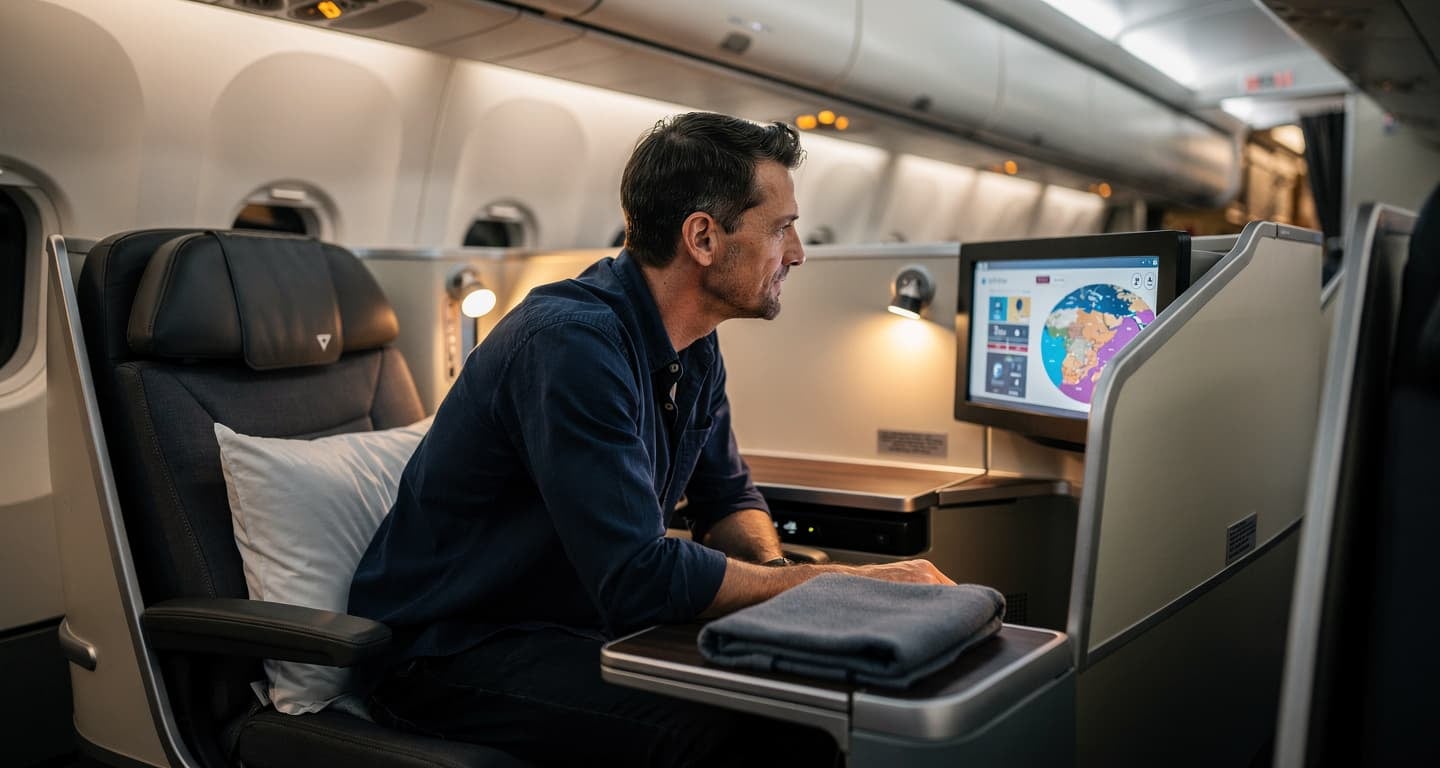
Zipair’s Zip Full-Flat product offers a fully lie-flat seat—the same 180-degree recline you’d find in JAL business class—for approximately $2,500 roundtrip. The identical routing on JAL, ANA, or United business class runs $6,000-8,000.
The catch: Full-Flat is still unbundled. No lounge access. No priority boarding. No complimentary champagne. You’re buying the seat, not the experience. Add $100-200 for meals and amenities, and you’re still paying 58% less than legacy business class.
For travelers who need to sleep on a 11-hour flight but don’t need the white-glove treatment, this is the math that makes business class accessible.
When this strategy breaks down
Zipair’s pricing advantage isn’t universal. Three scenarios erode or eliminate the savings:
- Large families with baggage: Four travelers with two checked bags each adds $400+ in fees. The gap versus legacy carriers shrinks to $200-300 per person—still meaningful, but the hassle factor increases.
- Peak March travel: Cherry blossom season pushes Zipair fares 20-30% higher while legacy carriers discount to fill planes. The structural gap compresses during Japan’s busiest tourist window.
- East Coast or Midwest origins: No direct Zipair service exists outside the four West Coast gateways. Positioning flights from New York or Chicago add $200-400 and 6+ hours, often eliminating the savings entirely.
The sweet spot is solo travelers or couples departing from LAX, SFO, SJC, or Vancouver during shoulder season (April-May or September-November). These passengers capture the full $600-1,000 savings with minimal friction.
Booking strategy and timing
Zipair fares follow predictable patterns. August shows the lowest prices (one-way fares around $258), while March peaks 25-30% higher. KAYAK data suggests booking one week ahead captures sub-$878 roundtrip fares outside promotional windows.
The January 2026 sale closed on January 26, but the travel window extends through May 31. If you missed the booking deadline, monitor Zipair’s official site for flash sales—they typically announce 2-3 per year with similar pricing.
One operational note: Zipair allows same-day connections through Narita to Bangkok, Seoul, Singapore, and Manila. Arrivals and departures must be at least one hour apart, and bags can be through-checked. Overnight connections are not permitted—you’d need to clear customs, collect bags, and re-enter the next day.
The bottom line for strategic bookers
Zipair represents the clearest arbitrage opportunity in transpacific travel. A JAL subsidiary operating modern 787s on nonstop routes, priced 40-60% below the parent company and competitors. The trade-off is transparency: you pay for exactly what you use.
For travelers positioned near the four gateway cities who can pack light and don’t require in-flight entertainment screens, the savings fund an extra week in Japan. For those who need full-service hospitality, the legacy carriers remain—at legacy prices.
Questions? Answers.
Does Zipair include any checked baggage in the base fare?
Yes, base fares include 7kg of checked baggage—unusual for a ULCC. Additional weight costs $10-15 per kilogram, so a standard 23kg bag runs approximately $50 extra each way.
Can I earn or redeem JAL Mileage Bank miles on Zipair?
Yes, bidirectional transfers exist between JAL Mileage Bank and Zipair Point Club. However, earning rates are lower than on JAL metal, and redemption availability is limited. Treat it as a bonus, not a strategy.
How does Zipair handle in-flight entertainment without seatback screens?
Zipair offers streaming content to personal devices via onboard WiFi. You’ll need to download the app before departure and bring your own tablet or phone. No screens means no screen-related maintenance delays—one reason the ULCC model works.
Is Zipair’s on-time performance reliable given the budget model?
Zipair operates under JAL’s operational umbrella with Boeing 787s—the same aircraft and maintenance standards as the parent carrier. No significant reliability issues have been reported since launch, though the smaller fleet means fewer rebooking options if delays occur.
What happens if I need to change or cancel a Zipair booking?
Zipair charges change fees of $50-100 depending on fare class, plus any fare difference. Cancellations typically receive credit rather than refunds. Travel insurance is advisable given the limited flexibility compared to legacy carriers’ premium tickets.
Are fuel surcharges included in the advertised promotional fares?
Base fares exclude fuel surcharges, which add approximately $100-150 roundtrip depending on oil prices. The social media claim of “$650-800 roundtrip” accounts for this, landing at realistic all-in pricing after taxes and surcharges.