Quick summary
T’way Air flies Sydney to Seoul Incheon three times weekly on A330-300 widebodies, pricing December peak return fares at approximately A$1,300 versus A$2,200+ for Qantas codeshare connections—a 41% saving that translates to A$2,800 less for a family of four even after adding checked baggage and meals. Jetstar and Korean Air also operate the route daily, filling the competitive spectrum between budget and full-service.
The savings gap narrows significantly once heavy baggage add-ons stack up, and T’way’s limited three-day-a-week schedule means peak inventory vanishes fast. The full breakdown covers total cost comparisons across all four direct operators, reliability data, and the specific scenarios where budget carrier math stops working.
A family of four flying Sydney to Seoul this December will pay roughly A$8,800 on Qantas connections or A$5,800 on T’way Air—a A$3,000 difference that covers a full week of Seoul accommodation. The saving isn’t a promotional fluke. T’way Air, South Korea’s largest low-cost carrier, operates the SYD-ICN route on Airbus A330-300 widebodies with a flight time of 10 hours 50 minutes—identical to the legacy carriers sharing the same corridor.
Air Traveler Club’s fare analysis across four direct SYD-ICN operators for December 2026 and January 2027 peak travel shows T’way consistently pricing 35-45% below the Qantas baseline after accounting for unbundled add-ons. For Australian travelers departing Sydney between December 1, 2026 and January 15, 2027, the decision hinges on total cost arithmetic, not just base fare headlines.
Four airlines, one route, wildly different prices
Sydney to Seoul Incheon is served by four direct operators, each targeting a different price-service balance. The pricing patterns our AI-powered Superdeal detection system for Australasia monitors daily confirm these gaps persist across the entire December-January peak window, not just isolated dates.
| Airline | Base RT Fare | Bags and Meals (RT) | Total per Pax | Family of 4 |
|---|---|---|---|---|
| T’way Air | A$1,300 | A$150 | A$1,450 | A$5,800 |
| Jetstar | A$1,600 | A$200 | A$1,800 | A$7,200 |
| Korean Air | A$2,000 | Included | A$2,000 | A$8,000 |
| Qantas (indirect) | A$2,200 | Included | A$2,200 | A$8,800 |
The critical detail: Qantas does not operate a direct SYD-ICN service. Its fares route through codeshare partners or one-stop connections, meaning you pay a premium for the Qantas brand while potentially adding transit time. Korean Air and Asiana both fly direct daily on Boeing 777s with full-service inclusions. T’way and Jetstar compete on the unbundled end, where base fares look dramatic but add-ons require careful calculation.
The unbundled math: when cheap stays cheap
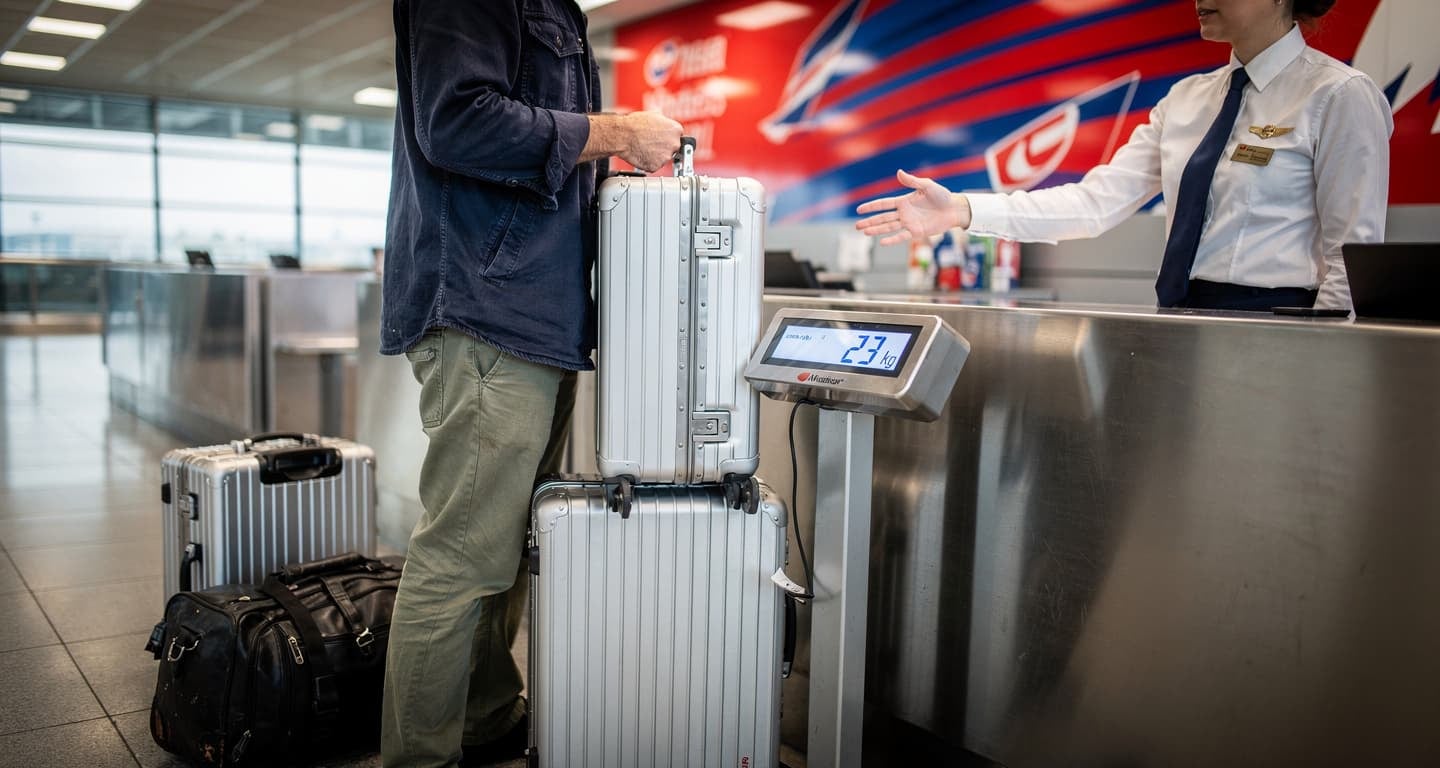
T’way’s cheapest fares exclude checked baggage and meals—a standard low-cost carrier model that catches infrequent budget flyers off guard. Expect roughly A$75-100 return per passenger for a 23-30kg checked bag and A$50-75 for meal packages. That pushes the real per-person cost from A$1,300 to approximately A$1,450.
Even at A$1,450 all-in, the gap against Qantas remains A$750 per person—or A$3,000 for a family of four. As our deep analysis of budget airline pricing to Asia demonstrates, the savings hold up under scrutiny for most travellers, but the margin compresses fast for heavy packers.
T’way’s quiet Australian expansion
T’way Air launched the SYD-ICN route as part of South Korea’s post-pandemic low-cost carrier boom, which saw Korean budget airlines collectively capture over 30% of international capacity from Incheon by 2025. The carrier now operates A330-300 widebodies on the route—the same airframe type Qantas uses on comparable sectors—departing Sydney at 11:40 and arriving Seoul at 21:30 local time.
A solo traveller with carry-on only sees the biggest percentage saving. A family hauling 30kg bags each and wanting hot meals still saves substantially, but should budget A$150-200 per person in add-ons rather than the A$75 minimum. Pre-purchase everything at booking—airport gate fees for bags can double the online price.
Flight deals
most people never see
Our AI monitors 150+ airlines for pricing anomalies that traditional search engines miss. Air Traveler Club members save $650 per trip per person on average: see how it works.
Each deal saves 40–80% vs. regular fares:

Schedule constraints that shape your booking
T’way operates SYD-ICN just three days per week—Tuesday, Thursday, and Saturday—compared to daily services from Korean Air, Asiana, and Jetstar. The SYD-ICN flight schedule across all four direct operators reveals T’way’s limited frequency clearly: roughly 156 seats per flight on an A330-300 versus Korean Air’s daily 777 carrying 300+ passengers.
That capacity gap has two consequences. First, peak December inventory vanishes 60+ days before departure. Families targeting school holiday dates should book by early October 2026 at the latest. Second, if T’way cancels your flight—historical data shows approximately 5% cancellation rates and 20% delays on the reverse ICN-SYD leg—the next T’way departure may be two days away.
Travellers with rigid date requirements or tight onward connections from Incheon should factor this into their risk calculation. Korean Air’s daily service offers a reliability buffer that T’way’s schedule simply cannot match.
Three scenarios where the savings disappear
T’way’s pricing advantage is real but not universal. These situations erode or eliminate the gap:
- Excess baggage beyond 30kg per person. Families travelling with sports equipment, strollers, or gifts can face A$200-300 per person in overweight charges. At that level, Korean Air’s included 23kg allowance plus generous excess policies narrows the gap to under A$200 per person—barely worth the schedule risk.
- Mid-week travel requirements. T’way doesn’t fly Monday, Wednesday, or Friday. If your dates are fixed to those days, Jetstar’s daily 787 service at roughly A$1,800 all-in becomes the budget alternative, cutting the Qantas gap to A$400 per person rather than A$750.
- Tight Incheon connections. If Seoul is a transit point to Japan or Southeast Asia, T’way’s evening 21:30 arrival limits same-day connections. Korean Air’s 07:55 departure from Sydney arrives earlier, feeding into ICN’s extensive afternoon connection bank. For travellers using alternative Australian departure airports to optimise connections, the full routing matters more than the SYD-ICN segment alone.
Booking strategy for December and January peak
T’way’s small inventory and peak demand create a narrow booking window. The optimal approach for December 2026 travel:
- Search by early October 2026. T’way loads peak-season inventory 3-4 months ahead. The A$1,200-1,400 base fares the carrier holds during initial release climb to A$1,600+ once early inventory sells.
- Compare total costs, not base fares. Add checked baggage and meals at the booking stage. A$1,300 base plus A$150 add-ons (A$1,450 total) versus Korean Air’s A$2,000 all-inclusive is the real comparison.
- Book directly with T’way. Third-party OTAs sometimes strip baggage bundle discounts. The carrier’s own booking engine typically offers the cheapest add-on packages, and direct bookings simplify rebooking if schedule changes occur.
For travellers with flexible dates, shoulder weeks around December 10-15 and January 8-15 often show A$100-200 lower fares than the Christmas and New Year core window. The Minimum Connection Time at Incheon for domestic Korean connections is 60 minutes, but allow 90+ minutes given T’way’s delay history.
Questions? Answers.
Does Qantas fly direct from Sydney to Seoul?
No. Qantas does not operate a direct SYD-ICN service. Fares marketed under the Qantas brand typically route through codeshare partners like Korean Air or involve one-stop connections via cities like Singapore. The A$2,200+ pricing reflects this indirect routing with full-service inclusions.
What aircraft does T’way use on the Sydney-Seoul route?
T’way operates an Airbus A330-300 widebody on the SYD-ICN route, departing Sydney at 11:40 and arriving Seoul Incheon at 21:30. This is the same aircraft family Qantas and other full-service carriers use on comparable medium-long-haul sectors, with a 2-4-2 or 3-3-3 economy configuration depending on variant.
How reliable is T’way Air for holiday travel?
Historical data from the reverse ICN-SYD route shows approximately 20% of flights experiencing delays and 5% cancellations. For holiday travel, build a one-day buffer before any onward plans in Seoul. T’way’s three-day-a-week schedule means a cancellation could strand you for up to 48 hours before the next available flight.
Can I earn frequent flyer points on T’way flights?
T’way is not a member of any major airline alliance (Star Alliance, oneworld, or SkyTeam), so you cannot earn Qantas Frequent Flyer, Velocity, or Korean Air SkyPass points on T’way tickets. Some third-party booking platforms offer their own loyalty credits, but direct airline point earning is not available.
Is Jetstar a better budget option than T’way for this route?
Jetstar operates daily SYD-ICN flights on Boeing 787 Dreamliners, offering more schedule flexibility than T’way’s three weekly flights. However, Jetstar’s peak December base fares run approximately A$300 higher than T’way (A$1,600 vs A$1,300), and add-on costs are comparable. Choose Jetstar if you need specific travel dates T’way doesn’t cover, or if daily frequency and a newer aircraft cabin matter more than the A$300-350 per person difference.
Should I consider flying from Melbourne or Brisbane instead?
T’way does not currently operate Seoul services from Melbourne or Brisbane—the SYD-ICN route is their only Australian departure. Korean Air and Jetstar serve additional Australian cities, but pricing structures differ. If you are based outside Sydney, factor in positioning flight costs (A$100-200 return on domestic carriers) against the T’way saving to determine whether the total economics still work.