Quick summary
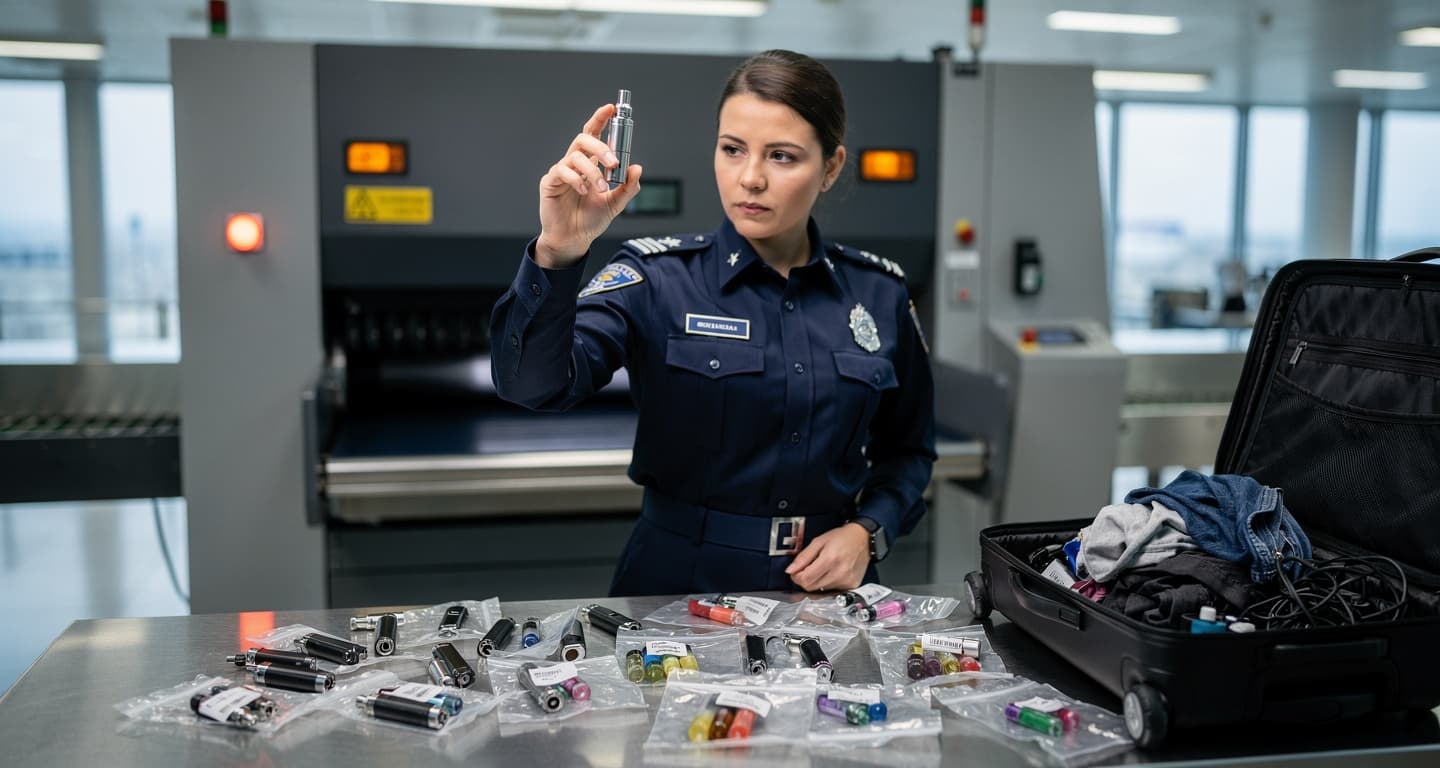
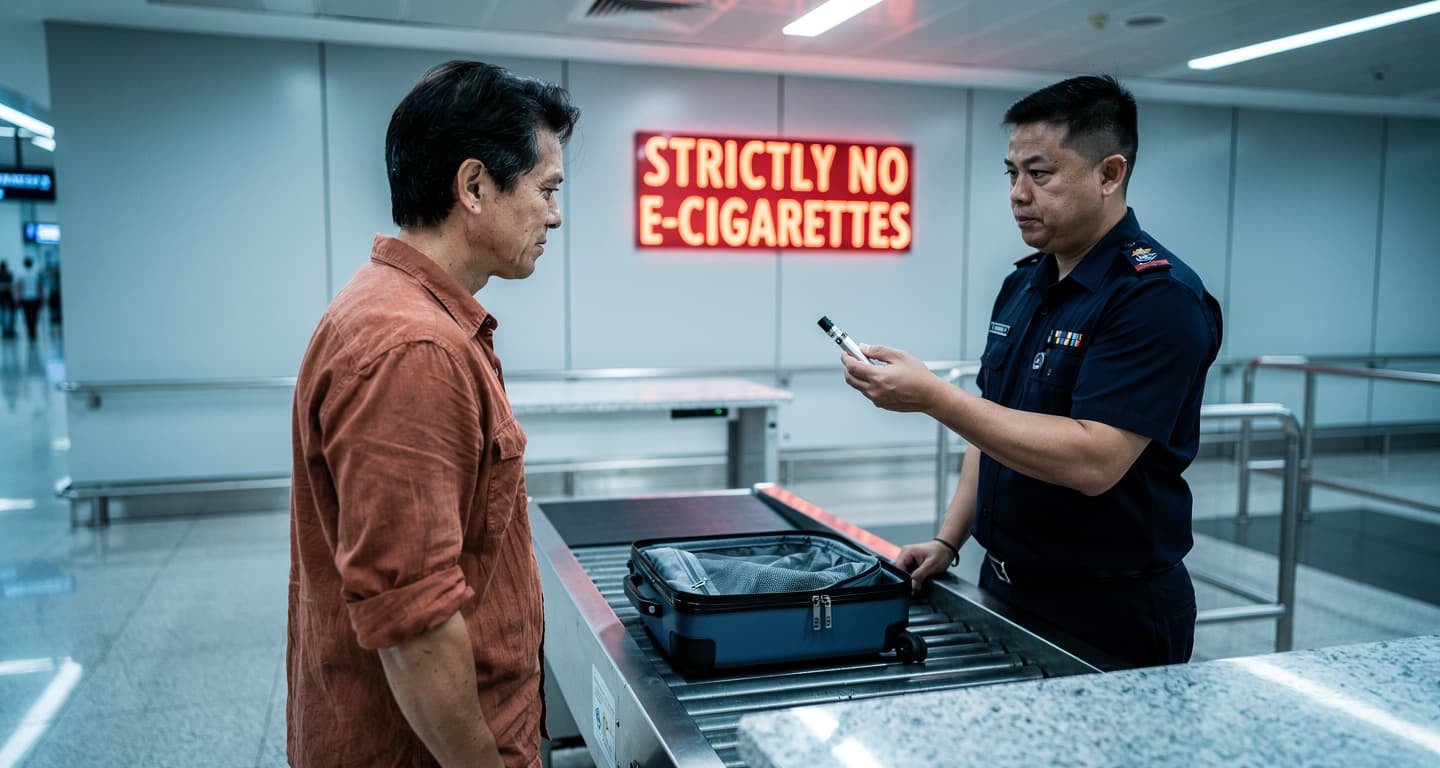
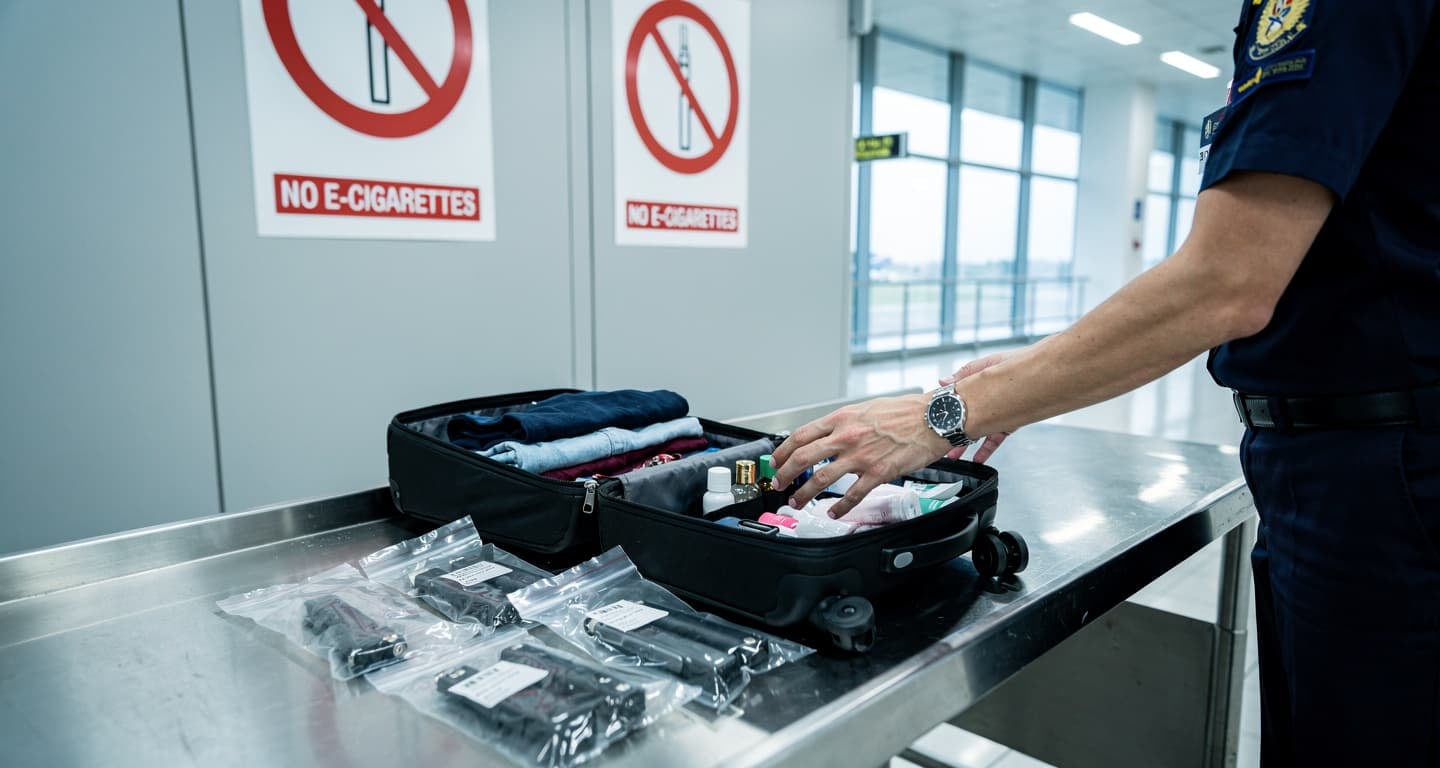
Thailand enforces a total ban on e-cigarettes, vapes, pods, chargers, and e-liquids—with on-the-spot fines of 20,000–50,000 THB ($550–$1,400 USD) at Suvarnabhumi and regional airports, and imprisonment up to 10 years under the Customs Act B.E. 2560. Airport X-ray scanners detect devices in both carry-on and checked bags, and a 2025 informant reward system paying 60% of collected fines has tripled detection rates.
The ban covers every component with zero exceptions for empty devices, medical prescriptions, or transit passengers. Nicotine patches and gum remain legal alternatives available at Thai pharmacies.
Bringing a vape to Thailand can cost you $550–$1,400 on the spot—or up to 10 years in prison. Thailand’s ban on e-cigarettes is not advisory, not selectively enforced, and not limited to active devices. Every component—pods, chargers, e-liquids, even empty hardware—is classified as a prohibited import under the Customs Act B.E. 2560. Fines are calculated at four times the assessed customs value of the device, producing typical penalties of 20,000–50,000 THB payable in cash at the airport.
Air Traveler Club’s travel compliance monitoring system flagged intensified enforcement at Bangkok’s Suvarnabhumi (BKK) and U-Tapao (UTP) airports in Q1 2026, with scanner-based detections tripling year-over-year following Thailand’s 2025 informant reward program. For anyone departing to Thailand between now and late 2026, the only safe strategy is total elimination of vaping equipment from all luggage before boarding.
Why Thailand’s enforcement hits harder than you expect
Thailand’s vape prohibition originates from Consumer Protection Board Order No. 131/2558, issued in 2015 and reaffirmed in 2024. The order bans the import, sale, and possession of “consumer products resembling cigarettes”—a definition broad enough to capture disposable vapes, refillable mods, standalone chargers, and empty cartridges. Criminal penalties flow through the Customs Act, which treats vaping equipment identically to other prohibited imports.
What makes Thailand’s system unusually aggressive is the informant reward structure introduced in 2025. Anyone—hotel staff, taxi drivers, fellow tourists—who reports a vape user to police receives 60% of the resulting fine. A 30,000 THB fine on a tourist means 18,000 THB ($500) for the informant. This financial incentive has expanded enforcement far beyond airports into beaches, hotels, and nightlife districts.
The £25 disposable that cost £800
In early 2026, a UK tourist at Suvarnabhumi was fined over £800 for a single disposable vape valued at £25. Thai customs assessed the device at 4x its declared value, then applied administrative surcharges. The UK FCDO’s Thailand travel advisory now explicitly warns of fines or imprisonment for vape possession, reflecting multiple similar incidents reported through consular channels.
On-the-spot fines demand cash payment. Refusal or inability to pay risks detention and potential deportation proceedings. There is no negotiation window, no warning system, and no distinction between first-time and repeat offenders at the customs checkpoint itself.
What counts as prohibited—and what scanners actually detect
Thai customs officers treat vaping equipment as a single category of prohibited goods. The distinction between “active device” and “harmless accessory” does not exist in Thai law. Specifically banned items include:
- Complete devices—disposable vapes, pod systems, box mods, and pen-style e-cigarettes regardless of whether they contain liquid.
- Components—replacement coils, empty pods, USB charging cables identifiable as vape accessories, and carrying cases.
- E-liquids—nicotine and zero-nicotine formulations alike, in any container size.
International Air Transport Association (IATA) dangerous goods regulations already prohibit lithium-battery vaping devices in checked luggage due to fire risk. This means airport scanners flag vapes in carry-on bags during standard security screening, and Thai customs officers intercept them during the separate customs inspection that follows. Hiding a device in checked luggage doesn’t bypass detection—it creates two violations: one aviation safety, one Thai customs.
Flight deals
most people never see
Our AI monitors 150+ airlines for pricing anomalies that traditional search engines miss. Air Traveler Club members save $650 per trip per person on average: see how it works.
Each deal saves 40–80% vs. regular fares:

How Thailand compares to neighboring destinations
Thailand’s penalties sit at the extreme end of Southeast Asian enforcement. For travelers planning multi-country itineraries, the legal landscape varies dramatically across a single region. Our guide to saving on Asia-Pacific flights covers routing strategies that may help you adjust itineraries around these compliance realities.
| Destination | Legal Status | Typical Fine (USD) | Jail Risk | Airport Enforcement |
|---|---|---|---|---|
| Thailand | Illegal | $550–$1,400 | Up to 10 years | High (scanners + checkpoints) |
| Singapore | Illegal | $150–$750 | Up to 3 years | Extreme |
| Vietnam | Restricted (since Jan 2025) | $150–$600 | Low | Medium |
| Malaysia | Legal (regulated) | N/A | N/A | Low |
| Philippines | Legal | N/A | N/A | Low |
Singapore imposes lower fines but enforces with near-absolute consistency. Vietnam’s 2025 restrictions remain unevenly applied outside Hanoi and Ho Chi Minh City. Malaysia and the Philippines permit vaping with minimal restrictions, making them the only regional destinations where travelers can carry devices without legal risk.
The compliance checklist before your flight
Eliminating risk requires deliberate action before you reach the airport. For travelers booking discounted fares to Thailand through AI-detected pricing anomalies, the savings evaporate instantly if a forgotten pod triggers a 50,000 THB fine at customs.
- Search every bag compartment. Vape pods lodge in jacket pockets, laptop sleeves, toiletry bags, and backpack side pouches. Check all of them.
- Remove chargers and cables. A USB-C cable alone won’t trigger issues, but a magnetic vape charger is identifiable and confiscatable.
- Discard before the airport. Do not attempt to dispose of devices in airport bins after security—you’ve already passed through scanners at that point.
- Brief travel companions. Customs assesses fines per bag, not per person. One vape in a shared suitcase fines the bag’s registered owner.
Legal alternatives exist. Nicotine patches and nicotine gum are available over-the-counter at Boots and Watsons pharmacies throughout Thailand without prescription. Stock up on arrival if needed.
Three scenarios travelers underestimate
Beyond the standard airport checkpoint, enforcement extends into situations most visitors don’t anticipate.
- Transit passengers are not exempt. Connecting through BKK or Phuket triggers the same customs screening as arriving passengers. A layover does not create a legal buffer—your bags pass through Thai jurisdiction.
- Hotel and beach enforcement is real. The 60% informant reward means hotel housekeeping staff, bar owners, and even other tourists have financial motivation to report vape use. Police raids on Koh Phangan and Pattaya nightlife areas increased measurably in late 2025.
- Medical prescriptions carry no weight. Unlike some countries that exempt medically prescribed nicotine delivery systems, Thailand’s ban contains no medical exception. Prescription documentation will not prevent confiscation or fines.
Questions? Answers.
Can I bring nicotine patches or gum to Thailand instead of a vape?
Yes. Nicotine replacement therapies including patches, gum, and lozenges are legal in Thailand and available without prescription at Boots and Watsons pharmacy chains nationwide. Prices are comparable to Western markets.
Are disposable vapes treated differently from refillable devices?
No. Thai customs applies the same 4x assessed value formula regardless of device type. A £25 disposable vape has generated fines exceeding £800 in documented 2026 cases. The Customs Act makes no distinction between disposable and reusable hardware.
What happens if I refuse to pay the on-the-spot fine?
Refusal to pay escalates the case from an administrative fine to potential criminal proceedings under the Customs Act B.E. 2560. This can result in detention, court appearance, and deportation. Officers accept cash only—no card payments are available at customs checkpoints.
Does the ban apply if I’m only transiting through Bangkok airport?
Yes. All passengers passing through Thai airports are subject to customs inspection, including those on connecting flights. There is no transit exemption. If your bags are scanned in Thai jurisdiction, prohibited items trigger the same penalties as arriving passengers face.
Can I buy vapes legally once I’m inside Thailand?
No. Sale, possession, and use of e-cigarettes are illegal throughout Thailand. Black market purchases carry the same penalties as importation—fines up to 600,000 THB or imprisonment up to 10 years under the Customs Act.
Has enforcement actually increased, or is this just media hype?
Enforcement has measurably intensified. Thailand’s 2025 informant reward system—paying reporters 60% of collected fines—tripled detection rates at major airports according to UK FCDO and US State Department advisories updated in early 2026. Both governments independently escalated their warnings based on increased consular cases.