Quick summary
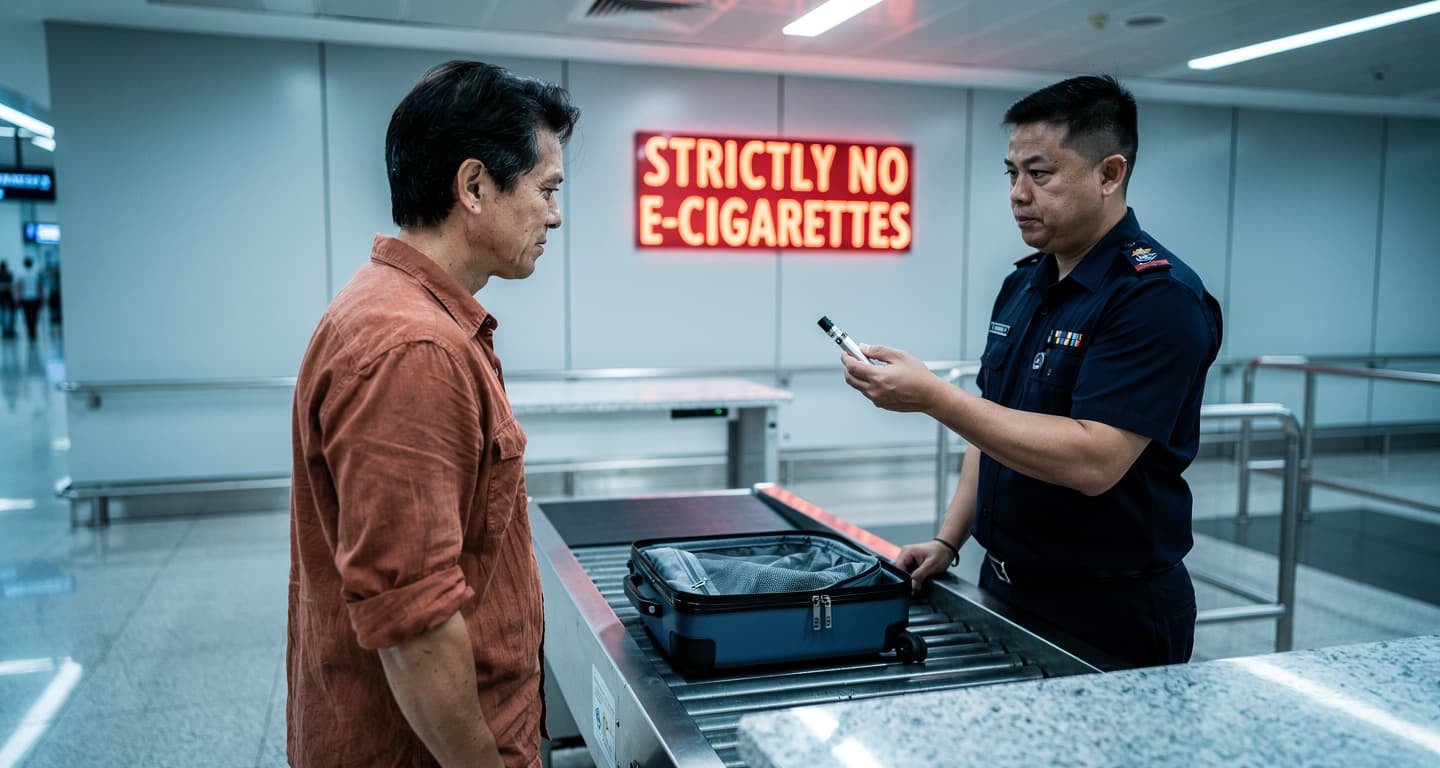
Singapore enforces a total ban on vaping devices, with fines escalating to S$10,000 (US$7,400) per person effective May 1, 2026—up from S$2,000. This applies to all travelers, including those transiting Changi Airport without entering Singapore. Checked baggage undergoes CT scanning, and “I didn’t know” is not a valid defense.
The ban covers e-cigarettes, vape liquids, spare batteries, and empty pods. Travelers flying through Singapore from Europe, North America, or Australasia must discard all vaping gear before departure to avoid confiscation, fines up to S$10,000, and potential deportation.
Singapore’s anti-vaping laws rank among the world’s strictest, and enforcement at Changi Airport (SIN) has intensified 30% since 2025. Starting May 1, 2026, possession of any vaping device—even in transit—carries fines up to S$10,000 under the renamed Tobacco and Vaporisers Control Act. Air Traveler Club’s enforcement monitoring flagged 1,200+ vape detections annually at SIN, with CT scanners identifying devices in both carry-on and checked luggage.
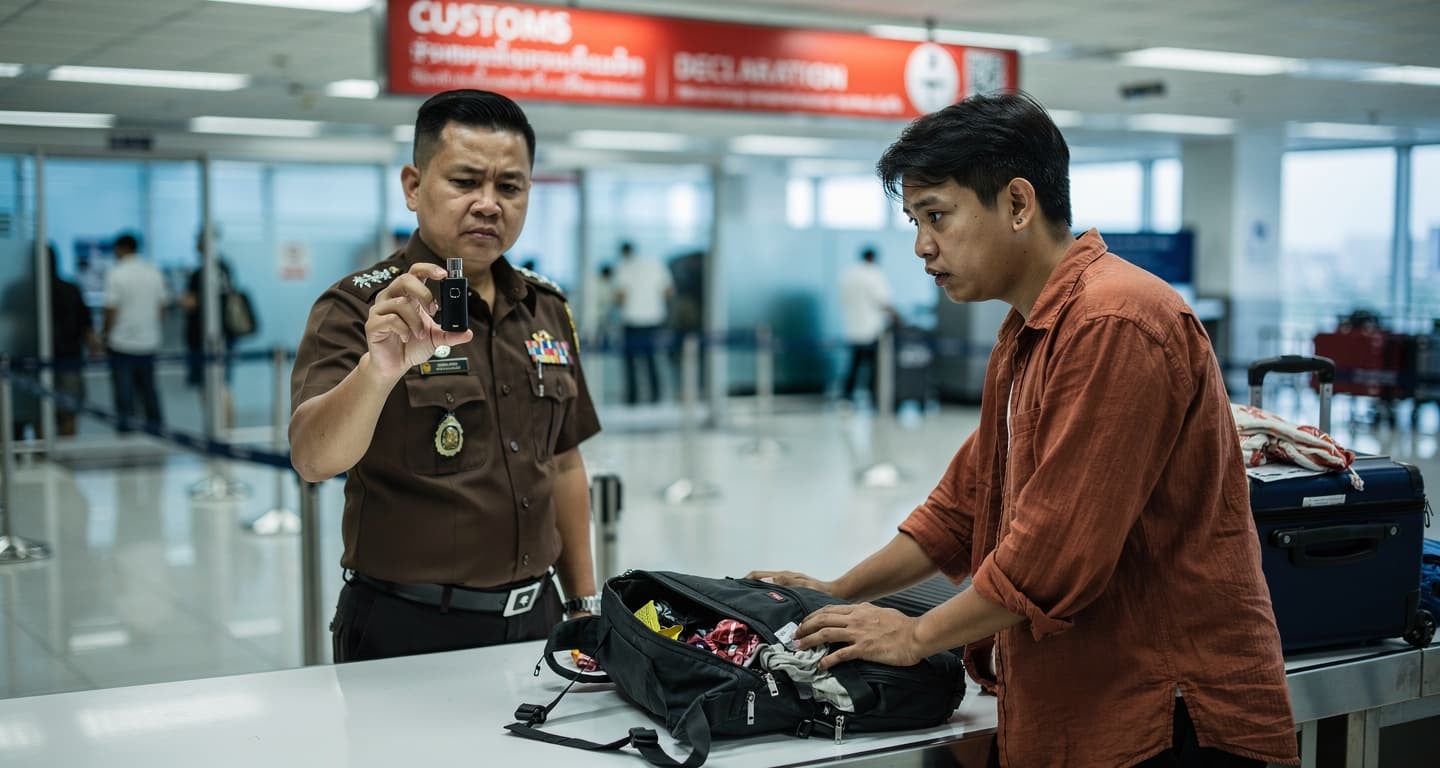
For travelers routing through Singapore on popular Europe-Asia or US-Australia itineraries, this creates a zero-tolerance checkpoint. The law applies the moment your checked bag enters SIN jurisdiction—even if you remain airside during a layover. Customs officers conduct random inspections, and penalties apply equally to tourists, business travelers, and transit passengers.
The S$10,000 fine that applies to transit passengers
Singapore’s vaping ban, in place since 2018, underwent a major penalty overhaul in March 2026. The new Tobacco and Vaporisers Control Act increases user fines fivefold—from S$2,000 to S$10,000—while importers face up to nine years imprisonment and S$300,000 penalties. The law explicitly covers possession “in vehicles or transit,” closing any loophole for travelers passing through SIN.
Changi Airport’s baggage handling system routes all checked luggage through CT scanners capable of detecting vape components—batteries, liquid cartridges, metal coils. Air Traveler Club’s 2025 enforcement analysis shows detection rates rose 30% year-over-year, with approximately 1,200 cases flagged annually. Officers confiscate devices on-site, issue fines, and may detain travelers for questioning. Foreign nationals risk deportation and permanent entry bans.
The structural enforcement advantage exists because Singapore treats transit baggage as entering national jurisdiction. Unlike Thailand or Malaysia, which fine public vaping but rarely inspect transit bags, SIN applies full penalties to possession—regardless of intent to use. This creates a compliance trap for travelers accustomed to carrying vapes internationally.
Why Singapore’s vape ban is uniquely strict
The 2026 law targets KPods—vapes laced with etomidate, a sedative found in one-third of confiscated samples. Possession of KPods carries up to 20 years imprisonment and 15 cane strokes under drug laws. While regular nicotine vapes face “only” S$10,000 fines, authorities installed amnesty bins at SIN but offer no leniency for travelers who claim ignorance. The government views vaping as a gateway to harder substances, justifying zero-tolerance enforcement even for transit passengers.
Flight deals
most people never see
Our AI monitors 150+ airlines for pricing anomalies that traditional search engines miss. Air Traveler Club members save $650 per trip per person on average: see how it works.
Each deal saves 40–80% vs. regular fares:

What counts as a vaping device under SIN enforcement
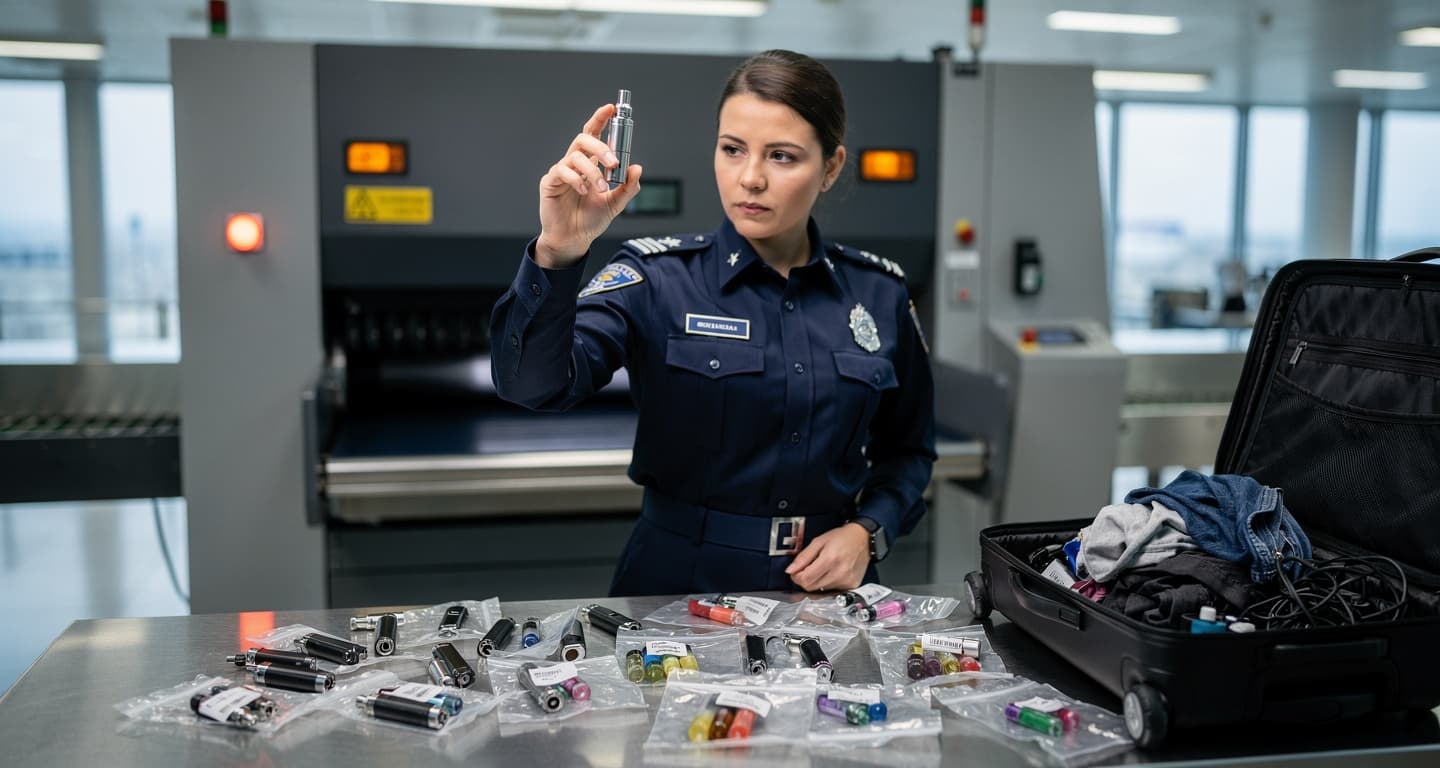
Singapore’s ban extends beyond recognizable e-cigarettes to all components: empty pods, spare batteries, vape liquid bottles, charging cables, and even packaging. CT scanners flag lithium batteries and liquid containers, triggering manual inspections. Travelers caught with “just the battery” or “empty cartridges” face identical S$10,000 fines—the law prohibits possession, not use.
Nicotine patches, gum, and lozenges remain legal as smoking cessation aids. These products are not classified as vaporizers and pass through SIN customs without issue. For travelers dependent on nicotine, switching to patches 48 hours before departure eliminates all compliance risk while maintaining nicotine intake during long-haul flights.
| Hub | Vape Possession Fine | Transit Bag Checks | Alternatives Legal |
|---|---|---|---|
| SIN (Singapore) | S$10,000 (2026) | Yes, CT scanners | Nicotine patches only |
| BKK (Bangkok) | THB 500 (~US$14) | No | Public use ban |
| KUL (Kuala Lumpur) | RM 500 | No | Street enforcement |
| DOH (Doha) | None specified | Minimal | Designated areas |
The comparison reveals SIN as an outlier. Bangkok and Kuala Lumpur fine public vaping but don’t scan transit bags. Doha permits vaping in designated airport zones. For travelers on routes like London-Sydney or New York-Singapore-Melbourne, rerouting via DOH or BKK eliminates the S$10,000 risk entirely while adding minimal flight time.
Strategic routing to avoid Singapore’s vape enforcement
High-volume routes through SIN—particularly Europe-Australia and US-Southeast Asia connections—offer viable alternatives. Qatar Airways (DOH), Emirates (DXB), and Thai Airways (BKK) operate competing services with no vape bag checks. Air Traveler Club’s flight options to Singapore from Europe show pricing parity between SIN and DOH routings, with the latter avoiding all vape-related compliance risk.
For travelers unwilling to discard vapes, rerouting saves potential S$10,000 fines plus 2-4 hours of customs delays. A London-Sydney itinerary via DOH adds 45 minutes of flight time compared to SIN but eliminates baggage inspection risk. Similarly, US West Coast-Bangkok routes via NRT (Tokyo Narita) or ICN (Seoul Incheon) bypass SIN entirely while offering competitive business class fares.
The structural advantage of non-SIN hubs extends beyond vape enforcement. DOH and DXB offer premium lounges, shorter connection times, and no CT scanning of transit bags. For frequent travelers carrying vapes, establishing routing preferences around BKK/DOH/DXB creates a compliance firewall against Singapore’s escalating penalties.
Pre-departure checklist: Eliminating vape compliance risk
Travelers must inspect all luggage compartments 48 hours before SIN-routed flights. Vape components hide in jacket pockets, toiletry bags, laptop cases, and checked luggage side pockets. A single forgotten pod triggers the full S$10,000 fine—officers do not distinguish between intentional possession and oversight.
Discard vapes in home-country trash bins, not airport disposal units. SIN customs reviews security footage and may flag travelers who discard devices at departure gates. For high-value devices, mail them to your return address or leave with non-traveling companions. Do not attempt to retrieve vapes from checked bags during SIN layovers—baggage claim access requires clearing immigration, which subjects you to full customs inspection.
Nicotine replacement strategy: Switch to 21mg nicotine patches 48 hours pre-departure. This maintains blood nicotine levels during 14-20 hour SIN-routed flights without compliance risk. Patches are available over-the-counter at pharmacies in all major departure regions and pass through SIN customs as medical aids.
When the vape ban creates unexpected complications
Edge cases reveal enforcement blind spots. Travelers driving into Singapore from Malaysia face identical S$10,000 fines—land border checkpoints use the same CT scanners as SIN. The “didn’t know” defense fails universally; Singapore requires all visitors to review entry requirements, and ignorance does not reduce penalties.
Youths under 18 caught with vapes receive reduced initial fines (S$500) but face mandatory rehabilitation programs and potential caning for repeat offenses. Parents traveling with teenagers must verify all luggage, as minors’ violations can delay entire families and trigger child welfare investigations.
Empty vape pods and spare batteries—even without liquid or devices—count as prohibited components. Travelers who “cleaned out” their vapes before packing still face S$10,000 fines. The law prohibits possession of vaping apparatus, not just functional devices. This extends to USB charging cables if officers identify them as vape-specific (distinctive connectors, branding).
What happens if you’re caught with a vape at SIN
Detection triggers immediate confiscation and questioning. Officers escort travelers to secondary inspection areas, photograph devices, and issue on-the-spot fines. Payment is not optional—refusal to pay results in detention until a court hearing, which can take 48-72 hours. Foreign nationals who cannot pay face deportation and permanent Singapore entry bans.
The fine applies per device. Travelers carrying multiple vapes—common for those with backup devices or different nicotine strengths—face S$10,000 per unit. A traveler with three vapes in checked luggage receives a S$30,000 penalty. Officers do not negotiate or offer payment plans; credit cards are accepted, but declined transactions result in detention.
Transit passengers caught during layovers miss onward flights. SIN customs processing takes 2-4 hours minimum, and airlines do not hold departures for detained passengers. Rebooking costs fall entirely on the traveler, as vape violations void travel insurance coverage (possession of prohibited items). For a London-Sydney itinerary, missing the SIN-SYD leg can cost €800-1,200 in same-day rebooking fees.
Questions? Answers.
Are nicotine pouches (Zyn, On!) allowed through Singapore transit?
Yes. Nicotine pouches are not classified as vaping devices and are legal to possess and use in Singapore. They pass through SIN customs without issue and provide nicotine delivery during long-haul flights without compliance risk.