Quick summary
Singapore imposes fines of S$2,000 (~US$1,400) for possessing e-cigarettes or vaporizers anywhere within its jurisdiction—including checked luggage transiting through Changi Airport. There is no transit exemption. Changi’s CT scanners are calibrated to detect lithium batteries and vape device shapes, flagging approximately 1,200 cases annually before a 2025 enforcement escalation pushed that figure up 30%.The ban extends to empty pods, spare batteries, and components. Nicotine patches and gum remain legal alternatives. The penalty structure, screening technology, and how this compares to other Southeast Asian hubs are detailed below.A single forgotten vape cartridge in your checked bag triggers a S$2,000 fine (~US$1,400), police questioning, and potential deportation from Singapore—even if you never leave the transit hall. Singapore’s zero-tolerance ban on e-cigarettes, enacted in 2018 and aggressively expanded in September 2025, treats possession as a criminal offense with no exemption for connecting passengers. Your bags enter Singaporean jurisdiction the moment they arrive at Changi Airport.
Air Traveler Club’s compliance monitoring system flagged the September 2025 enforcement escalation within 48 hours of Singapore’s Health Sciences Authority announcement, affecting all transit passengers on routes through SIN to Southeast Asia, Australia, and beyond. For travelers connecting through Changi in 2025-2026, the rule is absolute: no vaping devices, no components, no exceptions.
Why Changi catches what other airports miss
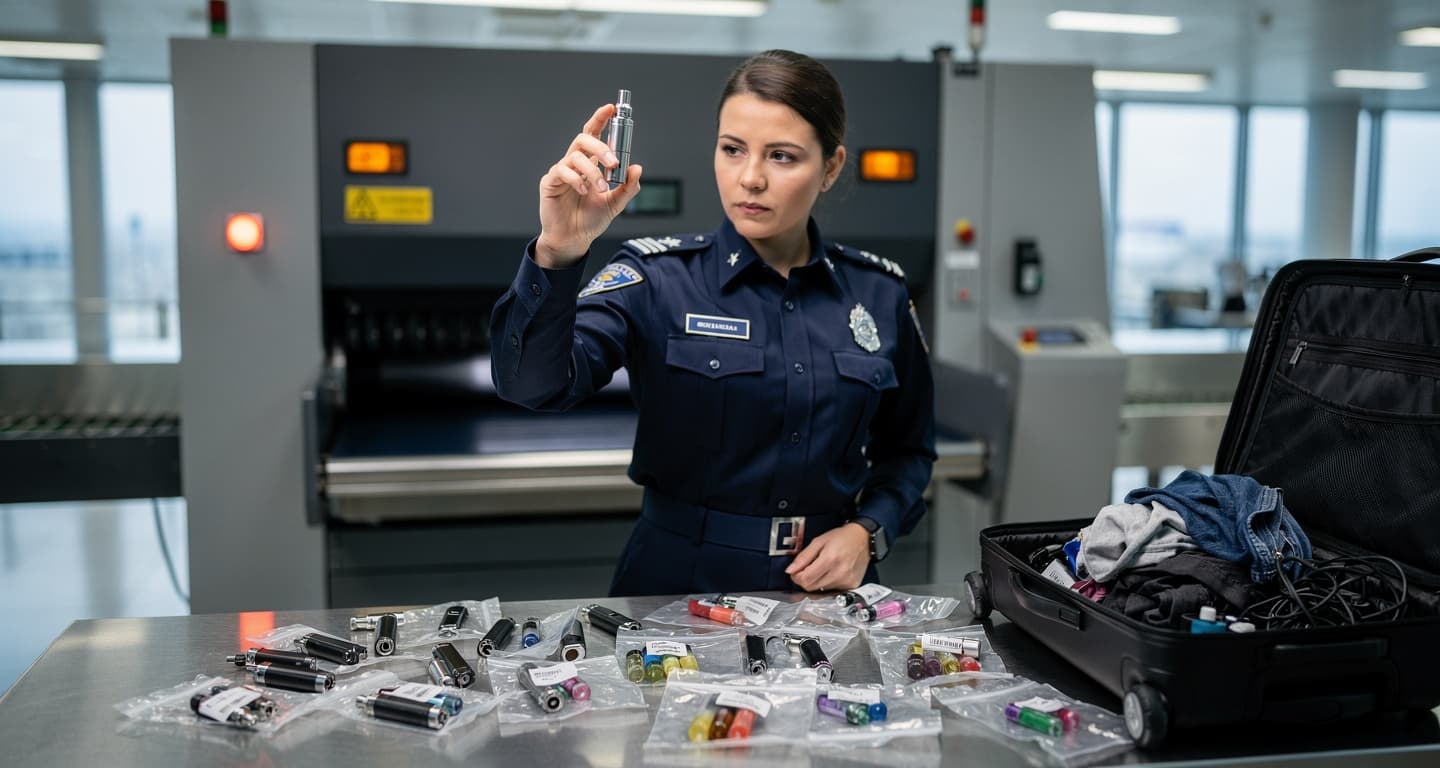
Singapore doesn’t rely on random bag checks. Changi Airport operates computed tomography (CT) X-ray scanners on all checked luggage—the same technology hospitals use for medical imaging. These systems create 3D cross-sections of bag contents, identifying objects by density, shape, and material composition. Vaping devices contain lithium batteries with a distinctive density signature that automated detection algorithms flag instantly.
The screening happens before bags reach the transit belt. Whether you’re claiming luggage or connecting airside, your checked bags pass through Singapore’s security apparatus. According to Singapore’s Immigration and Checkpoints Authority prohibited items policy, e-cigarettes and all related components are classified alongside controlled weapons and drugs—not treated as minor contraband.
Pre-2025 enforcement caught roughly 1,200 cases annually. Following the September 2025 crackdown—which reclassified etomidate-laced vape pods (K-pods) as Class C controlled substances—confiscation rates jumped 30%. Travelers transiting to popular destinations like Bali, Bangkok, and Sydney through Changi now face the strictest vape enforcement of any major Asian hub.
K-pods changed the enforcement calculus
On September 1, 2025, Singapore reclassified etomidate-laced vaping pods as Class C controlled substances, carrying penalties of up to 10 years imprisonment and caning for importers. The crackdown wasn’t just about nicotine—it was triggered by a wave of synthetic sedative pods entering through transit luggage, prompting Changi to recalibrate all screening thresholds downward.
Many travelers routing through Singapore are chasing the excellent fares available on carriers like Singapore Airlines, Scoot, and Qantas to Southeast Asia and Australia. Our AI-powered Superdeal detection system surfaces these pricing anomalies daily—but no fare savings justify a criminal record. Compliance starts before you pack.
Flight deals
most people never see
Our AI monitors 150+ airlines for pricing anomalies that traditional search engines miss. Air Traveler Club members save $650 per trip per person on average: see how it works.
Each deal saves 40–80% vs. regular fares:

The penalty structure most travelers underestimate
| Offense | First Offense Fine | Repeat / Aggravated | Additional Risk |
|---|---|---|---|
| Regular vape possession | S$700–S$2,000 | Up to 10 years jail | Confiscation, police record |
| K-pod (etomidate) possession | S$500–S$2,000 | 6 months rehab + charges | Deportation, visa ban |
| Import attempt (any quantity) | S$2,000+ | 3–20 years + caning | Permanent entry ban |
| Transit detection (checked bag) | S$2,000 | Police questioning | Flight delay, missed connection |
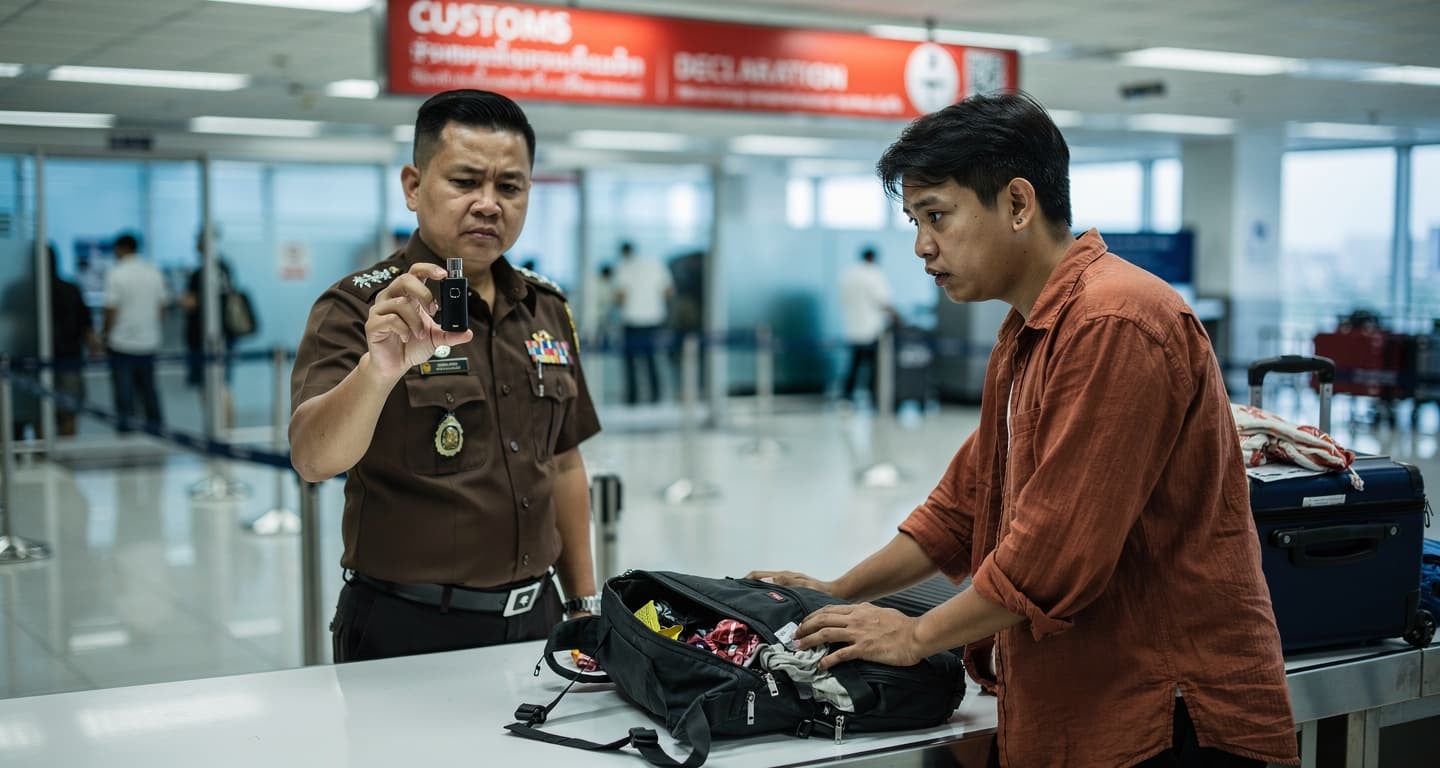
The fine distinction matters: there is no carry-on versus checked bag distinction. Both trigger identical penalties. Travelers who assume checked luggage avoids scrutiny face the highest risk because they’re least prepared for the gate-side police encounter that follows a scanner alert.
US, EU, and Australian passport holders receive no diplomatic exemptions. Fines are payable on-site, with appeals limited to a 14-day window through the Health Sciences Authority (HSA). Foreigners convicted face deportation and future visa bars—a consequence that compounds far beyond the S$2,000 fine itself.
How Singapore compares to other Asian transit hubs
Singapore stands alone in enforcing vape bans on transit passengers’ checked luggage. Thailand prohibits public vaping with fines of THB 500 (~US$14), but doesn’t screen transit bags for devices at Suvarnabhumi. Malaysia introduced public use fines of RM 500 in 2026, yet enforcement targets street-level use rather than airport cargo. Indonesia bans vape imports but rarely inspects transit luggage at Jakarta or Bali.
For travelers booking routes through multiple Southeast Asian hubs, this distinction shapes itinerary decisions. If you vape and need to connect through the region, Bangkok (BKK) or Kuala Lumpur (KUL) carry dramatically lower enforcement risk than Singapore. Our analysis of Asia-Pacific hub airports evaluates transit efficiency across these alternatives—though for vape-carrying travelers, the routing choice becomes a compliance decision, not just a comfort one.
What to do before boarding a flight through Singapore
- Search every bag compartment. Check jacket pockets, laptop sleeves, toiletry bags, and side pouches. Forgotten devices in rarely-used pockets cause most transit detections.
- Remove components, not just devices. Empty pods, spare coils, charging cables with vape-specific connectors, and loose lithium batteries designed for vaping devices all qualify as prohibited items under Singapore law.
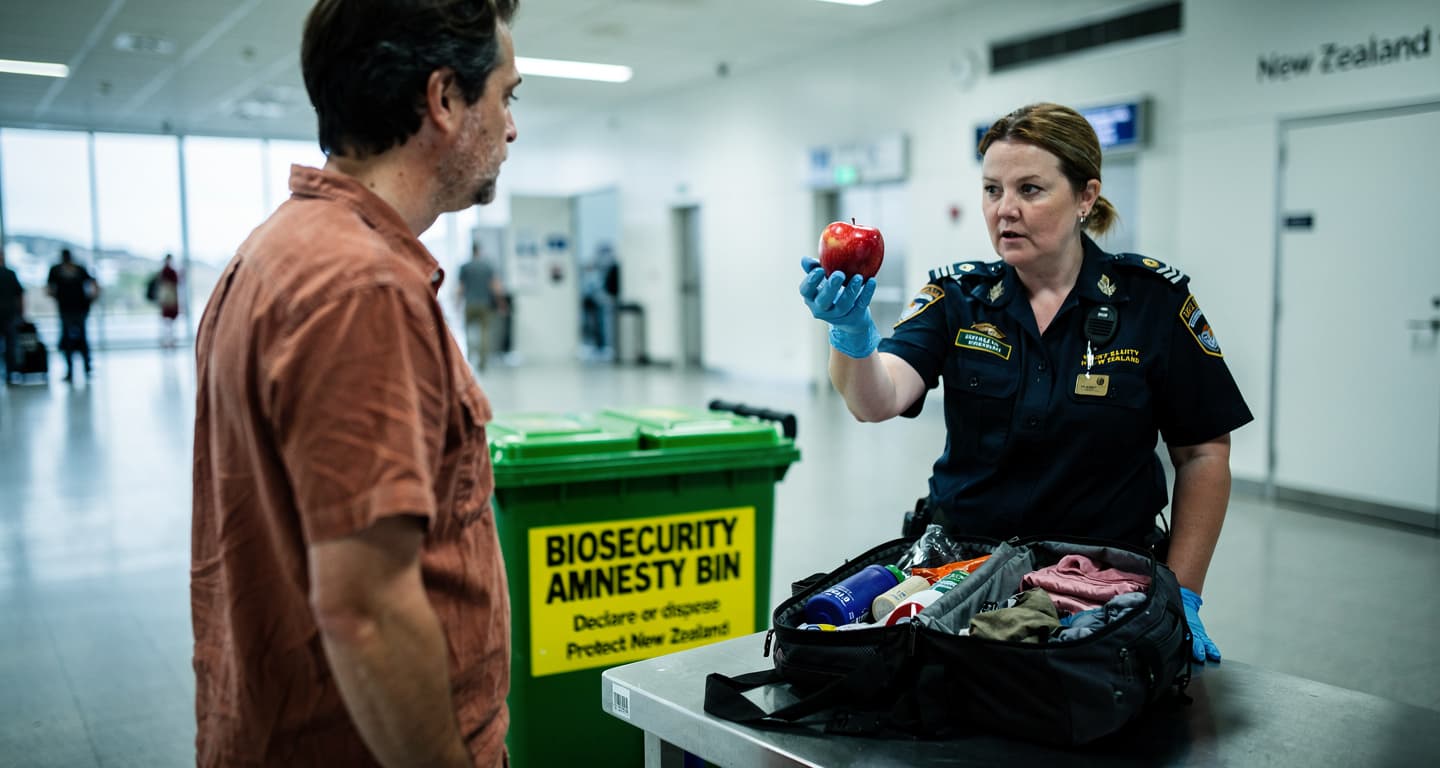
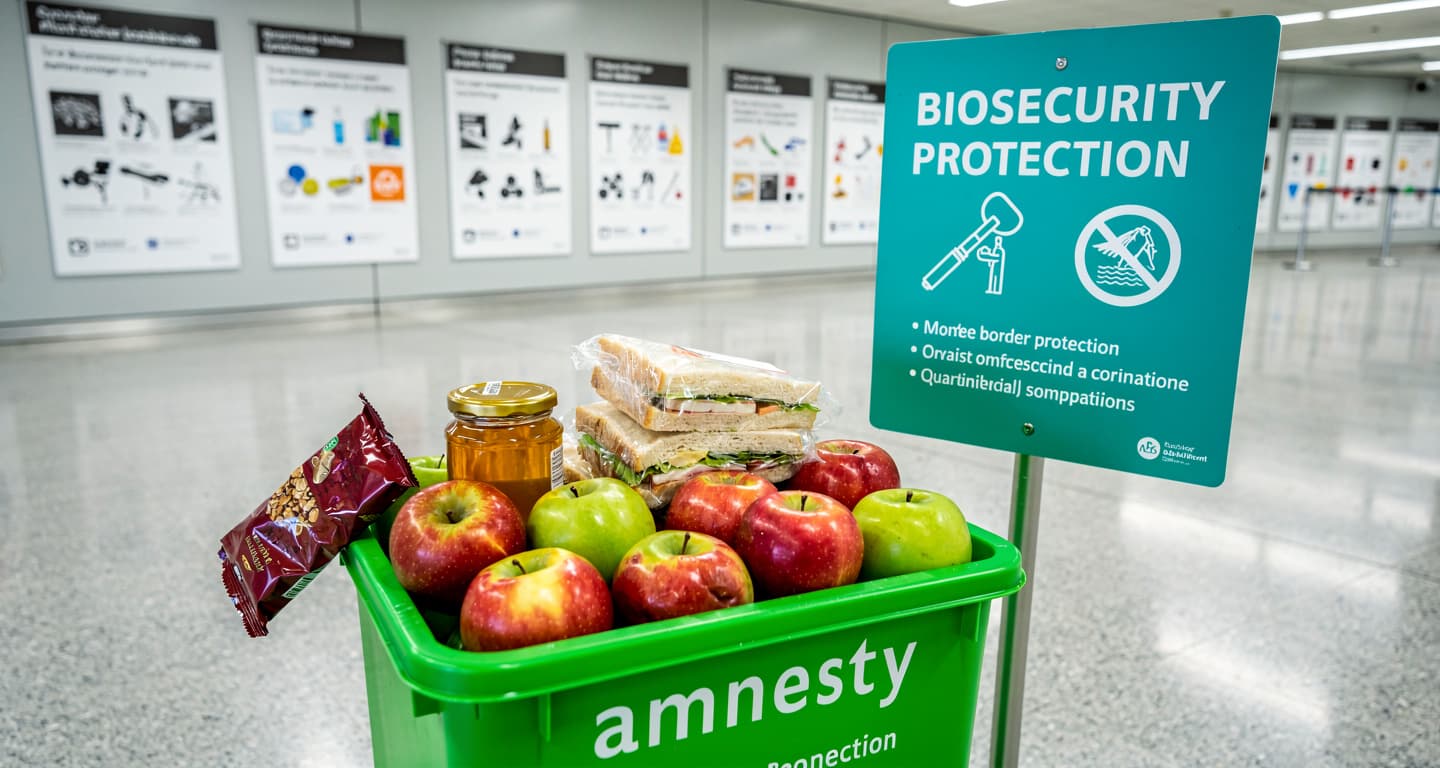
- Use amnesty disposal bins if already at the airport. Changi installed disposal bins at departure gates in 2025, reducing on-site confiscations by 25%. No questions asked, no penalties for voluntary surrender.
- Carry nicotine alternatives instead. Nicotine patches and gum are legal and unregulated for personal use in Singapore. Changi pharmacies stock both.
If you’re a regular vaper transiting Singapore frequently on routes to Australia or Southeast Asia, the simplest long-term solution is maintaining a dedicated travel kit that never contains vaping products. The S$2,000 fine isn’t a theoretical risk—it’s a routine enforcement outcome for the 1,500+ travelers caught annually.
Questions? Answers.
Does the ban apply if I stay airside and never enter Singapore immigration?
Yes. Checked bags are scanned before reaching the transit belt, meaning your luggage enters Singaporean jurisdiction regardless of whether you clear immigration. Airside transit passengers face gate screening as well. The only theoretical exemption applies to devices that physically remain onboard the aircraft and are never accessible to passengers.
Are nicotine patches and gum allowed through Singapore?
Nicotine patches and gum are fully legal for personal use in Singapore. The Ministry of Health actively promotes them as cessation alternatives. Both are available at Changi Airport pharmacies without prescription. Only e-cigarettes, vaporizers, and their components are prohibited.
What counts as a “vape component” under the ban?
Singapore defines prohibited items broadly: complete devices, empty pods, refill liquids, atomizer coils, vape-specific batteries, and charging units all qualify. Even a single empty cartridge forgotten in a bag pocket triggers the same S$2,000 fine as a fully loaded device. The CT scanners detect lithium battery signatures regardless of whether liquid is present.
Can my airline hold the device onboard for the duration of the Singapore stop?
Some airlines allow crew to secure a device onboard if declared before arrival, keeping it inaccessible during the Singapore ground stop. However, this requires advance coordination with the carrier and isn’t guaranteed. IATA recommends pre-flight disposal rather than relying on onboard storage, as airline policies vary and enforcement responsibility shifts to the passenger if the device is discovered during screening.
Do other Southeast Asian hubs enforce similar transit bans?
No hub matches Singapore’s transit enforcement. Thailand fines public vaping (THB 500) but doesn’t screen transit luggage. Malaysia introduced use-based fines in 2026 without airport cargo checks. Indonesia bans imports but rarely inspects transit bags. If you need to transit with a vaping device, Bangkok or Kuala Lumpur carry significantly lower enforcement risk.
What happens if I’m caught—can I pay the fine and continue my journey?
First-time possession typically results in an on-site fine of S$700–S$2,000, device confiscation, and police documentation. Processing takes 2–4 hours, which frequently causes missed connections. You can continue your journey after paying, but the police record may affect future Singapore visa applications. Repeat offenses or K-pod possession escalate to detention and potential imprisonment.