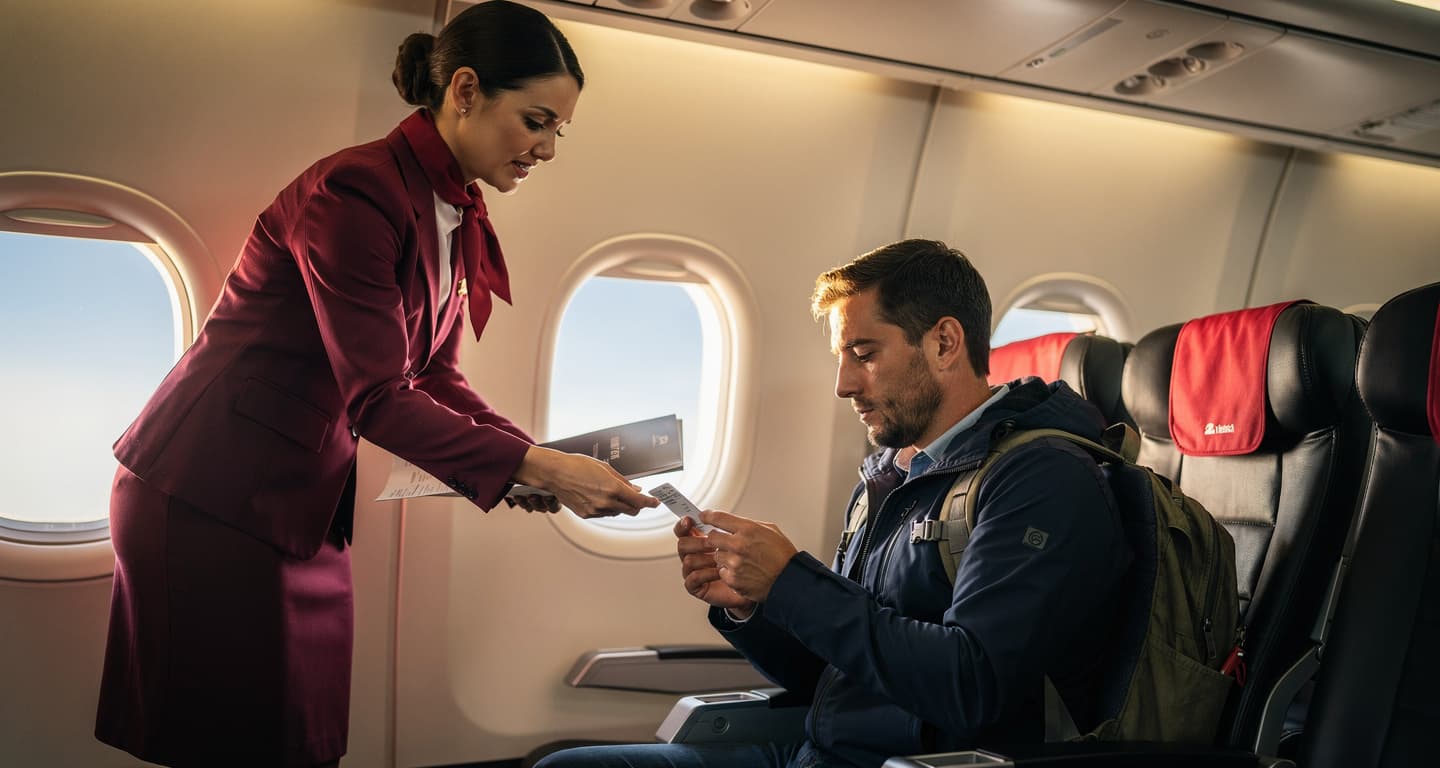
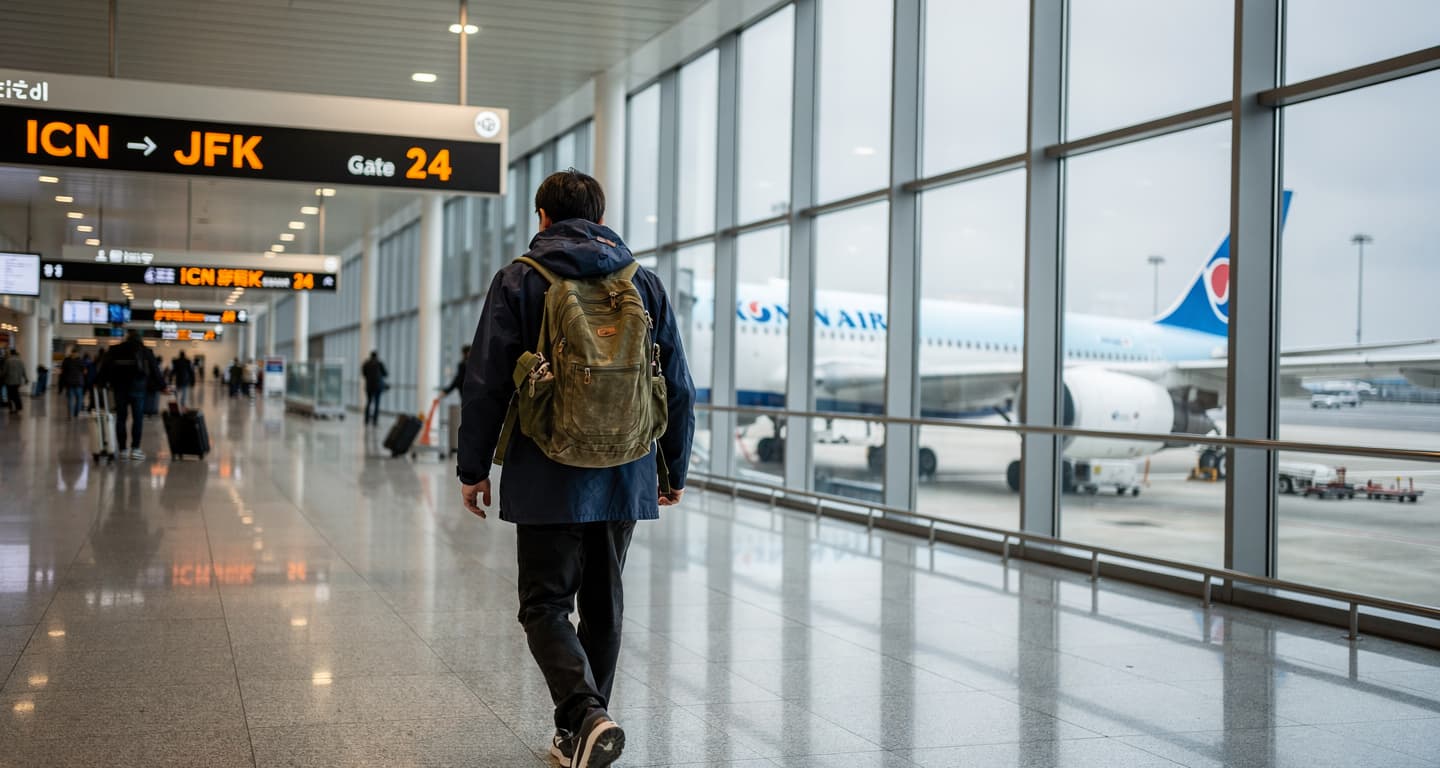
Korean Air and Asiana have dominated the Europe-Seoul corridor for decades, commanding €1,100 or more for roundtrip economy tickets. What most travelers overlook: South Korean budget carrier T’way Air now flies direct from four major European cities to Incheon at €600-800—a 40% discount that includes meals and checked baggage.
The airline isn’t a newcomer improvising long-haul service. T’way operates 60 destinations across Asia-Pacific and launched its European network in 2024 with widebody aircraft specifically configured for these 11-12 hour flights. The pricing gap isn’t a promotional gimmick—it’s a structural advantage that budget-conscious travelers can exploit through March 2026.
What T’way includes that other budget carriers don’t
European budget long-haul experiments have a troubled history. Norwegian collapsed. Level scaled back. The model struggles because passengers expect more than a seat on 10+ hour flights.
T’way addresses this by including what matters most: two complimentary meals in economy and business class, plus 23kg checked baggage as standard on all Europe-Incheon routes. These inclusions add €100-150 in value compared to typical low-cost carriers that charge for everything.
What costs extra: seat selection (€30 on B777 aircraft), blankets, and premium meal upgrades. The core product—getting from Paris to Seoul with luggage and fed—rivals legacy carriers at a fraction of the price.
Aircraft matter too. T’way deploys Airbus A330-200s and Boeing 777-300ERs on these routes, not cramped narrowbodies. Seat pitch matches Korean Air economy within an inch.
The route network and frequency trade-off
T’way serves five European cities with direct Seoul service: Paris (CDG), Frankfurt (FRA), Rome (FCO), Barcelona (BCN), and Zagreb (ZAG). The frequency varies significantly by route.
| Route | Frequency | RT Fare (€) | Duration | Savings |
|---|---|---|---|---|
| Frankfurt-Incheon | Daily | 650-800 | 10.5 hrs | 35% |
| Rome-Incheon | Daily | 600-750 | 11.5 hrs | 38% |
| Paris-Incheon | 5x weekly | 600-750 | 11 hrs | 38% |
| Barcelona-Incheon | 4x weekly | 700-800 | 12.5 hrs | 32% |
| Zagreb-Incheon | 3x weekly | 550-700 | 11 hrs | 42% |
Frankfurt and Rome offer the best flexibility with daily departures. Paris operates Monday, Wednesday, Friday, Saturday, and Sunday—still workable for most schedules. Barcelona and Zagreb require more planning around fixed departure days.
Zagreb: Europe’s cheapest gateway to Seoul
Croatia’s capital offers the deepest discounts at €550-700 roundtrip—42% below Korean Air—but only three weekly flights limit flexibility. For travelers with fixed dates, it’s the mathematical winner. For everyone else, daily Frankfurt or Rome service provides better optionality at €50-100 more.
The frequency gap matters most during peak periods. Korean Air operates daily from multiple European hubs; T’way’s 3-5 weekly flights on most routes mean fewer rebooking options if plans change. Book specific dates you can commit to.
Flight deals
most people never see
Our AI monitors 150+ airlines for pricing anomalies that traditional search engines miss. Air Traveler Club members save $650 per trip per person on average: see how it works.
Each deal saves 40–80% vs. regular fares:

Booking strategy: timing and current promotions
T’way’s European fares follow predictable patterns. Book 2-3 months before departure for optimal pricing—earlier bookings don’t yield significant discounts, and last-minute fares spike 30-50%.
Current promotions valid through March 2026 include:
- €50 coupon on bookings over €600 (applied at checkout)
- €30 discount on bookings over €500
- Up to 10% off via New Year promotional codes on twayair.com
These discounts apply only to direct bookings through T’way’s website—not through aggregators like Skyscanner or Kayak. Set the region to “ES” (Europe) and currency to EUR for accurate pricing.
One critical verification: always confirm inclusions at checkout. While 23kg baggage and meals are standard on these long-haul routes, fare rules can vary by booking class. The confirmation page should explicitly list “23kg checked baggage” and “in-flight meals” before payment.
When T’way doesn’t make sense
The 40% savings evaporate in specific scenarios. Flexible travelers who might change dates face T’way’s limited rebooking options—Korean Air’s daily service provides insurance that three-weekly Zagreb flights cannot. Change fees plus fare differences can eliminate the original savings.
After March 28, 2026, current promotional pricing expires. Base fares may increase 20-30% without active discounts, narrowing the gap with legacy carriers to 15-25%. The value proposition weakens but doesn’t disappear.
US and Canadian travelers face a structural barrier: T’way operates no direct transatlantic service. Connecting through Frankfurt or Paris adds €400-600 and 6-10 hours, reducing total savings to 15-20% versus Korean Air’s one-stop options from North America. The math works better for European residents.
Peak holiday periods (December through February) present availability challenges on lower-frequency routes. Barcelona’s four weekly flights and Zagreb’s three sell out faster than daily Frankfurt or Rome service. Book 3-4 months ahead for Christmas or Lunar New Year travel.
The broader context: budget long-haul’s second act
T’way’s European expansion represents a different model than the failed Norwegian experiment. Rather than launching dozens of routes simultaneously, T’way built Asian network density first—60 destinations—before adding five carefully selected European gateways with sustainable frequency.
The airline benefits from South Korea’s Incheon hub economics: lower airport fees than Frankfurt or Paris, government tourism incentives, and a captive market of Korean diaspora across Europe. These structural advantages enable pricing that European-based carriers couldn’t sustain.
For travelers, the implication is straightforward: budget long-haul to Asia works when operated by airlines with regional network advantages rather than standalone transatlantic ambitions. T’way’s Seoul pricing may outlast the promotional period because the underlying cost structure supports it.
Questions? Answers.
Does T’way include checked baggage on all Europe-Seoul flights?
Yes—23kg checked baggage is standard for long-haul economy on these routes, along with two meals. Extras like seat selection (€30 on B777 aircraft) and blankets are charged separately. Confirm inclusions in your fare rules at checkout before payment.
Are T’way’s frequencies the same year-round?
Summer 2025 schedules (Paris 5x weekly, Frankfurt/Rome daily) are expected to continue into 2026 based on ongoing promotions, but winter reductions are possible. Check the twayair.com booking calendar for your specific travel dates—frequency can vary by season.
How does T’way compare to Asiana on the same routes?
Asiana (now merged with Korean Air) matches the €1,100+ pricing with daily service but doesn’t include meals or checked bags in base economy fares. T’way’s inclusions add €100-150 in value, making the effective gap closer to 45-50% when accounting for what you’d pay as extras on legacy carriers.
What’s the best connection strategy for US West Coast travelers?
Fly to Frankfurt or Paris (LAX-FRA runs approximately €500 roundtrip on Lufthansa sales), then book T’way’s daily FRA-ICN separately. Total cost: €1,100-1,300 versus €1,500+ for direct Korean Air from Los Angeles—saving 20% with one connection.
Can I combine T’way with cheap domestic Korean flights?
Yes—T’way operates extensive domestic Korean routes from Incheon to Jeju, Busan, and other cities at €100-200 roundtrip. Book these separately through twayair.com after arriving in Seoul for budget-friendly multi-city itineraries.
Do EU citizens need visas for South Korea?
No—citizens of France, Germany, Italy, Spain, Croatia, and most EU countries receive visa-free entry for up to 90 days. US, Canadian, Australian, and New Zealand passport holders also qualify for 90-day visa-free stays. Check Korea Immigration Service for current requirements before travel.