Quick summary
Carrying a satellite phone into India without government permission is a criminal offense under Section 6 of the Indian Wireless Telegraphy Act and Section 20 of the Indian Telegraph Act. Baggage scanners at Delhi, Mumbai, and all Indian airports specifically target these devices — Iridium, Thuraya, Inmarsat handsets, and GPS messengers like Garmin inReach. Foreign nationals have been arrested, detained, and prosecuted. The US Embassy issued a 2025 travel alert confirming enforcement extends to GPS devices.
This ban applies to all foreign passport holders — tourists, business travelers, and transit passengers. The only legal path requires advance approval from India’s Department of Telecommunications, a process reserved for accredited media and NGOs that takes weeks. For travelers departing Europe between now and December 2026, the compliance rule is absolute: leave satellite communication devices at home.
India operates zero tolerance for unauthorized satellite communication equipment. The prohibition covers all devices capable of bypassing terrestrial networks: Iridium and Thuraya handsets, Inmarsat terminals, and two-way GPS messengers. Customs officers at arrival gates use X-ray scanners calibrated to flag these devices in both carry-on and checked luggage. Detection triggers immediate confiscation, and officers are authorized to detain passengers for questioning.
The legal framework is explicit. Section 6 of the Indian Wireless Telegraphy Act criminalizes possession of unlicensed wireless transmission equipment. Section 20 of the Indian Telegraph Act imposes penalties for operating communication devices without government approval. Prosecution can result in fines exceeding ₹100,000 and imprisonment. The US Embassy’s 2025 travel alert confirms these laws remain actively enforced, with no indication of policy relaxation.
For UK and European travelers booking flights to India, this means checking luggage contents before departure — not at the airport. The risk extends beyond obvious satellite phones. Garmin inReach devices, marketed as hiking safety tools, fall under the ban because they transmit via the Iridium network. SPOT trackers and emergency beacons with satellite uplink capability are similarly prohibited.
What customs officers actually look for
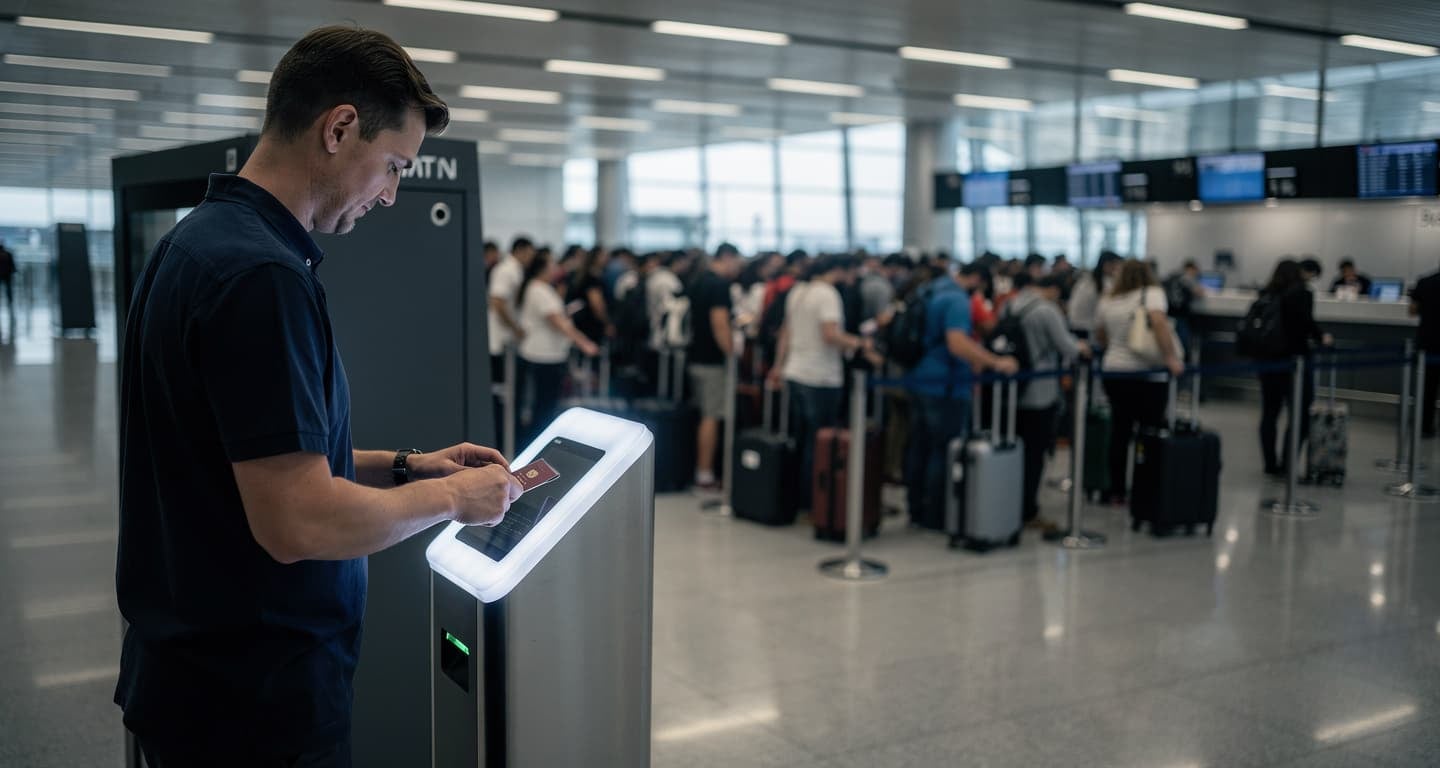
Indian customs uses multi-layer screening. All arriving baggage passes through X-ray systems programmed to highlight electronic devices with specific density signatures. Satellite phones and GPS messengers produce distinct patterns — their antenna arrays and battery configurations differ from standard smartphones and tablets. When a scanner flags a suspicious item, officers open the bag for manual inspection.
The Indian Embassy’s legal advisory confirms this process applies uniformly across all ports of entry. Delhi and Mumbai handle the highest passenger volumes, but enforcement is identical at Bangalore, Chennai, Kolkata, and Hyderabad. Officers receive training to identify Iridium 9575, Thuraya XT-LITE, and Garmin inReach models on sight.
Transit passengers face the same scrutiny. If you’re connecting through Delhi to Kathmandu or Bangkok, your bags still pass through Indian security screening. The fact that you’re not entering India doesn’t exempt you from the ban. Activated devices in carry-on luggage trigger additional inspection, and officers have authority to power on electronics to verify their function.
Flight deals
most people never see
Our AI monitors 150+ airlines for pricing anomalies that traditional search engines miss. Air Traveler Club members save $650 per trip per person on average: see how it works.
Each deal saves 40–80% vs. regular fares:

The GPS device problem trekkers don’t expect
Garmin inReach and SPOT devices occupy a gray area in traveler perception but not in Indian law. These products market themselves as safety tools for remote hiking, not satellite phones. The distinction is irrelevant to customs enforcement. Both devices transmit via satellite networks, which places them under the same legal prohibition as Iridium handsets.
The US Embassy’s 2025 alert specifically names GPS devices in its warning, a detail absent from older advisories. This update followed incidents where trekkers arriving for Himachal Pradesh and Uttarakhand expeditions had devices confiscated. The devices were not returned, and travelers faced fines. One case involved a German national detained for 18 hours after an inReach Mini was found in checked luggage during a connection through Delhi.
India’s telecommunications regulator does not publish a device whitelist. If the product description includes “satellite messaging” or “SOS via satellite,” assume it’s prohibited. Apple’s Emergency SOS via satellite feature, introduced in iPhone 14 and 15 models, operates differently — it uses existing satellite infrastructure for emergency-only transmission and has not triggered enforcement actions. Standard smartphones remain legal.
| Device Type | Legal Status | Enforcement Risk | Alternative |
|---|---|---|---|
| Iridium/Thuraya handsets | Prohibited | Arrest, prosecution | Local SIM with roaming |
| Garmin inReach, SPOT | Prohibited | Confiscation, fines | Offline GPS + local SIM |
| Inmarsat terminals | Prohibited | Arrest, prosecution | Hotel/café WiFi |
| iPhone Emergency SOS | Permitted (built-in) | None observed | N/A |
| Standard smartphones | Permitted | None | N/A |
The permit process that doesn’t apply to tourists
India’s Department of Telecommunications issues satellite phone permits, but the application process excludes leisure travelers. Permits are reserved for accredited journalists covering conflict zones, NGOs operating in disaster relief, and government contractors working in remote infrastructure projects. The application requires an Indian sponsor organization, a letter justifying operational necessity, and 4-6 weeks processing time.
Even with a permit, the device must be declared at customs upon arrival. Officers verify the permit number against a central database and attach a customs seal to the device. The permit holder signs a bond agreeing to surrender the device upon departure. This bureaucratic process is designed for professionals who have no alternative — not for tourists who want backup communication during a trek.
No permit pathway exists for individual travelers. Applying as a tourist results in automatic rejection. The Department of Telecommunications does not process expedited applications, and no fee structure exists for tourist permits. If your trip requires satellite communication for safety, India is not the destination to choose.
What happens if customs finds an undeclared device
Detection at the scanner triggers a standard enforcement sequence. Officers remove you from the arrival queue and escort you to a secondary inspection area. They confiscate the device and photograph it with your passport for documentation. You provide a written statement explaining why you carried the device and whether you knew about the prohibition.
The outcome depends on officer discretion and the device type. A first-time tourist carrying a Garmin inReach typically faces device confiscation and a fine of ₹50,000-₹100,000. Payment is required before you can leave the airport. Refusal to pay results in detention until the fine is settled or you arrange legal representation. The device is not returned.
Carrying an Iridium or Thuraya handset — devices with no plausible civilian use in India — escalates the response. Officers treat this as potential espionage equipment. You may be detained for 24-72 hours while authorities investigate your travel history and contacts. Prosecution under the Telegraph Act becomes likely, which means court appearances, legal fees, and potential imprisonment. The Indian Embassy in Warsaw’s advisory makes this consequence explicit: prosecution is the default response, not an edge case.
Alternatives that actually work in India
India’s mobile network coverage reaches most tourist destinations, including Himalayan trekking routes up to 3,500 meters. Airtel, Jio, and BSNL offer prepaid SIM cards at airports with data plans starting at ₹500 for 28 days. These SIMs work in Ladakh, Sikkim, and Uttarakhand — the regions where travelers most often consider satellite backup.
For true off-grid areas above 4,000 meters, no legal communication option exists for tourists. Satellite phones are banned, and terrestrial networks don’t reach those altitudes. Trekking companies operating in these zones use licensed radios for emergency contact with base camps, but individual travelers cannot obtain these licenses. The risk calculation is binary: accept communication blackout or choose a different destination.
Offline GPS navigation remains legal and functional. Devices like Garmin eTrex or smartphone apps with downloaded maps (Maps.me, Gaia GPS) work without satellite transmission. These tools provide positioning and route tracking but cannot send messages or SOS signals. Pair offline GPS with a local SIM for lower-altitude communication, and you cover 95% of India’s trekking terrain legally.
When this enforcement might change
No policy reform is under discussion as of March 2026. The ban has remained unchanged since the Indian Wireless Telegraphy Act was enacted in 1933, with satellite-specific provisions added in the 1990s. Security concerns — particularly regarding Kashmir and northeastern border states — drive enforcement, and these concerns have intensified rather than diminished in recent years.
The 2008 Mumbai attacks, where terrorists used satellite phones to coordinate with handlers in Pakistan, cemented the ban’s political support. Subsequent attempts by telecom companies to introduce licensed satellite services for remote areas have stalled in regulatory review. India’s government views satellite communication as a national security issue first and a civilian convenience second.
Travelers should not expect relaxation. The US Embassy’s 2025 alert represents a strengthening of enforcement messaging, not a precursor to reform. European and Australian embassies maintain identical warnings on their travel advisory pages. If you’re planning a trip to India in 2026 or 2027, assume the ban will remain in force.
How to comply before you fly
Compliance starts 48 hours before departure, not at the airport. Empty all luggage and check every pocket, pouch, and compartment. Satellite devices are small — a Garmin inReach Mini weighs 100 grams and fits in a jacket pocket. If you use the device regularly for hiking, it may be in your gear without conscious memory of packing it.
- Inventory your electronics: List every device you’re packing — phone, tablet, camera, power banks, GPS units. Cross-reference against India’s prohibited categories. If uncertain about a device, leave it home.
- Check your travel insurance: Standard policies do not cover fines or legal fees resulting from customs violations. If you’re carrying high-value electronics, verify your policy excludes satellite communication devices from coverage.
- Inform travel companions: If you’re traveling with a group, ensure everyone understands the ban. One person’s violation can delay the entire group at customs.
- Download offline maps: Before departure, download India maps to your smartphone using Maps.me or Google Maps offline mode. This eliminates the temptation to pack a GPS device “just in case.”
If you discover a prohibited device in your luggage after arriving at the airport, do not board the flight. Remove the device and leave it with someone outside the terminal. Attempting to hide it in checked baggage creates a worse outcome than missing your flight.

Questions? Answers.
Can I carry a satellite phone if I’m only transiting through Delhi to Nepal?
No. Transit passengers pass through Indian customs screening, and the ban applies regardless of whether you enter India. If the device is detected, it will be confiscated, and you may face fines or detention that cause you to miss your connecting flight.
What if I need satellite communication for a medical emergency during a trek?
No legal exception exists for medical emergencies. Trekking companies operating in remote areas use licensed radios to contact base camps, but individual tourists cannot obtain these licenses. If your medical condition requires guaranteed communication access, choose a destination with mobile network coverage or avoid remote trekking.
Are there any Indian states where the ban doesn’t apply?
No. The ban is federal law enforced uniformly across all states and union territories. Jammu and Kashmir, Ladakh, and northeastern states have stricter enforcement due to security concerns, but the prohibition applies nationwide.
How do journalists and NGOs get permission to carry satellite phones?
They apply to the Department of Telecommunications 4-6 weeks before travel, providing an Indian sponsor organization letter and operational justification. The permit is verified at customs, and the device is sealed and bonded. This process is not available to tourists or individual travelers.
Will my travel insurance cover fines if customs finds a satellite phone?
Standard travel insurance policies exclude coverage for fines resulting from customs violations or illegal possession of prohibited items. Check your policy’s exclusions section — most explicitly state they do not cover penalties for breaking local laws.
Can I mail a satellite phone to myself at an Indian hotel?
No. International mail entering India passes through customs inspection. Satellite phones are prohibited imports, and the package will be seized. You may face investigation for attempting to import prohibited equipment, and the hotel could face penalties for receiving it.
What happens to confiscated devices — can I get them back?
Confiscated devices are not returned. They are held as evidence if prosecution proceeds, or destroyed if you pay the fine and depart. No mechanism exists to reclaim a confiscated satellite phone, even after leaving India.