Quick summary
Medical evacuation from Samoa to New Zealand or Australia costs $50,000–$100,000. U.S. Medicare and Medicaid provide zero overseas coverage. Most Samoan hospitals require upfront cash payment and do not accept U.S. health insurance. Standard travel insurance policies cap evacuation coverage at levels that leave you exposed — or exclude it entirely.
Your policy must explicitly state “medical evacuation” or “medical repatriation” with a minimum $100,000 limit. Recommended coverage: $250,000. Credit card travel benefits typically cap at $50,000–$100,000 and often exclude evacuation altogether. Verify your specific evacuation limit in writing before departure — this is not optional.
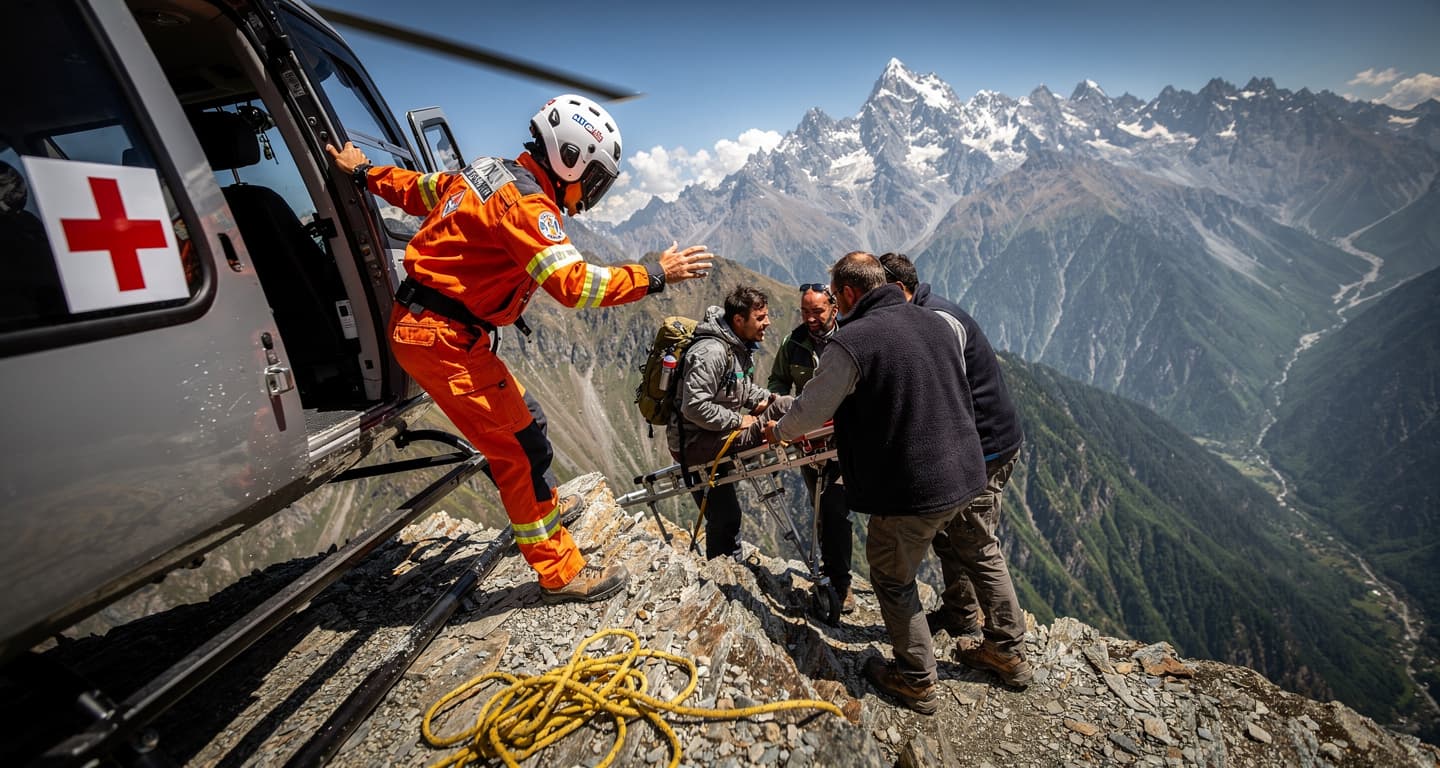
A surfing accident in Samoa that fractures your femur will not be treated in Apia. The injury requires surgical fixation, but Samoa’s National Hospital lacks the orthopedic capacity for complex procedures. You will be stabilized, then flown to Auckland or Sydney for surgery. The air ambulance alone costs $50,000–$75,000. Add pre-flight stabilization, the surgery itself, post-operative hospital stay, and follow-up care, and you are looking at $100,000–$150,000 in total medical costs.
U.S. health insurance will not pay for any of it. The U.S. State Department is explicit: Medicare and Medicaid provide zero coverage outside the United States. Private U.S. insurers rarely cover overseas hospitalization, and when they do, medical evacuation is excluded. Samoan hospitals operate on a cash-first basis — no insurance card will get you through the door.
Air Traveler Club’s analysis of Pacific island medical infrastructure shows Samoa sits in the highest-risk category for evacuation dependency. The country has one major hospital, limited specialist capacity, and no trauma surgery capability. For U.S. travelers departing November 2025 through March 2026 — Samoa’s peak tourism and cyclone season — this makes evacuation insurance the single non-negotiable coverage component.
The coverage gap most U.S. travelers miss
Standard U.S. health insurance is designed for the U.S. healthcare system. It does not translate overseas. When you present your Blue Cross card at Tupua Tamasese Meaole Hospital in Apia, the response is simple: cash or credit card, upfront, before treatment. No exceptions.
Medicare and Medicaid are federally restricted to U.S. territory. Private insurers occasionally cover “emergency care” abroad, but the definition of “emergency” is narrow, reimbursement is slow, and medical evacuation is almost universally excluded. The assumption is that local hospitals can treat you. In Samoa, that assumption fails the moment your condition exceeds the capacity of a 100-bed facility with limited surgical capability.
Credit card travel insurance — offered by premium cards like Chase Sapphire Reserve or American Express Platinum — provides some evacuation coverage, but the limits are typically $50,000–$100,000. That covers the flight itself in a best-case scenario. It does not cover the weeks of hospitalization in Auckland that follow, nor does it cover complications, extended ICU stays, or follow-up surgeries. If your card caps at $50,000, you are personally liable for the remaining $50,000–$100,000.
Travel insurance policies sold as “comprehensive” often bury evacuation coverage in fine print. A $50 policy may include $50,000 in medical coverage but only $25,000 in evacuation coverage — or none at all. The recommended minimum is $100,000, and that is the floor, not the target. For travelers engaging in water sports, hiking, or traveling during cyclone season, $250,000 is the appropriate coverage level.
Flight deals
most people never see
Our AI monitors 150+ airlines for pricing anomalies that traditional search engines miss. Air Traveler Club members save $650 per trip per person on average: see how it works.
Each deal saves 40–80% vs. regular fares:

Activity-specific risks that standard policies exclude
Samoa’s appeal is its coastline and its interior. Tourists come to surf, dive, snorkel, hike to waterfalls, and explore lava fields. These activities carry specific medical risks that trigger evacuation — and specific insurance exclusions that void your coverage if you did not read the fine print.
Scuba diving is the highest-risk activity. Decompression sickness requires immediate treatment in a hyperbaric chamber. Samoa does not have one. The nearest chambers are in Auckland and Suva, Fiji. Evacuation for decompression sickness is time-critical — delays increase the risk of permanent neurological damage. A dive-related evacuation costs $75,000–$100,000, and many standard travel insurance policies exclude scuba diving entirely unless you purchase a separate adventure sports rider.
Surfing and other water sports carry fracture and head injury risk. Remote hiking — particularly to waterfalls like Togitogiga or Afu Aau — adds the complication of delayed rescue. If you are injured two hours inland, ground transport to Apia takes time, and air ambulance extraction from remote areas adds cost. Policies that cover “emergency medical treatment” often exclude “adventure activities” or “extreme sports” without defining those terms clearly. Surfing may or may not be covered. Hiking may or may not be covered. You will not know until you file a claim — at which point it is too late.
Cyclone season runs November through April. If a Category 3 cyclone forces airport closure and you require evacuation, your insurance must cover “natural disaster-related delays” and “emergency evacuation under adverse conditions.” Many policies exclude weather-related complications or cap coverage at levels insufficient for prolonged delays.
| Coverage Level | Medical Evacuation Limit | Best For | Key Coverage Must-Haves |
|---|---|---|---|
| Minimum | $100,000 | Low-risk travelers, short stays, resort-based activities | Medical evacuation, emergency hospitalization, trip interruption |
| Recommended | $250,000 | Standard travelers, mixed activities (hiking + water sports), any duration | Activity-specific evacuation, pre-existing acute onset, repatriation, cyclone coverage |
| Premium | $500,000+ | Adventure activities (scuba, remote hiking), extended stays, travelers 55+ | Decompression chamber, remote area evacuation, specialist treatment abroad, multiple evacuations |
Pre-existing conditions and the acute onset loophole
Most travel insurance policies exclude pre-existing medical conditions. If you have diabetes, heart disease, or a history of stroke, and your condition triggers a medical emergency in Samoa, your claim will be denied — unless your policy explicitly covers “acute onset of pre-existing conditions.”
Acute onset coverage is not standard. It is an add-on or a feature of premium policies. The definition varies by insurer, but the general framework is this: if your pre-existing condition suddenly worsens in a way that could not have been predicted, and you require emergency treatment, the policy will cover it. A diabetic traveler who experiences hypoglycemic shock due to missed medication may be covered. A traveler with a known heart condition who suffers a heart attack may not be — the insurer will argue the risk was foreseeable.
The distinction is subjective and claim-dependent. If you have any pre-existing condition, you must purchase a policy that explicitly states “acute onset of pre-existing conditions” coverage, and you must verify that medical evacuation is included under that clause. Many policies cover acute onset for hospitalization but exclude evacuation. Read the exclusions section of the policy document — it is longer than the coverage section for a reason.
What happens when you file a claim
Insurance companies do not pay claims automatically. They require documentation, and the burden of proof is on you. If you are evacuated from Samoa, you will need written confirmation from the attending physician in Apia stating that evacuation was medically necessary. You will need itemized receipts for all medical services, including ambulance transport, hospital fees, and evacuation flight costs. You will need incident reports if the injury occurred during an organized activity like a dive trip or guided hike.
Claims processing takes weeks to months. The insurer will review the medical necessity determination, verify that your policy was active at the time of the incident, and check for exclusions. If you were diving without an adventure sports rider, the claim will be denied. If you failed to disclose a pre-existing condition during the application process, the claim will be denied. If the evacuation was deemed “not medically necessary” — meaning the insurer believes you could have been treated locally — the claim will be denied.
You will pay upfront. The air ambulance company will not wait for insurance approval. The hospital in Auckland will not wait for reimbursement. You will need a credit card with a limit high enough to cover the initial costs, and you will need to front the money while the claim is processed. If the claim is denied, you are liable for the full amount.
When standard policies are not enough
For travelers with significant pre-existing conditions, travelers over 65, or travelers planning high-risk activities, standard travel insurance may not be available at any price. Insurers either exclude you entirely or offer coverage with exclusions so broad that the policy is effectively useless.
Specialized high-risk travel insurance exists, but it is expensive. Companies like Global Rescue and Medjet offer membership-based evacuation services that guarantee transport to a hospital of your choice, regardless of medical necessity. These are not insurance policies — they are evacuation services. They do not cover medical treatment costs, but they do cover the evacuation itself, which is the single largest expense.
Global Rescue memberships start at approximately $300–$500 per year for individuals, with higher rates for families and travelers over 65. Medjet operates on a similar model. These services are worth considering if your health profile or activity plan makes standard insurance unavailable or inadequate. The cost is high, but it is predictable — unlike the $100,000 surprise bill you will receive if you are evacuated without coverage.
What to do now
Samoa’s evacuation risk is not theoretical — it is a documented gap between local healthcare capacity and the medical needs of serious illness or injury. The $50,000–$100,000 cost is not an estimate; it is the actual range for air ambulance transport plus initial stabilization and hospitalization abroad.
- Request the full policy document before purchasing travel insurance. Search for “medical evacuation” or “emergency medical transportation” and confirm the dollar limit is at least $100,000. If the policy does not use those exact terms, it does not cover evacuation.
- Verify credit card coverage limits by calling the benefits administrator. Ask for the specific evacuation cap in writing. If the card caps at $50,000, you need supplemental coverage to reach $100,000 minimum.
- Add an adventure sports rider if you plan to dive, surf, or hike. Standard policies exclude these activities. The rider costs $20–$50 extra and is non-negotiable if you are doing anything beyond resort-based tourism.
- Confirm acute onset coverage if you have any pre-existing condition. The policy must explicitly state that acute onset of pre-existing conditions is covered, and that medical evacuation is included under that clause.

Questions? Answers.
Does my U.S. health insurance cover medical evacuation from Samoa?
No. U.S. Medicare and Medicaid provide zero coverage outside the United States. Private U.S. health insurance rarely covers overseas hospitalization, and medical evacuation is almost universally excluded. You need separate travel insurance with explicit evacuation coverage.
What is the difference between medical coverage and evacuation coverage?
Medical coverage pays for hospital treatment and doctor visits. Evacuation coverage pays for air ambulance transport to a facility capable of treating your condition. In Samoa, evacuation is often required because local hospitals lack the capacity for complex procedures. A policy with $100,000 in medical coverage but zero evacuation coverage will not pay for the $50,000–$100,000 flight to Auckland.
Is credit card travel insurance enough for Samoa?
Rarely. Premium credit cards like Chase Sapphire Reserve or American Express Platinum typically cap evacuation coverage at $50,000–$100,000. That may cover the air ambulance itself but not the weeks of hospitalization that follow. Verify your card’s specific evacuation limit in writing before relying on it as your only coverage.
Do I need evacuation insurance if I am only staying at a resort?
Yes. Medical emergencies do not respect your itinerary. A heart attack, stroke, or severe allergic reaction can occur anywhere, and Samoa’s National Hospital cannot treat complex cardiac or neurological cases. Evacuation insurance is non-negotiable regardless of where you stay or what you plan to do.
What happens if I am evacuated and my insurance claim is denied?
You are personally liable for the full cost — typically $50,000–$150,000. The air ambulance company and the receiving hospital will bill you directly. If you cannot pay, the debt will be sent to collections, and you may face legal action. This is why verifying coverage before departure is critical.
Does travel insurance cover evacuation during cyclone season?
Only if the policy explicitly covers natural disaster-related delays and emergency evacuation under adverse conditions. Many policies exclude weather-related complications or cap coverage at levels insufficient for prolonged delays. If you are traveling November through April, confirm cyclone coverage in writing.
Where can I compare flight options to Samoa from North America?
Air Traveler Club tracks routing efficiency and fare patterns for North America–Samoa connections. Most travelers connect through Auckland, Sydney, or Honolulu. Direct flights from the U.S. mainland do not exist — all routings require at least one stop, and fare differences between gateways can exceed $400 per ticket.