Quick summary
Royal Brunei Airlines permits non-Muslim passengers to bring their own alcohol on board — up to 5 liters of spirits (24-70% ABV) or unlimited beer and wine under 24% ABV. The carrier serves no alcohol and all meals are halal, but the widely repeated claim of a “strict ban” with authority handover is unverified by official airline sources. The actual risk sits at the destination: Brunei customs limits non-Muslims to 2 bottles of liquor plus 12 cans of beer for personal use, and exceeding that allowance triggers confiscation.
The confusion stems from mixing flight policy with Brunei’s import laws. On flights to Brunei, you can consume your own alcohol at crew discretion — but you must dispose of excess quantities before landing to comply with customs. On flights from Brunei, alcohol is banned entirely because the country prohibits its sale and possession. This article clarifies the actual limits, explains the edge cases by route direction, and shows how to avoid the confiscation trap that costs travelers $50-200 per duty-free bottle.
Royal Brunei Airlines is a dry carrier — no served alcohol, all halal meals — but it allows non-Muslim passengers to bring and consume their own alcohol on board within specific limits. The airline’s Guide to Dangerous Goods states that alcoholic beverages between 24% and 70% ABV are permitted up to 5 liters per person in retail packaging, with each container holding no more than 5 liters. Beverages under 24% ABV — beer, wine, most liqueurs — are unrestricted by quantity, though carry-on liquids still face the standard 100ml container limit for security screening.
Air Traveler Club’s analysis of Royal Brunei’s current dangerous goods policy and customs guidance shows the carrier’s rules align with IATA standards for transporting alcohol, not a blanket prohibition. The policy applies to all routes operated by Royal Brunei (flight code BI), including the Melbourne-Bandar Seri Begawan direct service and connections via Hong Kong or Dubai. The confusion arises because Brunei itself bans alcohol sales and public consumption — but that national law does not extend to the aircraft cabin on inbound international flights.
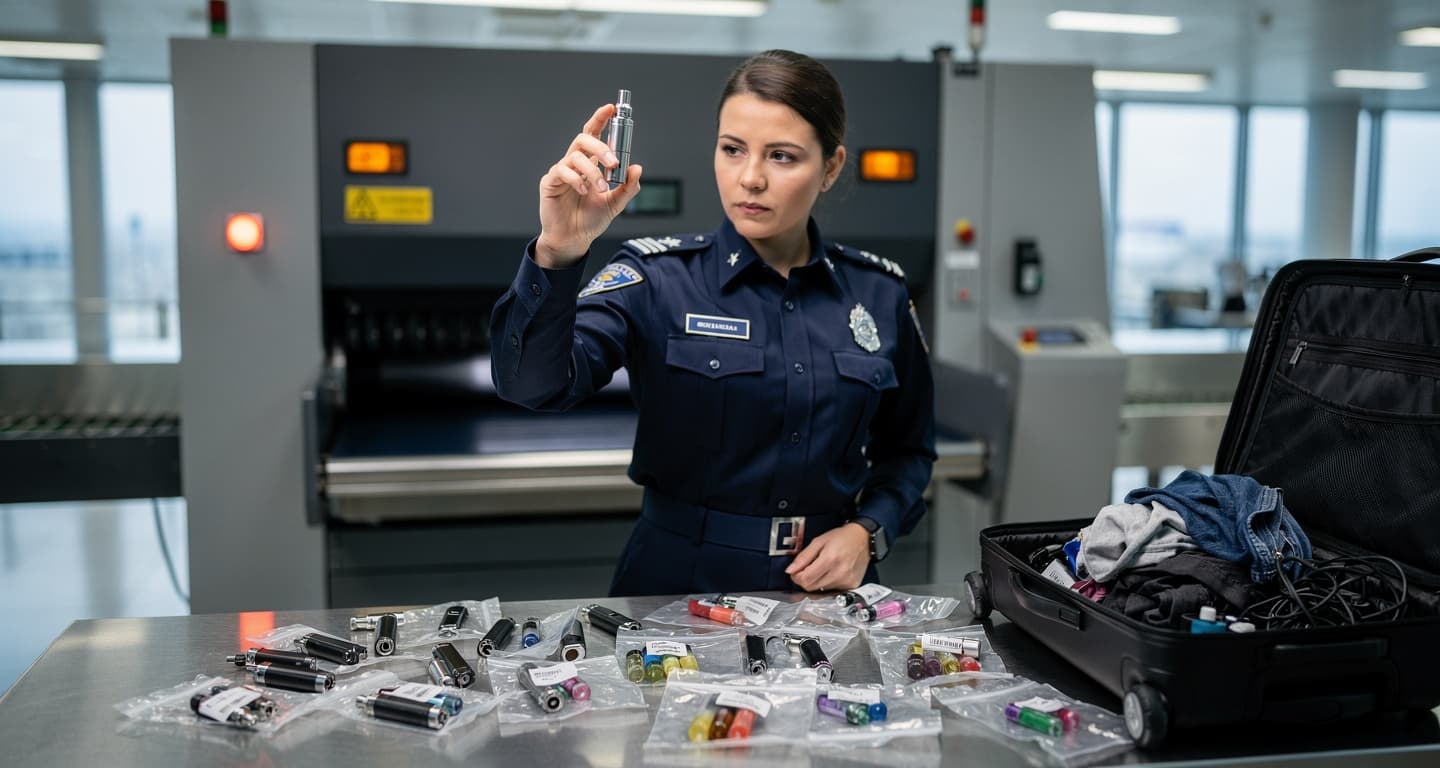
The real enforcement point is Brunei customs, not the flight crew. Non-Muslims entering Brunei may import 2 bottles of liquor and 12 cans of beer for personal consumption only, according to Royal Brunei’s Visiting Brunei guidance. Exceeding that allowance — even if you stayed within the 5-liter flight limit — results in confiscation and potential fines upon arrival. Duty-free purchases made in transit count toward this 2-bottle cap, which is why keeping those bags sealed until you clear customs is critical.
What the numbers actually allow
The table below breaks down Royal Brunei’s alcohol limits by type and compares them to Brunei’s customs allowance. The gap between what you can carry on the flight and what you can legally import is where most travelers get caught.
| Alcohol Type | Max Quantity (Flight) | Brunei Import Limit | Notes |
|---|---|---|---|
| Spirits (24-70% ABV) | 5L per person | 2 bottles | Retail packaging, ≤5L per container |
| Beer/wine (≤24% ABV) | Unrestricted (checked) | 12 cans beer | Carry-on: 100ml container limit |
| Duty-free liquor | Within 5L limit | Counts toward 2-bottle cap | Must stay sealed until customs clearance |
| Overproof (>70% ABV) | Banned | N/A | Dangerous goods violation |
| Muslim passengers | Zero | Zero | Religious law applies on flight and at border |
The 2-bottle Brunei import limit applies only to non-Muslims and covers personal consumption during your stay. “Personal consumption” is not defined by volume in official sources, but customs officers interpret it as quantities reasonable for a single traveler’s trip duration. Bringing 5 liters of spirits on a 3-day visit will trigger secondary inspection even if you’re within the flight’s technical allowance. The smart move: if you’re carrying more than 2 bottles, consume or dispose of the excess before landing, or book a connecting flight where Brunei is only a transit point and you never clear customs.
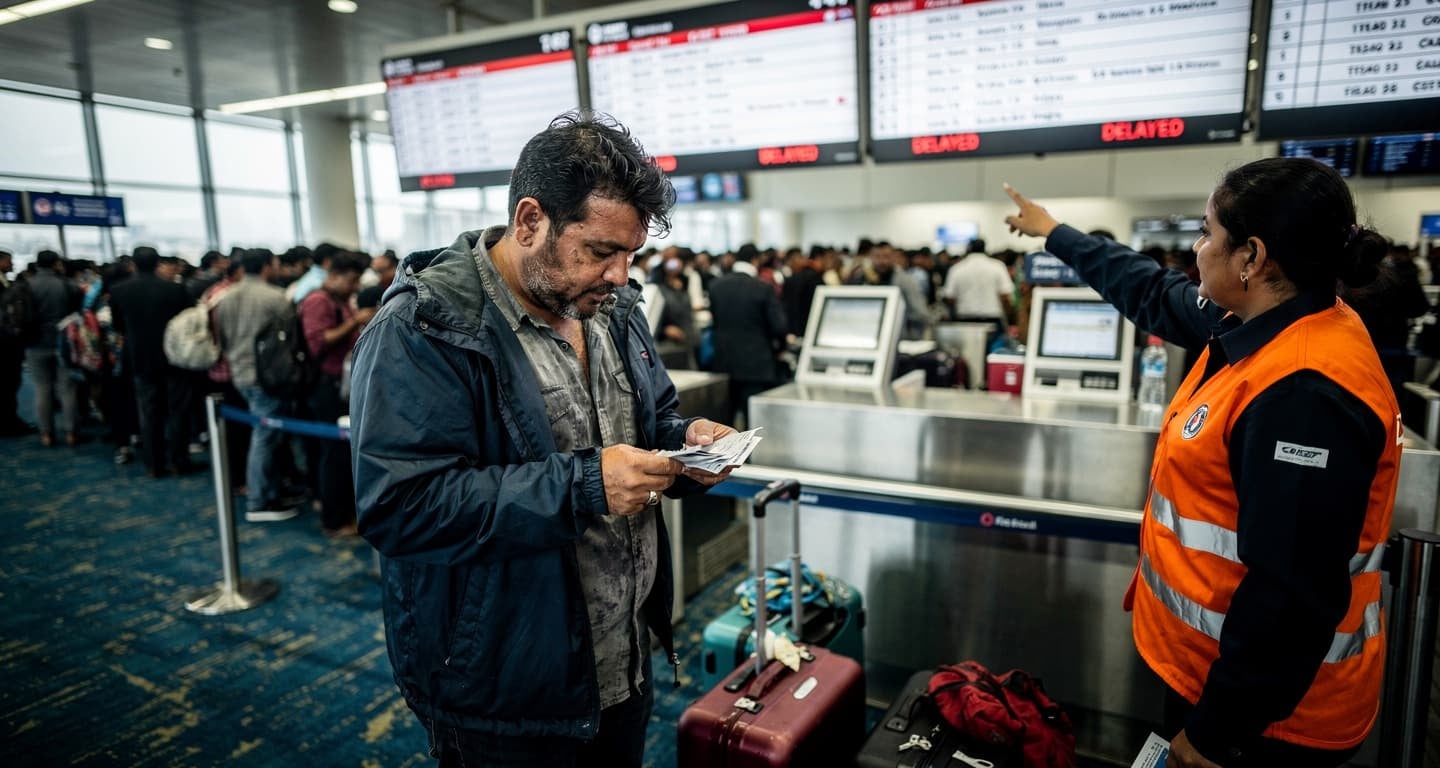
For Australian travelers on the Melbourne-Bandar Seri Begawan route, this creates a specific trap. The 7-hour flight is long enough that many passengers buy duty-free liquor in Melbourne’s international terminal, intending to drink it at their Brunei hotel. Brunei hotels do not serve alcohol, and importing more than 2 bottles means confiscation at the airport. The workaround: if you’re staying in Brunei, limit duty-free purchases to 2 bottles maximum. If you’re connecting onward to another destination, keep all alcohol sealed in your carry-on and do not exit the transit area in Brunei.
Flight deals
most people never see
Our AI monitors 150+ airlines for pricing anomalies that traditional search engines miss. Air Traveler Club members save $650 per trip per person on average: see how it works.
Each deal saves 40–80% vs. regular fares:

Why crew discretion matters more than the rulebook
Royal Brunei’s official policy permits personal alcohol consumption on board, but cabin crew retain discretion to refuse service or confiscate alcohol if a passenger appears intoxicated or disruptive. This is standard across all airlines, but it carries higher stakes on Royal Brunei because the carrier operates under Brunei’s legal jurisdiction. Crew members are trained to enforce Brunei’s alcohol laws, and while no verified cases of passengers being “handed over to authorities” for drinking duty-free liquor have been documented in official sources, the airline’s terms of carriage allow for such action if a passenger violates the carrier’s policies or local laws.
The practical implication: ask cabin crew before opening your own alcohol, even if you’re within the quantity limits. Crew discretion is not arbitrary — it’s based on visible intoxication, disruptive behavior, or attempts to consume alcohol in a way that violates the carrier’s halal service standards. Drinking discreetly from a sealed bottle in your seat is generally tolerated on flights to Brunei, but pouring spirits into a glass provided by the crew or offering alcohol to other passengers crosses the line. The safest approach is to treat your own alcohol as a personal item you consume quietly, not a social activity.
On flights from Brunei, the rules tighten significantly. Brunei prohibits alcohol sales and possession within the country, which means passengers departing Bandar Seri Begawan cannot legally bring alcohol on board. The airport has no duty-free shops selling alcohol, and attempting to board with alcohol purchased elsewhere in Brunei — even if sealed — violates both airline policy and Brunei law. This creates an asymmetry: inbound flights allow personal alcohol within limits, but outbound flights ban it entirely. If you’re flying roundtrip Melbourne-Brunei-Melbourne, you can bring alcohol on the outbound leg but not the return.
When the policy breaks down
The 5-liter flight limit and 2-bottle customs cap assume you’re traveling as a non-Muslim individual. Group travel complicates this. If you’re traveling with a spouse or companion who is Muslim, their zero-alcohol allowance does not transfer to you — you still get only 2 bottles at Brunei customs, not 4. Families traveling together face the same restriction: each non-Muslim adult gets 2 bottles, but children under 18 have no alcohol allowance regardless of religious status.
Codeshare flights add another layer of confusion. Royal Brunei has codeshare agreements with several carriers, but the operating airline’s policy governs what you can bring on board. If you book a flight marketed as Royal Brunei but operated by another carrier, that carrier’s alcohol rules apply — not Royal Brunei’s. Check the operating carrier code (the two-letter prefix on your flight number) before assuming you can bring your own alcohol. A flight marketed as BI but operated by QR (Qatar Airways) follows Qatar’s rules, which also permit personal alcohol but with different quantity limits.
Transit passengers face a specific edge case. If you’re flying Melbourne-Brunei-London and staying airside in Brunei, you never clear customs and the 2-bottle import limit does not apply. But if your layover exceeds 8 hours and you want to leave the airport to visit the city, you must clear customs on entry and re-clear security on departure. At that point, any alcohol in your possession must comply with the 2-bottle limit, even though you’re not staying in Brunei overnight. The workaround: leave your alcohol in your checked baggage if you have a connecting flight, or consume it on the first leg before landing in Brunei.
What to do now
The 2-bottle Brunei customs limit applies to all non-Muslim arrivals, and exceeding it costs you $50-200 per confiscated bottle depending on what you bought at duty-free.
- Check your route direction. Flights to Brunei allow personal alcohol within the 5L/2-bottle limits. Flights from Brunei ban alcohol entirely because Brunei prohibits its sale and possession. If you’re flying roundtrip, plan to bring alcohol only on the outbound leg.
- Count your bottles before landing. Brunei customs limits non-Muslims to 2 bottles of liquor plus 12 cans of beer. Duty-free purchases count toward this cap. If you’re carrying 3 bottles, consume or dispose of the excess before the aircraft door opens — customs officers inspect baggage immediately after disembarkation.
- Ask crew before drinking. Royal Brunei permits personal alcohol consumption at crew discretion. Open your bottle only after asking a flight attendant, and drink discreetly in your seat. Pouring spirits into crew-provided glassware or offering alcohol to other passengers violates the carrier’s halal service standards.
- Skip alcohol if transiting through Brunei. If you’re connecting to another destination and staying airside, keep all alcohol sealed in your carry-on or checked baggage. If you exit the airport during a layover, you must clear customs and comply with the 2-bottle limit even if you’re not staying overnight.
- Watch: Brunei’s 2027 tourism push. The government announced plans to relax some visitor restrictions to boost tourism, but no changes to alcohol import limits have been confirmed. If Brunei increases the 2-bottle cap or allows duty-free sales at the airport, the gap between flight policy and customs enforcement will narrow.

Questions? Answers.
Can I drink duty-free alcohol bought in transit on Royal Brunei?
Yes, within the 5-liter limit for spirits (24-70% ABV) or unlimited for beer and wine under 24% ABV. Ask cabin crew before opening the bottle, and keep it sealed until you receive permission. If you’re landing in Brunei, you must dispose of any alcohol exceeding the 2-bottle customs limit before disembarking — duty-free purchases count toward that cap.
What happens if I’m caught with too much alcohol at Brunei customs?
Customs officers confiscate any alcohol exceeding the 2-bottle/12-can limit for non-Muslims. There is no option to pay a duty fee or declare the excess — it is simply taken. Fines are rare for first-time violations involving small overages, but repeat offenses or large quantities can result in penalties. Muslim passengers caught with any alcohol face stricter enforcement under Brunei’s religious laws.
Does this policy apply to codeshare flights?
No. The operating carrier’s policy governs what you can bring on board, not the marketing carrier. If you book a flight with a Royal Brunei flight number (BI) but it’s operated by another airline, check that airline’s terms and conditions. For example, a BI-coded flight operated by Qatar Airways (QR) follows Qatar’s alcohol rules, which differ from Royal Brunei’s limits.
Are there routes where bringing your own alcohol is completely banned?
Yes. Flights departing from Brunei (outbound from Bandar Seri Begawan) prohibit passengers from bringing alcohol on board because Brunei bans alcohol sales and possession within the country. The airport has no duty-free shops selling alcohol, and attempting to board with alcohol purchased elsewhere in Brunei violates both airline policy and local law. This applies even if you’re a non-Muslim transit passenger.
Can I bring alcohol if I’m only transiting through Brunei?
Yes, as long as you stay airside and do not clear customs. If your layover is under 8 hours and you remain in the transit area, your alcohol stays in your carry-on or checked baggage and is never inspected by Brunei authorities. If you exit the airport to visit the city, you must clear customs on entry and comply with the 2-bottle import limit, even if you’re not staying overnight.
How does Royal Brunei’s upgrade bid program affect alcohol allowances?
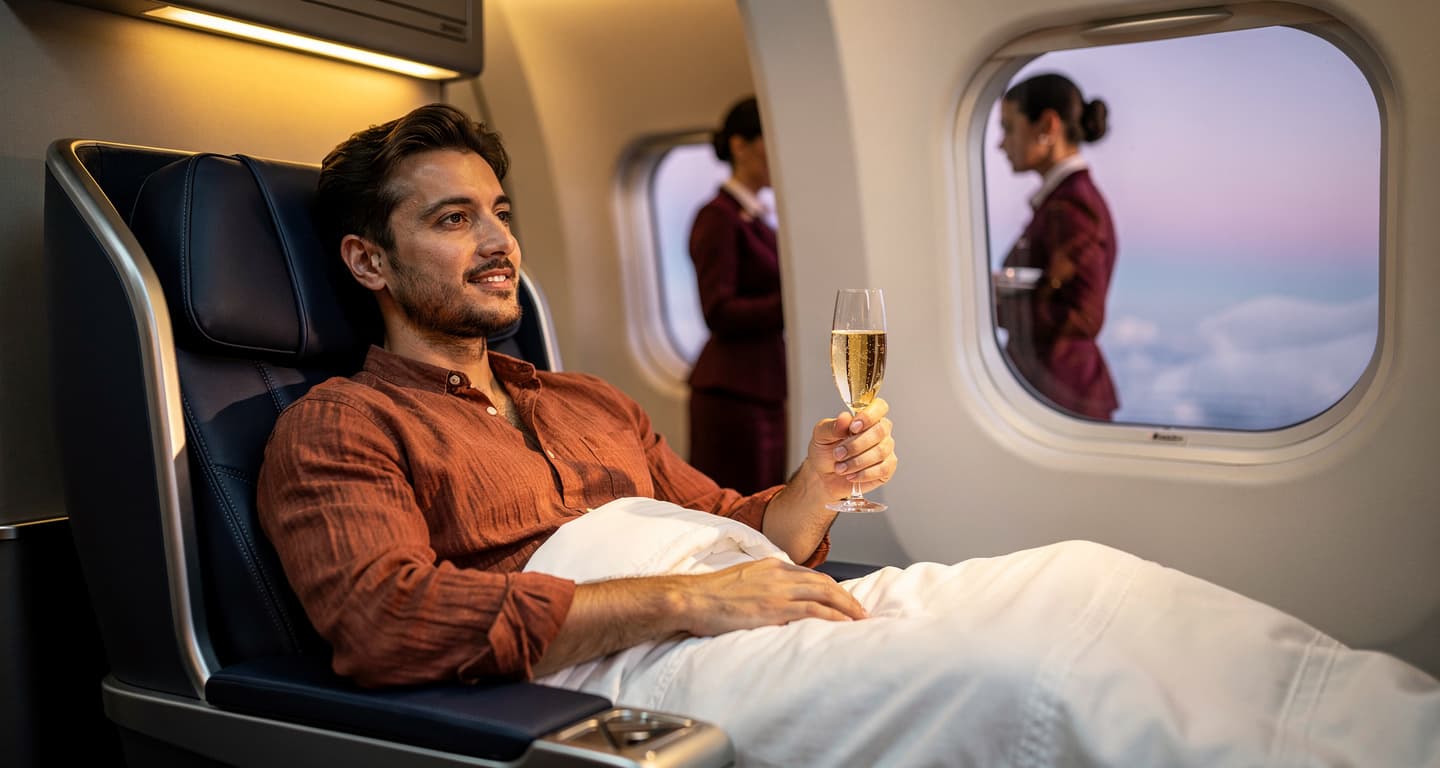
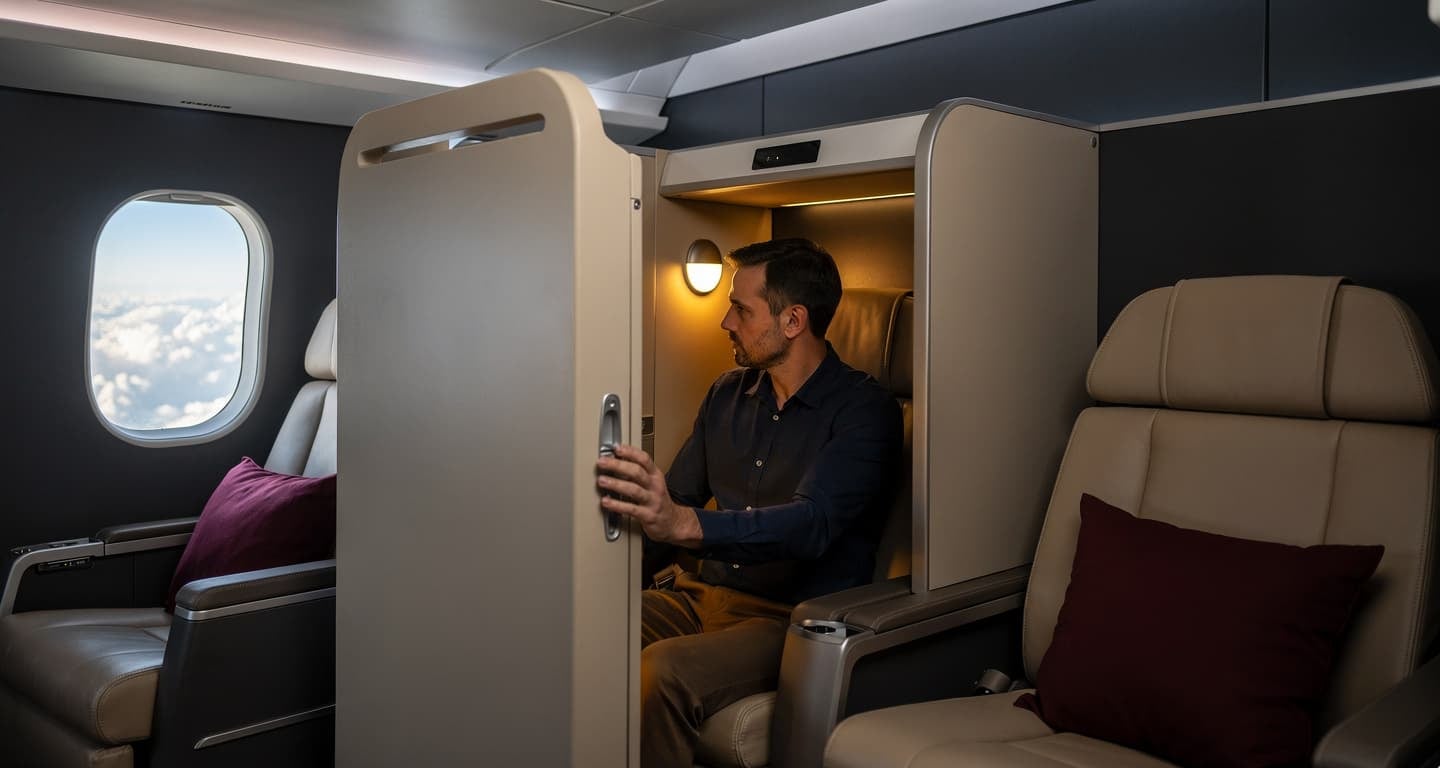
Upgrading to business class does not change your alcohol allowance — the 5-liter flight limit and 2-bottle customs cap apply to all passengers regardless of cabin. However, business class passengers on the Melbourne-Brunei route have more privacy to consume personal alcohol discreetly, which reduces the likelihood of crew intervention. Royal Brunei’s upgrade bid program allows economy passengers to bid for lie-flat business seats starting at A$400-500 one way, seven days before departure.
What if I’m traveling with someone who is Muslim?
Muslim passengers have a zero-alcohol allowance under Brunei law, and this restriction applies on the flight and at customs. If you’re traveling with a Muslim companion, their allowance does not transfer to you — you still get only 2 bottles at Brunei customs, not 4. Families traveling together face the same rule: each non-Muslim adult gets 2 bottles, but children under 18 and Muslim family members have no alcohol allowance regardless of the group size.