Quick summary
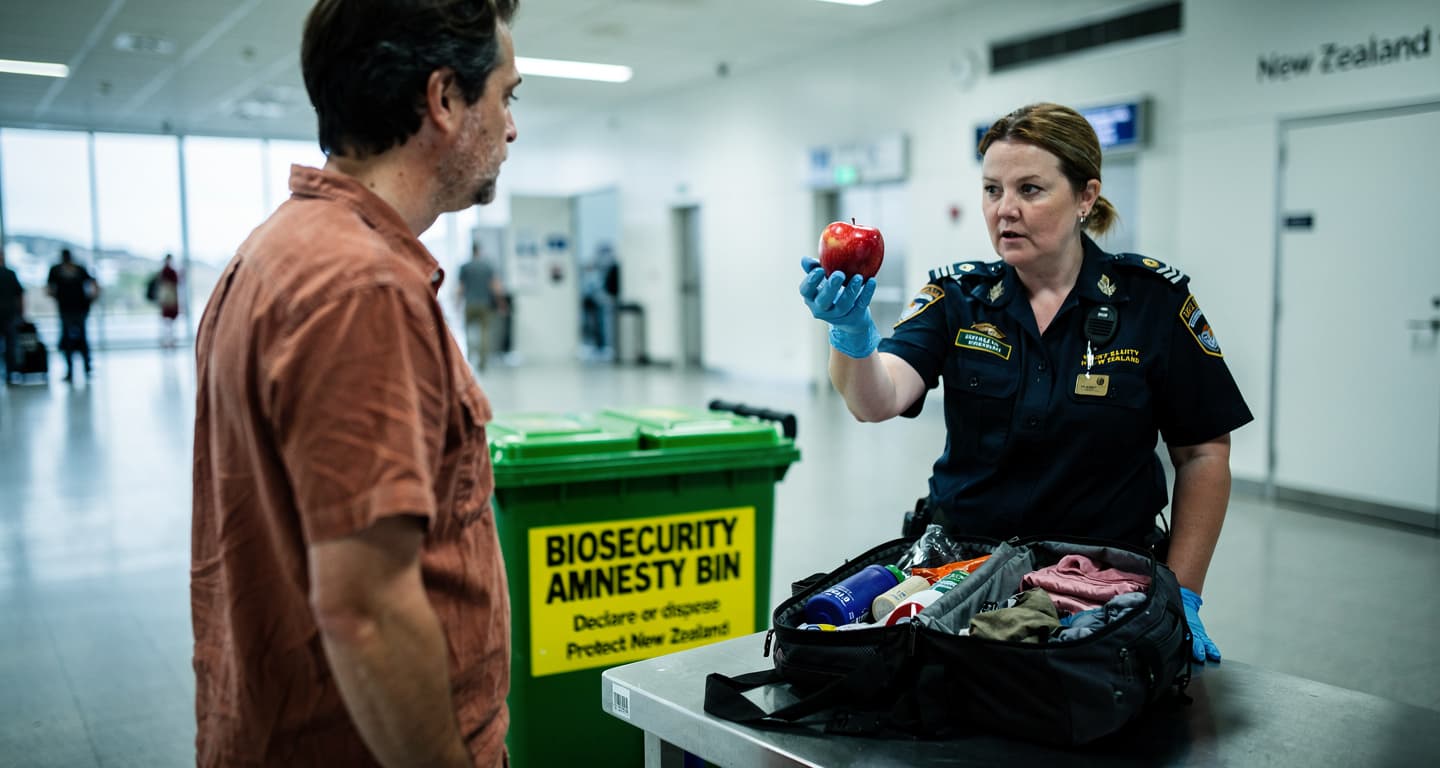
New Zealand issues an instant NZD 400 fine for any undeclared biosecurity risk item—a single apple, a cheese sandwich, dirty hiking boots—with no warnings and no exceptions. Declaring the same item on the mandatory NZ Traveller Declaration costs nothing: officers inspect it and either clear or dispose of it free of charge.The fine is strict liability, meaning intent doesn’t matter. Amnesty bins at all major NZ airports let you dump risk items anonymously before reaching the checkpoint. The full breakdown covers what triggers fines, how the NZTD form works, and six common items travelers forget.After 20 hours in the air, a forgotten granola bar in your carry-on can cost you NZD 400—roughly USD 235—before you even clear the arrivals hall. New Zealand’s Ministry for Primary Industries enforces one of the strictest biosecurity regimes on the planet, and the penalty for failing to declare a risk item is an instant infringement notice. No verbal warning. No second chance. One apple, one fine.
The rule is straightforward: declaring an item never results in a penalty, even if that item gets confiscated. The NZD 400 fine applies exclusively to non-declaration. For all travelers arriving in New Zealand as of 2026—whether from the US, Canada, Europe, or Australia—the compliance strategy is simple: declare everything remotely questionable on the NZ Traveller Declaration (NZTD) form, or drop it in an amnesty bin before the checkpoint.
Air Traveler Club’s travel compliance monitoring across 40+ Asia-Pacific destinations flags New Zealand’s biosecurity enforcement as among the most aggressive globally, with detection rates increasing since enhanced screening protocols were introduced for foot-and-mouth disease risk countries.
What triggers the NZD 400 fine
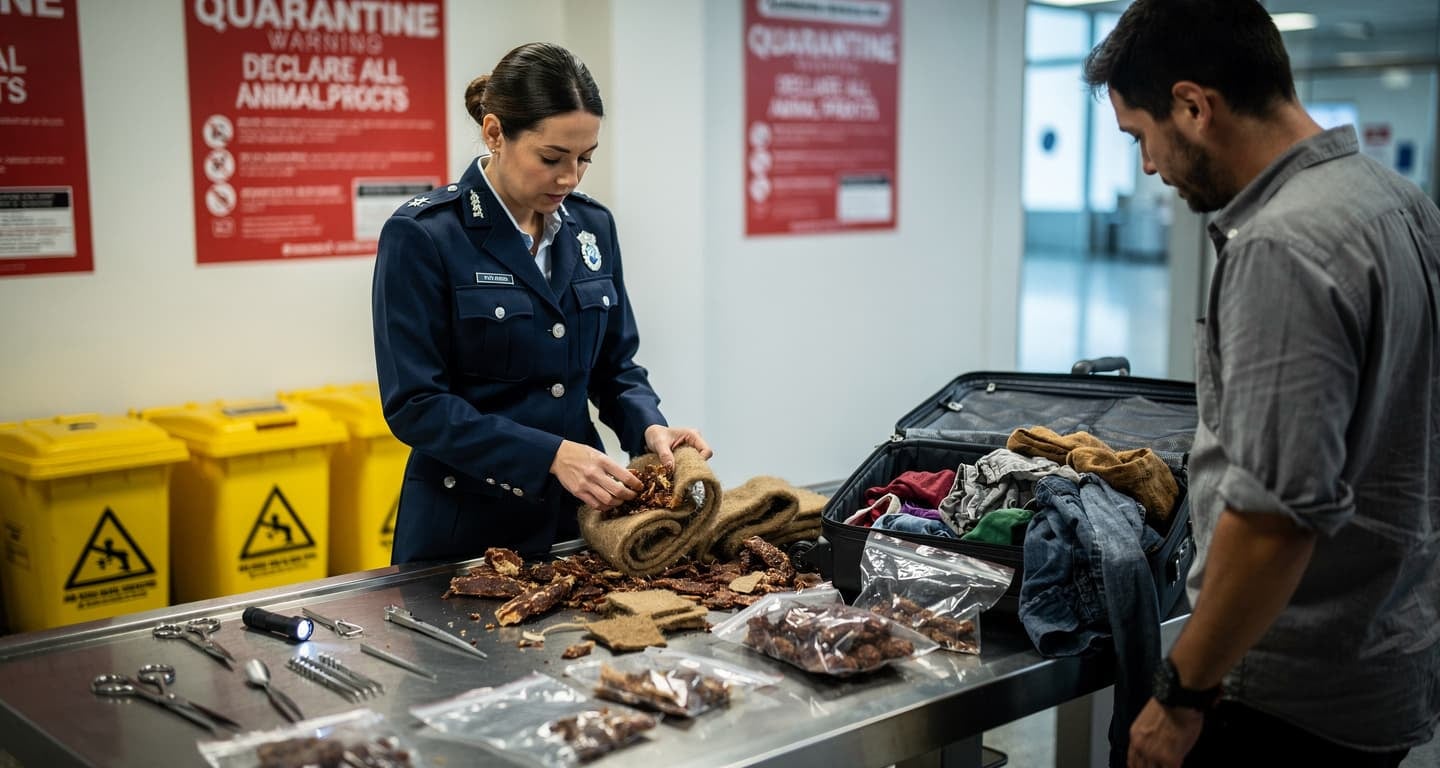
The risk item list is broader than most travelers expect. Fresh fruit, cooked meals, dried snacks, honey, spices, seeds, wooden souvenirs, and dirty outdoor equipment all qualify. That half-eaten sandwich from your Singapore Airlines meal service? Risk item. The beef jerky you bought at LAX? Risk item. The hiking boots with dried mud from your last trip? Risk item.
New Zealand’s biosecurity officers use X-ray screening on all checked and carry-on bags, supplemented by detector dogs trained to identify organic material. According to the Ministry for Primary Industries’ official declaration guidance, the fine operates on strict liability—meaning your intent doesn’t matter. Forgetting counts the same as concealing.
| Item | Risk Category | If Declared | If Undeclared |
|---|---|---|---|
| Apple or banana | Fresh fruit | Disposed free | NZD 400 instant |
| Cheese sandwich | Dairy product | Inspected/disposed free | NZD 400 instant |
| Beef jerky | Meat product | Inspected/disposed free | NZD 400 instant |
| Honey jar | Bee product | Disposed free | NZD 400 instant |
| Dirty hiking boots | Outdoor equipment | Cleaned free | NZD 400 instant |
| Wooden carving | Plant/wood material | Assessed/treated free | NZD 400 instant |
The pattern is unmistakable: declaring costs you nothing. Not declaring costs NZD 400 minimum—and up to NZD 100,000 or prosecution for intentional smuggling.
The NZTD form: your free insurance policy
Every traveler must complete the New Zealand Traveller Declaration before arrival. Paper forms were discontinued in 2023; the NZTD is now digital-only via app or web portal. It takes 5–10 minutes and asks yes/no questions about food, plants, animal products, outdoor equipment, and medicines. Complete it within 24 hours of your flight.
The critical mindset shift: the NZTD is not a confession form. It’s a protection mechanism. Answering “yes” to any category triggers a brief inspection at the biosecurity checkpoint. Officers assess whether your item is permitted, needs treatment, or must be disposed of. No fine is issued for declared items, regardless of outcome. If you’re unsure whether trail mix or herbal tea qualifies, declare it. The worst result is a 3-minute inspection.
Enhanced screening for foot-and-mouth risk
Arrivals from countries with active foot-and-mouth disease—including parts of Southeast Asia—face additional biosecurity screening. MPI has deployed extra detector dogs and targeted X-ray inspection for these routes, making undeclared items more likely to be caught, not less. Travelers connecting through affected regions should be especially thorough on their NZTD declarations.
Flight deals
most people never see
Our AI monitors 150+ airlines for pricing anomalies that traditional search engines miss. Air Traveler Club members save $650 per trip per person on average: see how it works.
Each deal saves 40–80% vs. regular fares:

Amnesty bins: the zero-risk escape hatch
Every major New Zealand airport—Auckland, Wellington, Christchurch—provides amnesty bins positioned between the arrivals gate and the biosecurity checkpoint. Drop any food, organic material, or risk item into these bins anonymously. No questions asked, no penalties, no record.
The bins exist precisely because MPI understands long-haul travelers forget items. After a 12-hour flight from Los Angeles or a 24-hour journey from London, that airline snack tucked into a jacket pocket genuinely slips your mind. The amnesty bins are your last opportunity to avoid the NZD 400 fine. Walk past them, and you’re committed to whatever your bags contain.
For travelers booking deals on long-haul routes to New Zealand—whether through AI-detected pricing anomalies from Australasia or positioning through Asian hubs—the savings evaporate fast when a biosecurity fine lands on arrival. A 5-second amnesty bin stop protects your entire fare advantage.
Three scenarios that escalate beyond NZD 400
The standard infringement notice is NZD 400, but penalties climb sharply in specific circumstances. Intentional concealment—wrapping food in clothing or hiding items in equipment—can trigger prosecution with fines up to NZD 100,000. Repeat offenders face escalated enforcement and potential entry complications on future visits.
Items requiring Import Health Standard (IHS) permits—certain seeds, live plants, or laboratory specimens—need pre-approval from MPI before departure. Arriving without the permit means prohibition regardless of declaration. Prescription medicines must also be declared; undeclared medications trigger the NZD 400 fine even when the substance itself is legal in New Zealand.
For context on how biosecurity compliance fits into broader Asia-Pacific travel planning, our guide to reducing flight costs covers strategies where arrival-country rules directly affect your total trip budget.
Questions? Answers.
How do I complete the NZ Traveller Declaration before my flight?
Download the NZTD app or use the online portal within 24 hours of departure. The form takes 5–10 minutes and covers food, plants, animal products, outdoor equipment, and medicines. It is mandatory for all arrivals—paper forms are no longer accepted since the 2023 digital transition.
Does commercially packaged food from an airport duty-free shop need declaring?
Yes. All food items require declaration regardless of packaging, origin, or purchase location. MPI inspects based on ingredients and country of origin. Commercially sealed items are often cleared quickly, but failing to declare them triggers the same NZD 400 fine as fresh produce.
Do transit passengers who don’t leave the airport need to declare?
If you remain in the transit zone and don’t access your checked bags, no declaration is required. However, checked luggage is still screened by biosecurity. If you exit the transit area for any reason—including to re-check bags on a domestic connection—full declaration rules apply.
Can I bring pet food or animal treats for my destination?
Pet food is classified as an animal product and must be declared on the NZTD. All bags are X-rayed, and undeclared pet food in checked luggage triggers the NZD 400 fine. Declare it, and officers will assess whether it meets import requirements or needs to be disposed of—at no cost to you.
What about wooden souvenirs or carvings purchased in Asia?
Wood and plant materials are biosecurity risk items. Declare them on the NZTD, and officers will assess whether treatment is needed or the item is permitted as-is. Undeclared wooden items carry the same NZD 400 fine. Items with bark or visible soil are higher risk and more likely to be confiscated.
Are amnesty bins available at all New Zealand airports?
Yes. Auckland, Wellington, and Christchurch all have amnesty bins positioned after the arrivals gate but before the biosecurity checkpoint. You can dispose of any risk item anonymously with no penalty. Once you pass the bins and enter the screening queue, disposal without declaration is no longer an option.