Quick summary
New Zealand issues an instant NZD 400 fine (roughly $240 USD) for any undeclared biosecurity risk item—including a single forgotten apple from your in-flight meal. The penalty operates on strict liability: intent is irrelevant, and officers issue fines on the spot with no warnings. Amnesty bins before customs and ticking “Yes” on the arrival card both cost zero.
A government proposal from October 2025 would double fines to NZD 800 for high-risk items like fresh produce and meat, though implementation remains pending. The penalty escalation matrix, declaration strategy, and six common edge cases are covered below.
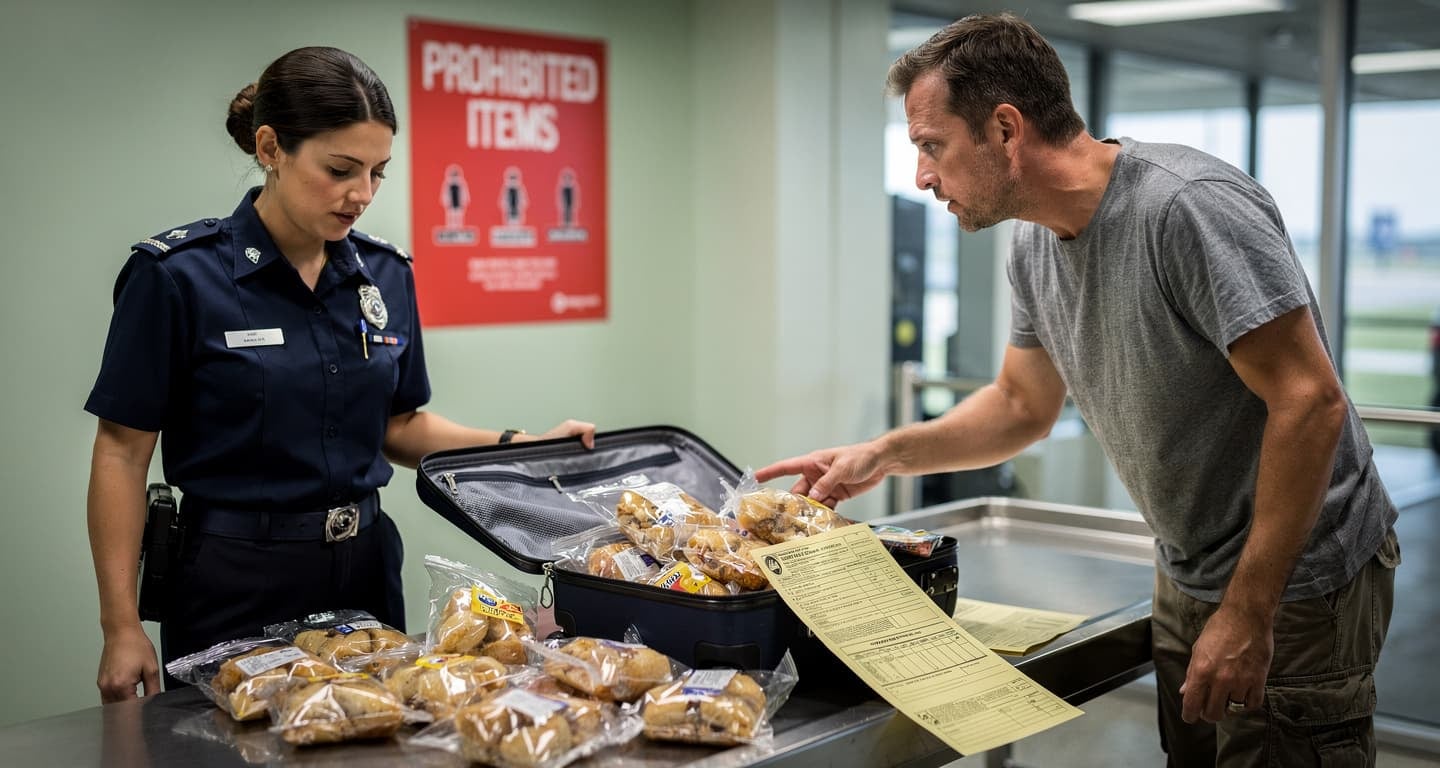
A single apple forgotten at the bottom of your carry-on triggers an instant NZD 400 fine at New Zealand customs—roughly $240 USD, €220, or £190. No warning. No negotiation. No exception for tourists who “didn’t know.” The most common violation is exactly this: a piece of fruit from the airplane meal, tucked into a bag pocket and completely forgotten by the time you reach the biosecurity checkpoint.
The rule that protects you is equally absolute: declaring an item costs nothing, even if the officer confiscates it. Ticking “Yes” on the NZ Traveller Declaration form triggers a brief inspection. If the item is prohibited, officers dispose of it and send you through. Zero penalty. Air Traveler Club’s compliance monitoring of Asia-Pacific entry requirements tracks these biosecurity policies across 60+ destinations, and New Zealand’s enforcement stands out as the most automated and least forgiving in the region.
These rules apply to all international arrivals at Auckland, Wellington, Christchurch, and Queenstown airports as of February 2026. Travelers on any airline, from any origin, carrying any nationality passport face identical enforcement.
Why New Zealand fines first and asks questions never
New Zealand’s biosecurity enforcement operates on strict liability. This legal framework means intent is irrelevant. Forgetting a granola bar in your jacket pocket incurs the same NZD 400 fine as knowingly smuggling fresh produce. The system doesn’t distinguish between carelessness and deliberate evasion at the infringement notice level.
The economic logic behind this severity is straightforward. New Zealand’s food and fibre export sector is forecast to generate NZD 61.4 billion in 2026—exceeding 10% of GDP. A single invasive pest or plant disease could devastate kiwifruit orchards, dairy pastures, or wine regions that underpin the national economy. According to the NZ Ministry for Primary Industries’ official traveller guidance, biosecurity risk items must be declared or disposed of in an amnesty bin on arrival—with instant fines for non-compliance.
40,000 interceptions and counting
Biosecurity detector dogs intercepted over 40,000 high-risk items at New Zealand airports, seaports, and mail centres in 2025, with more than 9,600 detections in international mail alone. These aren’t random spot checks—every arriving passenger passes through X-ray screening and canine detection zones.
This enforcement intensity mirrors a broader Asia-Pacific trend. Australia’s biosecurity penalties reach AUD 1.6 million and 10 years’ imprisonment for commercial violations. New Zealand’s NZD 400 traveler fine is the entry-level consequence in a region that treats border biosecurity as a national security priority.
The two-step strategy that costs you nothing
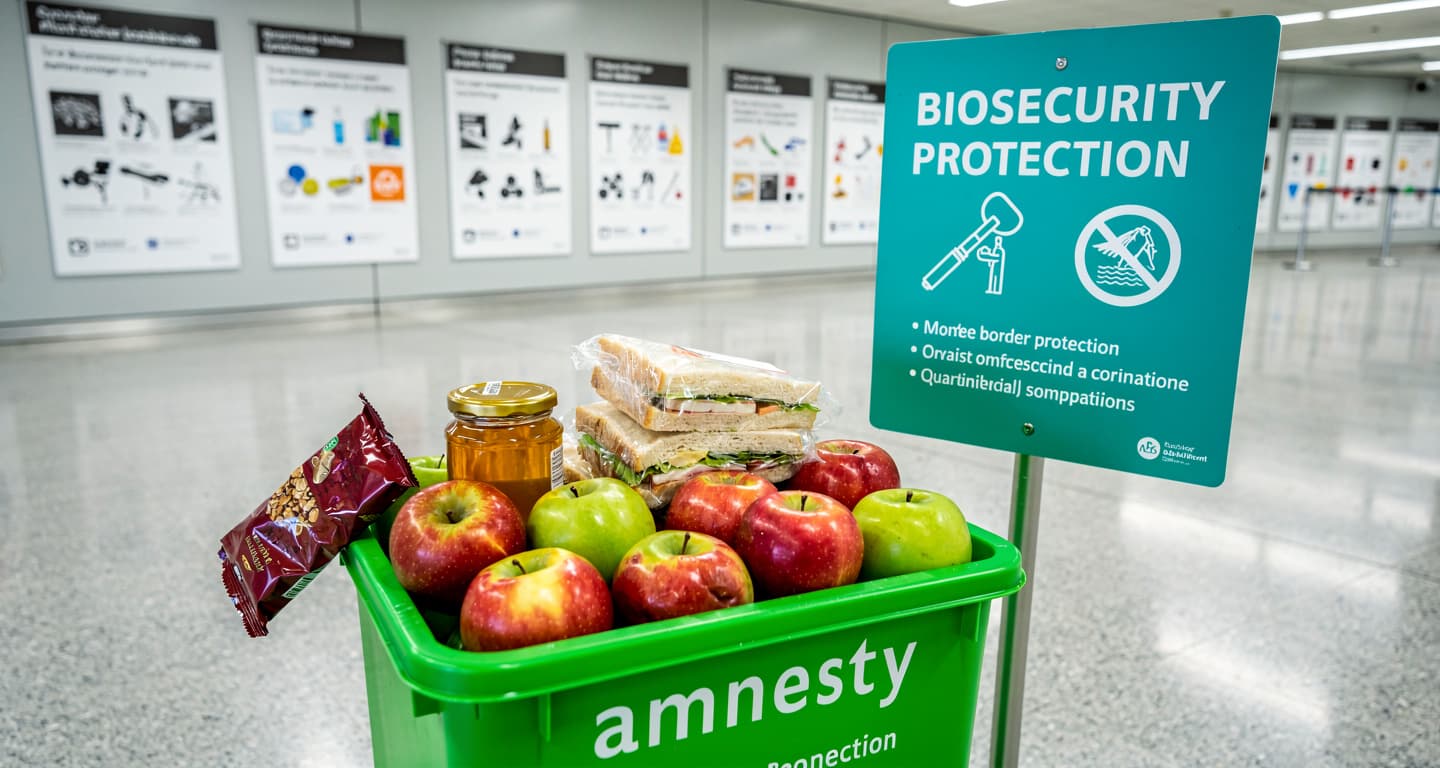
Every major New Zealand airport places amnesty bins directly before the customs checkpoint. These bins exist for one purpose: letting you dump airline snacks, fruit, sandwiches, granola bars, or any other food item anonymously and without penalty. No officer watches. No record is created. The item simply disappears.
If you’re unsure whether something needs declaring—herbal tea, trail mix, prescription medication—tick “Yes” on the NZ Traveller Declaration (NZTD) form. Officers inspect the item, determine whether it’s permitted, and either clear it or dispose of it. The worst outcome is a three-minute delay. The best outcome is keeping your item. The penalty in both cases: zero.
The decision framework is simple. If you’re certain an item is prohibited, use the amnesty bin. If you’re uncertain, declare it on the form. Both paths cost nothing. The only path that costs NZD 400 is failing to do either. For travelers planning trips to New Zealand on deals departing from Australia or New Zealand, building this habit into your arrival routine takes 30 seconds and eliminates all risk.
Flight deals
most people never see
Our AI monitors 150+ airlines for pricing anomalies that traditional search engines miss. Air Traveler Club members save $650 per trip per person on average: see how it works.
Each deal saves 40–80% vs. regular fares:

What triggers the fine—and what triggers worse
Not all violations carry the same consequences. The NZD 400 instant fine covers honest mistakes—forgotten items discovered during routine screening. But the penalty structure escalates sharply from there.
| Item Category | Examples | Undeclared (Current) | If Declared | If Amnesty Bin |
|---|---|---|---|---|
| Low-risk food | Granola bar, chocolate, packaged snacks | NZD 400 | Zero penalty | Zero penalty |
| High-risk food | Fresh fruit, meat, dairy, vegetables | NZD 400 (NZD 800 proposed) | Zero penalty | Zero penalty |
| Soil or plant material | Dirty hiking boots, seeds, garden soil | NZD 400 (NZD 800 proposed) | Zero penalty | Zero penalty |
| Prescription medicines | Undeclared legal medications | NZD 400 | Zero penalty | N/A (must declare) |
| IHS-controlled items | Live plants, laboratory specimens | Prohibition + prosecution | Requires pre-approval permit | N/A (must have permit) |
| Intentional concealment | Food wrapped in clothing, hidden items | Up to NZD 100,000 + prosecution | N/A | N/A |
The critical distinction: wrapping food in clothing or deliberately hiding items in equipment transforms a NZD 400 infringement into criminal prosecution. Fines for intentional concealment reach NZD 100,000, and repeat offenders face complications on future visits to New Zealand.
The proposed NZD 800 increase: what travelers need to know
In October 2025, the New Zealand government proposed doubling fines for high-risk items from NZD 400 to NZD 800. High-risk items include fresh fruit, meat, dairy, raw vegetables, and soil-contaminated equipment—precisely the categories most commonly intercepted from arriving passengers.
As of February 2026, this proposal has not yet been implemented into law. The current standard fine remains NZD 400 for all undeclared biosecurity risk items. However, travelers should check the MPI website within seven days of departure to confirm current penalty amounts, as the timeline for parliamentary approval was not specified in the original proposal.
The proposed increase aligns with emerging risk classifications. A November 2025 regulatory update classified Asian-origin finfish imports as medium-risk due to red sea bream iridovirus concerns—suggesting that food items from Asian origins may face heightened scrutiny. For travelers connecting through Asia on routes covered by our comprehensive guide to reducing flight costs, clearing out any in-flight snacks before landing in New Zealand is now doubly important.
Items that declaration can’t save
Most biosecurity situations resolve through declaration or amnesty bins. But certain items require Import Health Standards (IHS) permits obtained before departure from New Zealand’s Ministry for Primary Industries. These include live plants, seeds, and laboratory specimens.
Arriving without a required IHS permit means prohibition regardless of whether you declared the item. No amnesty bin option exists. No on-the-spot clearance is possible. If you’re packing any plant material, biological specimens, or specialty agricultural products, check the MPI permit requirements weeks before your flight—not at the airport.
Your pre-arrival checklist
- Empty your bag pockets before landing. Check jacket pockets, backpack compartments, and seat-back pouches for airline snacks, fruit, or wrapped food. This is where 80% of forgotten items hide.
- Review the NZTD form carefully. The declaration form asks about food, plant material, animal products, and outdoor equipment. When in doubt, tick “Yes.”
- Use amnesty bins before the checkpoint. Located at all major NZ airports (Auckland, Wellington, Christchurch, Queenstown), these bins accept any item anonymously with zero penalty.
- Declare prescription medicines separately. Even legal medications require declaration. Forgetting to declare them triggers the same NZD 400 fine as undeclared food.
Questions? Answers.
Does the NZD 400 fine apply to sealed, packaged snacks from the airplane?
Yes. Any food item—sealed or unsealed, fresh or packaged—that is not declared or disposed of in an amnesty bin triggers the NZD 400 fine. Sealed packaging does not exempt an item from biosecurity requirements. Granola bars, chocolate, and wrapped sandwiches all count.
What if I declare something and the officer says it’s prohibited?
You face zero penalty. Officers either clear the item or dispose of it at no charge. The NZD 400 fine applies exclusively to undeclared items discovered during screening. Declaring and being wrong costs you nothing beyond a brief inspection.
Are amnesty bins available at smaller regional airports like Rotorua or Napier?
Amnesty bins are confirmed at all major international arrival airports: Auckland, Wellington, Christchurch, and Queenstown. Availability at smaller regional airports is not guaranteed. If arriving at a secondary airport, declare items on the NZTD form rather than assuming amnesty bins are present.
Do dirty hiking boots really trigger a fine?
Yes. Soil-contaminated equipment—including hiking boots, camping gear, and golf clubs—is classified as a biosecurity risk item. Soil can carry seeds, fungi, and organisms harmful to New Zealand’s ecosystem. Clean equipment thoroughly before departure, or declare it on arrival for free inspection and cleaning.
What happens if I accidentally bring herbal tea or traditional medicine?
Herbal teas and traditional medicines containing plant material must be declared. If declared, officers inspect and either clear or confiscate the item with zero penalty. If undeclared and discovered, the standard NZD 400 fine applies regardless of the item’s legality in New Zealand.
Is the proposed NZD 800 fine already in effect for 2026 travel?
As of February 2026, the proposed increase has not been confirmed as law. The current fine remains NZD 400 for all undeclared items. Check the NZ Ministry for Primary Industries website (mpi.govt.nz) within one week of your travel date to verify whether the NZD 800 increase for high-risk items has been implemented.