China Eastern flights from San Francisco to Vientiane cost $720 roundtrip—while Korean Air and EVA Air charge $1,100-1,300 for the same destination. The difference isn’t service quality or aircraft age. It’s routing strategy: China Eastern connects through Kunming, where US and Canadian passport holders can leave the airport visa-free for up to 144 hours.
Air Traveler Club’s fare analysis of 90-day pricing data across North America-Laos routes shows China Eastern consistently undercuts major carriers by $400-600 on roundtrip economy fares. The trade-off is a longer layover in Kunming—typically 6-12 hours on standard bookings, extendable to 24-72 hours without fare penalty. For travelers willing to embrace that layover, the savings fund several nights of accommodation in Laos while adding a free bonus destination in China’s Yunnan province.
For US and Canadian travelers departing between January and October 2026, this routing delivers the lowest fares to Laos from West Coast gateways. The strategy works best from SFO and LAX, where China Eastern operates high-frequency service to its Kunming hub.
The pricing gap across departure cities
China Eastern’s Kunming routing creates systematic savings regardless of which West Coast airport you use. The gap exists because Korean Air and EVA Air route through Seoul Incheon and Taipei—hubs that add premium pricing but offer only 2-4 hour airside layovers with no city access.
| Route | Airline | Roundtrip Price | Total Time | Layover | Savings |
|---|---|---|---|---|---|
| SFO-VTE | China Eastern | $720 | 24h | 8h KMG | $480 |
| LAX-VTE | China Eastern | $796 | 21h30m | 10h KMG | $404 |
| SFO-VTE | Korean Air | $1,200 | 20h | 3h ICN | Baseline |
| LAX-VTE | EVA Air | $1,200 | 22h | 4h TPE | Baseline |
The $400-600 savings more than covers positioning costs if you’re flying from East Coast cities. A one-way from Boston or New York to SFO on budget carriers runs $80-150—still leaving $250-500 in net savings. Our analysis of the Continental Hop Trick for North American travelers shows this repositioning strategy unlocks significantly more Asia-Pacific deals than booking direct from Eastern hubs.
Turning a connection into a free destination
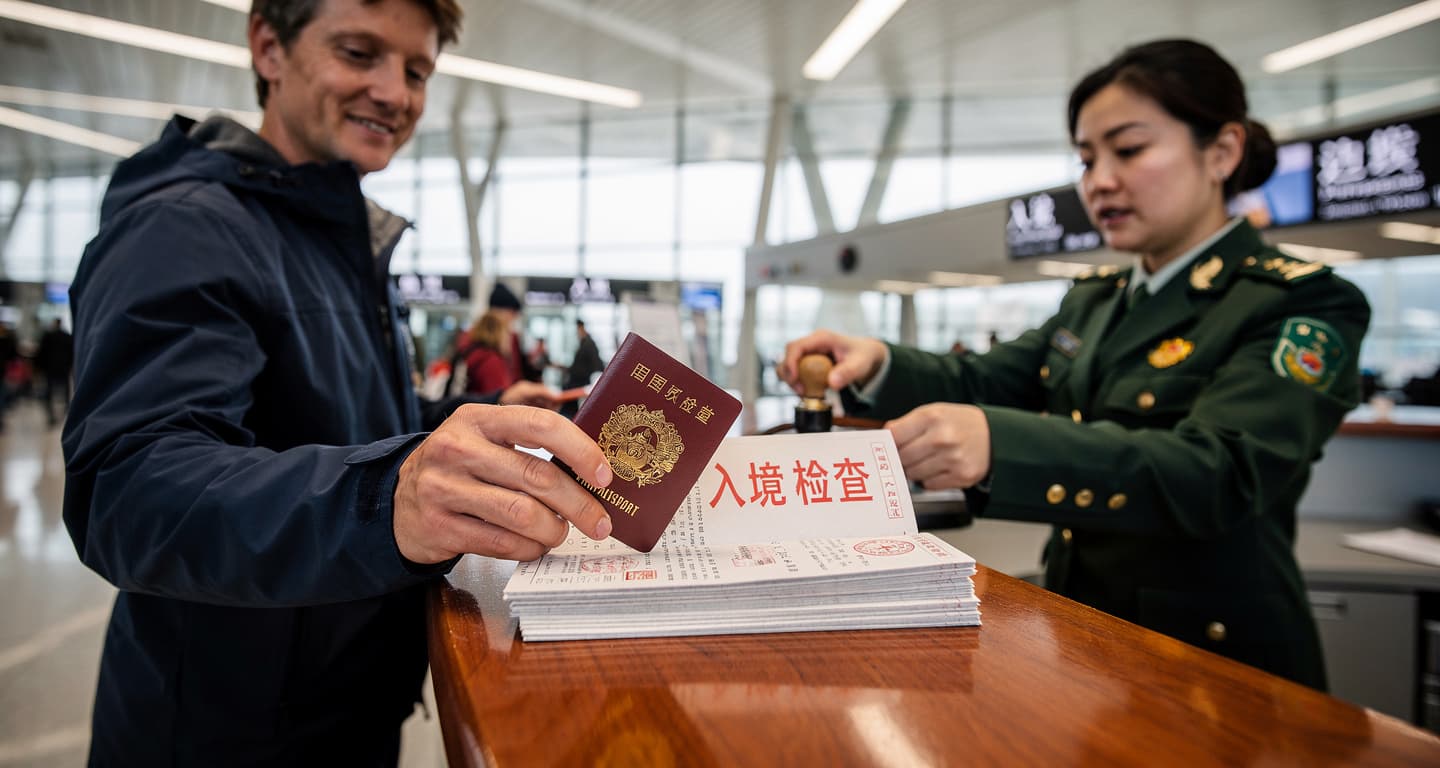
The real value of China Eastern’s Kunming routing isn’t just the fare savings—it’s what you can do with that layover. Under China’s 144-hour transit visa-free policy, US and Canadian passport holders can exit Kunming airport and explore Yunnan province without applying for a visa in advance.
The policy requirements are straightforward: you must be transiting to a third country (Laos qualifies), hold a confirmed onward ticket within 144 hours, and enter/exit through the same airport. Most China Eastern bookings show 8-12 hour natural layovers, but you can select extended connections of 24-72 hours during booking without fare penalty.
Kunming: the gateway city most travelers skip
Yunnan’s capital sits at 1,900 meters elevation with year-round spring weather—locals call it the “City of Eternal Spring.” The old town is a 45-minute taxi ride from the airport, with $50/night hotels throughout the city center. Your $500 in flight savings covers 10 nights of accommodation in Vientiane—or a few nights exploring Kunming’s Stone Forest, Dianchi Lake, and Yunnan cuisine before continuing to Laos.
This transforms what competitors treat as a connection penalty into a genuine travel benefit. Korean Air’s 3-hour Seoul layover keeps you airside. China Eastern’s 24-hour Kunming layover lets you sleep in a real bed, eat authentic Yunnan hotpot, and arrive in Laos rested rather than jet-lagged.
Flight deals
most people never see
Our AI monitors 150+ airlines for pricing anomalies that traditional search engines miss. Air Traveler Club members save $650 per trip per person on average: see how it works.
Each deal saves 40–80% vs. regular fares:

Booking the optimal routing
China Eastern currently offers a 5% discount on LAX and SFO departures to Southeast Asia when booked by January 31, 2026, for travel in January or April 2026. This stacks on already-low base fares, dropping the LAX-VTE roundtrip from $838 to approximately $796. According to China Eastern’s current LAX/SFO promo announcement, the discount applies to both one-way and roundtrip bookings through the official website.
For maximum layover flexibility, book directly on ceair.com rather than through aggregators. The airline’s booking engine allows you to select extended Kunming connections—look for layover options beyond the default 8-12 hours. Baggage checks through to Vientiane on single-ticket bookings, though you’ll need to collect and recheck if you exit the airport during transit.
Peak pricing applies during December-January holiday periods, when China Eastern fares rise to $900+, compressing the savings gap to $200-300. The sweet spot is shoulder season: February-March and September-October, when base fares stay low and Kunming weather is ideal for exploration.
When this strategy breaks down
Three scenarios eliminate or significantly reduce the savings advantage:
- Layovers under 6 hours or over 144 hours. You won’t qualify for visa-free transit and must stay airside. Some China Eastern routings show tight 4-5 hour connections—avoid these if city access matters to you.
- Non-US/Canadian passports. The 144-hour policy covers 54 nationalities, but eligibility varies. EU passport holders generally qualify; check the Chinese National Immigration Administration portal for your specific country before booking.
- Luang Prabang instead of Vientiane. The strategy still works—KMG-LPQ direct flights run $302 roundtrip, putting total SFO cost around $750—but verify China Eastern serves your preferred Laos destination before committing.
February 2026 travel is excluded from the current 5% promo, so full fares apply. If your dates fall in that blackout window, the savings gap shrinks slightly but remains substantial compared to Korean Air and EVA Air pricing.
The broader pattern: Chinese carriers and Asia routing
China Eastern’s Laos pricing reflects a wider trend. As our analysis of Chinese airline competitiveness documents, carriers like Air China, China Eastern, and China Southern consistently undercut Western and Northeast Asian competitors by 25-50% on Southeast Asia routes—leveraging Russian airspace access, lower labor costs, and government-backed hub development.
The trade-off is typically longer total journey times and variable soft product quality in business class. For economy travelers focused on value, the math overwhelmingly favors Chinese carrier routings when the layover can be converted into destination time rather than airport waiting.
Questions? Answers.
Can I leave Kunming airport during a 144-hour transit to Laos?
Yes. US and Canadian passport holders can exit KMG airport, travel within Yunnan province including Kunming city center, and return within 144 hours to continue to Laos. You must hold a confirmed onward ticket and enter/exit through the same airport.
What’s the minimum layover needed to qualify for visa-free transit?
The policy requires transit to a third country within 144 hours—there’s no minimum. However, layovers under 6 hours typically don’t allow enough time to clear immigration, reach the city, and return for your onward flight. Most China Eastern routings show 8-12 hour natural connections.
How does baggage work if I exit the airport during the layover?
On single-ticket bookings, bags check through to Vientiane. If you exit the airport during transit, you must collect your luggage, clear customs, and recheck before your onward flight. Allow 3+ hours for this process when planning city exploration time.
Does this work for Luang Prabang instead of Vientiane?
Yes. China Eastern operates direct KMG-LPQ flights at $302 roundtrip. Combined with SFO-KMG pricing, total cost runs approximately $750—still $350-450 below Korean Air or EVA Air alternatives to Luang Prabang.
What if my passport isn’t US or Canadian?
The 144-hour policy covers 54 nationalities including most EU countries, Australia, and Japan. Verify your eligibility on the Chinese National Immigration Administration website before booking, as some nationalities require standard transit visas.