Fake police officers in Almaty extorted 5.5 million tenge ($11,500 USD) from foreign tourists in November 2025 before their arrest—and the scam they used is still being replicated across the city. The tactic is specific: individuals posing as “tourist police” approach travelers on the street, claiming they need to inspect wallets and passports to “check for counterfeit currency.”
The defense protocol is straightforward. Real Kazakh police never ask to examine wallets, rarely stop tourists without cause, and always carry verifiable identification. If approached, politely decline to hand over your wallet and offer to accompany them to the nearest police station instead. Scammers won’t follow through—this response ends encounters immediately.
For US, Canadian, European, and Australian travelers visiting Kazakhstan in 2025-2026, memorizing this three-step protocol before arrival prevents financial losses averaging $4,000-$13,500 based on documented Almaty fraud cases. Air Traveler Club’s scam alert database tracking Central Asian incidents flagged this pattern following the November arrests, with similar approaches now targeting Western tourists beyond the initial Chinese victims.
The wallet inspection scam: how it unfolds
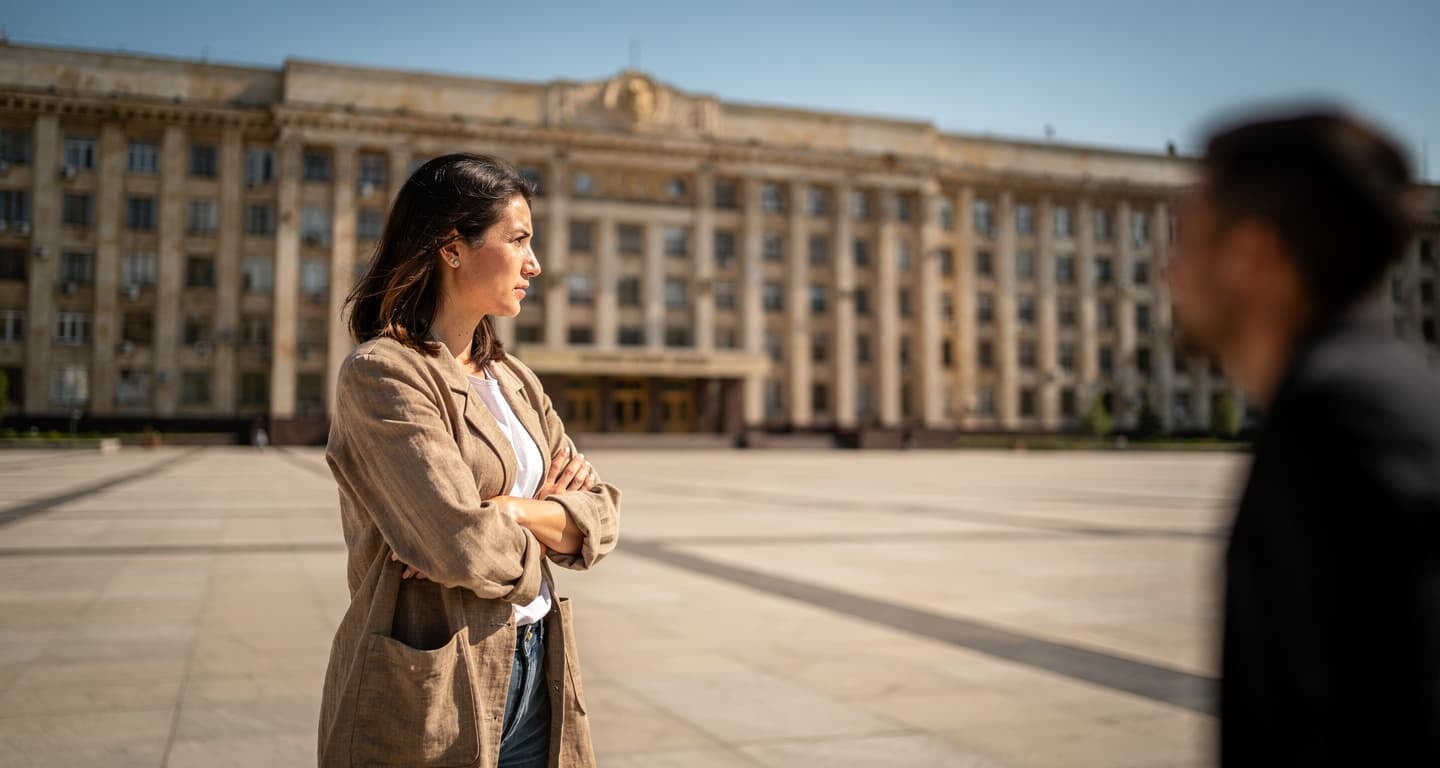
The November 2025 arrests revealed a consistent pattern. Scammers approach foreigners on Almaty streets, often near tourist areas or transport hubs. They claim official authority—sometimes flashing fake badges—and cite “counterfeit currency checks” as justification for wallet access.
Once a tourist complies, one of two outcomes follows. In the street variant, cash disappears during the “inspection” while the victim’s attention is diverted. In the more elaborate version documented in the recent arrest of a fake police ring extorting 5.5 million tenge, scammers escort victims to lodging for “further verification,” then demand payment to avoid fabricated legal consequences.
The 5.5 million tenge case targeted Chinese citizens, but the tactic adapts to any nationality. Language barriers increase vulnerability—scammers exploit confusion when tourists can’t verify credentials or understand demands.
Almaty’s fraud surge: the numbers
Fake police aren’t isolated incidents. Eurasian Bank’s 2025 fraud report documented 6.5 million tenge ($13,500) stolen via fake rental scams and 2 million tenge ($4,200) in car theft extortion schemes in Almaty alone. Police issued public warnings on rising fraud “last month” before January 2026 cryptocurrency scam arrests—the pattern is accelerating.
Distinguishing fake stops from legitimate encounters
Knowing the difference prevents both victimization and unnecessary confrontation with actual authorities. This decision matrix covers the scenarios travelers encounter:
| Scenario | Key Indicators | Legitimate? | Your Response |
|---|---|---|---|
| Street wallet inspection request | No stated cause; “counterfeit check” excuse; demands wallet handover | No | Decline politely; offer station visit |
| Escort to lodging for “verification” | Insists on private location; avoids public scrutiny | No | Disengage immediately; enter crowded area |
| Money demand after escort | Threatens legal consequences; requests cash payment | No | Refuse; call 102 (police) loudly |
| Checkpoint ID request | Official uniform/vehicle; public location; stated cause | Possible | Show passport copy; verify badge details |
| Airport security screening | Official badges; follows queue procedures; uniformed staff | Yes | Comply with standard procedures |
The critical distinction: legitimate Kazakh police operate in public settings with verifiable credentials and stated cause. They never request wallet access, never escort tourists to private locations for “inspections,” and never demand cash payments.
Flight deals
most people never see
Our AI monitors 150+ airlines for pricing anomalies that traditional search engines miss. Air Traveler Club members save $650 per trip per person on average: see how it works.
Each deal saves 40–80% vs. regular fares:

The three-step defense protocol
Step 1: Decline wallet handover. State clearly: “I’m happy to show my passport, but I don’t hand over my wallet.” Real officers accept this; scammers escalate or pivot.
Step 2: Offer the station test. Suggest accompanying them to the nearest police station for proper verification. This is the decisive moment—scammers won’t follow through because stations mean real police involvement. If they refuse or make excuses, you’ve confirmed the scam.
Step 3: Disengage and document. Walk toward a crowded area, hotel lobby, or official building. Note physical descriptions for reporting. If followed, call 102 (police) or 103 (ambulance) loudly—scammers flee escalation.
For travelers who’ve already been victimized, file a police report immediately at the nearest station. While recovery of stolen funds is difficult across jurisdictions, reports help authorities track patterns and may support travel insurance claims—though many policies exclude “unattended money” without documented theft.
When this protocol doesn’t apply
Legitimate security checkpoints at airports, train stations, and government buildings follow different rules. Officers operate in marked locations, wear official uniforms, and process travelers systematically. Comply with standard ID requests in these settings.
Traffic stops with marked police vehicles may legitimately request driver documentation. Show a passport copy rather than the original when possible, and note officer badge numbers.
Outside Almaty, fake police reports are less common. Astana and smaller cities see different scam types—fake rentals and car theft schemes dominate. The wallet inspection tactic concentrates in Almaty’s tourist-dense areas where foreign visitors are most numerous.
Punishment and reporting framework
Kazakh law treats large-scale fraud seriously: up to 7 years imprisonment plus property confiscation and 6-year bans on related activities. The November 2025 arrests demonstrate police do pursue fake officer cases aggressively—the ring was caught quickly after victims reported.
Report incidents to 102 (police) immediately. Provide your location in English if possible; operators handle tourist calls. The 1454 information line also accepts fraud tips integrated with police systems. For embassy assistance, US travelers should register with STEP (Smart Traveler Enrollment Program); Australian travelers with SmartTraveller.
Questions? Answers.
What is Kazakhstan’s emergency police number?
Dial 102 for police or 103 for ambulance. Operators can handle English-speaking callers—provide your location clearly and describe the incident.
How do I verify a police officer’s ID in Almaty?
Official police wear marked uniforms with visible badges and operate from marked vehicles or fixed locations. Demand to see credentials before complying with any request, and note badge numbers. Legitimate officers accept scrutiny; fakes avoid it.
What if scammers follow me after I decline?
Enter a crowded area—hotel lobby, shopping center, or official building. Call 102 loudly so others hear. Scammers consistently flee when escalation risks real police involvement or witness attention.
Does travel insurance cover fake police extortion losses?
Coverage varies significantly. Many policies exclude “unattended money” or require documented theft via police report. File a report immediately after any incident and check your specific policy terms before travel—some premium policies include robbery coverage.
Are fake police scams common outside Almaty?
Significantly less so. Astana and regional cities see different fraud patterns—fake rentals, car theft demands, and digital scams dominate. The wallet inspection tactic concentrates in Almaty’s tourist areas due to higher foreign visitor density.
Should I carry my original passport on Almaty streets?
Carry a photocopy for routine verification and keep the original secured at your accommodation. If stopped, offer the copy first. Legitimate officers accept copies for basic checks; only border/airport officials require originals.