Quick summary
Visa, Mastercard, and Amex are completely blocked in Iran due to US and EU sanctions—no ATM withdrawals, no merchant terminals, no exceptions. Travelers must carry 100% of their trip budget in physical USD or EUR cash, budgeting $80–150 per person per day, with a 30% emergency buffer. A 10-day trip requires approximately $1,560 in pristine post-2013 $100 bills.
Bill condition is non-negotiable: notes with tears, pen marks, or heavy creases face 20–50% rejection rates at Iranian money changers. The full breakdown covers daily cost benchmarks by city, a cash carry calculator by trip length, and five emergency scenarios where running out of cash has no digital fallback.
Every foreign bank card you own—Visa, Mastercard, Amex, even UnionPay—is completely non-functional inside Iran. Not intermittent. Not unreliable at certain merchants. Blocked at the infrastructure level by US and EU financial sanctions that sever Iran’s banking system from international payment networks. No ATM in the country will recognize your card. No hotel, restaurant, taxi, or domestic airline counter will process a foreign transaction.
You need to carry 100% of your trip budget in physical cash—pristine USD $100 bills (post-2013 series) or clean EUR notes. Air Traveler Club’s travel advisory analysis across four government sources confirms identical guidance: budget $80–150 per person per day, add a 30% emergency buffer, and verify every bill’s condition before departure. For travelers from the US, UK, EU, Canada, or Australia planning trips in 2025–2026, this is the single most important financial preparation step for Iran.
The sanctions wall: why every card fails
This isn’t a technology gap or banking limitation. The US Treasury’s Office of Foreign Assets Control (OFAC) enforces comprehensive sanctions that prohibit American financial institutions from processing transactions with Iranian entities. Since Visa, Mastercard, and Amex route all international transactions through US-based clearing systems, every foreign card is blocked regardless of the cardholder’s nationality.
A British traveler’s Barclays Visa fails for the same reason an Australian’s Commonwealth Bank Mastercard does—the transaction attempts to clear through US infrastructure and gets rejected. EU sanctions layer additional restrictions. The result is a complete payment blackout that has persisted since 2012 and shows no signs of easing through 2026, according to OFAC’s current Iran sanctions program documentation, updated January 2026.
No cryptocurrency wallets, prepaid cards, or digital payment apps bypass this. Iran’s domestic Shetab banking network operates entirely separate from international systems. Local apps exist, but they require Iranian bank accounts that foreign visitors cannot open.
How much cash to carry: the daily budget math
Iran is remarkably affordable once you’re inside the country—the challenge is having enough physical currency to access that affordability. Based on verified government advisory data and traveler reports, daily costs break down predictably.
Mid-range hotels in Tehran, Isfahan, and Shiraz run $50–100 per night. Restaurant meals cost $10–20. Taxis within cities average $3–7 per ride. Museum entries, guided tours, and intercity buses add $15–30 daily. That puts realistic daily spending at $80–150 per person depending on comfort level and city.
| Trip Length | Daily Budget | Base Total | 30% Buffer | Cash to Carry |
|---|---|---|---|---|
| 5 days (Tehran focus) | $90 | $450 | $135 | $585 |
| 7 days | $100 | $700 | $210 | $910 |
| 10 days (multi-city) | $120 | $1,200 | $360 | $1,560 |
| 14 days | $110 | $1,540 | $462 | $2,002 |
| 21 days | $130 | $2,730 | $819 | $3,549 |
The 30% buffer isn’t conservative—it’s essential. Flight changes, medical visits, and unexpected overnight stays all require immediate cash payment. There is no emergency wire transfer service that works inside Iran. Running out of money means relying on the kindness of other travelers or contacting your embassy, neither of which is a reliable financial plan.
Twenty $100 bills weigh 20 grams
Carrying $2,000 in $100 bills adds barely any weight to your luggage. The real burden is security, not bulk. Use a neck wallet for daily spending and a hotel safe for reserves. If carrying over $10,000 equivalent, you must declare it at Iranian customs—failure to declare risks confiscation.
Flight deals
most people never see
Our AI monitors 150+ airlines for pricing anomalies that traditional search engines miss. Air Traveler Club members save $650 per trip per person on average: see how it works.
Each deal saves 40–80% vs. regular fares:

The pristine bill problem: why condition matters more than amount
Iranian money changers—called Sarrafs—enforce bill quality standards that surprise most Western travelers. Notes with tears, pen marks, heavy creases, or stains are routinely rejected. Government advisories from the US, UK, Australia, and Canada all flag this independently, estimating 20–50% rejection rates for older or damaged bills.
The rules are specific. USD bills should be post-2013 series (some changers accept post-2009, but newer is safer). The $100 denomination gets the best exchange rates. Fifties and twenties work but at slightly worse rates. Bills smaller than $20 are often refused entirely. EUR notes face similar scrutiny—clean, unfolded, post-2013 preferred.
Before departing, inspect every bill. Reject anything with writing, stamps, excessive fold lines, or corner tears. Your home bank can usually provide fresh sequential bills if you request them 48 hours in advance. This preparation step alone prevents the single most common financial frustration reported by Iran travelers.
Where to exchange: Sarrafs beat banks and airports
Authorized Sarrafs in major bazaars offer the best rates—typically 2–5% better than airport counters and significantly faster than official banks, which cap daily exchanges and move slowly. Tehran’s Grand Bazaar alone has over 50 licensed money changers. Isfahan and Shiraz bazaars offer comparable rates.
Shop at least three Sarrafs before exchanging. Rates vary meaningfully—as of late 2025, the USD sell rate hovered around 850,000 IRR per $100, but individual changers quoted spreads of 3–5%. Avoid street hawkers entirely: counterfeit rial notes circulate, and unlicensed exchanges offer no recourse. Carry a passport copy (not your original) as Sarrafs occasionally request identification. For travelers concerned about managing finances across complex multi-country itineraries, our guide to 11 strategies for reducing flight costs covers broader trip budgeting approaches that complement destination-specific cash planning.
Five scenarios where cash-only becomes a crisis
The card blackout creates vulnerabilities that don’t exist in connected economies. Understanding these edge cases before departure is the difference between inconvenience and genuine emergency.
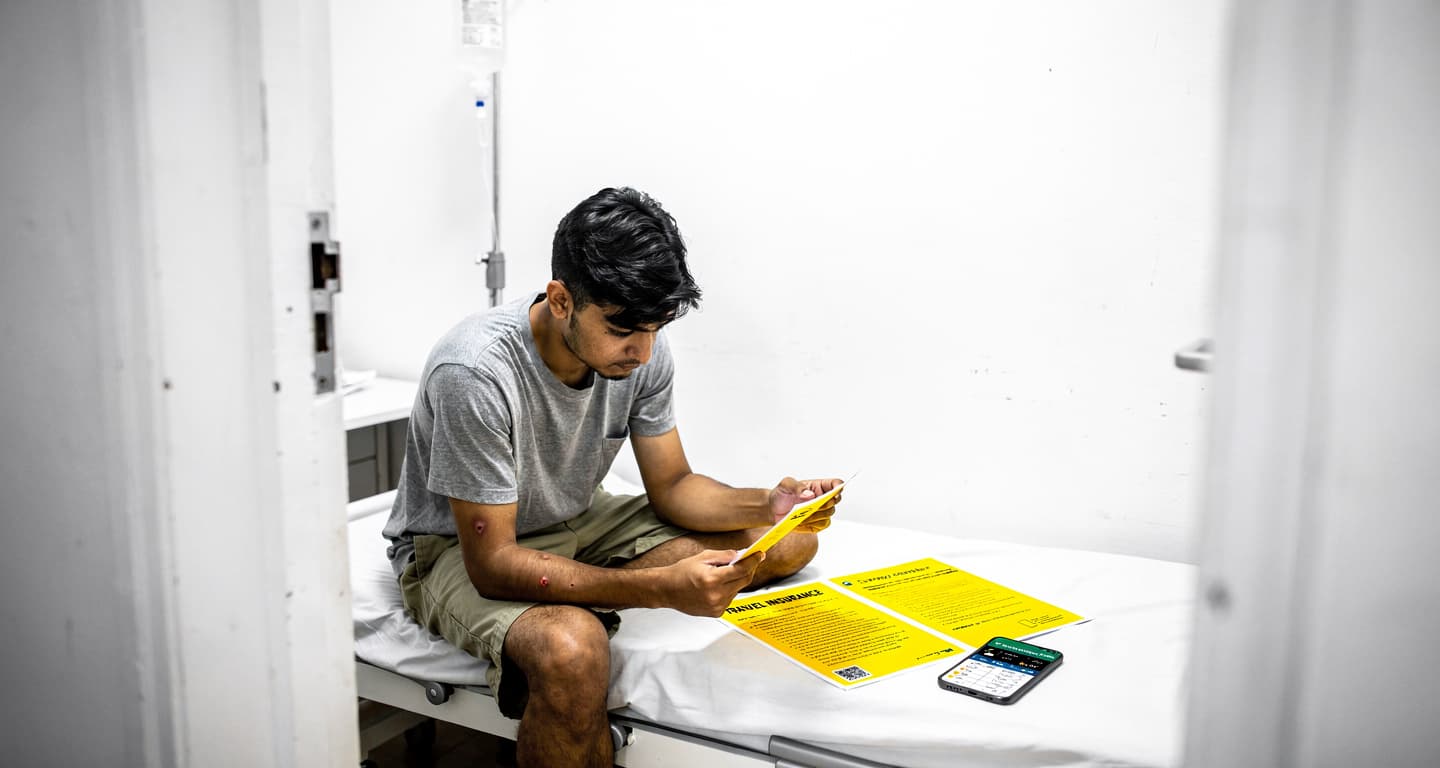
- Medical emergencies require upfront cash payment. Iranian clinics and hospitals treat foreign patients but demand immediate payment. International travel insurance won’t cover costs without upfront settlement—reimbursement happens after you return home. Budget $300–500 of your buffer specifically for medical contingency.
- Domestic flight changes are cash-only at the counter. If weather, illness, or itinerary shifts require rebooking an internal flight, you’ll pay the fare difference in cash at the airport. No phone rebooking with a card is possible.
- Overland border crossings gouge exchange rates. Entering from Turkey or Armenia, border money changers extract 10–15% premiums over city rates. Carry extra pristine bills if crossing by land.
- Trips exceeding 21 days multiply theft risk. Carrying $3,500+ in cash for three weeks requires splitting storage across body, luggage, and hotel safes. No foreign bank vaults are accessible.
- Dual nationals face compounded risks. US, UK, EU, and Canadian citizens with Iranian heritage face heightened border scrutiny and potential detention. Cash remains mandatory, but multiple government advisories strongly discourage travel entirely for dual nationals.
EUR as a lighter alternative
While USD enjoys roughly 90% acceptance at Sarrafs, EUR works as a viable secondary currency—particularly for European travelers who avoid double-conversion fees. EUR acceptance is universal in Tehran, Isfahan, and Shiraz, though rural areas may prefer dollars. For a 14-day trip, carrying €1,800 in clean notes achieves equivalent purchasing power with slightly less bulk than mixed-denomination USD. The key trade-off: EUR exchange rates at Sarrafs run 1–3% worse than USD rates. For travelers researching broader Middle East and Asia routing options, our analysis of airline stopover programs covers free hotel packages in transit hubs like Istanbul and Dubai that can reduce overall trip costs.
Questions? Answers.
Can I exchange more cash mid-trip if I run low?
Yes, but only at authorized Sarrafs or official banks. Tehran Grand Bazaar has 50+ licensed changers with competitive rates. Official banks are slower and may cap exchanges at $500-equivalent per day. Always carry your passport copy. Airport exchanges work 24/7 but charge 5–8% worse rates than city Sarrafs.
Do any digital payment methods work as backup?
No. Cryptocurrency wallets, Apple Pay, Google Pay, and all foreign fintech apps are blocked by the same sanctions infrastructure. Iran’s domestic Shetab network and local apps like Snapp require Iranian bank accounts unavailable to tourists. Cash is your only payment method.
Does UnionPay work in Iran?
UnionPay (Chinese-issued) cards occasionally function at upscale malls in northern Tehran—roughly 10% of high-end retail locations. This is unreliable and limited to Tehran only. Do not factor UnionPay into your financial planning. Treat it as a bonus if it works, not a backup.
What happens if my $100 bills get rejected?
Try another Sarraf—standards vary slightly between changers. If multiple changers reject the same bill, it’s likely too damaged or too old. Some travelers report success exchanging rejected USD at official bank branches, which are less strict on condition but offer worse rates. Prevention is better: inspect every bill before departure and request fresh sequential notes from your bank.
Do I need to declare cash at Iranian customs?
Yes, if carrying over $10,000 equivalent. Failure to declare risks confiscation. For amounts under $10,000, no declaration is required, but keep exchange receipts from Sarrafs in case of questions at departure. Some travelers photograph their cash before entry as documentation.
Are airport lounges and duty-free also cash-only?
Yes. Iranian airport lounges, duty-free shops, and airline service counters all operate on cash. If you need to change a domestic flight, purchase food, or buy last-minute items at the airport, you’ll pay in rials or accepted foreign currency. Budget $50–100 equivalent for airport expenses on departure day.