Quick summary
Indonesia’s official Electronic Visa on Arrival (e-VOA) costs a fixed $35 USD through the government’s .go.id portal, but the top Google results for “Indonesia e-visa” are third-party agency sites charging $80–100—a 129–186% markup—for submitting the identical application on your behalf. Approval is instant, the PDF arrives by email within minutes, and the process requires no intermediary.
The scam relies on paid ad placement and near-perfect mimicry of official Indonesian government branding. Every traveler heading to Bali, Jakarta, or any of Indonesia’s 90+ entry points should verify the URL ends in .go.id before entering payment details.
The first Google result for “Indonesia e-visa” charges $90. The official Indonesian government fee is $35. That $55 difference buys you nothing—no faster processing, no priority lane, no additional service. You get the same single-entry, 30-day Visit Stay Permit PDF emailed to the same inbox in the same number of minutes.
The copycat sites work because they bid aggressively on Google Ads, rank above the real portal, and replicate Indonesian immigration branding with near-perfect accuracy. Air Traveler Club’s analysis of the top 10 search results for “Indonesia e-visa” and “Bali visa online” found 7 out of 10 were third-party agencies charging between $80 and $100 for the identical $35 document. For the millions of US, Canadian, European, and Australian travelers visiting Indonesia annually as of 2026, that’s a collective overpayment running into tens of millions of dollars.
This applies to every international leisure visitor arriving at Bali’s Ngurah Rai (DPS), Jakarta’s Soekarno-Hatta (CGK), Surabaya (SUB), or any of Indonesia’s 90+ designated entry points. The fix takes 30 seconds: bookmark the real site now.
The one URL that matters
Indonesia’s immigration authority operates two legitimate portals. The application starts at evisa.imigrasi.go.id, and payment processes through molina.imigrasi.go.id. Both end in .go.id—Indonesia’s government domain suffix, equivalent to .gov in the United States or .gov.uk in Britain. If the URL doesn’t end in .go.id, you’re on an agency site.
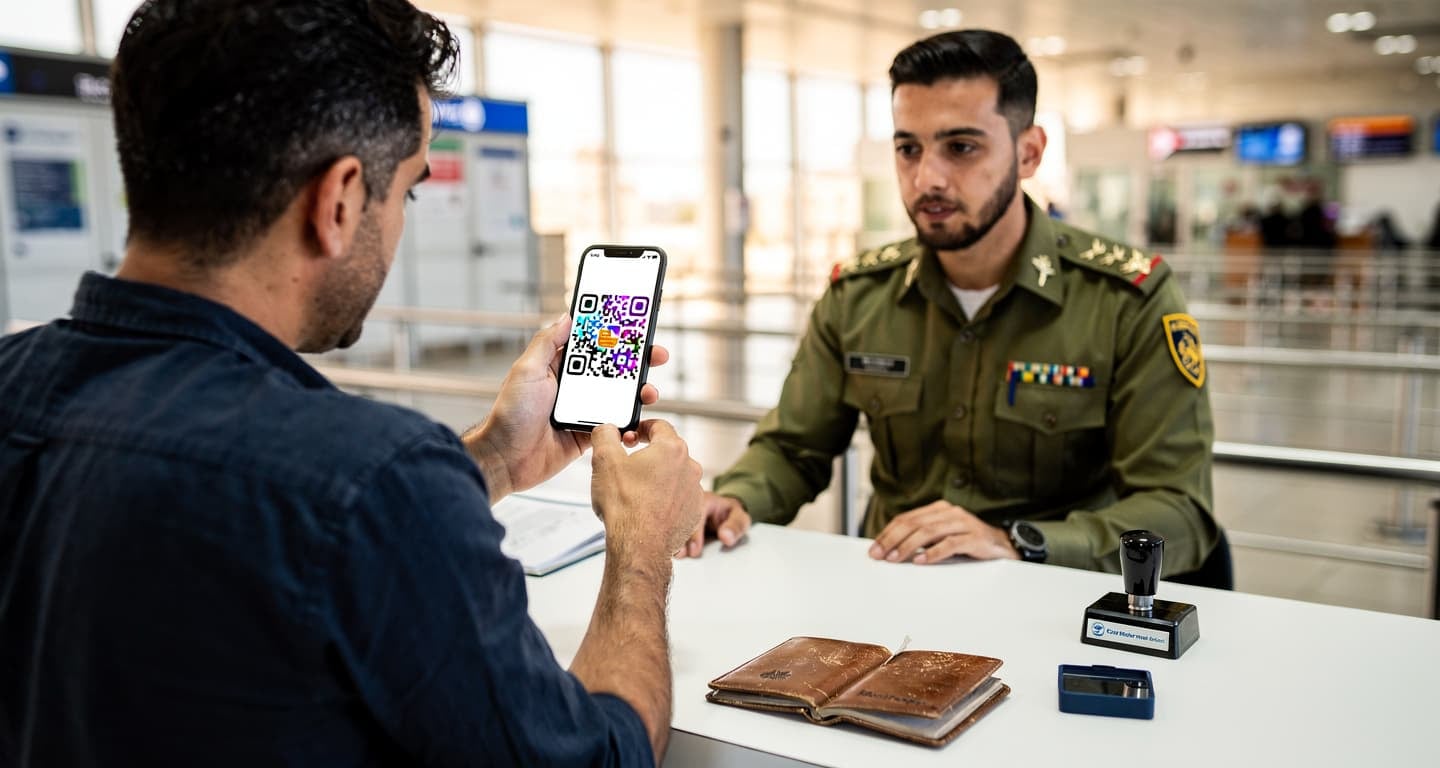
The official process is straightforward: upload your passport photo page, fill in travel details, pay $35 via Visa, Mastercard, or JCB, and receive an approved PDF by email. Approval is typically instant after payment clears. The system even supports group applications for up to 5 travelers simultaneously—useful for families heading to Bali who’d otherwise pay an agency $90 per person, turning a $175 family visa cost into $450.
For travelers already hunting AI-detected flight deals from Australia and New Zealand to Bali, losing $55 per person to a fake visa site erases a meaningful chunk of those airfare savings before you even board.
Flight deals
most people never see
Our AI monitors 150+ airlines for pricing anomalies that traditional search engines miss. Air Traveler Club members save $650 per trip per person on average: see how it works.
Each deal saves 40–80% vs. regular fares:

How the scam works—and why it’s legal
These aren’t phishing sites stealing your data. They’re registered businesses that submit your e-VOA application through the same government portal you’d use yourself, then charge a “processing fee” of $45–65 on top of the $35 government fee. The service is technically legitimate—just wildly overpriced for what amounts to copying your passport details into a form.
The deception lies in presentation. Agency sites use Indonesian flag imagery, official-sounding names like “Indonesia eVisa Service” or “Official Visa Portal,” and design layouts that mirror government aesthetics. They purchase top ad positions on Google for search terms every traveler uses. At midnight before a trip, when you’re rushing to sort documents, the distinction between an agency site and the official Indonesian eVisa portal is nearly invisible.
The markup math across nationalities
The government charges every eligible nationality the same $35 flat fee. Agency pricing, however, varies: US and Canadian travelers report charges averaging $90, Europeans see $85, and Australian applicants face up to $95. The markup ranges from 129% to 171%—for a form that takes under 5 minutes to complete yourself.
Indonesia’s Directorate General of Immigration has not cracked down on these services because they don’t violate Indonesian law. They’re visa agents, a category that exists legitimately for complex visa types requiring sponsors. The problem is that e-VOA doesn’t require an agent—it was specifically designed for self-service.
What you actually need to know before applying
The e-VOA grants a single-entry, 30-day Visit Stay Permit for leisure travel. It cannot be extended or converted to a business or work visa. Citizens of the US, Canada, EU member states, the UK, Australia, and New Zealand are all eligible to self-apply without a sponsor. ASEAN nationals from countries like Singapore, Malaysia, and Thailand are typically visa-exempt entirely—no e-VOA needed.
One requirement catches travelers off guard: Indonesia now mandates an electronic arrival card submitted 3 days before arrival through the allindonesia.imigrasi.go.id portal. This is separate from the e-VOA and free of charge, but skipping it can cause delays at immigration.
If you don’t have a credit or debit card for online payment, the identical $35 Visa on Arrival remains available in cash at airport immigration counters. You’ll wait in a queue instead of walking to the e-gate, but the cost and visa terms are identical. For travelers already planning their Indonesia trip using cost-cutting flight strategies, protecting that $55 per person at the visa stage is the easiest savings you’ll make.
Edge cases where the standard path doesn’t apply
Not every traveler qualifies for the self-service e-VOA. If your nationality isn’t on Indonesia’s eligible list, you’ll need a local sponsor—a hotel or registered travel agent—to submit your application. In this scenario, paying an agency fee may be unavoidable, though you should still verify the agency is registered with Indonesian immigration rather than a random Google result.
Official or government visits require an invitation letter and fall outside the e-VOA system entirely. And travelers planning stays beyond 30 days should note that the e-VOA is non-extendable—overstaying triggers fines of IDR 1,000,000 (roughly $60) per day and potential deportation. For longer stays, apply for a B211 visa through the Indonesian embassy before departure.
Questions? Answers.
Can I still get a visa on arrival at the airport if I forget to apply online?
Yes. The same $35 USD Visa on Arrival is available at immigration counters in Bali (DPS), Jakarta (CGK), and 90+ other entry points. You’ll pay in cash (USD or Indonesian Rupiah) and wait in a queue, but the visa terms are identical to the e-VOA. Online application simply saves time at arrival.
Does the e-VOA cover island-hopping within Indonesia?
Yes. The e-VOA grants nationwide validity for leisure travel. Once you clear immigration at your arrival airport, no additional visa checks apply for domestic flights between islands—Bali to Lombok, Jakarta to Yogyakarta, or any other internal route.
What payment methods work on the official portal?
The molina.imigrasi.go.id payment gateway accepts Visa, Mastercard, and JCB credit or debit cards, plus SIMPONI bank transfers for Indonesian bank account holders. Cash payment is not available online. If your card is declined, try a different card or clear the transaction with your bank’s fraud department before attempting again.
Is the e-VOA valid for multiple entries?
No. The e-VOA is single-entry only, valid for 30 days from your arrival date. If you leave Indonesia and want to return, you’ll need to apply and pay for a new e-VOA. Frequent visitors should consider a B211 multiple-entry visa through the embassy instead.
How do I verify my e-VOA status after applying?
Use the status tracker on evisa.imigrasi.go.id by entering your application reference number. Approval is typically instant after payment processes. The approved PDF is emailed to the address you provided during application—check spam folders if it doesn’t appear within 10 minutes.
What’s the electronic arrival card and is it separate from the e-VOA?
The arrival card is a free, mandatory health and customs declaration submitted through allindonesia.imigrasi.go.id at least 3 days before your flight. It is completely separate from the e-VOA visa. You need both: the e-VOA for entry permission and the arrival card for customs clearance. Neither costs more than $35 total.