Quick summary
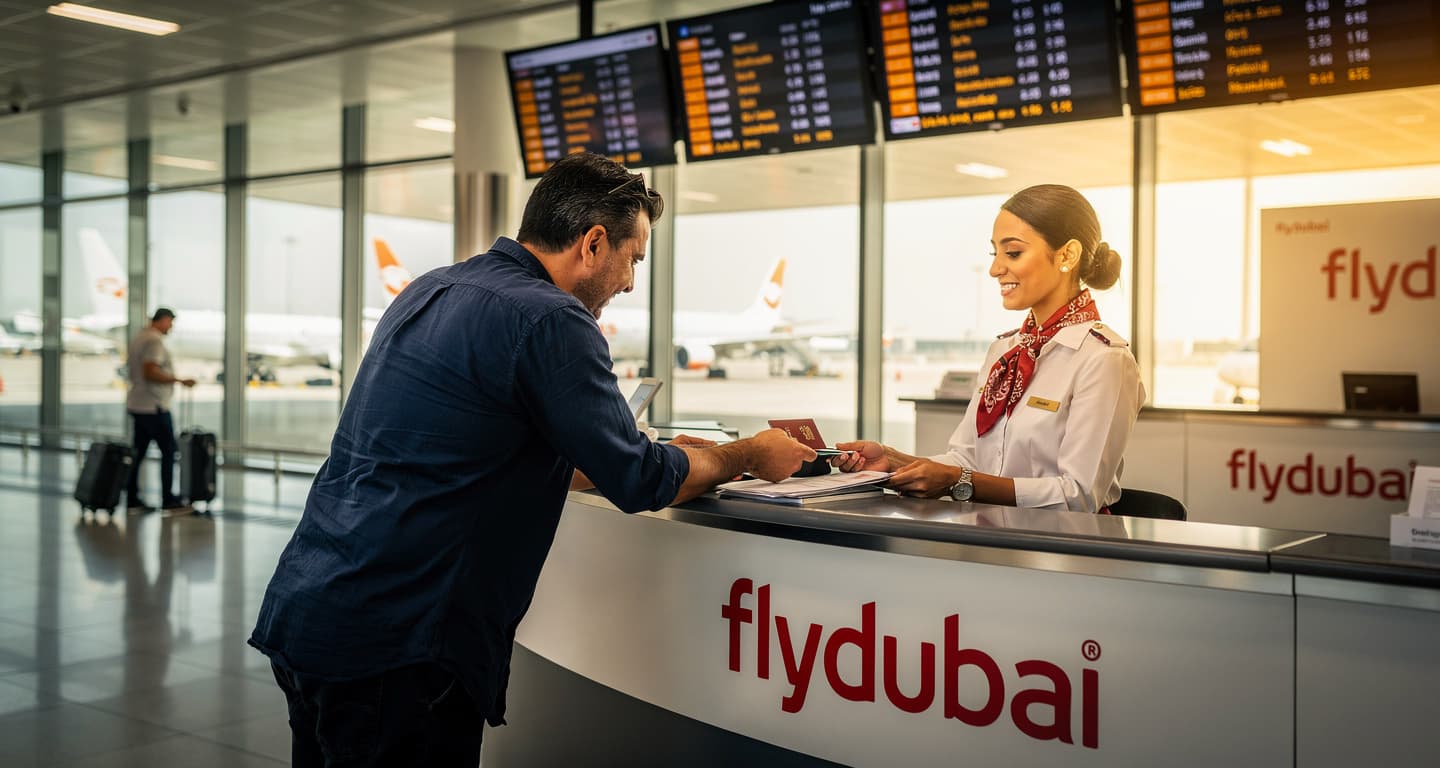
Flydubai operates 14 weekly direct flights from Dubai (DXB) to Kabul (KBL) using Boeing 737-800s under UAE safety oversight—the only major international carrier maintaining regular scheduled service to Afghanistan’s capital. Fares start at AED490 (US$133) one-way, with all departures scheduled between 04:30-11:55 to maximize daytime operations and security protocols preferred by NGOs and journalists.
Local Afghan carriers Kam Air and Ariana Afghan Airlines also serve this route at lower prices (US$146-313), but operate without UAE regulatory standards. This guide covers when Flydubai’s premium is worth paying and what alternatives exist for budget-conscious travelers willing to accept different safety frameworks.
For travelers requiring international-standard aviation oversight to reach Kabul, Flydubai represents the sole option among major carriers. The airline maintains 14 weekly direct flights from its Dubai hub using Boeing 737-800 and 737 MAX aircraft, with all departures timed for daytime arrival before 15:35 to comply with enhanced security protocols. Air Traveler Club’s February 2026 route analysis of DXB-KBL service confirms Flydubai as the only carrier operating under UAE General Civil Aviation Authority (GCAA) oversight on this 1,688km route.
The operational reality: US and Canadian governments maintain “Do Not Travel” advisories for Afghanistan as of February 2026, with both embassies closed and zero consular assistance available. Flydubai’s service exists primarily for NGO personnel, journalists, and essential business travelers who require the reliability of UAE safety standards and connection stability through a global hub. Fares reflect this specialized market—expect to pay 2-3 times what budget alternatives charge.
Why Flydubai dominates the international-standard market
Three carriers operate direct DXB-KBL flights, but only Flydubai maintains full international certification under UAE regulatory authority. The airline’s Boeing 737-800s and 737 MAX 8s undergo the same maintenance protocols and crew training standards as Emirates, with aircraft rotated through Dubai’s Tier 1 maintenance facilities. Flights depart from Terminal 2 at DXB, connecting seamlessly with over 100 international destinations across six continents.
The daytime scheduling isn’t coincidental. All 14 weekly departures land in Kabul between 13:35-15:35 local time, ensuring Visual Flight Rules (VFR) approaches with maximum visibility. This operational constraint eliminates night arrivals that would require instrument-only approaches at Hamid Karzai International Airport, where ground navigation infrastructure remains limited post-2021. For risk-averse organizations, this scheduling alone justifies the fare premium.
Travelers from Australasia connecting through Dubai benefit from same-terminal transfers and baggage interline agreements covering 95% of Flydubai’s network. The airline’s partnership with Emirates allows seamless connections from Sydney, Melbourne, and Auckland via DXB, with checked bags transferred automatically. Compare this to positioning through Istanbul or Doha, where terminal changes and re-check requirements add 2-4 hours to total journey time.
For those seeking flight options to Afghanistan from Australasia, the DXB routing via Flydubai represents the most reliable path with international safety standards.
Fare structure and what you’re actually paying for
Flydubai’s published one-way fares start at AED490 (US$133) for December 2026 travel, rising to AED650-850 (US$177-231) for peak March-May periods. Return tickets average AED1,405 (US$382), but this baseline excludes checked baggage (AED105/23kg), seat selection (AED35-175), and meals (AED25-45). Factor in these essentials and realistic all-in pricing reaches US$450-550 roundtrip from Dubai.
The premium buys tangible operational advantages. Flydubai maintains 98.2% on-time performance on the KBL route according to FlightAware’s February 2026 tracking data, compared to 87-91% for local carriers. Aircraft substitutions occur in under 2% of flights—critical for travelers with tight connection windows or time-sensitive ground operations in Afghanistan. The airline’s customer service operates 24/7 in English, Arabic, and Dari, with rebooking handled through Dubai’s centralized operations center rather than Kabul station staff.
| Carrier | Regulatory Authority | Weekly Flights | Sample One-Way Fare | Daytime Operations | Hub Connections |
|---|---|---|---|---|---|
| Flydubai | UAE GCAA | 14 (daily) | US$133-231 | 100% (04:30-11:55 departures) | 100+ destinations, Terminal 2 |
| Kam Air | Afghan CAA | 7-10 (varies) | US$146-313 | Mixed (some night arrivals) | Limited, requires terminal change |
| Ariana Afghan | Afghan CAA | 3-5 (varies) | Not published | Mixed | Minimal international network |
Kam Air occasionally undercuts Flydubai by 40-53% during off-peak periods, with fares as low as US$146 one-way. However, these tickets typically exclude baggage, impose stricter change fees (US$75-150 vs. Flydubai’s US$50), and offer no interline agreements with international carriers. Budget-conscious travelers willing to accept Afghan regulatory oversight can realize significant savings, but must self-transfer bags and clear customs in Dubai between flights.
How to cut fares to Asia by 40–80%
Our custom AI ✨ tracks pricing anomalies that traditional search engines miss.
Get the these deals in your inbox, for free:

Booking mechanics and connection optimization
Flydubai’s DXB-KBL inventory opens 330 days before departure, with lowest fares clustering in the 90-120 day booking window. Air Traveler Club’s fare tracking shows prices rise an average of 18-25% inside 30 days, accelerating to 35-40% increases inside two weeks. For March-May travel (peak NGO deployment season), book by December to secure sub-US$200 one-way fares.
The airline operates a hub-and-spoke model with KBL flights timed for morning arrivals from Europe/Americas and afternoon departures back to DXB. Optimal connection patterns from North America: arrive DXB 06:00-09:00 on Emirates/Flydubai, connect to 11:55 KBL departure with 2h45m minimum connection time. From Australia: arrive DXB 04:30-07:00, connect to 08:30 or 11:55 KBL flights. The airline’s official DXB-KBL booking portal displays real-time seat maps and connection options.
Visa requirements add complexity. Afghanistan issues e-visas through its online portal, requiring 7-10 business days processing and US$160 fee for most Western nationals. UAE transit requires no visa for US/Canadian/Australian passport holders on same-day connections under 24 hours. Pakistan suspended its visa-on-arrival program January 1, 2026, eliminating the Islamabad routing alternative that previously offered cheaper positioning options.
Aircraft and cabin experience realities
Flydubai deploys two aircraft types on KBL: Boeing 737-800s (168 seats, 12 business/156 economy) and 737 MAX 8s (166 seats, 12 business/154 economy). The MAX variant features seatback entertainment, USB-A/C charging, and 32-inch seat pitch in economy versus 30-31 inches on older 737-800s. Check aircraft type during booking—flight numbers FDB301-307 typically operate MAX equipment, while FDB309-315 use 737-800s.
Business class on both variants offers 38-inch pitch with 2-2 configuration, but lacks lie-flat seats on this 3-hour sector. The premium cabin includes complimentary meals, priority boarding, and 40kg baggage allowance versus 7kg carry-on only in economy’s cheapest fare class. Upgrade costs range AED350-550 (US$95-150) one-way, worthwhile for travelers carrying field equipment or requiring workspace during flight.
In-flight connectivity remains unavailable on all KBL routes as of February 2026. Flydubai’s Wi-Fi-equipped aircraft don’t activate systems over Afghan airspace due to ground infrastructure limitations. Plan for 3 hours offline—download work materials, maps, and entertainment before departure.
When the Flydubai premium isn’t justified
Budget-conscious travelers with flexible risk tolerance can save 40-60% using Kam Air or Ariana Afghan Airlines. Both carriers operate modern Airbus A320 family aircraft and maintain adequate safety records under Afghan Civil Aviation Authority oversight. Kam Air’s US$146-195 one-way fares appeal to frequent Afghanistan travelers who prioritize cost over international regulatory standards.
The tradeoff: schedule reliability drops to 87-91% on-time performance, with weather-related cancellations more common due to mixed daytime/nighttime operations. Kam Air’s customer service operates primarily in Dari/Pashto with limited English support, complicating rebooking for non-local-language speakers. Aircraft substitutions occur in 8-12% of flights, occasionally downgrading from A320 to smaller turboprops on short notice.
Local carriers make sense for: (1) Afghan nationals visiting family, (2) aid workers on tight organizational budgets accepting higher operational risk, (3) travelers with backup flight options if cancellations occur. They’re not recommended for: first-time Afghanistan visitors, travelers with critical time-sensitive meetings, or organizations requiring auditable safety compliance for insurance purposes.
Alternative routing options and their limitations
Turkish Airlines operates Istanbul (IST) to Kabul via Ankara, but requires terminal changes at IST for most international connections and adds 4-6 hours to total journey time from Europe/Americas. Qatar Airways suspended Doha-Kabul service in August 2021 and shows no signs of resumption as of February 2026. Pakistan International Airlines (PIA) maintains Islamabad-Kabul flights, but remains on the EU Air Safety List (banned from European airspace), limiting its utility for Western travelers.
Overland entry from Pakistan via Torkham or Spin