Quick summary
Fiji enforces instant fines starting at $400 FJD (€165) for undeclared food, plant, or animal products at arrival — matching Australia’s biosecurity strictness. That apple from your flight tray or ham sandwich from the lounge triggers confiscation plus the fine if you don’t declare it. Maximum penalties under Fiji’s Customs Act reach $25,000 FJD for serious violations.
The safest strategy: tick “Yes” on the arrival card for any food item you’re carrying. Officers inspect and either approve or confiscate — but declaring eliminates the fine risk. Processed snacks often pass inspection; fresh produce and meat products do not.
Fiji’s customs enforcement targets undeclared food with the same zero-tolerance approach Australia pioneered. Fresh fruit, vegetables, meat, dairy, and plant materials are prohibited without permits. The instant fine — $400 FJD, roughly €165 — applies when travelers fail to declare these items on the Incoming Passenger Card. Officers at Nadi International and Suva confiscate the item and issue the penalty on the spot.
For travelers arriving November 2025 through March 2026 on flights to Fiji from Europe, this means disposing of airline meal leftovers, lounge snacks, and any fresh produce before disembarkation. The enforcement window starts the moment you step off the aircraft — not at baggage claim.
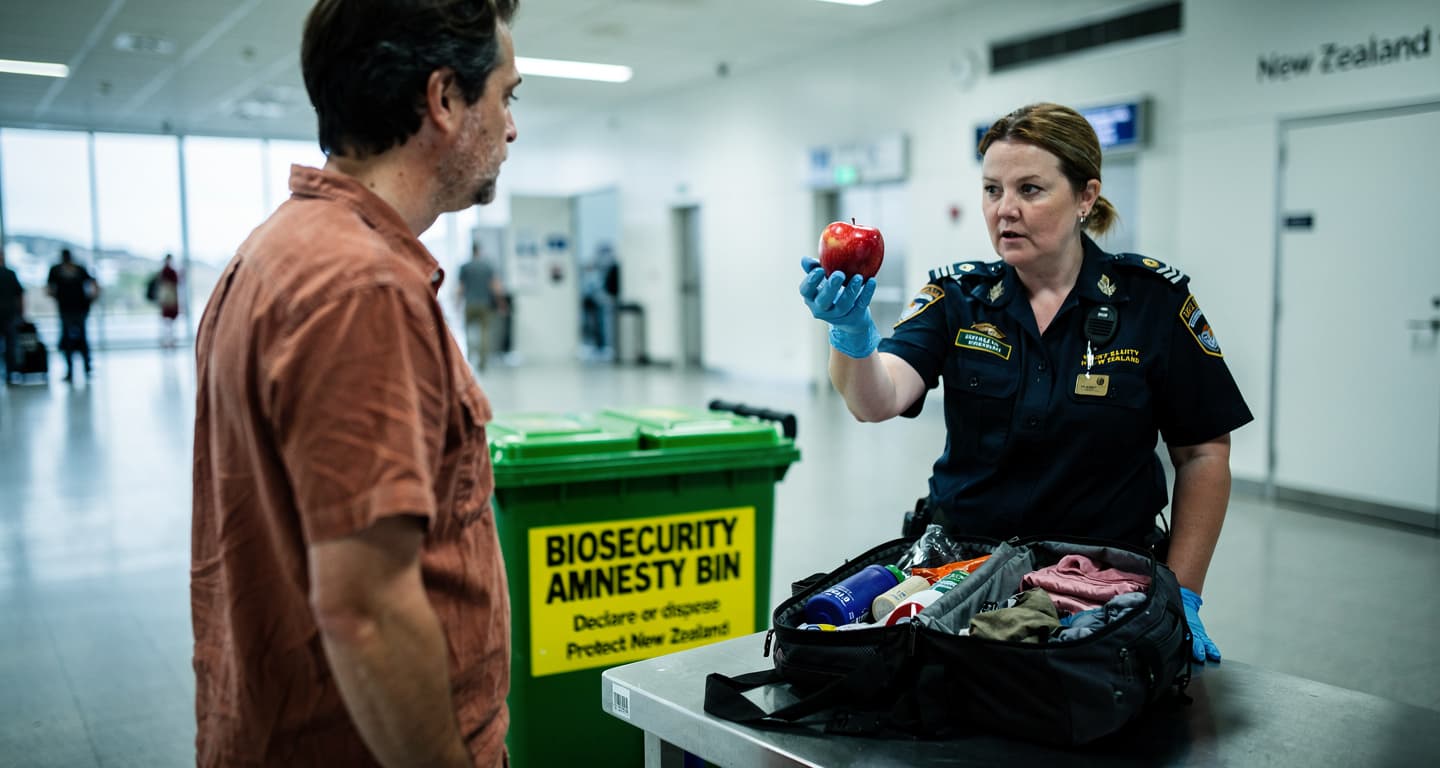
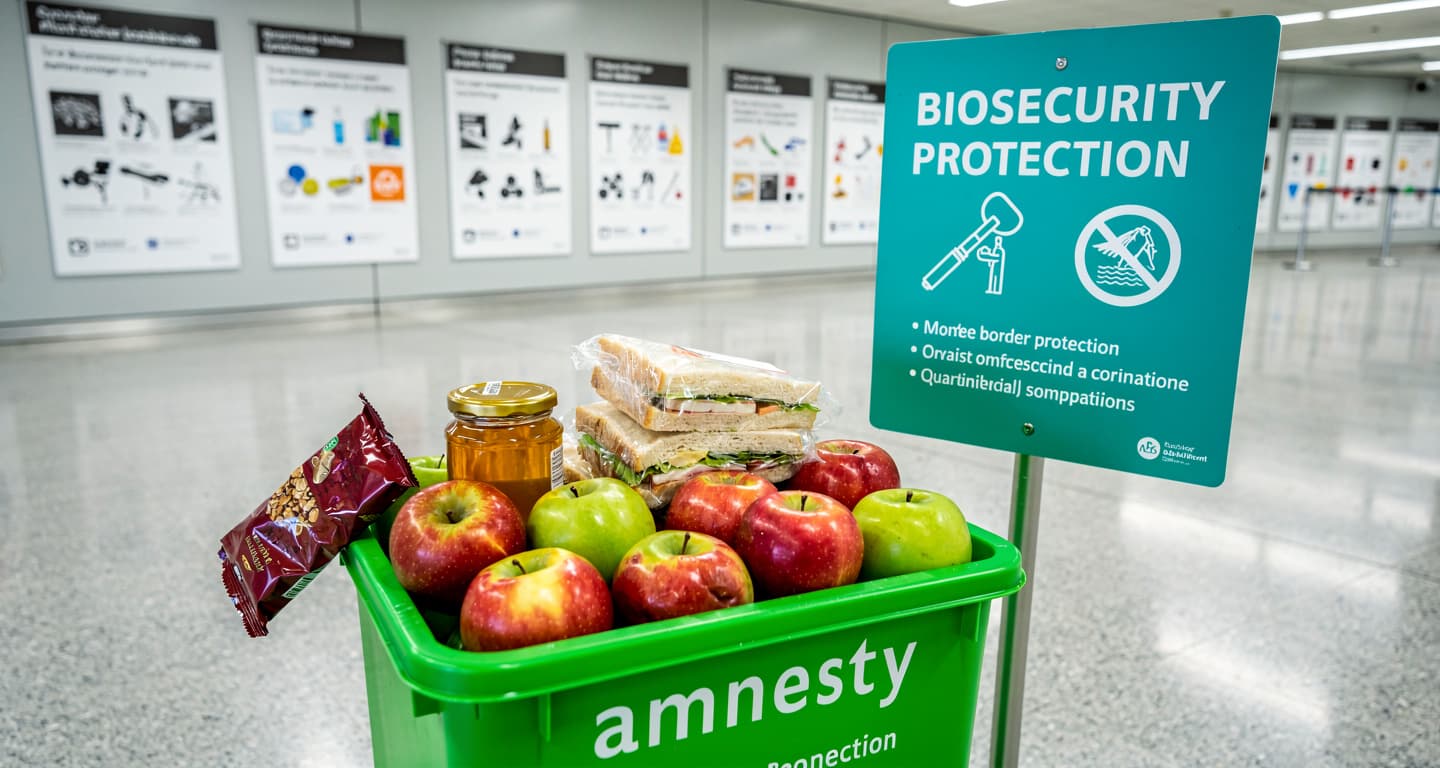
Air Traveler Club’s analysis of Pacific customs regimes shows Fiji Revenue & Customs Service (FRCS) operates the region’s strictest food import controls outside Australia and New Zealand. Officers conduct random bag searches and use detector dogs trained on organic materials. The “declare it or bin it” rule is literal: bins are positioned before the customs desk specifically for this purpose.
What triggers the fine versus inspection-only
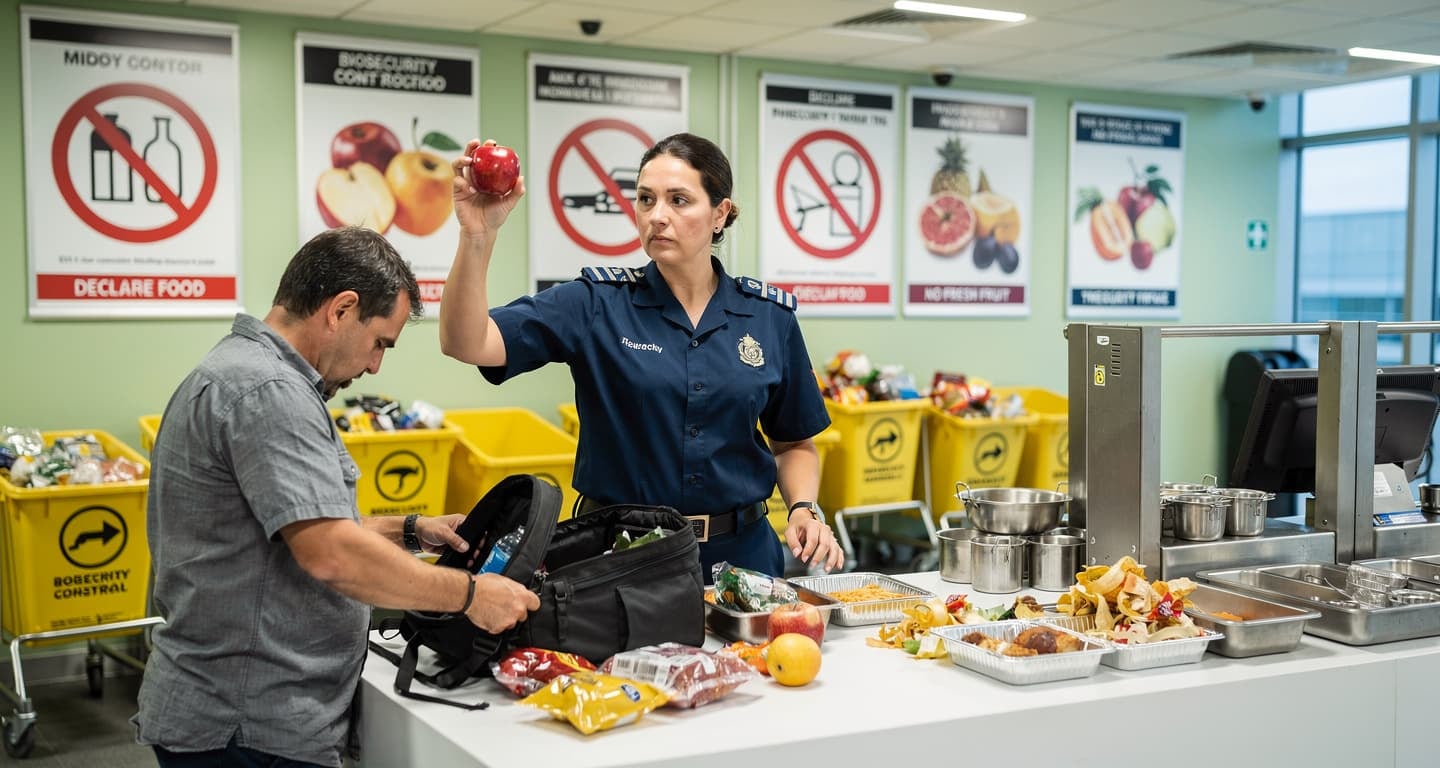
The arrival card question asks: “Are you bringing into Fiji any food, plants, animals, or animal products?” Ticking “Yes” routes you to the inspection lane. Officers open your bag, examine items, and make admissibility decisions on the spot. Sealed, commercially packaged snacks like chocolate bars or biscuits typically pass inspection. Fresh produce, homemade food, and anything containing meat or dairy gets confiscated — but you walk away fine-free because you declared it.
Ticking “No” when you’re carrying food — even accidentally — triggers the $400 FJD penalty if officers find it. Random searches and detector dogs make discovery likely. The fine applies to any undeclared food item, regardless of quantity or value. One apple costs the same €165 as a bag of sandwiches.
| Item Category | Examples | Declared Status | Undeclared Penalty |
|---|---|---|---|
| Fresh produce | Apples, bananas, vegetables | Confiscated (no fine) | €165 fine + confiscation |
| Meat/dairy | Ham, cheese, milk, jerky | Confiscated (no fine) | €165 fine + confiscation |
| Sealed snacks | Chocolate, biscuits, chips | Usually permitted after inspection | €165 fine + likely confiscation |
| Nuts (sealed) | Packaged almonds, cashews | Usually permitted after inspection | €165 fine + likely confiscation |
| Honey/jams | Sealed jars | Confiscated (biosecurity risk) | €165 fine + confiscation |
The table shows why “when in doubt, declare” is the only safe strategy. Officers make final admissibility calls — not the arrival card. Your job is eliminating the fine risk by ticking “Yes” for anything edible.
Flight deals
most people never see
Our AI monitors 150+ airlines for pricing anomalies that traditional search engines miss. Air Traveler Club members save $650 per trip per person on average: see how it works.
Each deal saves 40–80% vs. regular fares:

How Fiji’s enforcement compares to Australia’s regime
Australia pioneered instant biosecurity fines in 2015 and now charges $375 AUD (€230) for first offenses, escalating to $3,756 AUD for repeat violations or high-risk items. Fiji adopted a similar model but set the baseline fine lower at $400 FJD. Both countries use detector dogs, random bag searches, and zero-tolerance policies for fresh produce and animal products.
The practical difference: Australia’s enforcement is more visible. Signs, videos, and multilingual warnings saturate Sydney and Melbourne airports. Fiji’s approach is quieter — fewer warnings, same consequences. Travelers familiar with Australia’s strictness often assume Pacific islands are more relaxed. Australia’s biosecurity fines have conditioned some travelers to declare everything; Fiji benefits from that habit but catches those who don’t.
Both countries share biosecurity intelligence and training programs. Fiji’s officers receive Australian Border Force instruction on detection techniques and risk assessment. The enforcement philosophy is identical: protect island ecosystems from invasive species and agricultural diseases by eliminating undeclared organic material at the border.
Why Fiji enforces this strictly
Island biosecurity is existential, not bureaucratic. Fiji has no land borders — every pest, disease, and invasive species arrives by air or sea. A single fruit fly species introduced via undeclared produce can devastate commercial agriculture within months. The 2015 coconut rhinoceros beetle outbreak cost Fiji’s palm industry millions in crop losses and eradication efforts.
The $400 FJD fine funds inspection infrastructure: detector dogs, X-ray equipment, officer training, and laboratory testing for intercepted materials. FRCS reports that undeclared food items account for 60-70% of customs violations at Nadi International. The fine also serves as deterrent — high enough to change behavior, low enough to avoid creating a black market for food smuggling.
Fiji’s agricultural economy depends on export certification. International buyers require proof that Fiji maintains strict import controls to prevent contamination of export crops. The instant fine regime signals compliance with international phytosanitary standards, protecting market access for Fijian sugar, ginger, and tropical fruit exports worth hundreds of millions annually.
When the standard rule breaks down
Duty-free purchases made after clearing customs in your departure country occupy a gray zone. Chocolate or snacks bought in Singapore’s transit area before your Fiji flight technically qualify as “food brought into Fiji,” but enforcement varies. Some officers wave through sealed duty-free items; others apply the declaration requirement strictly. The safest approach: declare duty-free food purchases on the arrival card.
Medical dietary requirements — specialized protein bars, infant formula, prescription nutritional supplements — may receive exemptions, but no official list exists. Officers assess these case-by-case during inspection. Carry prescriptions or medical documentation for specialized food items, declare them on the arrival card, and explain the medical necessity during inspection. This usually results in approval, but the documentation is critical.
Travelers transiting Fiji to other Pacific islands face double jeopardy. If you’re flying Nadi to Suva to Tonga, you clear Fiji customs at Nadi — meaning the food declaration applies even though Fiji isn’t your final destination. Dispose of food before the Nadi arrival, not before the Tonga leg.
What to do before your Fiji arrival
The $400 FJD fine applies to 15-20% of travelers who tick “No” on the arrival card while carrying food — a rate FRCS considers unacceptably high given the warning infrastructure.
- Dispose of airline meal leftovers in the aircraft bins during descent. Flight attendants make final waste collection rounds 30-45 minutes before landing specifically for this purpose. That fruit cup or sandwich from the meal service must go.
- Check your bag for forgotten snacks before disembarkation. Protein bars, nuts, dried fruit, and chocolate often hide in laptop compartments or jacket pockets. A 2-minute bag check eliminates 90% of accidental violations.
- Tick “Yes” on the arrival card if you’re carrying any food item, including sealed snacks. The inspection lane adds 2-3 minutes to your arrival time. Officers usually approve commercially packaged items after a quick visual check.
- Carry medical documentation for specialized dietary items like prescription protein powder or infant formula. A doctor’s letter or prescription eliminates ambiguity during inspection and usually results in approval.

Questions? Answers.
What happens if I declare food but it gets confiscated anyway?
You pay zero fine. Confiscation is the standard outcome for fresh produce, meat, and dairy — but declaring eliminates the €165 penalty. Officers dispose of prohibited items in biosecurity-approved bins, and you continue through customs. The fine only applies when you claim “No” on the arrival card and officers find food during inspection.
Are sealed, commercially packaged snacks like chocolate bars safe to bring?
Usually, but not guaranteed. Officers assess sealed snacks case-by-case during inspection. Chocolate, biscuits, and chips typically pass because they’re processed and pose minimal biosecurity risk. Honey, jams, and nut butters often get confiscated even when sealed due to contamination risk. Declare all food items and let officers make the call — this eliminates the fine risk regardless of outcome.
Does the fine apply to food purchased in Fiji’s duty-free zone before arrival?
Technically yes, though enforcement varies. Duty-free purchases made after clearing customs in your departure country still qualify as “food brought into Fiji” under the arrival card question. Some officers wave through sealed duty-free items; others require declaration. The safest approach: tick “Yes” on the arrival card for any food, including duty-free purchases, and explain the source during inspection.
Can I bring infant formula or specialized medical food into Fiji?
Yes, with proper documentation. Officers assess medical dietary items case-by-case during inspection. Carry a doctor’s letter, prescription, or medical certificate explaining the necessity. Declare the items on the arrival card and present documentation during inspection. This usually results in approval, but the documentation is critical — officers need proof the item is medically required, not just preferred.
What if I’m transiting through Fiji to another Pacific island?
You still clear Fiji customs at your first point of entry — typically Nadi International. The food declaration applies even if Fiji isn’t your final destination. Dispose of food before landing in Fiji, not before your onward flight. If you’re flying Nadi to Suva to Tonga, the customs inspection happens at Nadi, and the $400 FJD fine applies to undeclared food at that point.
How does Fiji detect undeclared food during arrival?
Random bag searches, X-ray screening, and detector dogs trained on organic materials. Officers select passengers for secondary inspection based on arrival card responses, travel origin, and random selection. Dogs patrol baggage claim areas and can detect fresh produce, meat, and dairy through closed bags. The detection rate is high enough that FRCS considers the $400 FJD fine a reliable revenue stream, not an occasional penalty.
If I’m caught with undeclared food, can I pay the fine later or dispute it?
No. The $400 FJD fine is instant and non-negotiable. Officers issue a penalty notice on the spot, payable before you leave the customs area. Disputing requires filing a formal appeal with FRCS, which takes weeks and rarely succeeds unless you can prove the item wasn’t food or you genuinely didn’t know you were carrying it. The enforcement model assumes the arrival card question is clear enough that non-declaration equals intent.