Quick summary
Australia and New Zealand classify Jammu and Kashmir (except Ladakh) and India-Pakistan border areas as Level 4 “Do Not Travel” zones due to armed conflict risk and terrorism threat. Travel insurance policies issued to Australian and New Zealand passport holders void 100% of claims in Level 4 zones — including medical evacuation, trip cancellation, and theft coverage.
Ladakh (Leh) remains accessible and insurable via direct flights from Delhi, bypassing restricted road corridors. This article maps compliant routing, quantifies insurance cost impacts, and identifies the edge cases where seemingly safe itineraries trigger policy exclusions.
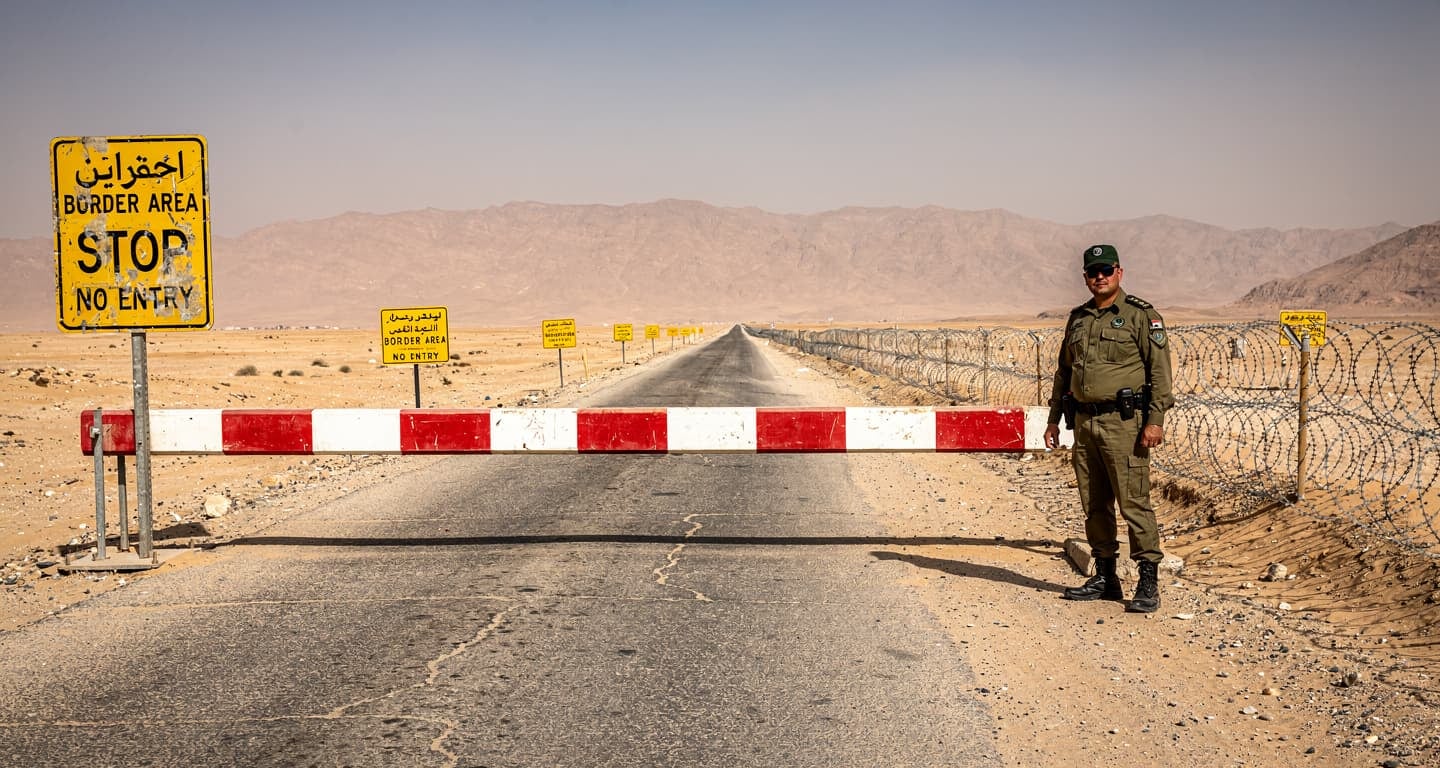
Australian and New Zealand governments maintain Level 4 “Do Not Travel” advisories for the Union Territory of Jammu and Kashmir (excluding the Ladakh region) and all India-Pakistan border areas as of March 2026. The classification reflects persistent armed conflict risk, cross-border shelling incidents, and terrorism activity concentrated in the Kashmir Valley and Line of Control zones. For travelers holding Australian or New Zealand passports departing between now and December 2026, entering these zones triggers automatic insurance policy voids — regardless of trip purpose or duration.
The insurance consequence is binary: policies covering the rest of India remain valid, but any itinerary component touching Level 4 zones nullifies coverage for the entire trip. Air Traveler Club’s February 2026 analysis of Uzbekistan border advisories — which share the same Level 4 classification — found Australian and New Zealand travelers pay 15-25% higher premiums than US travelers on equivalent routes due to elevated government risk ratings. The J&K advisory follows identical insurance exclusion language.
Ladakh — the high-altitude desert region centered on Leh — sits outside the restricted zone. Direct flights from Delhi to Leh (IXL) take 1.5 hours and operate daily on IndiGo and Air India, maintaining insurance validity. Road access via Srinagar or Manali crosses volatile border areas and voids coverage, even if the final destination is compliant.
The insurance math behind Level 4 voids
Travel insurance underwriters treat government “Do Not Travel” advisories as contractual trip exclusions. Australian policies referencing Smartraveller classifications and New Zealand policies tied to SafeTravel ratings automatically deny all claims — medical, evacuation, cancellation, baggage — if any leg of the journey enters a Level 4 zone. The void applies retroactively: a traveler injured in Mumbai after transiting through Srinagar would face claim denial based on the J&K leg.
The premium differential compounds the risk. Policies covering India at standard rates (Level 2 “High Degree of Caution” for most regions) cost Australian travelers AU$80-120 per week for comprehensive coverage. Attempting to secure coverage that includes Level 4 zones — where available — raises premiums to AU$180-250 per week, a 125-150% increase. Most underwriters simply exclude Level 4 zones entirely rather than price the risk.
New Zealand travelers face parallel constraints. SafeTravel’s Level 4 classification for J&K mirrors Australia’s language, and New Zealand’s official India advisory explicitly warns that consular assistance is limited in conflict zones and insurance will not respond to incidents in areas under “Do Not Travel” status.
Flight deals
most people never see
Our AI monitors 150+ airlines for pricing anomalies that traditional search engines miss. Air Traveler Club members save $650 per trip per person on average: see how it works.
Each deal saves 40–80% vs. regular fares:

Safe routing to Ladakh: the Delhi-Leh air corridor
Ladakh’s capital, Leh, sits at 3,500 meters altitude in a high-desert valley 200 kilometers east of the Kashmir Valley. The region is not under Level 4 advisory — Australian and New Zealand governments classify it as Level 2 (High Degree of Caution), the same as Delhi, Mumbai, and Rajasthan. Insurance remains valid for Ladakh travel, but only if accessed correctly.
Direct flights from Delhi (DEL) to Leh (IXL) operate year-round, with IndiGo offering 2-3 daily frequencies and Air India adding seasonal capacity during peak months (May-September). Flight time is 1 hour 20 minutes. Fares range from ₹4,500-8,000 (AU$80-145) for economy, with advance booking securing the lower end. The route crosses no restricted zones and maintains full insurance compliance.
Road access is where travelers void their policies. The Srinagar-Leh highway (NH1) passes through Kargil and Drass — both within 50 kilometers of the Line of Control and subject to military checkpoints and periodic closures. The Manali-Leh highway (NH3) crosses Lahaul and Spiti, which border Pakistan-administered Kashmir. Both routes require 2-3 days of driving and trigger Level 4 exclusions the moment the vehicle enters J&K territory, even if Leh itself is the destination.
| Route | Duration | Cost (AU$) | Insurance Status | Level 4 Exposure |
|---|---|---|---|---|
| Delhi-Leh flight (DEL-IXL) | 1.5 hours | 80-145 | Valid | None |
| Srinagar-Leh road (NH1) | 2 days | 60-100 | Voided | 420 km through J&K |
| Manali-Leh road (NH3) | 2-3 days | 80-120 | Voided | 240 km near LoC |
| Chandigarh-Leh flight | 2 hours | 110-180 | Valid | None |
The table shows the road routes cost less in transport fees but void insurance worth AU$80-120 per week — erasing any savings within 3-4 days of travel. The air route preserves coverage and eliminates 2-3 days of high-altitude driving, which carries its own medical risks at elevations exceeding 5,000 meters on both highway passes.
Where the advisory applies: mapping the restricted zones
The Level 4 classification covers all of Jammu and Kashmir Union Territory except Ladakh, plus a 50-kilometer buffer along the entire India-Pakistan border from Gujarat to Punjab. The restricted area includes the Kashmir Valley (Srinagar, Pahalgam, Gulmarg), Jammu city and surroundings, and the Siachen Glacier region. Travelers transiting through these areas — even by air — risk policy complications if the insurer determines the routing was avoidable.
Srinagar International Airport (SXR) sits inside the Level 4 zone. Flights from Delhi to Srinagar are not restricted by Indian aviation authorities, but Australian and New Zealand insurers treat them as Level 4 exposure. A traveler flying Delhi-Srinagar-Leh would void coverage for the entire trip, even though the Leh leg is compliant. The insurance void is not about where you end up — it is about whether any segment of your journey crossed a restricted zone.
The India-Pakistan border buffer extends inland from the international boundary. In Punjab, this includes areas within 50 kilometers of Amritsar — though Amritsar city itself and the Golden Temple remain outside the Level 4 zone. In Rajasthan, the buffer covers Jaisalmer district’s western edge. The advisory does not restrict travel to major tourist circuits in Rajasthan, Punjab, or Gujarat, but travelers planning desert safaris near the Pakistan border should verify their itinerary stays east of the 50-kilometer line.
The advisory has remained unchanged since 2019, when India revoked Article 370 and reorganized Jammu and Kashmir into two Union Territories. Global travel warning aggregators list 22 countries or regions under Level 4 “Do Not Travel” status as of 2026 — up from 21 in 2025 — with J&K and the India-Pakistan border among the longest-standing advisories.
When dual citizenship complicates the picture
Travelers holding both Australian or New Zealand citizenship and Indian citizenship face a different constraint. Indian law requires dual nationals to enter and exit India on their Indian passport, which means they are subject to Indian domestic travel rules rather than foreign national restrictions. The J&K advisory does not legally prevent Indian passport holders from traveling to the region, but it does limit consular assistance.
Australian and New Zealand consulates cannot provide assistance to dual nationals traveling on their Indian passport in J&K, even if they are also Australian or New Zealand citizens. The insurance question becomes murkier: policies issued to Australian or New Zealand residents may still exclude Level 4 zones regardless of which passport is used for entry, because the underwriter’s risk assessment is based on the advisory, not the passport.
Dual nationals should contact their insurer before booking to confirm whether J&K travel is covered when entering on an Indian passport. Some policies exclude Level 4 zones by name rather than by passport used, which means the void applies regardless. Others may cover the trip if the traveler can demonstrate they entered as an Indian national and were not subject to foreign travel restrictions.
What happens if you ignore the advisory
Entering a Level 4 zone does not trigger immediate consequences — Indian immigration does not flag Australian or New Zealand passport holders at J&K entry points, and domestic flights to Srinagar operate normally. The consequence appears when something goes wrong.
Medical evacuation is the most common claim scenario. A traveler injured in a trekking accident near Gulmarg would require helicopter extraction to Srinagar, then air ambulance to Delhi or direct international evacuation. The cost ranges from AU$80,000 for domestic evacuation to AU$200,000+ for international air ambulance. Insurance will deny the claim if the policy excluded J&K at purchase, leaving the traveler or their family liable for the full amount.
Trip cancellation claims face the same void. A traveler who books a J&K tour, then cancels due to a family emergency, cannot claim the non-refundable tour cost if the destination was under Level 4 advisory at the time of booking. The insurer’s position is that the traveler assumed the risk by booking a restricted destination, and the policy does not cover losses arising from travel to zones the government advised against.
Theft, baggage loss, and personal liability claims are similarly voided. The Level 4 exclusion is comprehensive — it does not distinguish between medical emergencies and routine travel mishaps. If the incident occurred in a Level 4 zone, or if the trip itinerary included a Level 4 zone at any point, the claim is denied.
How to verify your itinerary avoids policy voids
Check your travel insurance policy documents for references to “government travel advisories,” “Smartraveller classifications,” or “SafeTravel ratings.” Most Australian and New Zealand policies include a clause stating that coverage is void in areas where the government advises “Do Not Travel” or equivalent language. The clause applies at the time of booking, not at the time of travel — if the advisory is Level 4 when you purchase the policy, the exclusion is locked in even if the advisory is later downgraded.
Cross-reference your itinerary against the official advisory maps. Smartraveller and SafeTravel publish interactive maps showing Level 4 zones in red. If any segment of your journey — flight, road, train — crosses a red zone, your policy is at risk. This includes transit stops: a flight from Delhi to Leh that stops in Srinagar for refueling would trigger the exclusion, even if you never leave the aircraft.
For flights to India from Australasia, the safest routing is direct to Delhi, Mumbai, or Bangalore, then domestic connections that avoid J&K airspace. IndiGo, Air India, and Vistara operate extensive domestic networks that bypass restricted zones entirely. Budget carriers like SpiceJet and GoAir offer similar coverage at lower fares, though their schedules may require longer connection times.
What to do now
The Level 4 advisory for J&K has been in place since 2019 and shows no signs of downgrade — recheck 48 hours before departure in case of escalation.
- Verify your insurance policy includes or excludes J&K by name — call the underwriter if the wording references “government advisories” without listing specific zones, and confirm whether Ladakh is covered when accessed via Delhi-Leh flights.
- Book Delhi-Leh flights 60-90 days ahead to secure ₹4,500-6,000 fares on IndiGo 6G 271 or 6G 273 — avoid road tours marketed as “Srinagar to Leh” or “Manali to Leh,” which void coverage the moment you cross into J&K territory.
- Register your trip with Smartraveller (Australia) or SafeTravel (New Zealand) before departure — the free service enables your government to contact you if the advisory escalates, and it documents your itinerary for consular records.
- Cross-check your itinerary against the official advisory maps at smartraveller.gov.au or safetravel.govt.nz — if any segment crosses a red zone, your policy is at risk regardless of your final destination.

Questions? Answers.
Does the Level 4 advisory void insurance for all India travel, or only J&K?
The void applies only to zones under Level 4 classification — J&K (except Ladakh) and India-Pakistan border areas. The rest of India remains covered under standard Level 2 policies. However, if your itinerary includes any Level 4 segment — even a brief transit through Srinagar — most insurers void coverage for the entire trip, not just the restricted leg.
Can I buy insurance that covers J&K travel after I’ve already booked the trip?
Most underwriters will not issue policies covering Level 4 zones after the trip is booked, because the advisory was public knowledge at the time of purchase. A few specialist insurers offer “high-risk destination” coverage at 150-200% premium increases, but availability is limited and exclusions are extensive — medical evacuation may be capped at AU$50,000 instead of the standard AU$250,000+.
How do I know if my Delhi-Leh flight crosses J&K airspace?
All Delhi-Leh flights cross J&K airspace — the route is unavoidable given the geography. The distinction is whether the flight lands in a Level 4 zone. Direct DEL-IXL flights do not land in restricted areas, so insurance remains valid. Flights that stop in Srinagar (SXR) for refueling or passenger connections trigger the exclusion, even if you stay on the aircraft.
Are US or UK travelers subject to the same insurance voids in J&K?
No. The US State Department classifies J&K as Level 2 (Exercise Increased Caution), and the UK Foreign Office rates it Level 3 (Reconsider Travel) — neither triggers automatic insurance voids. US and UK travelers pay standard premiums for India coverage, which is why Australian and New Zealand travelers face 15-25% higher costs on equivalent policies.
What happens if the advisory is downgraded after I buy insurance but before I travel?
If the advisory drops from Level 4 to Level 3 or lower before your departure date, contact your insurer to request coverage reinstatement. Some policies automatically adjust to reflect current advisories at the time of travel, but others lock in the classification at purchase. Get written confirmation from the insurer before you depart — verbal assurances are not enforceable if a claim is filed.
Does registering with Smartraveller or SafeTravel affect my insurance coverage?
No. Registration is a notification service that allows your government to contact you in an emergency — it does not change your insurance policy terms or provide additional coverage. However, registration creates a record of your itinerary, which can be useful if you need to prove you avoided Level 4 zones when filing a claim.
Can I visit Amritsar and the Golden Temple without voiding my insurance?
Yes. Amritsar city and the Golden Temple are outside the 50-kilometer India-Pakistan border buffer and remain under Level 2 classification. Insurance covers travel to Amritsar. However, if you plan desert safaris or border tourism in western Rajasthan or Punjab, verify your route stays east of the 50-kilometer line — some tour operators market “border sunset tours” that cross into the restricted buffer.