Quick summary
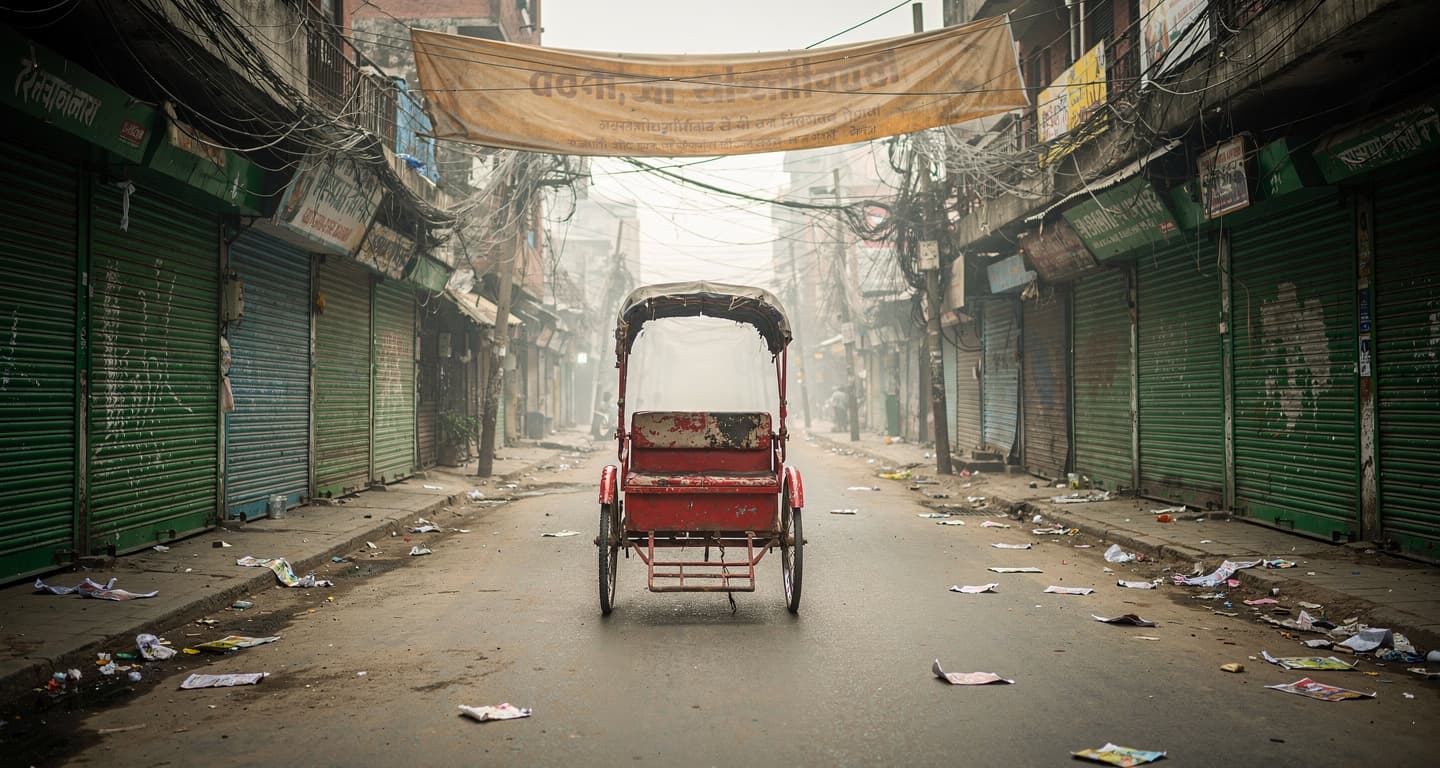
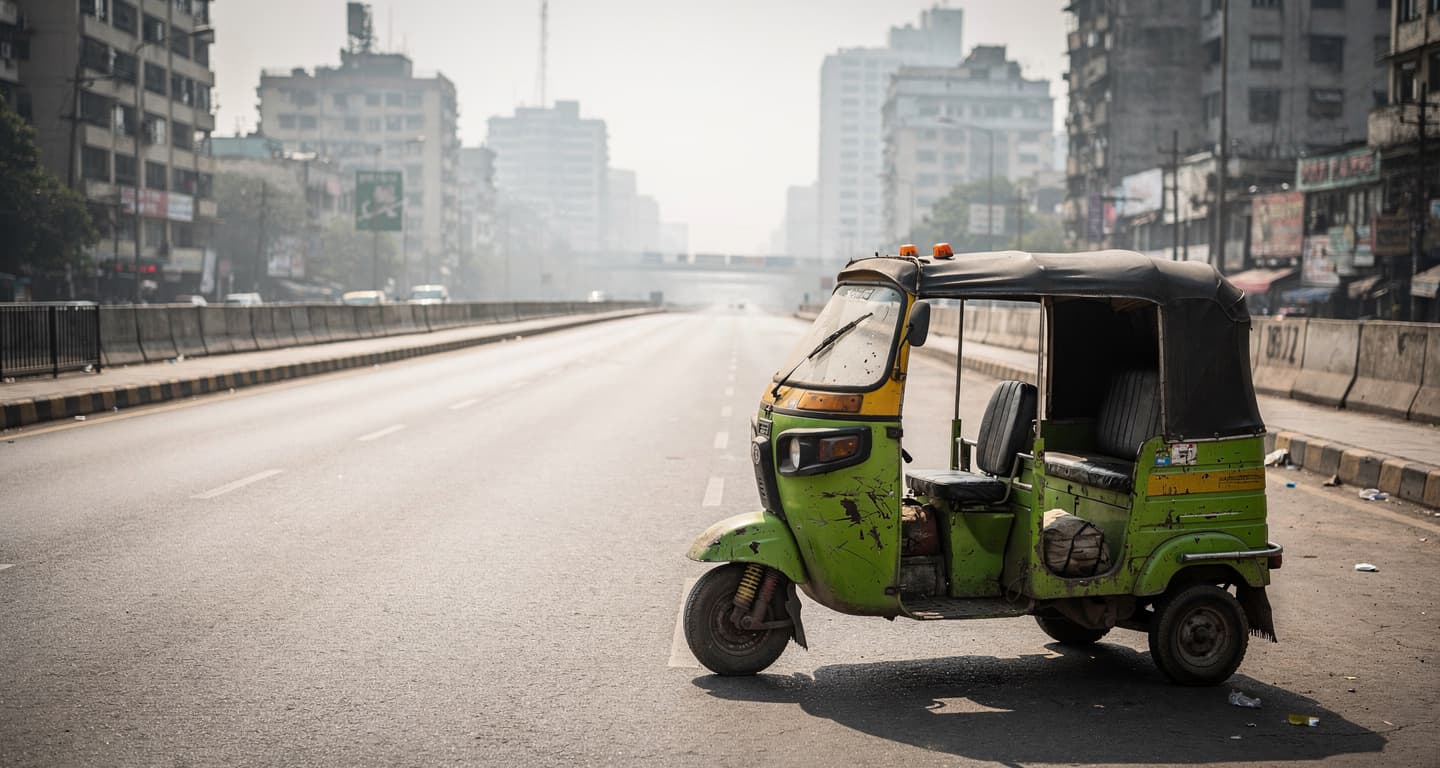
Between December 11 and 24, 2025, at least 13 documented violent incidents across Dhaka, Chittagong, and Rajshahi shut down road transport, closed diplomatic missions, and stranded travelers at Hazrat Shahjalal International Airport. Political strikes—called Hartals—rendered standard taxis and ride-hailing services inoperable during the 3-day peak violence window of December 18–20, with no advance warning.
The crisis was triggered by a specific assassination, not a seasonal pattern, making future strike timing unpredictable. Pre-arranged hotel transport, the airport railway station, and embassy alert registration form the contingency framework—but each option carries limitations during peak unrest.
Thirteen violent incidents in 14 days. That is what December 2025 delivered to travelers passing through Dhaka—a crisis that turned the 20-kilometer airport-to-city corridor into a no-go zone without warning. Political strikes known as Hartals shut down all road transport across Bangladesh’s capital between December 18 and 20, stranding passengers at Hazrat Shahjalal International Airport with no taxis, no ride-hailing, and no clear timeline for resumption.
The trigger was the assassination of activist Sharif Osman Hadi, shot on December 12 and declared dead at Singapore General Hospital on December 18. His death ignited protests targeting media offices, cultural institutions, and diplomatic missions across multiple cities. For travelers, the immediate consequence was simple and severe: road transport ceased to function, and anyone arriving at Dhaka airport faced hours or days of uncertainty.
Air Traveler Club’s travel advisory monitoring system flagged the escalation on December 13, 2025, upgrading Bangladesh to elevated risk status five days before the peak violence window. This intelligence—covering embassy protocols, transport alternatives, and contingency routing—applies to any future Dhaka travel during periods of political instability, with specific lessons from the December 2025 crisis documented below.
What happened during the December 2025 crisis
Violence concentrated in a 3-day peak window from December 18 to 20, with secondary incidents continuing through December 24. Targets included the headquarters of Prothom Alo (Bangladesh’s largest newspaper), Daily Star offices, the cultural institution Chhayanaut, and Indian diplomatic missions. The interim government deployed police, Border Guards Bangladesh (BGB), Rapid Action Battalion (RAB), and army units across major cities.
Indian visa centers in Rajshahi and Khulna temporarily closed. The Indian High Commissioner was summoned. Full-year 2025 saw 645 documented incidents across Bangladesh, with 71 classified as communal violence—numbers the interim government under Muhammad Yunus publicly acknowledged in January 2026.
Why December 2025 wasn’t a one-off
The crisis followed the August 2024 overthrow of Prime Minister Sheikh Hasina. Bangladesh’s Election Commissioner stated that joint security forces would conduct “regular operations until the 2026 general election”—an official acknowledgment that the government expects continued unrest, not normalization. Elevated baseline risk extends through mid-2026 at minimum.
The deeper problem for travelers: this crisis was not calendar-driven. Hartals respond to political triggers—assassinations, policy announcements, election disputes—that cannot be predicted weeks in advance. The December 2025 pattern may not repeat in December 2026, but a similar disruption could occur in any month.
The airport-to-city corridor: why Dhaka is uniquely vulnerable
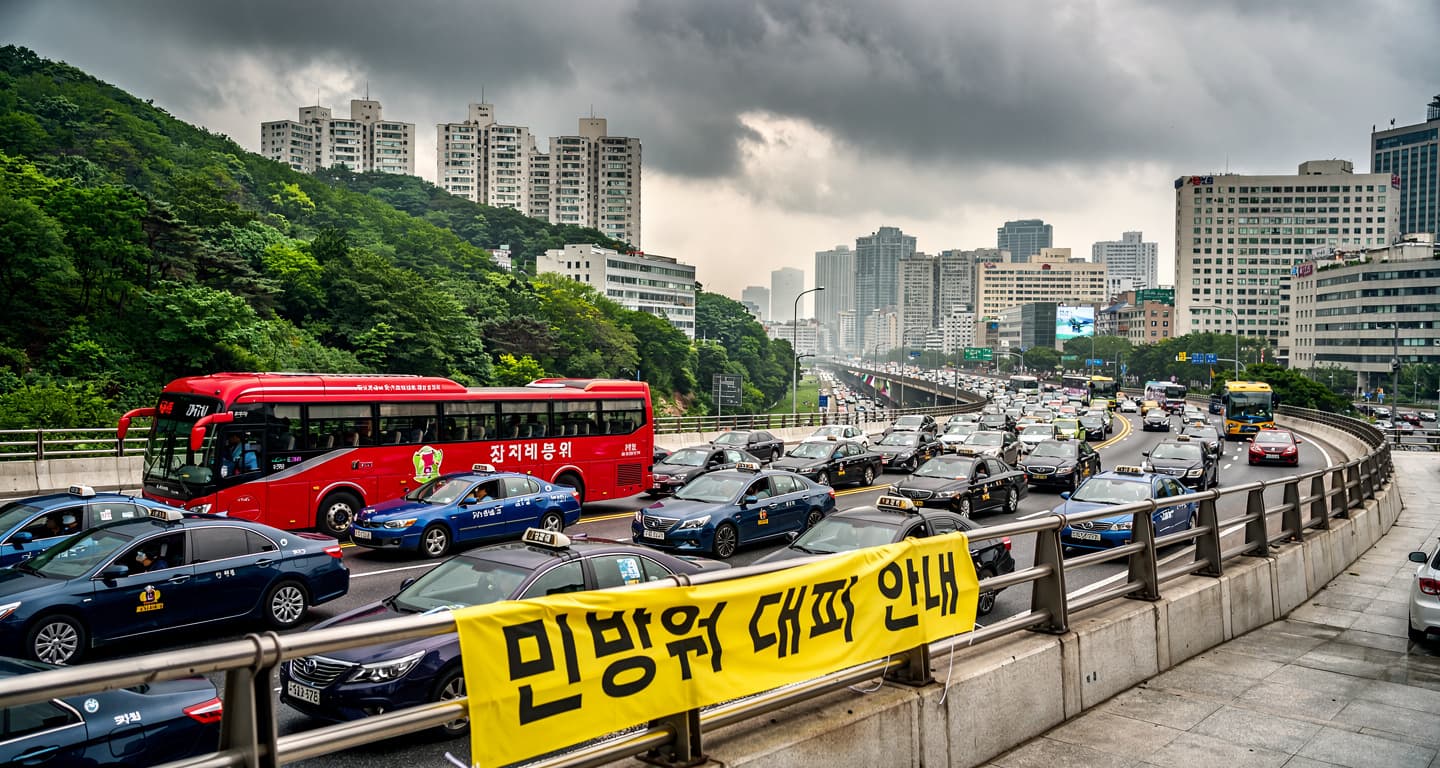
Dhaka’s airport sits approximately 20 kilometers north of the city center, connected primarily via the Dhaka-Chittagong Highway. During Hartals, security forces establish checkpoints on major roads, effectively closing them to civilian traffic. Private vehicles become targets for protesters. This creates a bottleneck with no reliable alternative road routing.
As documented in the timeline of December 2025 violence, protesters targeted civic and cultural institutions across the city, and security lockdowns extended well beyond the immediate protest zones. Standard taxis and ride-hailing apps like Pathao refused to operate during the peak window—drivers face real physical risk, not just inconvenience.
Your contingency options narrow to three, each with significant constraints:
| Option | Hartal Availability | Lead Time | Cost | Reliability |
|---|---|---|---|---|
| Hotel-arranged car | Available (premium hotels) | 24–48 hours | $40–80 | High |
| Ambulance transfer | Available but limited | 48 hours | $60–120 | Medium |
| Airport railway station | Operational if accessible | Day-of | $2–5 | Medium |
| Standard taxi or Pathao | Unavailable | — | $8–15 | None |
| Pre-arranged private driver | Available | 1 week | $50–100 | High |
The ambulance transfer workaround—where high-end hotels arrange medical vehicles as civilian transport—works because ambulances are generally exempt from strike blockades. But during the December 18–20 peak, actual medical emergencies may have overwhelmed this capacity. Do not treat this as a guaranteed fallback.
How to cut fares to Asia by 40–80%
Our custom AI ✨ tracks pricing anomalies that traditional search engines miss.
Get the these deals in your inbox, for free:

Pre-departure protocols that reduce your exposure
The difference between a manageable disruption and a missed $2,000 long-haul connection comes down to preparation completed before you board your inbound flight. Three steps are non-negotiable.
Register with your embassy’s crisis alert system
US citizens should register with STEP (Smart Traveler Enrollment Program). German nationals use Elefand. UK travelers register with the FCDO (Foreign, Commonwealth and Development Office). Registration is free, takes under 10 minutes, and delivers real-time SMS and email alerts about security threats, transport disruptions, and evacuation procedures. These systems are informational only—they do not guarantee evacuation or transport—but they provide the earliest warning of emerging Hartals.
Build a full buffer day around international connections
If your itinerary includes a long-haul flight departing Dhaka, arrive at least 24 hours before departure. Missing a connecting flight to London or Singapore because a surprise strike closed roads is an expensive lesson—most airlines classify Hartals as civil unrest and will not rebook for free. For travelers concerned about overall connection efficiency, our analysis of Asia-Pacific hub airports identifies which transit points offer the most resilient connection options when disruptions cascade.
Monitor local news daily for 7 days before travel
Bangladeshi English-language outlets Daily Star and Prothom Alo (English edition) report on political tensions in real time. Set Google Alerts for “Bangladesh Hartal” and “Dhaka strike.” If a Hartal is announced within 48 hours of your arrival, seriously consider rescheduling. Airlines increasingly offer free rebooking within 72 hours of travel during political unrest—check your carrier’s specific policy before departure.
When the standard contingency plan breaks down
Three scenarios eliminate even well-prepared travelers’ safety margins:
- Railway station inaccessibility. The Dhaka Airport Railway Station offers a $2–5 alternative to road transport, but no evidence confirms it remained fully operational during the December 18–20 peak. If security lockdowns extend to transport hubs, this option disappears.
- Insurance won’t cover you. Most standard travel insurance policies classify political strikes as force majeure or civil unrest exclusions. A traveler stranded by a Hartal faces full hotel and rebooking costs out-of-pocket. Verify your policy’s specific language around “civil unrest” and “government action” before departure.
- Geographic concentration misleads. December 2025 violence concentrated in Dhaka, Chittagong, Rajshahi, and Bandarban. Travelers arriving in secondary cities like Sylhet may experience minimal disruption—but domestic connections through Dhaka still carry full risk.
The decision framework for future Dhaka travel
December 2025 was triggered by a specific assassination, not a recurring annual pattern. But Bangladesh’s political trajectory—post-coup interim government, sustained military deployment, 645 incidents in 2025—suggests elevated baseline risk through the 2026 general election at minimum.
Rather than avoiding Dhaka entirely, implement a decision gate approach: register with embassy alerts two weeks before departure, monitor local news daily for seven days, and establish a personal trigger point. If a Hartal is called within 48 hours of your arrival, reschedule. If your itinerary includes a tight international connection, the buffer day is not optional—it is the minimum responsible margin. Our airline promotions tracker surfaces rebooking-friendly fare options that provide flexibility when political conditions shift.
Questions? Answers.
What exactly is a Hartal, and how does it differ from a labor strike?
A Hartal is a South Asian political protest involving complete shutdown of public and private transport, businesses, and services—often called without advance notice. Unlike labor strikes targeting specific industries, Hartals aim to paralyze entire cities to pressure governments. During December 2025, Hartals were triggered by political violence rather than labor disputes, making them particularly unpredictable for travelers.
How long do Hartals typically last?
Duration varies widely. The December 2025 violence peaked over 3 days (December 18–20) with secondary incidents through December 24. Some Hartals last only hours; others extend for multiple days depending on political dynamics. There is no reliable way to predict duration in advance, which is why a full buffer day around international connections is essential.
Does travel insurance cover Hartal-related disruptions?
Most standard policies exclude political strikes under “civil unrest” or “force majeure” clauses. This means hotel costs, missed connections, and rebooking fees typically fall on the traveler. Some premium policies offer optional civil unrest coverage at higher cost with strict conditions. Review your policy’s exact language around “political events” and “government action” before departing.
Are non-Indian foreign nationals at personal risk during these protests?
December 2025 violence was characterized by strong anti-India sentiment, with protesters specifically targeting Indian diplomatic missions and media perceived as pro-India. Non-Indian foreign nationals were not directly targeted. However, transport shutdowns affect all travelers regardless of nationality, and proximity to protest sites carries inherent risk.
Can I fly into Chittagong instead of Dhaka to avoid strike risk?
Chittagong experienced documented violence during December 2025, so it is not a reliable alternative during nationwide Hartals. Secondary cities like Sylhet may see less disruption, but international flight options into smaller Bangladeshi airports are extremely limited. Most travelers must transit through Dhaka regardless of final destination.
Will airlines rebook my flight for free if a Hartal prevents airport access?
Most airlines classify Hartals as civil unrest and do not offer automatic free rebooking. If the airline cancels your flight due to airport closure, you are typically entitled to rebooking or refund. If you voluntarily miss your flight because road transport is blocked, standard change fees apply. Check your specific carrier’s disruption policy before booking.