Quick summary
Australian and New Zealand passport holders clear Singapore immigration in under 45 seconds using Changi Airport’s Automated Clearance Initiative — no prior registration required. The system enrolled all foreign visitors in May 2024, cutting arrival processing from 20-30 minutes during peak evening banks to a single biometric scan. Submit your SG Arrival Card online up to 3 days before departure, head to the automated lanes after baggage claim, and you’re through.Families with children under age 6 cannot use the automated system — one parent must accompany young children through manual counters while the other clears via ACI. The 25-minute time gap creates coordination friction, but the system works flawlessly for solo travelers and groups aged 6+.How the automated clearance system works
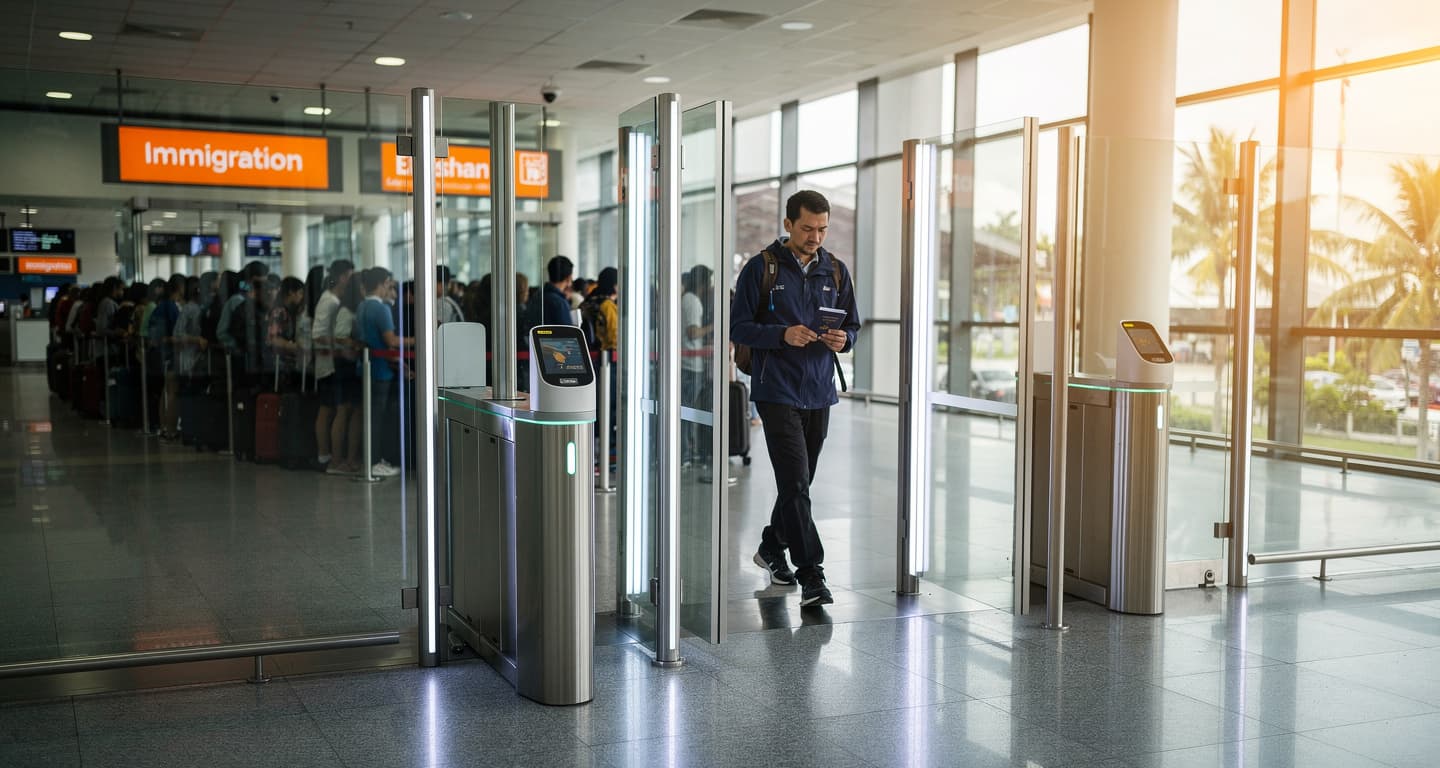
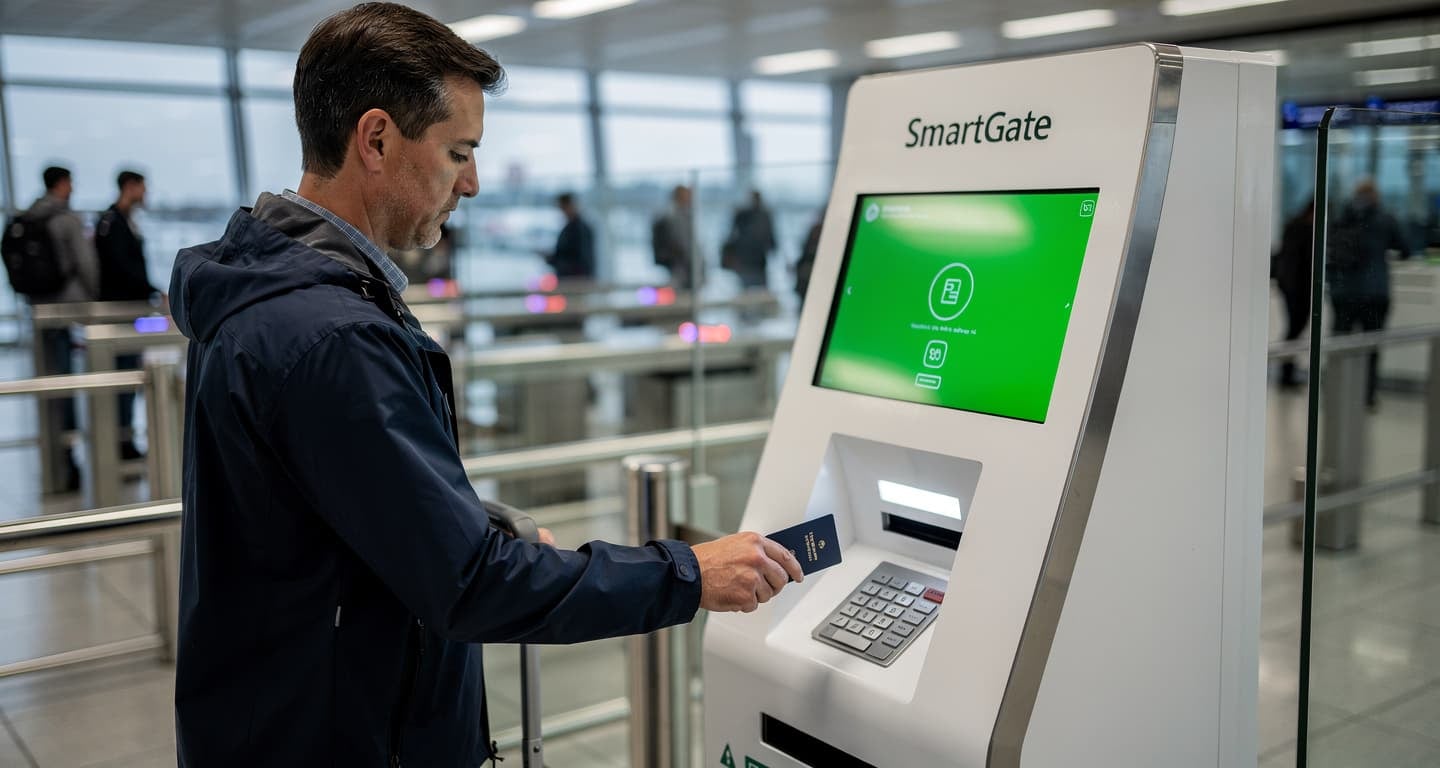
Changi’s ACI lanes sit immediately after baggage claim in Terminals 1, 2, and 3. Look for digital signage reading “Automated Clearance” with passport icons — the lanes run parallel to manual immigration counters. First-time users scan their passport at a kiosk, which captures biometric data (iris scan and facial recognition) and prints a small receipt. Keep the receipt until you exit the immigration hall — officers occasionally verify it matches your passport.
The biometric enrollment happens once. On subsequent visits, the system recognizes your stored data and clears you in under 30 seconds without passport scanning. Singapore’s Immigration & Checkpoints Authority sends an email confirmation to the address listed on your SG Arrival Card, confirming your enrollment in the e-Pass system. This email contains no actionable information — it’s purely confirmatory. Your biometrics remain valid until you renew your passport, at which point you re-enroll on your next arrival.
Departure from Singapore became passport-less for foreigners in September 2024. Outbound travelers scan biometrics only — no physical passport presentation required at the gate. Carry your passport anyway; your next destination’s immigration will demand it, and airline staff verify travel documents at the boarding gate. The passport-less departure system exists purely to speed Singapore’s exit process, not to eliminate the document from your journey.
Flight deals
most people never see
Our AI monitors 150+ airlines for pricing anomalies that traditional search engines miss. Air Traveler Club members save $650 per trip per person on average: see how it works.
Each deal saves 40–80% vs. regular fares:

The SG Arrival Card requirement
Singapore’s digital arrival card replaced the paper form in 2020. The online version collects identical information — passport details, flight number, accommodation address, contact information — but submission triggers your ACI eligibility flag. Without a submitted card, the automated lanes reject your passport scan and direct you to manual counters. The card remains valid for 30 days after submission, meaning you can complete it well before departure and avoid last-minute airport WiFi struggles.
The MyICA mobile app and website (https://eservices.ica.gov.sg/sgarrivalcard) both accept submissions. The app offers a slight advantage: it auto-fills passport data from your device camera, reducing manual typing. The website requires manual entry but works on any device with a browser. Both platforms save your information for future trips — returning visitors can duplicate a previous submission and update only the flight and accommodation details. Total completion time: 5 minutes for first-time users, under 2 minutes for repeat visitors.
Submit the card between 3 days and 3 hours before your scheduled arrival. Earlier submissions expire; later submissions risk processing delays if Singapore’s servers experience high traffic. Evening departures from Australia and New Zealand — the flights that arrive during Changi’s peak immigration windows — benefit from submitting the card 24-48 hours ahead. This timing ensures the system processes your eligibility flag before you board, eliminating any risk of technical delays at the kiosk.
| Scenario | Time | Requirements | Best For |
|---|---|---|---|
| Solo adult, ACI | <45 seconds | SG Arrival Card submitted, age 6+, valid passport | Peak evening arrivals (7-10pm) |
| Family with child under 6 | 20-30 minutes | Manual counter mandatory for under-6s | All families with young children |
| First-time ACI user | 45-60 seconds | Biometric enrollment + passport scan | Initial visit, subsequent trips faster |
| Repeat ACI user | <30 seconds | Biometrics already enrolled | Frequent Singapore connections |
| Off-peak manual | 8-12 minutes | Standard passport check | Morning/midday arrivals |

Why this system exists
Changi Airport processed 58.9 million passengers in 2023, with projections reaching 70 million by 2026. Singapore’s Immigration & Checkpoints Authority faced a capacity constraint: manual immigration counters couldn’t scale fast enough to handle peak arrival banks without building additional terminal space. The automated clearance system solves this by shifting 80% of eligible passengers to self-service lanes, freeing officers to handle complex cases — visa issues, passport damage, secondary screening — that require human judgment.
The May 2024 expansion to all foreign visitors followed a successful trial with 60 pre-approved nationalities. Australia and New Zealand were part of the original trial group, meaning Australian and New Zealand travelers have used the system since its 2017 pilot phase. The 2024 expansion simply removed the pre-approval requirement, making the lanes available to any passport holder meeting the technical requirements. Singapore’s government estimates the system saves 12 million cumulative passenger-hours annually — time travelers redirect toward connections, shopping, or rest.
The biometric data Singapore collects stays within the Immigration & Checkpoints Authority’s systems. The agency does not share iris scans or facial recognition data with airlines, foreign governments, or commercial entities. Your biometrics link to your passport number in Singapore’s immigration database, enabling faster clearance on future visits. If you renew your passport, the old biometric record remains inactive — the system treats your new passport as a first-time enrollment until you complete the initial scan.
When the system breaks down
Non-ICAO-compliant passports — rare among Australian and New Zealand citizens but possible with emergency travel documents or older passport editions — cannot use automated lanes. The kiosk scans the passport’s embedded chip; if the chip is missing, damaged, or uses a non-standard format, the system rejects it. Officers at manual counters handle these cases manually, adding 15-20 minutes to your clearance time. Check your passport’s data page for the biometric symbol (a small rectangle with a circle inside) — its presence confirms ICAO compliance.
Biometric enrollment failures occur in roughly 1-2% of first-time scans, typically due to poor lighting, glasses interference with iris scanning, or facial recognition issues with passengers wearing religious head coverings. The kiosk displays an error message and directs you to a nearby officer, who completes a manual enrollment using a handheld scanner. This adds 3-5 minutes to your first visit but doesn’t affect future trips — the manual enrollment data integrates with the automated system.
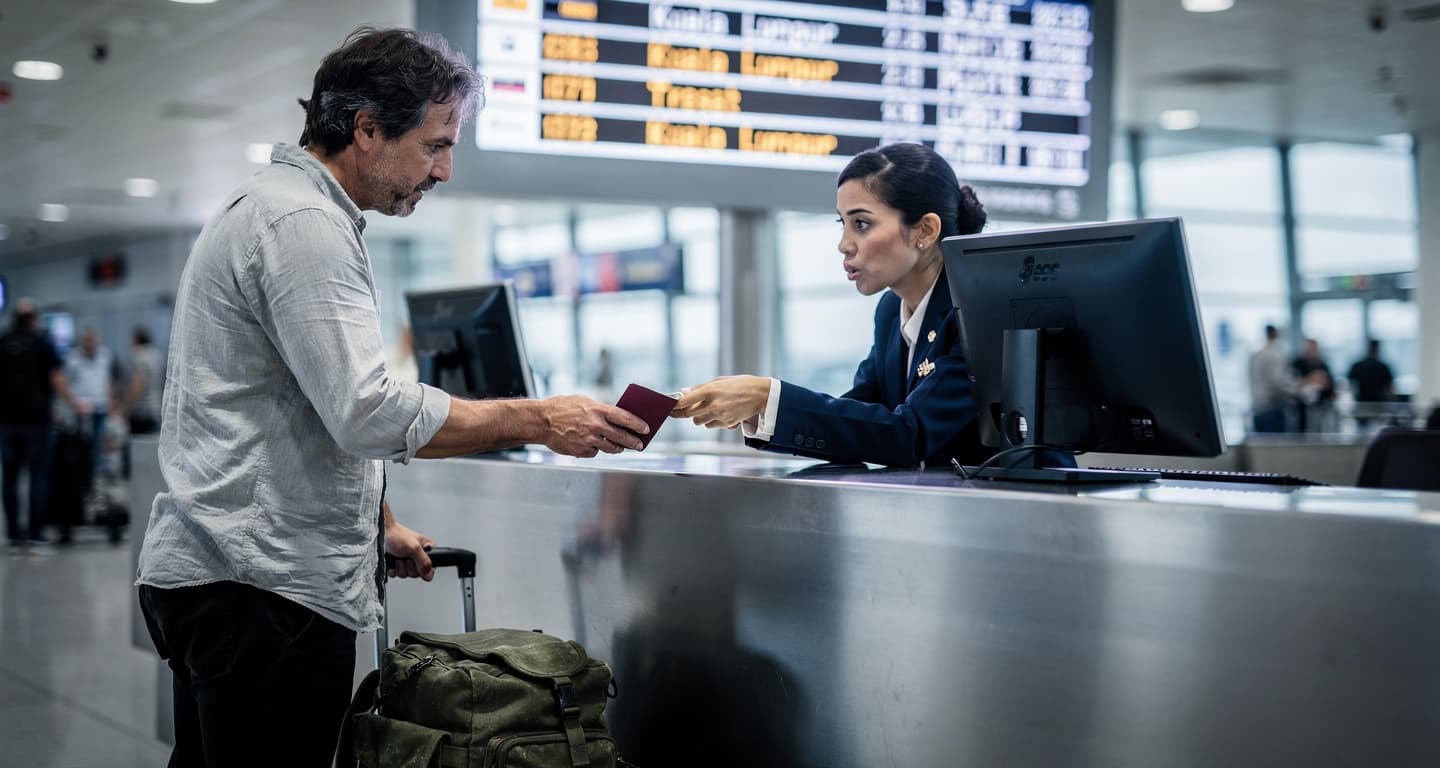
Families traveling with children under 6 face a coordination challenge: one parent must stay with the child at manual counters while the other parent and older children use ACI. The time gap — typically 20-25 minutes during peak arrivals — means the ACI-cleared family members wait in the arrivals hall or proceed to baggage claim. Singapore’s immigration hall has no seating area between the automated lanes and manual counters, so waiting family members stand near the exit. Plan your meetup point in advance: the arrivals hall information desk or the nearest coffee shop both work.
How this changes your Singapore routing
The 25-minute time saving matters most for tight connections. Singapore Airlines schedules minimum connection times of 50 minutes for international-to-international transfers at Changi. Manual immigration during peak banks consumes 20-30 minutes of that window, leaving 20-25 minutes for terminal transit and boarding. ACI reduces immigration to under 1 minute, expanding your usable connection time to 45-48 minutes — enough to clear security, walk to your gate, and board without stress.
This advantage applies specifically to flight options to Singapore from Australasia that arrive during evening banks and connect to late-night departures. A Sydney-Singapore-Bangkok itinerary with a 7:30pm Changi arrival and 9:45pm Bangkok departure becomes viable with ACI; manual immigration makes it risky. The same logic applies to Singapore-Bali, Singapore-Phuket, and Singapore-Kuala Lumpur connections — routes where evening departures dominate the schedule.
For travelers using Singapore as a stopover rather than a connection, ACI eliminates the immigration bottleneck that makes short stopovers impractical. A 6-hour daytime layover becomes 5 hours and 25 minutes of usable time once you subtract the ACI clearance. That’s enough to take the MRT into the city, eat at a hawker center, and return to the airport with margin. Manual immigration reduces the same layover to 4 hours and 30 minutes of usable time — still workable, but tight enough that delays cascade into missed flights.
What to do now
The automated clearance system is live at Changi for all Australian and New Zealand passport holders aged 6 and above — no registration window, no capacity limits, no expiration date currently announced.
- Submit your SG Arrival Card 24-48 hours before departure via the MyICA app or website (https://eservices.ica.gov.sg/sgarrivalcard) — takes 5 minutes, remains valid for 30 days, and triggers your ACI eligibility flag.
- Check your passport validity — Singapore requires 6 months remaining from your departure date, and the ACI system auto-rejects passports below this threshold, forcing manual counter processing.
- Plan family coordination if traveling with children under 6 — one parent uses ACI while the other accompanies young children through manual counters, reuniting in the arrivals hall 20-25 minutes later during peak times.
- Target evening arrivals for maximum time savings — flights landing between 7pm and 10pm face the longest manual queue times (20-30 minutes), making ACI’s 45-second clearance most valuable for tight connections or early hotel check-ins.

Questions? Answers.
Does ACI work for Australian and New Zealand passport holders without pre-registering?
Yes. Singapore’s Immigration & Checkpoints Authority enrolled all foreign visitors in the automated system in May 2024. Australian and New Zealand citizens scan their passport at the kiosk on first use, complete biometric enrollment in 45-60 seconds, and use the faster lanes on all subsequent visits. No advance registration, no fee, no application process.
What happens if I forget to submit my SG Arrival Card?
The automated lanes reject your passport scan and direct you to manual counters. You can submit the card via the MyICA app while standing in the manual queue — it takes 5 minutes — but processing delays mean you’ll likely clear manually on this visit and use ACI on your next trip. Submit the card 24-48 hours before departure to avoid this scenario.
Can families with young children use ACI together?
No. Children under 6 must use manual counters due to height and age restrictions on the biometric kiosks. One parent accompanies the child through manual immigration while the other parent and older children (aged 6+) clear via ACI. The family reunites in the arrivals hall after the manual queue clears, typically 20-25 minutes during peak evening banks.
How do I know if my passport is eligible for automated clearance?
Check for the biometric symbol on your passport’s data page — a small rectangle with a circle inside, typically printed near the photo. This confirms ICAO compliance and embedded chip functionality. Australia and New Zealand issue e-passports as standard, so 99% of current passports qualify. The passport must also have 6+ months validity remaining from your Singapore departure date.
What about departure from Singapore — do I need my passport?
Singapore’s outbound immigration became passport-less for foreigners in September 2024. You scan biometrics only at the departure gate. However, carry your physical passport anyway — your next destination’s immigration requires it, and airline staff verify travel documents before boarding. The passport-less system speeds Singapore’s exit process but doesn’t eliminate the document from your journey.
Which arrival times benefit most from automated clearance?
Evening banks between 7pm and 10pm, when flights from Sydney, Melbourne, and Auckland converge at Changi. Manual immigration queues during these windows average 20-30 minutes. Off-peak arrivals (morning and midday) clear manual counters in 8-12 minutes, reducing ACI’s advantage to 8-10 minutes — still useful for tight connections, less critical for leisure travel.
Does the system work at all Singapore entry points?
ACI operates at Changi Airport Terminals 1, 2, and 3, plus Seletar Airport for private aviation. Land checkpoints (Woodlands, Tuas) and cruise terminals use separate automated systems with different eligibility rules. If you’re flying into Singapore, Changi is your entry point — and ACI is available.