
Quick summary
An emergency department visit at an Australian public hospital is billed at 519 to 2,470 AUD for an overseas visitor, with the total depending on the care provided. A same-day admission climbs higher on the same fee schedule, and scans, pathology, and specialist reviews can arrive as separate charges on top.
One caveat shapes every figure here: non-resident charges are set facility by facility, and the official guidance on Medicare’s overseas limits is general rather than destination-specific. The essentials: what hospitals bill visitors, which billing detail decides whether a claim pays, and the coverage lines to confirm before departure.
Air Traveler Club’s review of Western Australian public-hospital fee schedules shows a same-day inpatient admission billed at 3,087 AUD — for a stay that does not last overnight. Emergency care costs less. It is also rarely where a bill ends.
Medicare and Medicaid do not pay for health care received outside the United States; the State Department states that plainly, so the fallback most Americans assume they carry stops at the departure gate. The exposure lands on US- and Canada-based travelers headed to Australia, and on visitors from every other region who arrive without a standalone policy. As of October 2026, the practical standard is emergency medical cover of at least 100,000, in AUD or USD-equivalent, confirmed in the policy’s actual benefit terms. That gap is the whole risk: an injury serious enough to reach a hospital becomes a financial event as well as a medical one.
Australia’s public hospitals deliver excellent care. The billing system was not built to absorb visitors, though, and it invoices at published rates for anyone outside the national scheme. When travelers weigh Australia travel insurance options, the medical coverage line is what separates a covered trip from an open-ended bill — and it is the line least likely to be explained at the point of sale.
What a non-resident hospital bill includes
Treatment comes first; billing follows. An emergency visit that never leads to admission can still generate separate bills for equipment, medicines, specialist consultations, X-ray or CT imaging, pathology, and doctor or nurse practitioner time, according to NSW public-hospital guidance.
One visit, several invoices.
Whether a patient is admitted also changes the paperwork. When someone is not admitted, costs can be billed as outpatient-style consultations and tests rather than a single inpatient claim, so the shape of the bill depends on a decision made inside the treatment room rather than the size of the injury.
That shape matters for coverage: a policy sized only for one emergency visit can be exhausted by a short admission, before overnight care or follow-up enters the picture. The care ladder gets expensive faster than most limits are built for.
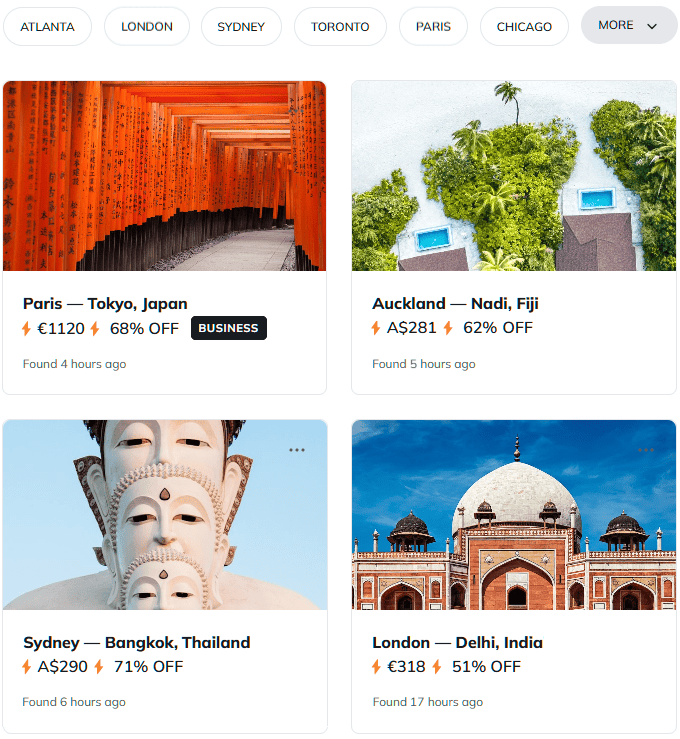
Superdeals cover departures from North America, Europe and Australia.
Flight deals most people never see
Air Traveler Club monitors thousands of routes for pricing anomalies that traditional search engines miss. With ATC Superdeals members save up to 80% on each flight vs. regular fares.
Too good to be true? Check it out yourself. It's free.
Delivered weekly. Unsubscribe anytime.
The non-resident rate card, line by line
Non-resident charges are itemized, and no two bills for the same injury look alike. The table below gathers the published figures any policy has to clear.
| Charge or rule | Figure or status | What it means for cover | Source |
|---|---|---|---|
| Emergency department visit, public hospital | 519–2,470 AUD | Range depends on the care provided; not a flat fee | WA Health fee schedule |
| Same-day inpatient admission | 3,087 AUD | Can exhaust a limit sized for one ER visit | WA Health fee schedule |
| Imaging, pathology, medicines, specialist visits | Billed as separate items | Each charge becomes its own claim line | NSW Health guidance |
| Medicare and Medicaid | No payment outside the U.S. | No public fallback for US travelers | Medicare.gov; U.S. State Department |
| Emergency transport and evacuation | Confirm as a named benefit | Verify it sits inside the medical limit | Insurer benefit guides |
| Sources: WA Department of Health overseas-visitor fee schedule; NSW Health overseas-visitor billing guidance; Medicare and U.S. State Department overseas-coverage rules. Figures current as of October 2026. | |||
The pattern explains why travelers get caught: charges multiply, and the coverage side offers no public backstop. Read together, the table sets the floor for any policy comparison — including the one against your current policy.
Plenty of US travelers mentally file their credit-card travel benefit under “coverage” and stop thinking about it.
What travel medical coverage for Australia must include
According to Qantas Insurance, the medical core of a travel policy covers four things: emergency treatment, hospitalisation, emergency transport, and evacuation or repatriation when a situation demands it. Any policy missing one of those lines is missing part of the job.
Existing conditions are where policies quietly diverge. Qantas automatically covers 40 existing medical conditions across its Australian Comprehensive, International Comprehensive, and Annual Multi Trip policies at no extra cost, provided each condition meets the listed criteria. The criteria do the real work in that promise, which is why a generic comparison table rarely settles the question. Confirm your own conditions against the policy’s wording rather than a marketing summary.
The wording, not the headline limit, decides whether a claim gets paid. Before departure, find the international emergency medical limit and the evacuation sublimit in the benefits schedule itself; brochures and comparison sites round the details in their favor.
Where the rules get uneven
Reciprocal health agreements are the first wrinkle. Visitors from countries with an arrangement in place can face different public-hospital treatment rules than the standard non-resident rates, so a second passport is worth checking before assuming the published charges apply to you.
Medicare’s overseas exceptions are the second: they exist, but they are limited and narrow, aimed at specific situations rather than routine travel, which makes them a poor backup plan.
Nor is the gap Australia-specific; it follows the traveler. Medical costs for Australians in South Korea show the identical arithmetic under a different health system. Every border crossing resets the question of who pays.
Before departure: lock the medical limit
If your policy was chosen for its price rather than its medical line, this is the cheapest fix available, and it takes one sitting. The steps below decide who pays if the trip goes sideways.
- Set the floor at 100,000: emergency medical cover of at least 100,000, in AUD or USD-equivalent, held by a standalone policy or verified inside the one you already own.
- Open the benefits schedule: find the international emergency medical limit and the evacuation/repatriation sublimit in the policy wording itself.
- Screen existing conditions: complete any declaration or screening the insurer requires, since automatic coverage for listed conditions depends on meeting the criteria.
- Save the proof: carry the policy certificate and the insurer’s emergency assistance number, and leave a copy with someone at home.
The hospital rates in this guide are public and slow to move; the policy in your file is the only variable left. Sort it before departure, and a hospital stay in Australia becomes a covered event with a price you already know.
Reporting by




Questions? Answers.
How much does the ER cost in Australia?
One Australian public-hospital schedule lists emergency department charges for overseas visitors from 519 to 2,470 AUD, and separate tests or specialist consultations can add more. The ER headline figure is only the start of the bill.
Is 50,000 enough medical travel insurance?
For Australia, a higher limit is safer, because non-resident hospital care can escalate quickly. A serious admission or evacuation can push past 50,000 once scans, inpatient days, and transport are added.
Is 100,000 enough for medical travel insurance?
The number matters less than what it covers: hospital care, emergency transport, and repatriation, not just one ER bill. 100,000 is a credible floor, though it can still run tight if treatment turns into an admission or requires complex testing.
Can I buy just medical travel insurance?
Yes, medical-only travel insurance exists, and it can be the simplest fit for a traveler who needs nothing else. The policy still has to clearly cover emergency treatment, hospital admission, and evacuation; a plan missing any of those lines leaves the biggest bills uncovered.
What are pre-existing medical conditions and how do they affect travel insurance in Australia?
They are conditions you already had before the policy starts, and insurers often require declaration, screening, or specific acceptance before coverage applies. Some policies automatically cover listed conditions only when each one’s criteria are met, so confirm acceptance before you pay, not after you claim.
