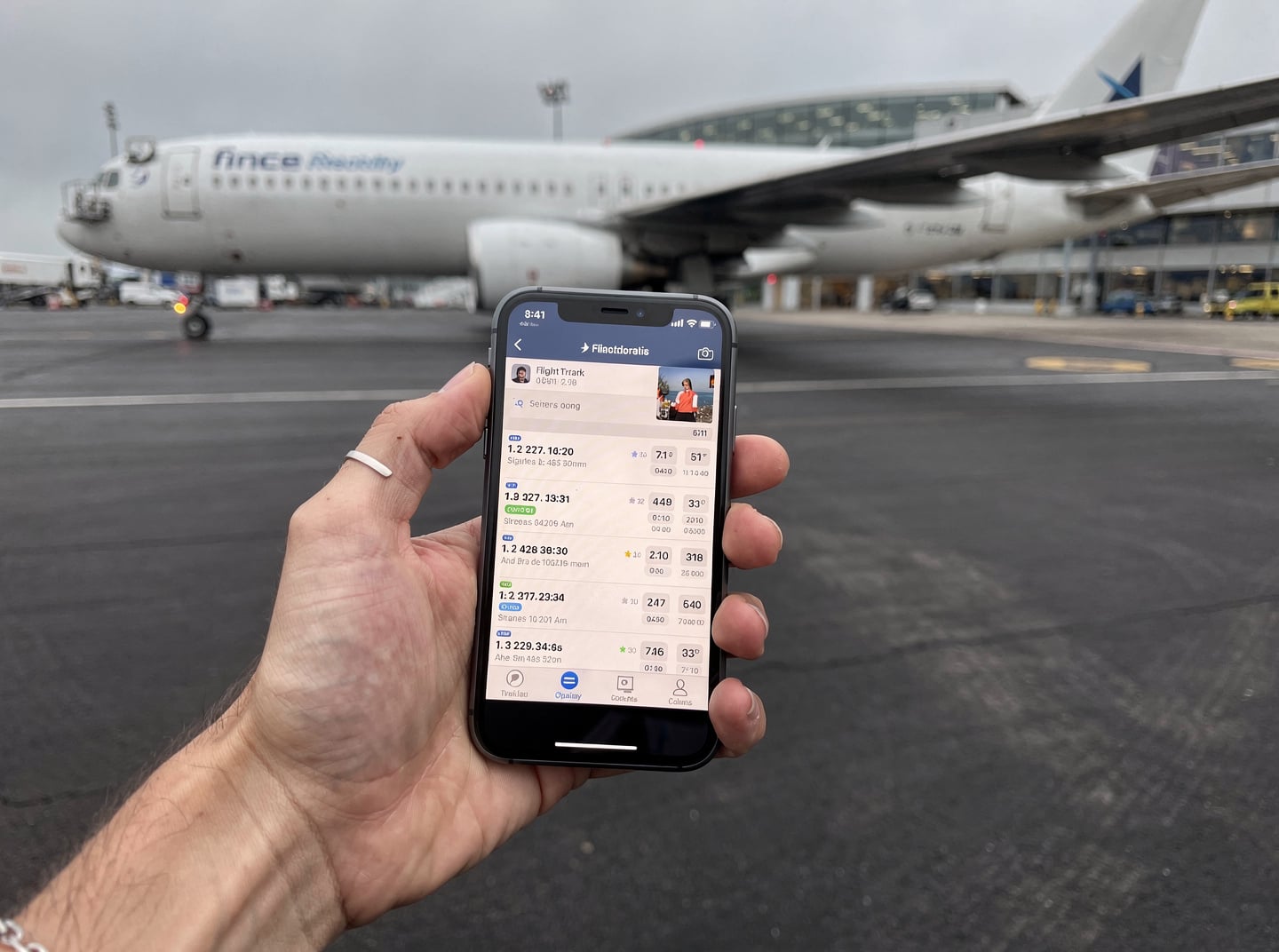
Fleet-age averages describe a spreadsheet, not the flight you’re on. They smooth over the exact variation that determines what’s parked at your gate.
No airline, booking site, or aviation authority lets you see a confirmed tail number before you pay. A registration usually surfaces only a day or two before departure, and even that can swap before pushback. So if you wanted your aircraft’s real age before choosing a flight, that tool does not exist.
Ask a dispatcher which tail flies tomorrow morning and the answer is already on a rotation board. Ask an airline’s booking page and you’ll get a type code — 77W, 789 — and maybe a seat map. The actual machine, its build year, its cycle count: none of it surfaces before the booking screen closes the sale.
Seat 14C does not get the average. It gets one airframe.
The industry would rather talk about the average, and search engines happily serve it back. It’s a fine number for treasury desks and fuel planners. For a passenger choosing a sixteen-hour flight it says almost nothing, because one rotation can pair a near-new airframe on Monday with one delivered before in-flight Wi-Fi was standard two days later — same flight number, same fare, identical booking screen.
This article is about why fleet averages fail the passenger by design, and what a tail-number-level answer would actually look like.
What a fleet-age average actually measures
Fleet age sounds personal. It is the annual-report version of personal. An airline’s figure bundles every airframe it flies — new deliveries alongside twenty-year-old frames kept for range and lease economics — into a single calendar-year average.
Which is fine, if you’re an equity analyst.
Calendar years are also only one of three yardsticks used to age a jet. There are flight cycles — one takeoff and one landing — and total flight hours, and each measure wears out a different part of the structure. For fuselage fatigue the dominant driver is pressurization cycles: every climb inflates the hull like a balloon and every descent lets it relax, thousands of times before the structure gets old.
The booking screen shows none of these numbers. The one aging yardstick the industry chooses to publicize is also the one least connected to what you will actually sit in.
Flight deals
most people never see
Our AI monitors 150+ airlines for pricing anomalies that traditional search engines miss. Air Traveler Club members save $650 per trip per person on average: see how it works.
Each deal saves 40–80% vs. regular fares:

The tail-number lookup that doesn’t exist
Here is the finding that matters for seat 14C: as of August 2026, no airline, global distribution system, or aviation authority offers a public tool that lets a passenger enter a future flight or route at the shopping stage and see a confirmed tail number. And no regulation introduced between 2014 and 2026 has required one.
What exists instead is post-assignment tooling. Flightradar24 and Flighty publish a registration only after a specific airframe is assigned to the flight — typically within 24–48 hours of departure — and nothing locks that pair until pushback. The enthusiast services point at the past: SkySpy‘s airframe lookup and Plane Finder‘s historic-data API can pull tail numbers, build years, and serials out of stored ADS-B records, but only for flights that have already flown.
Neither promises the tail on a trip you haven’t booked.
The closest consumer-facing compromise is AirlineFYI’s Equipment Checker, which resolves flight numbers to planned ICAO types using OAG schedule data. It is candid about the ceiling: it follows planned type, never actual registrations, and it notes that about 15% of long-haul flights operate on a different type than originally scheduled. The industry will disclose the model; it just won’t disclose the machine.
Same flight number, different decade, identical booking screen
The variability the average hides is not hypothetical — though it is admittedly unmeasured in any public dataset. Pick any long-haul flight number between North America and Asia.
Monday’s rotation might be flown by an airframe delivered this decade; Thursday’s, by a sister ship that rolled out of the factory nearly twenty years earlier, kept in service because it has the range and its capital cost was paid off long ago. Same code on the boarding pass, nearly two decades apart in metal.
Your ticket never shows this because assignment is an operational decision, not a sales one. An aircraft goes technical, a schedule tightens, a crew pairing shifts — and dispatch swaps in whatever can fly the route. Routine, sensible, and completely invisible to the customer.
What is less sensible is the registry’s version of the story. A current registration tells you who operates the plane now, not the airframe’s full life. Jets routinely move between operators through sales and leases, so a tail that reads as a new delivery under its current airline may have spent its first tour in a different livery on a different continent.
The tail number is a name, not a biography.
What a tail number would actually tell you
If a pre-booking lookup existed, the first surprise would be how little it says about safety. The MIT International Center for Air Transportation, in an October 2014 study commissioned by the Aviation Working Group, analyzed fatal accident rates for commercial jets above 60,000 lb across 1959–2012. For the first 27 years of an airframe’s life, there is no statistically significant correlation between age and fatal accidents.
An ICAO working paper found the same pattern for total accident rates up to 18 years, with a slight upward drift after 20 driven mainly by Africa — and explicitly rejected age-based import bans as a safety tool.
The number that would actually change your plans belongs to the cabin. Worn seats and an IFE system from a different decade get read by passengers as signs of aircraft age and safety, but they are purely cosmetic — a story about maintenance budgets and retrofit schedules, not about the wings.
And the airframe itself usually outlasts its economics: jets leave fleets because residual value, maintenance intensity, and fuel burn stop adding up, not because the structure fails. A tail lookup, in other words, would be a comfort and expectations tool, not a safety instrument — which makes its absence stranger, not safer.
The plumbing already exists — the disclosure doesn’t
The strange part is that every component of the lookup already works. The FAA Aircraft Registration Inquiry hands over owner, make, model, and manufacture year for any U.S.-registered tail number, and TailNumberLookup repackages those records across 310,653 FAA-registered aircraft. Flightradar24’s playback mode surfaces the registration and equipment code for a past flight when searched by number.
The data is collected, structured, and queryable — it is simply never presented to a passenger at the booking stage.
The tools even know how to dress it up. Once a tail is assigned to your flight, Flighty shows its registration plus the airframe’s “birthday” — the year it left the factory. Charming, but it arrives a month after the booking decision.
Turning that into a route-level, expected-tail display is a disclosure choice, not an engineering project. Airlines keep the assignment internal because it wobbles until the equipment actually parks at the gate, and publishing a tail too early would mean owning every swap. Until a carrier decides that a predicted tail, swap rate included, is better marketing than a mystery, seat 14C keeps boarding blind.
What this means for you
Until the lookup exists, you can approximate it in three moves. At booking, treat aircraft type as the working proxy: the type code on the booking screen plus an equipment-checking tool will steer you toward a newer-generation type if cabin experience is the priority.
Once you’ve booked, put the flight number and date into a tracker and check it in the final day or two before departure, when a registration tends to surface. Then run that tail through the national registry for the manufacture year.
And when the seat in 14C turns out to be older than the average promised, at least you’ll know which decade did the promising.

Questions? Answers.
What does airline fleet age actually tell me as a passenger?
A fleet average is a calendar-year aggregate across an operator’s whole fleet. It smooths over the specific airframe assigned to your route, which can differ by decades from one day to the next, so it tells you almost nothing about the aircraft or cabin waiting at your gate.
How can I find out how old my plane is?
Not before booking: no airline or booking system shows a confirmed tail number at the shopping stage. Once an aircraft is assigned — typically 24 to 48 hours before departure — trackers such as Flightradar24 or Flighty display the registration, which you can then run through the FAA registry or your national equivalent to find the manufacture year.
Is a 20 year old aircraft safe?
Yes, in the sense that matters. A 2014 MIT study commissioned by the Aviation Working Group found no statistically significant correlation between fatal accident rates and airframe age in the first 27 years for commercial jets, and airworthiness is maintained through scheduled A, C, and D checks rather than an age-based expiry. Aircraft leave service for economic reasons, not structural failure.