Summary
- Post-pandemic travel demand is sky-high, but airlines still haven’t restored full capacity.
- Fuel costs make up 20-30% of flight expenses, and prices remain volatile due to global tensions and supply issues.
- European flights can’t use Russian airspace, adding 30-40% more flying time and fuel costs to Asian routes.
- Asia’s booming economic recovery means more travelers with money to spend, keeping airlines’ prices high.
- Prices will likely stay high short-term, but increased capacity and new aircraft could gradually bring relief.
Listen to the podcast version of this article:
The new normal for Asia airfare
If Asia is on your list this year, you’ve probably noticed fares feel higher—and they vanish faster. Prices can swing week to week, and the tempting “from” fare often disappears by the time you click. That’s the 2026 reality.
International class round-trip fares to Asia have increased by 30–60% on average since 2018–2019, with North American routes showing the highest increases. Domestic fares on short-haul routes in the APAC region have also surged significantly.
This guide cuts through the noise. In plain language, it shows why are flights so expensive right now, how pricing really works these days, which patterns matter most, and the simple moves that still save you real money.
You’ll finish with a clearer plan—and fewer surprises at checkout.
Before we start, here’s a comparative table detailing the average flight price ranges for popular routes in the pre-2020 era and the current 2026 travel season. It shows that, on average, travelers are now paying hundreds of dollars more for round-trip tickets.
| Route | Price before 2020 | Price now (2026) | % increase (Midpoint) |
|---|---|---|---|
| North America | |||
| US West Coast → Japan | $500–800 | $800–1,200 | 54% |
| USA → Thailand | $700–1,100 | $1000–1,600 | 44% |
| US → South Korea | $800–1,200 | $1,100–1,700 | 40% |
| Europe | |||
| UK → Vietnam | £450–700 | £600–1,000 | 39% |
| Germany → Philippines | €500–800 | €700–1,200 | 46% |
| France → Indonesia | €600–900 | €800–1,200 | 33% |
| Australia / New Zealand | |||
| Australia → Singapore | A$400–700 | A$600–1,100 | 55% |
| New Zealand → Malaysia | NZ$800–1,200 | NZ$1,200–1,700 | 45% |
| Australia → India | A$700–1,100 | A$1,000–1,500 | 39% |
Please note: Flight prices shown here are rough averages, based on typical fares seen across major hubs and popular travel months. They blend off-peak prices with the higher fares seen during peak seasons to give a realistic, big-picture snapshot rather than exact figures.
Flights to Asia for half-price. Thanks, AI.
Our custom AI finds rare deals that save 40–80% compared to regular fares. Why overpay?
See how it works →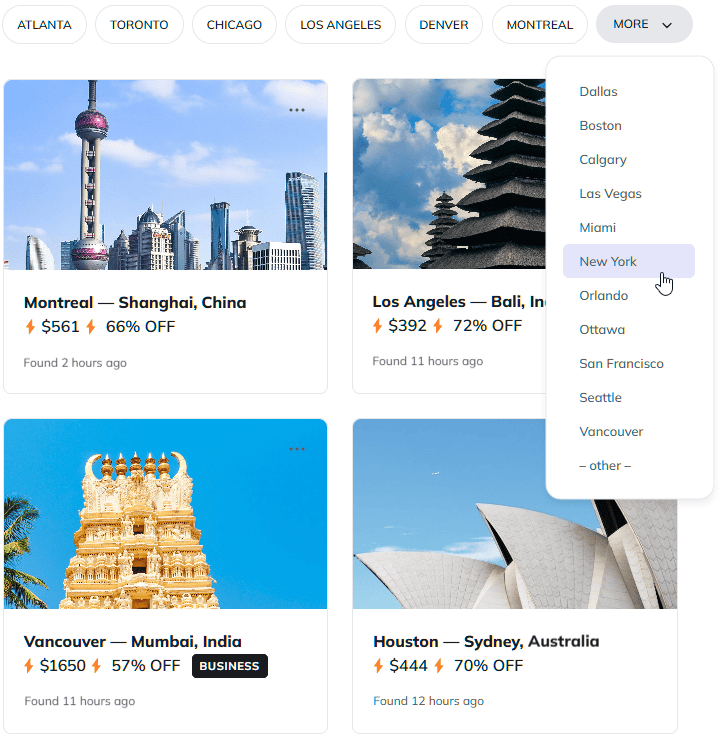
1. Demand is back; peaks push prices
Leisure and VFR (visiting friends/relatives) demand to Asia is running hot in 2026, led by Japan, Southeast Asia, and Korea. Global air travel is still growing, and Asia‑Pacific is a big driver. Japan set new records last year and is tracking higher again this year as a weak yen keeps trips feeling cheaper. Singapore and Bali are also posting steady visitor growth, with Bali’s monthly arrivals staying above 600,000 in late spring.
When demand bunches into school breaks and big holidays, the cheapest fare buckets close early and average prices climb.
Region impact
- North America — Cherry blossom season, summer, Thanksgiving (late November), and late‑December departures price up fastest to Japan and Korea.
- Europe — Summer school holidays and Japan’s Golden Week (late April–early May) see early sell‑outs.
- Australasia — School holidays and Japan’s snow season (Dec–Feb) plus Bali peaks lift fares.
How to save
- Set price alerts 4-6 months before peak seasons (cherry blossom, summer, holidays) to catch early sales.
- Target airline flash sales in January-February for spring travel and May-June for winter bookings.
- If Japan sells out, book Seoul/Taipei first, then grab cheap regional flights (often under $150) to Tokyo.
- Avoid booking exactly on holiday dates—shift departure by 2-3 days to save 30-50%.
2. Seat supply is still tight
Long‑haul schedules still have not fully returned to 2019. Nonstop US–China flights were added back in steps, but they are still below pre‑pandemic levels, so seats are limited. Tokyo Haneda has very limited international slots, which keeps flights scarce at the best times. Airlines cut lightly used days and focus capacity on the most popular departure times. Fewer seats when most people want to travel means fewer cheap tickets.
Region impact
- North America — US↔China and some US↔Southeast Asia routes have fewer flights.
- Europe — Limited Haneda slots and a few major Europe↔Asia routes still run fewer flights.
- Australasia — AU/NZ↔Japan/Korea/Taiwan flights are thinner during school holidays.
How to save
- Check alternate airports within 2 hours’ drive; secondary cities often have better availability and lower fares.
- Don’t book too early (8+ months out)—airlines release sales 3-6 months before departure when they see demand.
- Set alerts for your exact route so you catch when airlines add new flights or capacity.
3. Few true low‑cost long‑haul options
There isn’t a big ultra‑low‑cost (ULCC) presence on ocean‑crossing routes to Asia, so legacy and full‑service airlines set most prices. That removes the cheap “floor” you see on some short‑haul markets.
A few LCCs do help—ZIPAIR (Japan), Jetstar (Australia), Scoot (Singapore), AirAsia X (Malaysia), Cebu Pacific (Philippines) —but they’re limited by fleet size and focused city‑pairs, so sale seats go fast.
Region impact
- North America — Outside of ZIPAIR’s routes to Tokyo, there’s almost no true low‑cost transpacific capacity, so alliances dominate pricing.
- Europe — Very limited long‑haul LCC service deep into Asia; Scoot’s Athens and Vienna links are the main exceptions.
- Australasia — You have the most LCC choice (Jetstar, Scoot, AirAsia X, Cebu Pacific), but capacity is small versus demand and peak dates sell out.
How to save
- West Coast/Canada travelers: Book ZIPAIR immediately when sales drop (they sell out in days).
- Australia/NZ: Calculate total LCC cost with bags—sometimes full-service is only $50-100 more with better schedules.
- Europe: Fly budget to Athens/Vienna, then catch Scoot to Asia—can save €300-500 vs direct flights.
- Compare one-stop options via budget-friendly hubs like Kuala Lumpur or Bangkok versus expensive Singapore.
4. Jet fuel & surcharges set the floor
Fuel still accounts for a large share of airline costs, and prices move a lot. Airlines hedge, but they also add a risk buffer. Many Asian and Japan‑bound carriers update fuel surcharges every month or two, which lifts the total even when the base fare looks fair.
Longer routings burn more fuel and push costs up again. Together, these forces set a floor under fares on popular Asia routes.
Region impact
- North America — very long trans‑Pacific legs magnify fuel and surcharge exposure.
- Europe — detours to North Asia add hours of burn.
- Australasia — AU/NZ→North Asia flights are long and fuel-heavy.
How to save
- Book on Tuesdays/Wednesdays when airlines refresh pricing—you’ll see lower fuel surcharges before weekend spikes.
- Check the same route on partner airlines—fuel surcharges vary wildly (e.g., ANA vs United to Tokyo).
5. Higher pay and staff gaps raise costs
There is a shortage of experienced pilots and technicians. Post‑pandemic wage deals lifted pay across majors and partners. Training and type‑rating take time. Higher crew costs are a durable part of the cost base and appear in long‑haul fares.
Region impact
- North America — pilot pay sets the tone.
- Europe — crew and air traffic control staffing costs ripple system‑wide.
- Australasia — tight pools and long training cycles.
How to save
- Target shoulder season (April-May, Sept-Oct) when airlines actually discount premium-heavy routes to fill seats.
- Mix premium economy on outbound with economy return—you get comfort where it matters for less money.
6. Inflation raises the baseline
Airports, ground handling, maintenance, and catering all cost more than in –. Crew pay rose after new contracts. Suppliers charge more for parts and cabin work. Even if fuel dips, these non‑fuel costs keep the headline price up across regions.
Region impact
- North America — higher labor and airport fees feed into fares.
- Europe — airport/handling inflation plus regulatory costs raise the floor.
- Australasia — smaller markets pay more for logistics and services.
How to save
- When in hurry, book when you see 10-15% price drop for your route—don’t wait for unrealistic “steals.”
- Use flexible date searches (±7 days) to spot pricing dips caused by airline revenue management.
- Consider alternative destinations with similar appeal (Vietnam vs Thailand, Philippines vs Indonesia) for better value.
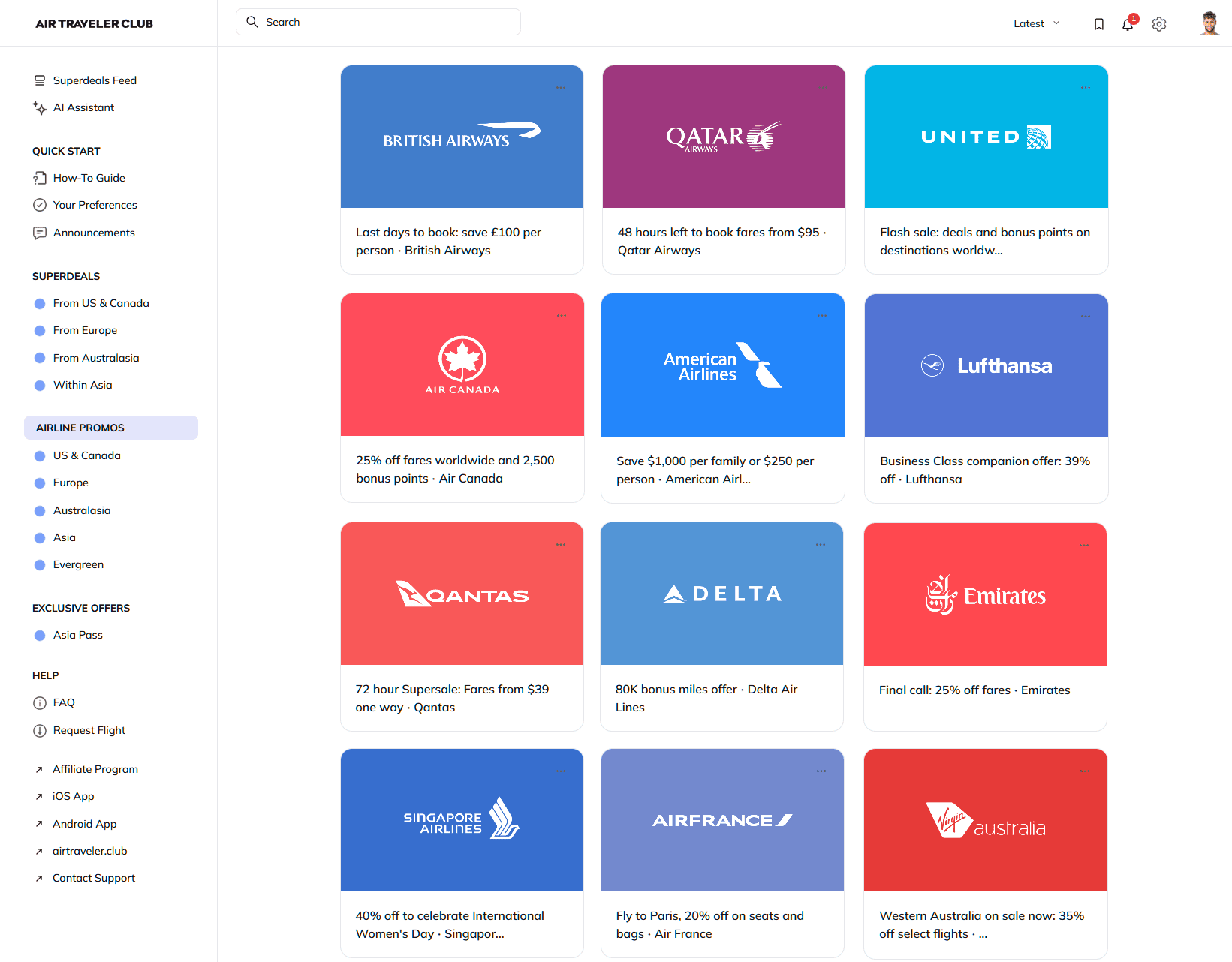
Our AI detects sales and promotions from 150+ airlines
- Genuine gems—vetted by travel experts
- Browse all active promos on our platform
- Never miss a new promo with real-time alerts
7. Closed airspace means longer routes
Since February 2022, most Western airlines have been barred from using Russian airspace for overflights to Asian destinations. This has fundamentally altered flight routes and costs. Europe↔Japan/Korea flights must loop around, which adds about 2–4 hours so more fuel gets burned and crew duty runs longer. In the Middle East, temporary restrictions can also force detours to South and Southeast Asia. These longer paths raise fares because airlines spend more and get less use from each aircraft day.
Price split in Europe: Chinese airlines that are permitted to overfly Russia can keep the shorter great‑circle path. Shorter flight times means lowest Europe→Asia fares—especially to China and on routings via Chinese hubs.
Region impact
- North America — Smaller effect on most trans‑Pacific routes.
- Europe — Two‑tier pricing: Western carriers detour and price higher; Chinese carriers overfly and often undercut to China and beyond via Chinese hubs.
- Australasia — Most noticeable on Europe connections; fares via Chinese or Gulf hubs can beat detour‑heavy options.
How to save
- Europe: Fly via Istanbul, Dubai, or Doha to Asia—often 4-6 hours faster and €200-400 cheaper than detour routes.
- Chinese carriers (Air China, China Eastern, China Southern) still use Russian airspace—check them first for Europe-Asia.
- Verify visa-free transit limits (24-144 hours depending on city) before booking Chinese hub connections.
8. War‑risk and insurance add a surcharge
Conflicts and overflight risks raise the cost of insuring aircraft and crews on certain corridors. Even when airlines avoid hot zones, underwriters price risk across networks—long‑haul to Asia included. Combined with detours, this narrows room for discounts and keeps fares firm on sensitive routes.
Region impact
- North America — modest effect on most trans‑Pacific routes; higher via Gulf hubs.
- Europe — largest impact near restricted or volatile corridors.
- Australasia — felt on Gulf‑hub routings and certain detours.
How to save
- Avoid routes through or near conflict zones unless they’re significantly cheaper (they rarely are anymore).
- Check your travel insurance coverage for conflict-related disruptions before booking sensitive corridors.
9. More premium seats lift averages
Airlines added premium economy and refreshed business cabins where demand is strong. Economy cabins sometimes got smaller. Even if you fly economy, the cabin mix lifts the average price on that flight. Premium‑leisure demand to Japan, Singapore, and resort gateways supports this strategy.
Region impact
- North America — premium‑heavy Japan/Korea/SIN routes.
- Europe — premium densification on trunk routes.
- Australasia — Qantas/SIA mixes skew higher.
How to save
- Wait for premium economy flash sales (usually 30-50% off)—often cheaper than flexible economy.
- Set alerts for new route launches—airlines heavily discount all cabins for 2-3 months to build demand.
- Book mixed-class tickets (premium outbound, economy return) for comfort without double cost.
10. Holiday peaks wipe out cheap seats
Chinese New Year, Golden Week, Eid, summer holidays, Christmas/New Year, and big expos or sporting events drive intense short‑window demand. Seats in the lowest buckets sell out months ahead—especially for Japan, Korea, Bali, and Thailand. Late shoppers buy in the steep part of the ladder.
Region impact
- North America — Japan cherry blossom/autumn foliage and Lunar New Year push fares up.
- Europe — summer and Christmas/New Year drive early sell‑outs.
- Australasia — school holidays and Japan ski season trigger price jumps.
How to save
- Book Christmas/New Year Asia trips by August—prices jump 40-60% after September.
- Target the week immediately after major holidays when prices drop sharply.
- Search multi-city options: fly into Bangkok, out from Singapore—opens more inventory at better prices.
11. Taxes and airport fees add up
UK Air Passenger Duty increased on . France’s eco‑levies apply to long‑haul. Australia charges a A$70 Passenger Movement Charge on every international traveler. Canada’s Airport Improvement Fees add to totals. Asian hubs (Singapore, Tokyo, Manila, and others) levy passenger service charges to fund terminals and upgrades. These are fixed costs baked into the final price.
Region impact
- North America — Canada AIFs and U.S. fees add up.
- Europe — APD and eco‑levies are heavy on long‑haul.
- Australasia — PMC plus local airport fees lift the floor.
How to save
- Compare nearby gateways: Oakland vs SFO, Gatwick vs Heathrow can save $100-200 in taxes alone.
- One-stop via low-tax hubs (Seoul, Taipei) often cheaper than high-tax hubs (Singapore, Tokyo Narita).
- Budget airlines sometimes have lower total taxes—check before dismissing them.
12.Trade frictions raise route costs
US–China trade tensions lift some cargo and compliance costs, which can affect route economics. Airlines may redeploy capacity away from lower‑margin city‑pairs or delay adding back thinner routes. While indirect, these pressures support firmer pricing on the seats that remain.
Region impact
- North America — largest exposure on trans‑Pacific flows.
- Europe — moderate effect via cargo/compliance costs.
- Australasia — indirect impact via partner networks.
How to save
- Book mid-week (Tue-Thu) when cargo demand is lower—airlines price passenger seats more competitively.
- One-stop via Seoul/Taipei/Singapore often beats nonstops by $300-600 on US-China routes.
- Use Chinese carriers via Beijing/Shanghai/Guangzhou for best pricing to mainland destinations.
13. Aircraft delays limit growth
New jets arrived slower than planned. 737 MAX deliveries, 787 pacing, and Pratt & Whitney GTF inspections grounded or delayed aircraft, especially in Asia and India. Cabin retrofit programs also tie up frames. Fewer usable aircraft means tighter schedules and less inventory to discount.
Region impact
- North America — widebody availability paces long‑haul growth.
- Europe — feeder LCC/GTF issues ripple into hub flows.
- Australasia — small long‑haul fleets feel single‑aircraft issues more.
How to save
- If a flight you like disappears, it may be a fleet issue, not demand. Save 2-3 backup date options when searching.
- Subscribe to route-specific alerts to know when airlines add back cancelled flights.
14. IT and cyber costs flow into fares
Airlines invest in booking platforms, NDC/ONE Order changes, payment security, and cyber defense. They also spend on apps, inflight wi‑fi, and personalization engines. None of this is free. When margins are thin, these costs show up in fare structures and fees.
Region impact
- North America — large networks spread costs but still price to recover.
- Europe — regulated markets and IT upgrades push costs into fares.
- Australasia — smaller scale means higher per‑passenger impact.
How to save
- Expect $10-30 annual increases in booking fees and credit card surcharges—factor into budgets.
- Book direct with airlines when possible to avoid OTA markup fees.
15. More security steps add cost
Stricter screening, biometric deployments, and added cargo checks increase operating complexity. Airports charge for upgraded systems; airlines staff accordingly. The per‑flight cost is small but adds up on long‑haul.
Region impact
- North America — TSA enhancements and PreCheck/Global Entry integrations.
- Europe — extra checks at Schengen and ex‑EU borders.
- Australasia — added steps at AU/NZ gateways.
How to save
- Enroll in Global Entry ($100/5 years) or TSA PreCheck ($78/5 years)—saves hours and stress on long-haul trips.
- Pack smart: liquids under 100ml in clear bags, electronics accessible, no prohibited items—avoid bag check fees.
- Arrive 3 hours early for international Asia flights—new security protocols add time.
$2500 in savings from top travel brands
Discounts on premium services, free hotel stays, free guided tours, big rebates on travel gear, and much more.
Get discounts →
Other reasons fares stay high
These don’t set the headline fare on their own, but they still move the number you see at checkout—especially on busy weeks or thin routes. Think of them as price nudges that explain why a deal vanishes or two similar trips price differently.
Pandemic debt still nudges fares
Many airlines still carry debt from –. Servicing that balance sheet leaves less room to discount on long‑haul where costs are highest. It is not the top driver in 2026, but it helps explain stubbornly high averages.
- North America — majors stay cautious on discounting.
- Europe — legacies protect yield.
- Australasia — smaller carriers hold the line.
Consolidation reduces rivalry
Mergers, joint ventures, and deep alliances can thin independent competition on some city‑pairs. With fewer carriers bidding for the same travelers, there is less need to discount deeply. The effect varies by market but is clear on long‑haul spokes into Asia where one or two brands dominate ideal times.
- North America — deep trans‑Pacific JVs reduce independent competition.
- Europe — alliances dominate Europe↔Japan/Korea markets.
- Australasia — tie‑ups on AU/NZ↔Asia limit head‑to‑head options.
EU climate rules and SAF add cost
In Europe, free ETS allowances are shrinking in (halved, ending by ). The EU’s ReFuelEU also starts sustainable aviation fuel blending at low levels (about 2%). Airlines pass these costs into fares, especially when you start your trip in the EU/UK. Non‑EU carriers often price to the same market level.
- North America — limited effect unless your trip starts in the EU/UK.
- Europe — primary driver in 2026.
- Australasia — smaller near‑term effect; more later.
Slots and curfews limit flights
Heathrow slots are capped. Haneda’s international slots are rationed. Sydney has a curfew and a movement/hour cap. EU summer ATC congestion adds delay. When airlines cannot add flights at peak hours, prices rise on the flights that exist.
- North America — some limits, but less binding than EU/AU.
- Europe — Heathrow/Haneda scarcity and EU summer ATC.
- Australasia — Sydney caps and scarce peak slots.
Higher fees at Asian hubs
Passenger service charges at hubs like Singapore, Tokyo, and Manila stepped up to fund expansion and upgrades. These are fixed per‑passenger uplifts you pay regardless of fare bucket. The more connections you make, the more you feel it.
- North America — multi‑stop itineraries feel it most.
- Europe — noticeable when connecting through higher‑fee hubs.
- Australasia — common on SIN/KUL/MNL routings from AU/NZ.
Strong cargo supports higher fares
Widebodies carry containers under your feet. When cargo pays well on a lane, airlines do not need to chase marginal passengers with deep discounts. That keeps passenger prices firmer at diversified hubs.
- North America — e‑commerce flow on China/SE Asia lanes sustains cargo yields.
- Europe — balanced cargo at FRA/AMS supports stronger passenger pricing.
- Australasia — smaller cargo base but still affects widebody economics.
NDC and distribution gaps reduce transparency
As airlines push New Distribution Capability (NDC) and hold some content for their own sites, comparison shopping gets harder. Some OTAs and meta‑search show fewer fares or hide ancillaries. Reduced transparency weakens competitive pressure and can keep fares higher than in a fully comparable market.
- North America — most visible due to large NDC rollouts and OTA disputes.
- Europe — broad adoption by EU/UK carriers affects cross‑border searches.
- Australasia — growing but less disruptive so far.
Looking ahead: price outlook through 2027
Don’t expect airfare relief anytime soon. Industry forecasts suggest ticket prices will stay stubbornly high through 2027, held up by a perfect storm of constraints.
The culprits are familiar: Boeing’s ongoing production troubles mean airlines can’t expand their fleets, while a worsening pilot shortage compounds the problem. Pilot retirements will peak in 2029 at rates 57% higher than today, with training programs unable to keep pace.
There is one bright spot. Fuel costs are finally moderating, with jet fuel drop 13% in 2025. But here’s the catch—that’s still far above 2019 levels. And new environmental regulations requiring sustainable aviation fuel added $4.4 billion to airline costs in 2026 alone, double last year’s impact.
The best-case scenario involves China fully reopening international routes and budget long-haul carriers launching aggressive fare wars. Even then, expect prices to hover above pre-pandemic levels through 2026 and 2027.
Questions? Answers.
Has demand fully recovered?
For leisure and visiting‑friends‑and‑relatives (VFR), yes—and often above 2019 to hotspots like Japan, Korea, Singapore, and Bali. Business demand is steadier, but leisure fills planes in peak weeks.
Will airfares to Asia ever return to pre‑pandemic levels?
Unlikely in the near term. New aircraft will help, but higher operating costs, airport fees, climate rules, and strong demand set a new baseline. You’ll still see sales, just from a higher starting point. Some pressure may ease as more planes and flights return later in the decade, but detours and labor costs keep prices elevated.
Are high prices greed or economics?
Mostly economics. Airlines face higher costs and fewer seats on some routes. Revenue systems then price to demand—capturing what travelers will pay. That can look like “greed,” but the math starts with higher costs.
Are connecting flights cheaper than nonstops?
Sometimes. Hubs like Dubai, Istanbul, Singapore—and from Europe, some Chinese hubs—can be cheaper on certain dates. Balance the savings against longer travel time, possible overnights, and visa/transit rules.
Should I wait for prices to drop or book now?
If you’re traveling in the next 6–12 months and see a “good enough” fare, book it. Big fare wars are rare right now. Use free 24‑hour holds or flexible tickets when available, and keep alerts running in case a better deal pops up.
How can I find cheaper flights to Asia?
First of all, try Air Traveler Club deal alerts—they typically save 40-80% compared to regular fares. You may also try to:
- Search 3–6 months out (earlier for cherry blossom/Christmas).
- Fly Tue/Wed or take a red‑eye; shift by ±3–7 days.
- Compare nearby airports and one‑stop routings (Gulf, Türkiye, Chinese hubs).
- Check LCCs where they exist (ZIPAIR, Jetstar, Scoot, AirAsia X, Cebu Pacific) and price all‑in with bags/seats.
- Use points/miles or companion discounts to offset cash.
What else can reduce my trip cost?
Start from a cheaper gateway if it saves a lot, then position with a short flight or train. Consider open‑jaw trips (fly into one city, out of another), bundle hotels where the discount is real, and travel off‑peak.
Why are flights from the US to Asia often pricier than from Europe?
The Pacific has fewer true low‑cost competitors and very long distances, which raises fuel and crew costs. Europe has more carrier options but faces detours to North Asia; Chinese airlines that can overfly Russia sometimes post the lowest Europe→Asia fares. Net result: averages often run higher from the US, but it varies by city and season.
Sources & further reading
- Global Outlook for Air Transport June 2025 — IATA
- Air Travel Demand Outlook 2025: Growth Persists — Boston Consulting Group
- UK Air Passenger Duty — HMRC rates page & 2025–26 notice
- EU climate rules — ETS phase-out of free allowances
- Forecasting the Airfare Prices — Evidence from Online Travel Agency data
- Conflict Zone advisories map/list — EASA
- Aviation regulations and policies — Federal Aviation Administration (FAA)
- On-time performance and airline operational data — Bureau of Transportation Statistics (BTS)
- Japan National Tourism Organization (JNTO) data portal — monthly inbound stats
- Singapore Tourism Board — 2024 results & 2025 outlook
- Bali (BPS Bali)— official press release with monthly arrivals (May 2025)